In 1839, Britain invaded Afghanistan. The reasoning was the cold logic of empire: fearful of Russia creeping toward India, the British marched an army of around 16,000 into Afghanistan, deposed the ruler, and installed a puppet king who would do what London wanted. They occupied Kabul, built a cantonment, and settled in. Officers sent for their wives. It felt, for a while, like a success.
It was a catastrophe waiting three years to happen.
THE HORROR — the trap The Afghans did not accept a foreign‑imposed king, and by late 1841 Kabul was seething. In November, a mob murdered the senior British political officer, Sir Alexander Burnes, in his own house. The rising spread. The British, dug into an indefensible cantonment on low ground with their supplies stored in a separate fort they promptly lost, found themselves besieged and starving.
And they were led by possibly the worst man for the job in the entire British Army: Major‑General William Elphinstone, elderly, gout‑ridden, indecisive, physically and mentally broken. Faced with a crisis that demanded speed and nerve, Elphinstone dithered, negotiated, changed his mind, and dithered again.
The Afghan leader, Akbar Khan, offered the British a deal: leave Afghanistan, and you’ll be granted safe passage to Jalalabad, ninety miles away, where there was a British garrison. Elphinstone took it. On the 6th of January 1842, the entire British contingent marched out of Kabul into the snow: about 4,500 fighting men, and around 12,000 civilians — Indian camp followers, servants, workmen, and the soldiers’ wives and children.
Sixteen thousand people, walking into the mountains, in the dead of an Afghan winter.
The “safe passage” was worthless from the first hour. The moment the column left Kabul, Afghan fighters loyal to Akbar Khan fell on it, and they never stopped.
THE HORROR — the annihilation What followed over the next seven days is one of the most complete military disasters in British history. The route ran through a series of high, narrow mountain passes — perfect killing ground. The tribesmen held the heights and fired down into the packed, freezing, starving column as it struggled through the snow. There was no escape and nowhere to shelter.
The cold alone was lethal. People with no proper winter clothing simply froze to death in the night by the hundreds — soldiers, servants, women, children, sitting down in the snow and never getting up. Frostbite crippled the ones the cold didn’t kill outright. And all the while the jezail long‑rifles cracked from the ridgelines above.
The worst slaughter came in the Khoord‑Kabul pass and then at a narrow gorge called Jugdulluk, where the Afghans had blocked the route with barriers of thorn and brushwood. The trapped column was butchered against the obstacle. Discipline dissolved. The great mass of camp followers, the women and children, were killed, died of exposure, or were taken.
By the 13th of January, seven days out of Kabul, the sixteen thousand had been reduced to a last knot of a few dozen soldiers, mostly men of the 44th Regiment of Foot, who made a final stand on a small hill outside a village called Gandamak. Surrounded, frozen, almost out of ammunition, they refused to surrender. One sergeant, when the Afghans tried to take him alive, is said to have snarled “not bloody likely.” They were overwhelmed and killed almost to the last man. A tiny handful of officers had ridden ahead trying to break through. Nearly all of them were cut down on the road.
THE HORROR — the one At Jalalabad, the British garrison knew their comrades were coming. They’d been told an army of sixteen thousand had left Kabul and was marching to join them. So they watched the road. Men stood on the ramparts and stared west, out across the desolate plain toward the mountains, waiting for the column to appear.
On the afternoon of the 13th of January, a single speck appeared in the distance.
One rider. Slumped forward, barely staying in the saddle, on a horse that was visibly dying beneath him. As he came closer they could see he was a European, an officer, and that he was terribly wounded — a portion of his skull had been sheared clean off by an Afghan sword.
His name was William Brydon, an assistant surgeon of the Bengal Army. He rode in through the gates, and the horse that had carried him ninety miles collapsed and died almost the moment it stopped.
And here is the detail that has kept his story alive for nearly two hundred years. Brydon should have died on the road when that sword caught his head. He survived for one reason: against the terrible cold, he had folded a copy of Blackwood’s Magazine and stuffed it inside his hat for warmth. When the Afghan horseman’s blade came down on his skull, the thick wad of magazine took most of the force of the blow. A periodical in his hat was the only thing between William Brydon and a cloven skull.
When they got him inside and asked him, desperately, where the rest of the army was — the sixteen thousand who had left Kabul a week before — Brydon is said to have given the answer that became legend:
“I am the army.”
Out of sixteen thousand souls who had marched out of Kabul, the garrison at Jalalabad watched exactly one man ride out of the mountains to reach them.
THE MODERN RELIC Now, the honest truth, because it matters: Brydon was not literally the only survivor of all sixteen thousand — and the real story is, if anything, darker. He was very nearly the only one to reach Jalalabad by his own power. But he wasn’t quite alone in surviving: a number of British officers, soldiers, wives and children — around a hundred and fifteen of them, including a formidable woman named Lady Florentia Sale, who kept a diary through the whole nightmare — had been taken as hostages and captives by Akbar Khan, and were released or ransomed months later. A few Indian sepoys also struggled in afterward. General Elphinstone, the man whose dithering doomed them all, died in Afghan captivity.
The prevailing theory about Brydon is grimmer still: that he was allowed to live. That the Afghans deliberately let one wounded man ride through, so that he would carry the news to Jalalabad and to British India — a living message, a warning of exactly what happened to an army that invaded Afghanistan. Whether that’s true or not, the message landed. Britain was stunned to its core. The idea that a modern imperial army of sixteen thousand could simply vanish in the mountains, leaving one broken surgeon to tell the tale, shook Victorian confidence to its foundations.
And it became one of the most enduring warnings in military history — the graveyard of empires. The image of that lone rider was invoked again and again, right through to the 21st century, whenever another great power marched into Afghanistan.
The relic is one of the most famous paintings in Britain. In 1879 — during the Second Anglo‑Afghan War — the artist Lady Butler painted the exact moment: a single exhausted rider on a stumbling horse on a vast, empty plain, the walls of Jalalabad rising behind, and not another living soul from his army anywhere in the frame. She called it Remnants of an Army. It hangs in Tate Britain in London today, and you can walk in and stand in front of it — the loneliest painting of a soldier ever made.
And William Brydon himself? He survived. He recovered from his wounds, served on through the horrors of the Siege of Lucknow during the Indian Mutiny fifteen years later — where he was wounded again — and eventually retired to Scotland, where he died quietly in his bed in 1873, an old man. The one who rode out of the mountains lived another thirty‑one years.
Sixteen thousand went into the passes. History remembers the one who came out — and the four words he gave the men on the walls: I am the army.
Nearby on the Dark Atlas
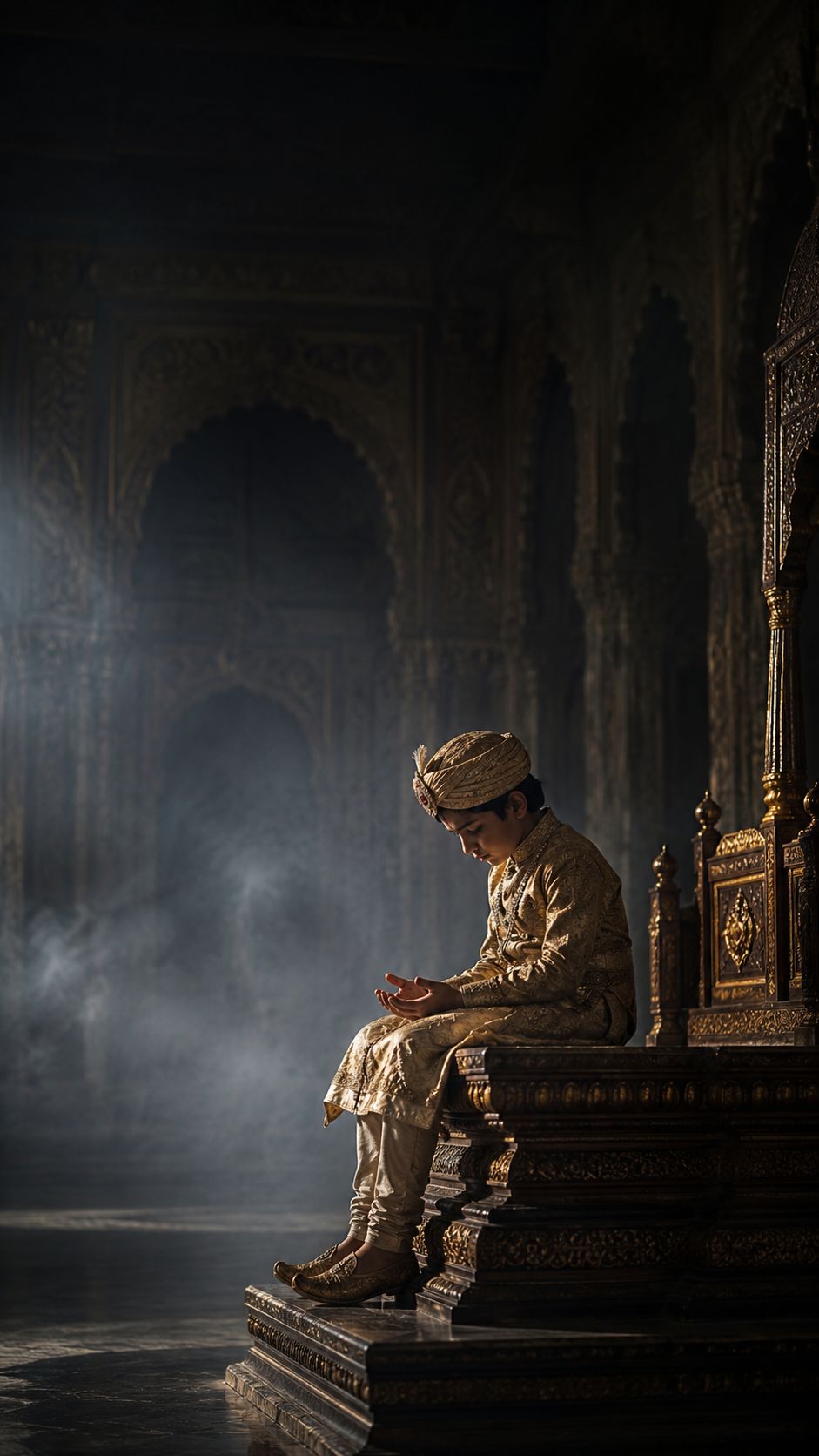 The Diamond Taken From a Ten-Year-Old King
A legal trap stripped a child king of his mother, his throne, and the most famous diamond in the world.
Lahore, Pakistan · 1849 · 584 km away
- The Curse That Coincided With Barbarossa
His tomb warned that opening it would unleash a conqueror worse than himself, and it was opened the day before Hitler invaded Russia.
Samarkand, Uzbekistan · 1941 · 598 km away
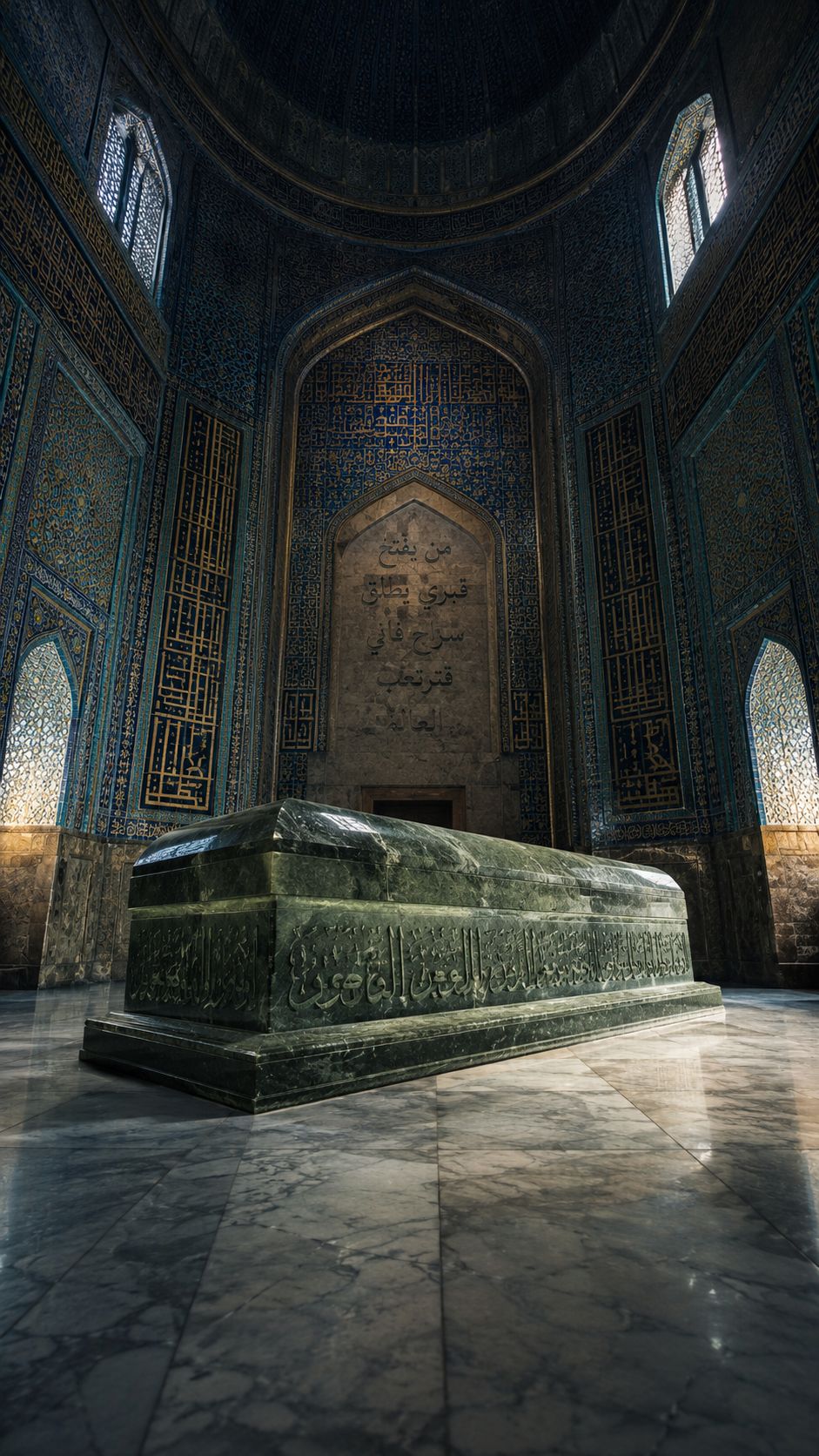 The Tomb That Warned The World Would Tremble
Soviet scientists opened the tomb of a conqueror who killed millions — and, so the legend goes, unleashed a curse the next morning.
Samarkand, Uzbekistan · 1941 · 601 km away
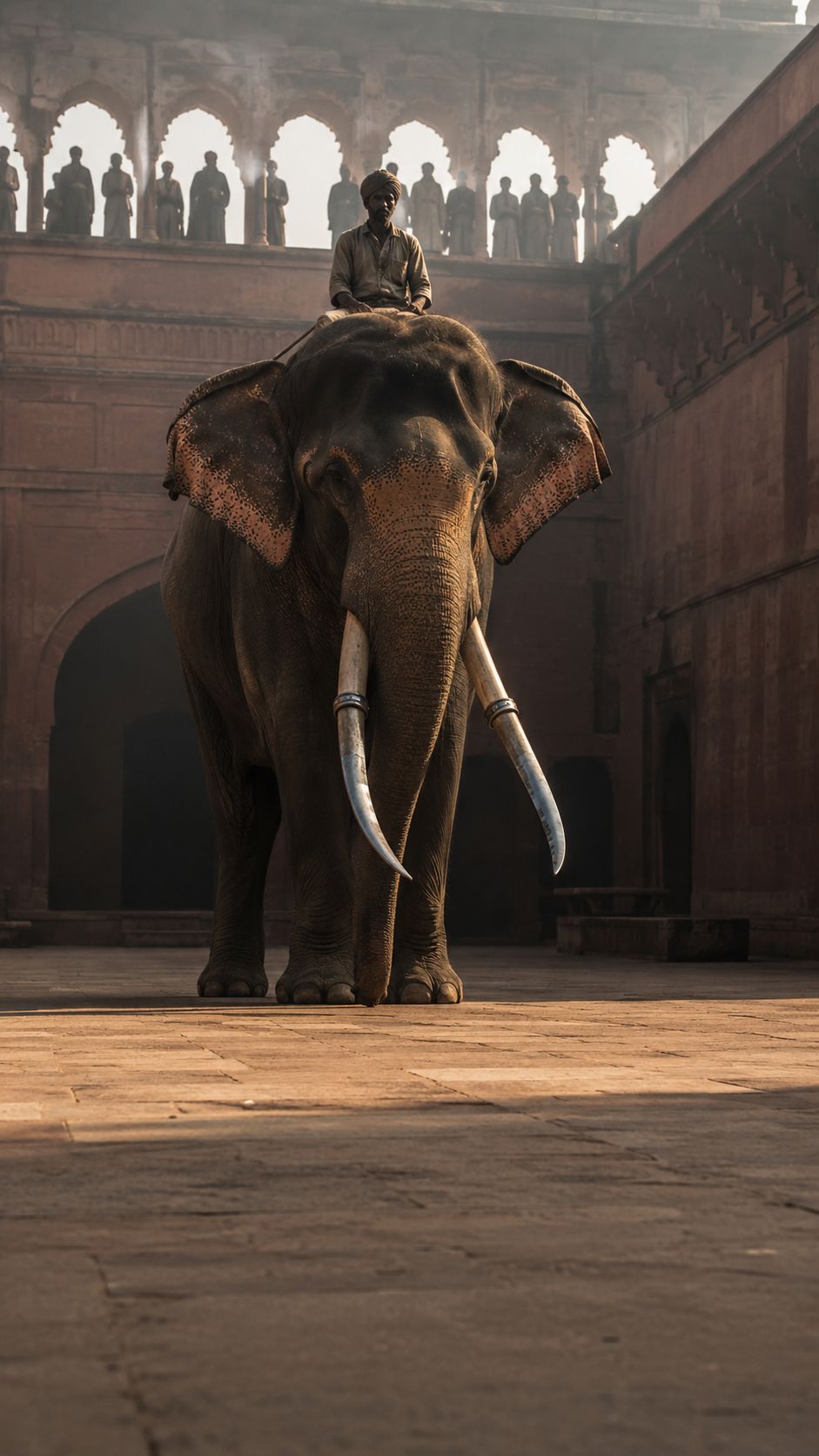 Executed by Trained Elephants in Delhi
A travelling scholar watched the Sultan's elephants, hooves fitted with blades, cut condemned men to pieces before a royal court.
Delhi, India · 1335 · 1004 km away