
The court of King Louis XIII of France in the early 1640s ran on one hard, unspoken fact: the true ruler of France was not the king at all, but his chief minister, Cardinal Richelieu — brilliant, tireless, and utterly without mercy toward anyone who threatened his grip on power. To cross Richelieu was to gamble your head against the most formidable political operator in Europe. A dazzling, headstrong young man named Henri Coiffier de Ruzé, Marquis of Cinq-Mars, made exactly that bet — and it is one of the great cautionary tales of the age. Cinq-Mars was scarcely more than a boy when Richelieu himself brought him to court and pushed him toward the king, calculating that a charming young favourite loyal to the cardinal would be useful. The plan worked far too well. Louis XIII — melancholy, lonely, starved of affection — became utterly devoted to the beautiful young man, heaping titles and offices on him until he was Grand Squire of France, ‘Monsieur le Grand’, one of the most glittering figures at court before he was twenty. But Cinq-Mars was vain, spoiled and hungry for more. He wanted real power: a seat on the royal council, a great and profitable marriage, a voice in the running of the kingdom. Richelieu, who had made him, refused him all of it — and so the young man the cardinal had raised up turned on the cardinal with all the reckless fury of wounded pride.
In 1642 Cinq-Mars threw himself into a conspiracy to destroy Richelieu — to have him dismissed from power or simply assassinated. He drew in the king’s own weak, treacherous brother, Gaston, Duke of Orléans, and, fatally, he reached out to France’s greatest enemy: Spain. A secret treaty was drawn up, promising that Spanish armies would help topple Richelieu in exchange for concessions. It was an act of open treason in a time of war, and it depended entirely on secrecy. It had none. Richelieu’s intelligence network — the finest in Europe — obtained an actual copy of the treaty with Spain. A single leaked document destroyed the whole plot. Cinq-Mars was arrested, and with him his closest and most loyal friend, François-Auguste de Thou — a man whose real ‘crime’ was simply that he had known of the conspiracy and failed to denounce it.
The Horror
On 12 September 1642, after both had been condemned as traitors, the two friends were brought to the Place des Terreaux in the city of Lyon to be beheaded before an immense crowd. Cinq-Mars was so beautiful, so young and so famous that people packed the great square to see the golden favourite of the king die. And he did not disappoint them in courage. By every account he met his end with striking composure: he had dressed with deliberate care, as if for a court occasion; he refused to have his hands bound; he looked out calmly over the sea of faces; and he spoke a last, weary, oddly modern line that came down through the histories — ‘Mon Dieu, qu’est-ce que ce monde?’ — ‘My God, what is this world?’
And then the killing began, and it went horribly, unforgettably wrong. Contemporary accounts record that no skilled headsman was on hand that day in Lyon; the grim task fell instead to a clumsy, untrained substitute — in the most repeated version, a condemned criminal pressed into the work in exchange for sparing his own life. A practised executioner ended a life cleanly, in a single stroke. This one could not. Cinq-Mars’s own death was cruel enough. But it is the beheading of his friend de Thou that the eyewitnesses could barely bring themselves to set down: blow after blow that failed to sever, the young man reportedly still moving, still terribly conscious, as the horrified crowd cried out, the executioner hacking again and again in a rising panic before it was at last, mercifully, over. What was meant to be the swift, dignified justice of the state became a public butchery, drawn out in front of thousands of screaming spectators.
That, in a sense, was precisely the point. Richelieu — himself gravely ill, with only weeks to live — had crushed the last great conspiracy of his career and left no man in France in any doubt about what awaited anyone who reached for his throat, however young, however beautiful, however beloved by the king himself. It was a lesson written in blood on a scaffold. And it was almost the cardinal’s final act. Within three months Richelieu was dead. Within a year, the grieving, guilt-haunted Louis XIII followed him to the grave. Cinq-Mars, who had gambled everything to outmanoeuvre them both, had outlived neither, and had gained precisely nothing — nothing but a permanent place in the long, glittering, blood-soaked list of the court favourites France raised up and then destroyed. What is perhaps strangest is how tender the friendship at the centre of it was. De Thou had begged Cinq-Mars, more than once, to abandon the plot; his only true offence in law was loyalty — that, knowing of the treason, he would not betray his friend to save himself. The two young men died within moments of one another, and later ages found something unbearably romantic in it. In 1826 the writer Alfred de Vigny turned the story into ‘Cinq-Mars’, one of the first great French historical novels, and the doomed favourite passed out of history and into legend — the beautiful, reckless boy who reached for too much and pulled his dearest friend down with him.
The Modern Relic
The square is still there. The Place des Terreaux, in the heart of old Lyon — today a handsome open plaza with a great sculpted fountain, café tables and crowds of a very different kind — is the exact ground where Cinq-Mars and de Thou lost their heads, and the histories of the city still mark it as the site of their execution. And to the north-west, in the gentle country of the Loire valley, the young marquis left his name written on the map itself: the village of Cinq-Mars-la-Pile, and the broken towers of the family château standing above it, still carry the title of the boy who lost his head at twenty-two for reaching too high, too fast, at a court that devoured its favourites alive.
Nearby on the Dark Atlas
- The Blade That Shattered on the Block
A half-blind stand-in executioner's first swing shattered a young nobleman's jaw instead of his neck.
Lyon, France · 1642 · same site
- The Heretic Burned By The Reformers Who Fled Rome
Calvin's Geneva burned a brilliant Spanish physician for his beliefs, then, centuries later, erected a monument of atonement.
Champel, Geneva, Switzerland · 1553 · 112 km away
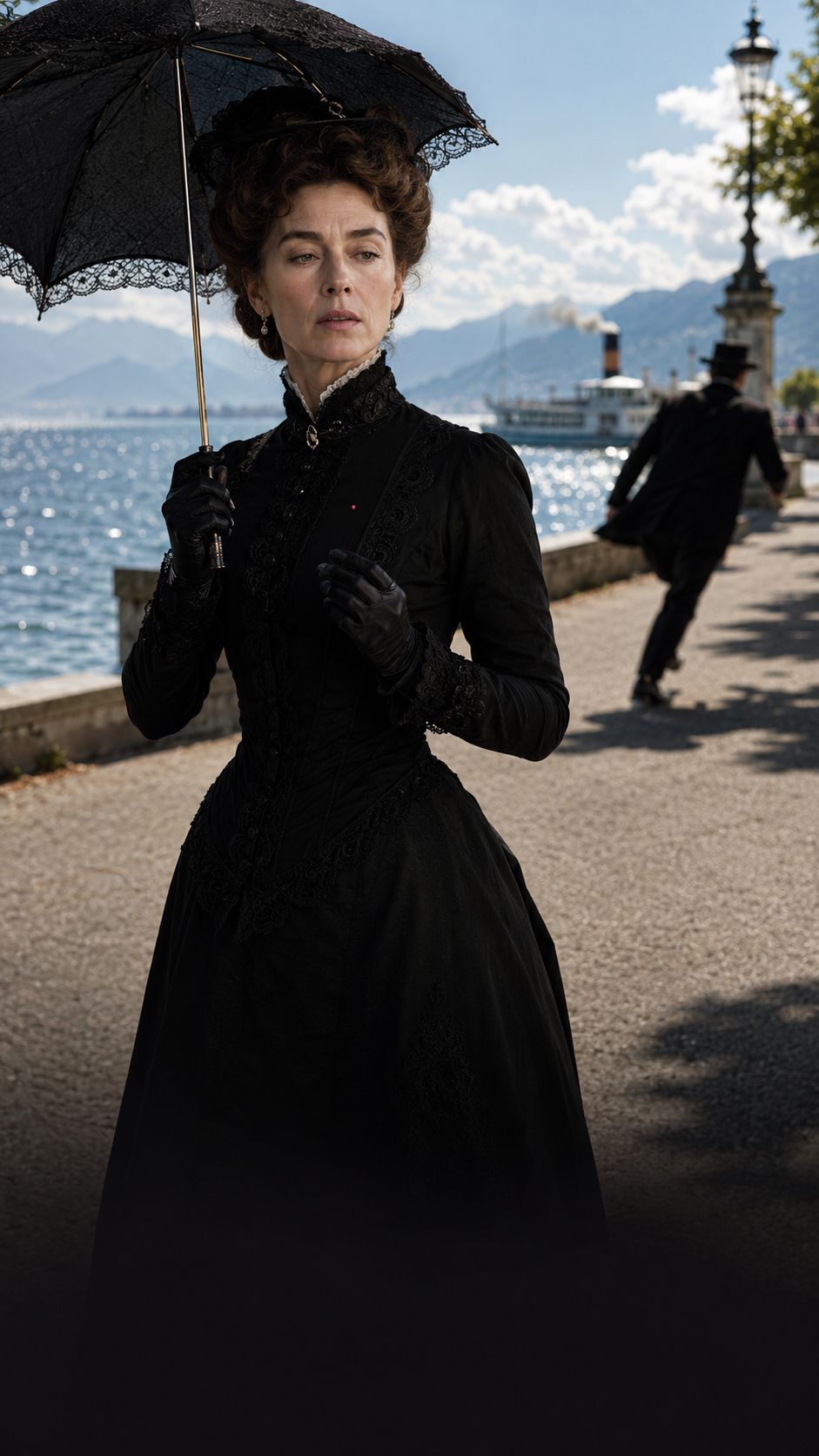 The Empress Who Walked Away From Her Own Murder
Stabbed through the heart by an assassin who wanted someone else, she got up, brushed herself off, and kept walking.
Geneva, Switzerland · 1898 · 112 km away
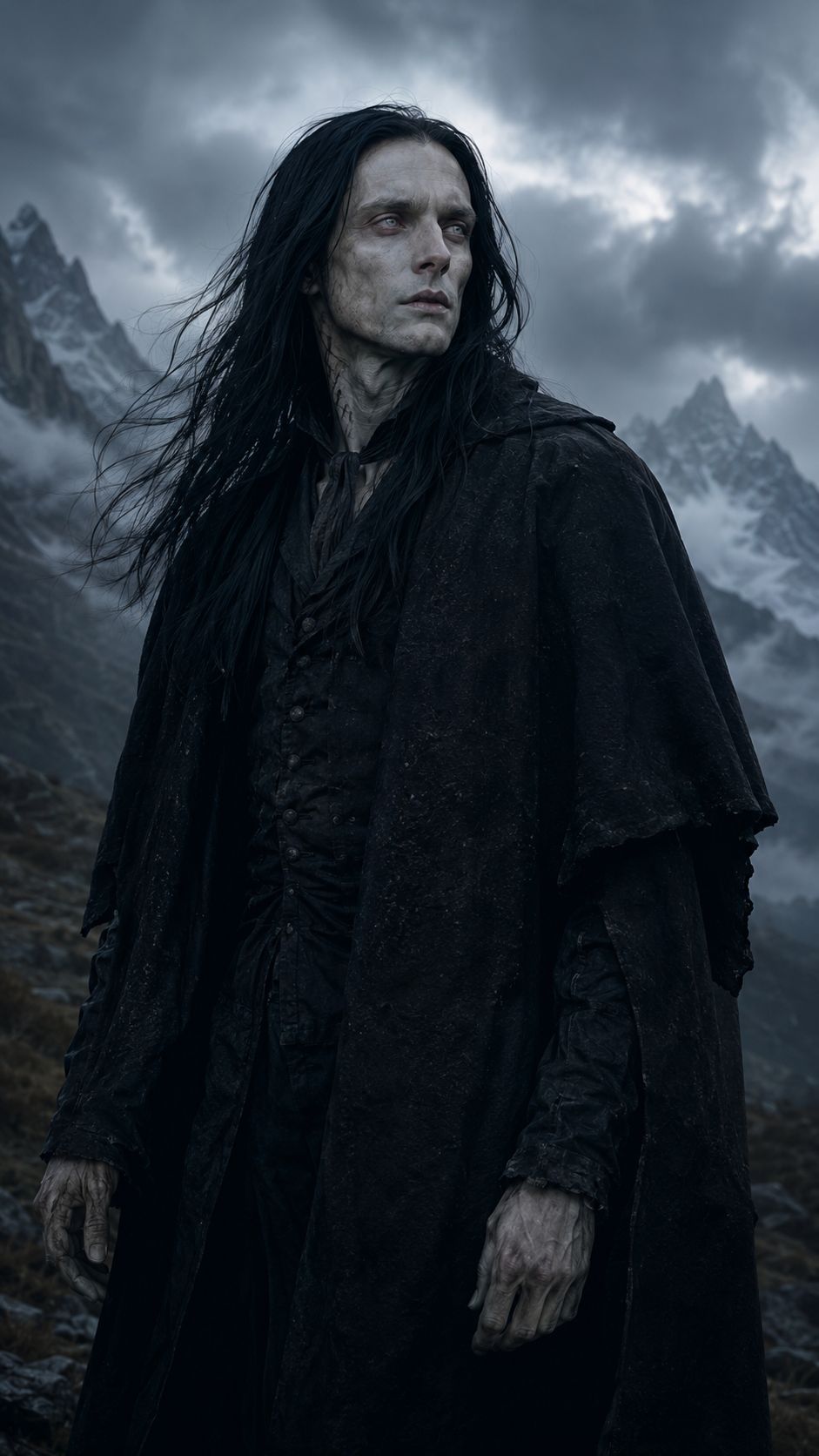 The Tragic Life Behind Frankenstein
The real 1818 novel is nothing like the lumbering movie monster — and the woman who wrote it lived a life as tragic as her fiction.
Geneva, Switzerland · 1816 · 112 km away