Lucrezia Borgia is one of the most infamous women in all of history — a byword for poison, seduction, incest, and murder. The very name “Borgia” conjures images of a beautiful, deadly temptress slipping arsenic from a hidden ring into her enemies’ wine. But here is the truth that the legend buried: almost none of it is real. The real Lucrezia Borgia was not history’s greatest villainess. She was one of its most used and slandered women — a pawn, sold and traded by the most powerful and ruthless men of the age, and then blamed for their crimes for five hundred years.
She was born in 1480, the illegitimate daughter of a Spanish cardinal named Rodrigo Borgia and his mistress. And in 1492, her whole life changed when her father bribed and schemed his way onto the throne of Saint Peter itself, becoming Pope Alexander VI — one of the most corrupt and worldly popes in the history of the Church. From that moment, Lucrezia was no longer a person. She was an asset.
The Horror
The Borgias were building an empire, and Lucrezia’s beauty and her status as the Pope’s daughter made her the perfect tool for forging alliances through marriage. Her father and her brother, the terrifying and ambitious Cesare Borgia, would marry her off to whichever powerful family was most useful at the time — and then, when that alliance stopped being useful, they would simply discard the marriage and trade her again.
Her first marriage came at the age of just thirteen, to Giovanni Sforza, to cement an alliance with the powerful Sforza family of Milan. But within a few years, the political winds shifted, and the Sforza alliance became worthless to the Borgias. So the Pope decided to dissolve his own daughter’s marriage. And the way he did it was designed to humiliate. He forced an annulment on the grounds that Giovanni Sforza was impotent — a public emasculation of the man. Lucrezia, a teenager, was even made to appear before a council of cardinals to testify to her own virginity to secure the annulment — despite the fact that, by some accounts, she was pregnant at the time.
Giovanni Sforza was enraged and humiliated beyond endurance. And he took his revenge in the cruellest way he could — not with a sword, but with a rumour that would destroy Lucrezia’s name forever. To explain why the Pope had really taken his wife away from him, Sforza spread a monstrous lie: that Alexander VI had annulled the marriage because he wanted Lucrezia for himself. He accused the Pope of incest with his own daughter, and threw in her brother Cesare for good measure. It was almost certainly a complete fabrication — a spiteful slander invented by a wounded, vengeful man, with no credible evidence behind it. But it was too scandalous, too delicious, to die. The accusation of incest stuck to Lucrezia Borgia for the next five centuries, and it’s still repeated as “fact” today. She was branded for life by a lie told by a husband she had been forced to shame.
Her second marriage was, by all accounts, a genuine love match — she truly cared for her young husband, Alfonso of Aragon. But once again, the Borgia political machine turned. When the alliance with Naples became inconvenient, Alfonso became an obstacle. And in 1500, Lucrezia’s husband was attacked and then strangled to death — almost certainly on the orders of her own brother, Cesare Borgia. Lucrezia, by every account, was devastated by his murder. She had loved him, and her own family had killed him, and there was nothing she could do. She was not the murderer in her family. She was watching the people she loved be murdered by it.
And what about the poison? The single most famous “fact” about Lucrezia Borgia — the hollow ring filled with arsenic, which she supposedly used to murder her enemies at dinner parties — is pure fiction. There is no historical evidence that Lucrezia Borgia ever poisoned anyone. The poison ring, the deadly seductress emptying vials into goblets — all of it was invented and embellished over the centuries, spun out of the genuine ruthlessness of her father and brother and pinned onto her. The Borgia men were indeed capable of murder and corruption. But the crimes of the family were loaded onto the reputation of its most vulnerable member.
THE MODERN RELIC And here is the part of Lucrezia’s story that the lurid legend completely erases — because it’s the part where she was finally free, and became something remarkable. In 1503, her father Pope Alexander VI died, and her brother Cesare’s power collapsed almost overnight. For the first time in her entire life, Lucrezia Borgia was out from under the control of the ambitious, murderous men who had used her as a chess piece since childhood.
By then she was on her third marriage, to Alfonso d’Este, the heir to the Duchy of Ferrara. And in Ferrara, away from Rome and the Borgia machine, Lucrezia became the woman she might always have been. She was, by the accounts of the people who actually lived alongside her, an excellent, capable, and genuinely popular ruler. When her husband was away at war — which was often — Lucrezia governed the duchy herself, managing its finances, its diplomacy, and its affairs with real skill. The people of Ferrara liked and respected her. She created one of the most brilliant courts in all of Italy, a magnet for poets, scholars, and artists — a famous patron of the Renaissance, whose celebrated literary correspondence with the poet Pietro Bembo is still read today. And in her later years, she became increasingly devout and pious, a world away from the poison-wielding seductress of legend. She died in 1519, aged thirty-nine, mourned by the city she had governed so well.
The relic is the city she made her own. In Ferrara, in northern Italy, the great castle and the court where Lucrezia Borgia finally found freedom and became a beloved duchess still stand, and you can visit them. And her tomb lies in the Monastero del Corpus Domini in Ferrara, where the real Lucrezia — not the murderess of legend, but the intelligent, artistic, capable, and deeply wronged woman she actually was — was laid to rest. She spent her life being used by powerful men and slandered by history for crimes that were mostly theirs, or entirely invented. The poison ring never existed. The real Lucrezia Borgia’s story is not one of a villain — it’s one of a survivor.
Nearby on the Dark Atlas
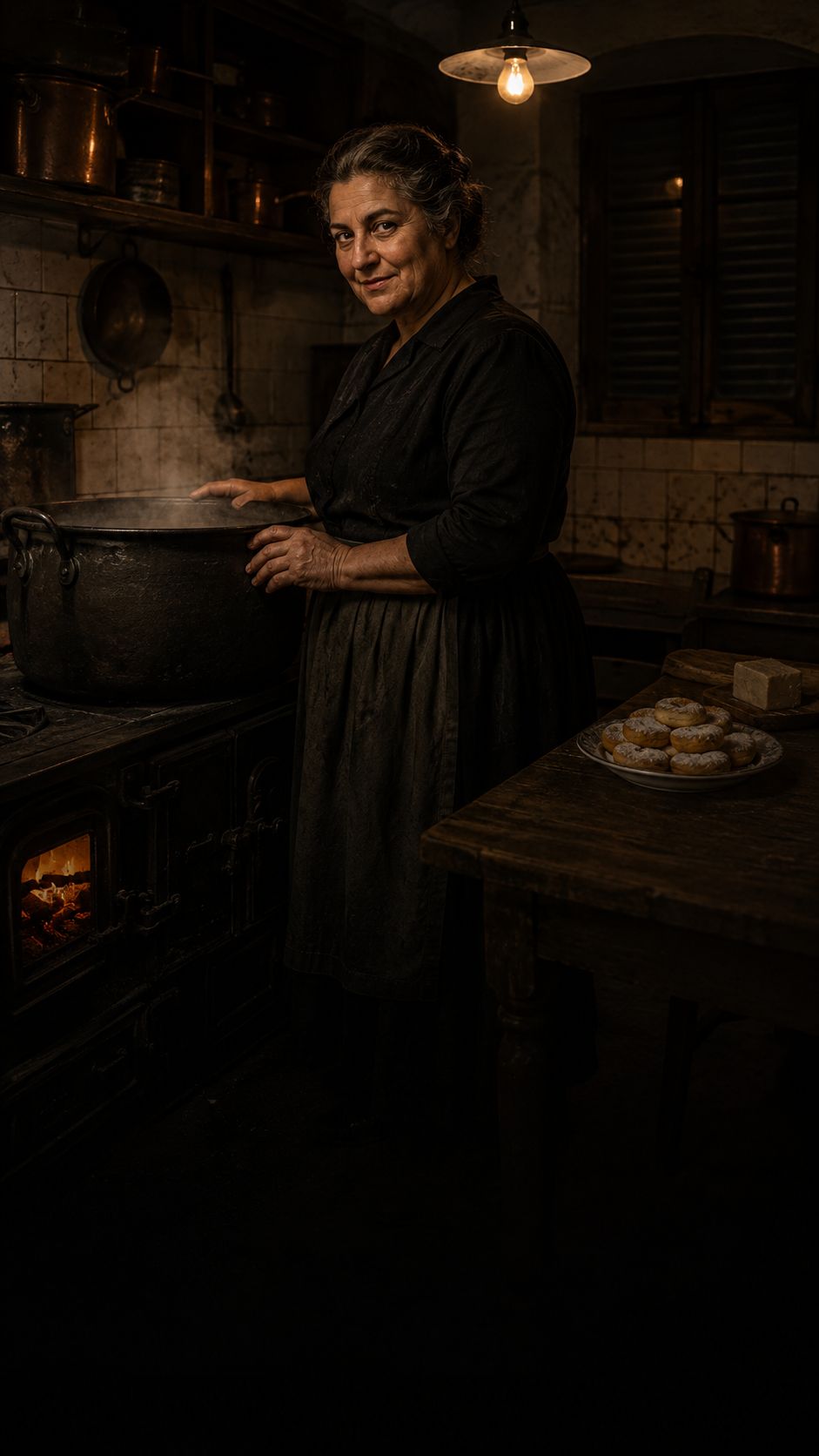 The Soap-Maker Who Murdered For Love
An Italian woman murdered three neighbours and turned their bodies into soap and teacakes, believing she was saving her son.
Correggio, Italy · 1940 · 67 km away
 The Tiger Who Defied The Borgias
A warrior noblewoman who ruled her own city outright dared to defy the most dangerous family in Italy.
Forlì, Italy · 1500 · 76 km away
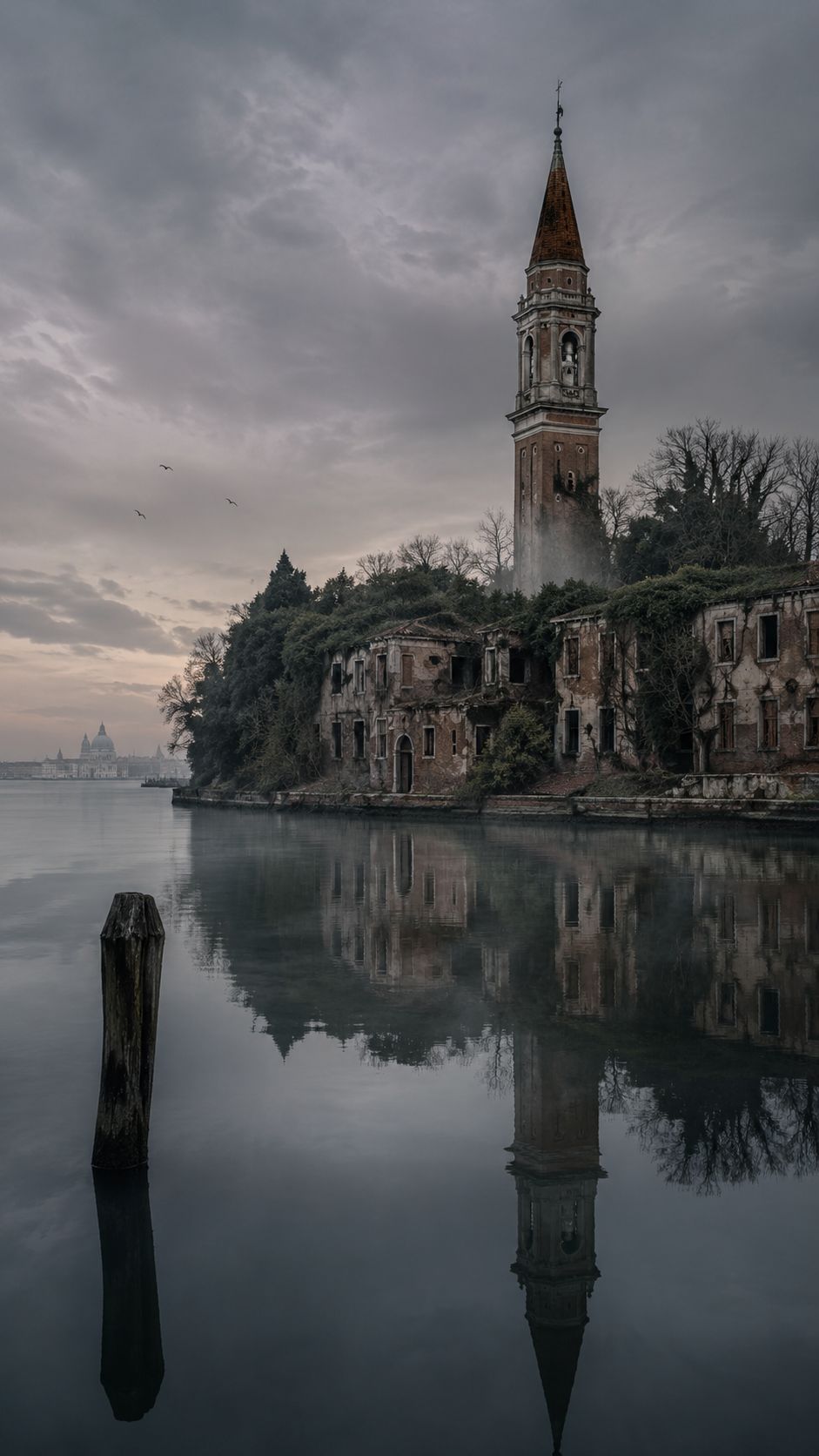 The Island Of The Dead In Venice's Lagoon
A tiny forbidden island soaked in plague pits and asylum horror sits in full view of romantic Venice.
Poveglia, Venice, Italy · 1922 · 82 km away
- The Islands That Invented Forty Days Of Isolation
To hold back the plague, Venice invented a word and a system the whole world still uses: quarantine.
Venice, Italy · 1423 · 85 km away