Every person who stayed home during COVID used a word without knowing where it came from. Quarantine. From the Italian quaranta giorni. Forty days.
It was invented by Venice. And the place where it was enforced is still sitting in the lagoon.
The Horror
In the 14th century, the Black Death reached Venice — one of the most connected trading cities in the world. Ships arrived daily from Constantinople, Alexandria and the Black Sea. They brought silk, spices — and plague. At its worst, the death rate in Venice reached around 500 people per day, bodies carried through streets that had been crowded markets only hours before.
The Republic’s answer was radical for its time. In 1423, the government designated a small island in the eastern lagoon — Lazzaretto Vecchio — as an isolation hospital. Plague victims were ferried there by boat and left in quarantine wards. Physicians in long robes and beak‑shaped masks stuffed with herbs tried to treat them. Most never came back.
As outbreaks continued, Venice realised the danger was not just the sick who were already in the city but the ships arriving at its gates. In 1468, a second island — Lazzaretto Nuovo — was set aside for vessels and cargo. Any ship arriving from a port suspected of infection was ordered to anchor there for quaranta giorni — forty days.
Passengers and crew stayed aboard or on the island. Bales of cloth, crates of goods and barrels of food sat stacked in storehouses while officials watched and waited. If anyone showed signs of plague, they were taken to Lazzaretto Vecchio. If everyone survived the forty‑day period, ship and cargo were finally allowed into Venice.
Why forty? No one at the time could measure incubation periods or bacterial lifecycles. The number probably came from scripture: Christ’s forty days in the desert, forty days and nights of rain in the Flood, the forty days of Lent. The theology didn’t matter. The practice did. The Venetians called the enforced waiting period a quarantena. The word travelled.
Archaeologists excavating Lazzaretto Vecchio have uncovered more than 1,500 skeletons in mass graves. Pits were reopened again and again as waves of plague hit; bodies were stacked layer upon layer. One excavator described the cross‑sections as “like a lasagna,” ribs and skulls and limb bones forming bands through the soil. Rich and poor, citizens and strangers, adults and children — dumped together. The disease did not care about status. On the island, neither did the burial trenches.
In 2006, excavators found something stranger: the skull of a woman, dated to a later 16th‑century epidemic, with a brick forced between her jaws. The stone had been rammed into her mouth after death, wedging it open. This was not an act of murder; it was an act of fear. In parts of Europe, people believed that some corpses — especially plague victims — could become nachzehrer: revenants who chewed their burial shrouds in the grave, the sound of fabric tearing signalling that they were feeding and spreading sickness from underground.
If you thought the dead could eat and infect the living, you did the obvious thing: you stuffed a brick into their mouth so they couldn’t chew. Someone on Lazzaretto Vecchio was afraid enough to do that in a mass grave.
The Modern Relic
Both islands still lie low in the Venice lagoon. Lazzaretto Nuovo is occasionally opened to visitors on guided tours; its low walls, storehouses and inscriptions from long‑ago quarantined crews are still there. Lazzaretto Vecchio remains largely closed, its soil still being peeled back, its mass graves still yielding bones and artefacts from centuries of epidemics.
From a water taxi heading toward the Lido, you can see both as dark strips of land in the shallow water, easy to miss if you’re staring at the skyline of domes and campanili behind you. Fourteen million tourists arrive in Venice in a typical year. They queue for St Mark’s, photograph the Rialto and drift in gondolas past palaces, often without ever glancing east toward the two small islands where the idea of quarantining the sick to protect the healthy was first turned into law.
The word they carry home — quarantine — was born there: on bare islands full of bodies, where ships waited forty days to see who would die, where a woman was buried with a brick in her mouth so she could not “chew” her shroud, and where a city that lived by trade invented time as a barrier between disease and survival six centuries before anyone had heard of COVID.
Nearby on the Dark Atlas
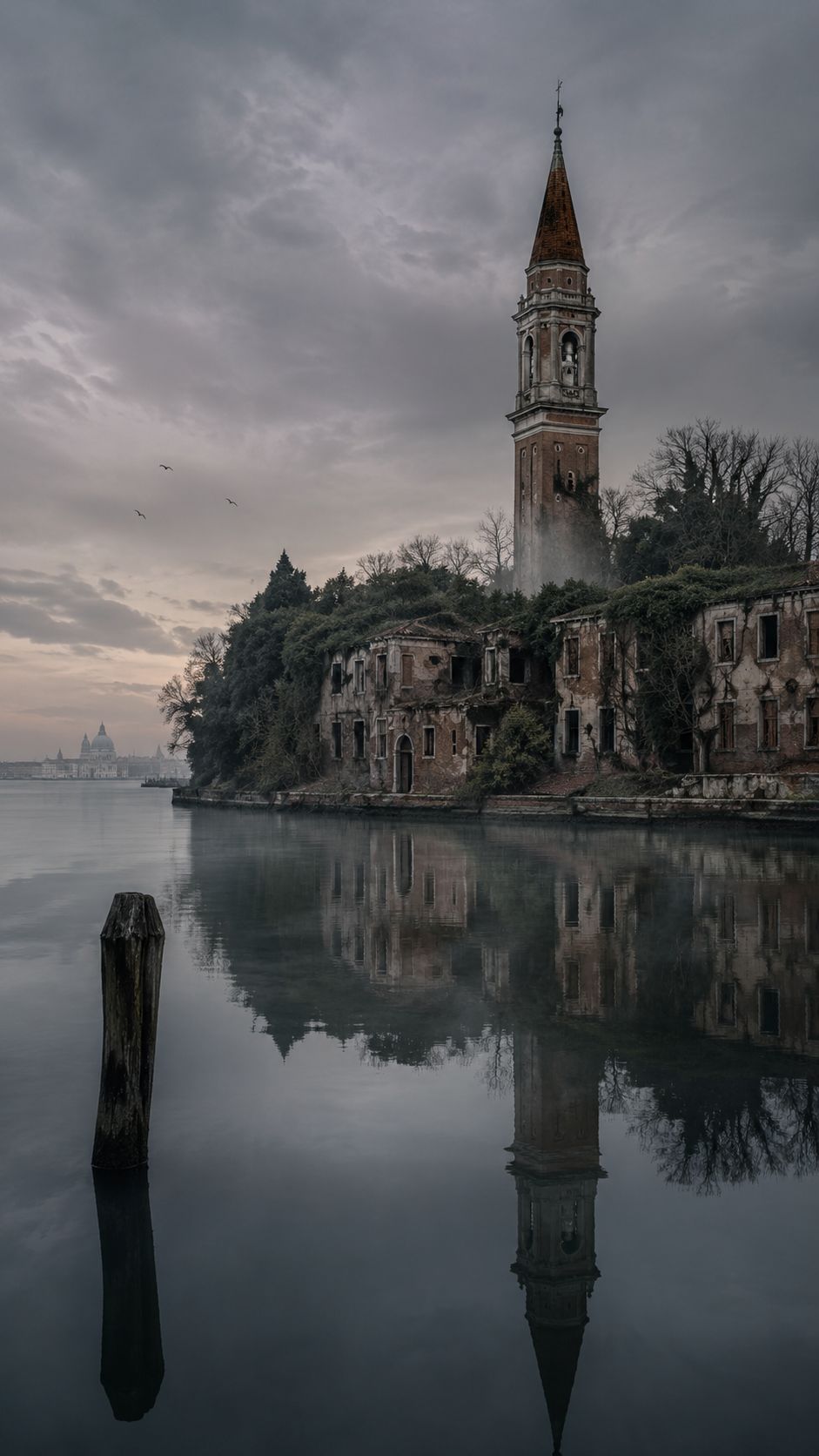 The Island Of The Dead In Venice's Lagoon
A tiny forbidden island soaked in plague pits and asylum horror sits in full view of romantic Venice.
Poveglia, Venice, Italy · 1922 · 2.8 km away
- The Coup Undone by a Falling Pot
A secret army marching to seize a republic was stopped cold by a single dropped piece of pottery.
Venice, Italy · 1310 · 3.1 km away
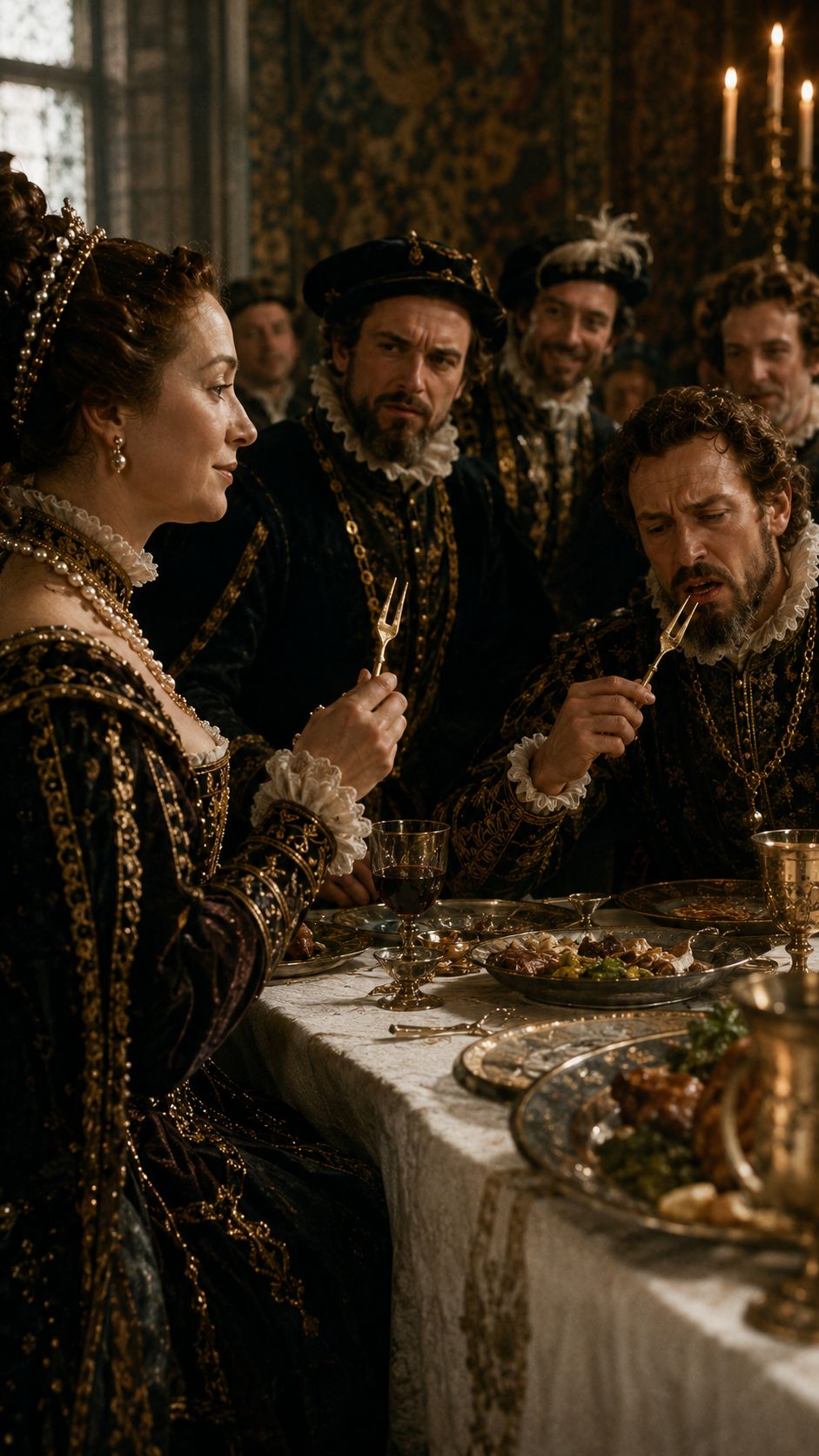 The Fork That Scandalized Venice
A Byzantine noblewoman marries into Venice's ruling dynasty and horrifies the city by eating with a two-pronged golden utensil instead of her fingers.
Venice, Italy · 1004 · 4.3 km away
 The Poisoner Legend That Was Almost Entirely False
History remembers her as a scheming poisoner, but she was really a pawn sold and blamed by the men who used her.
Ferrara, Italy · 1503 · 85 km away