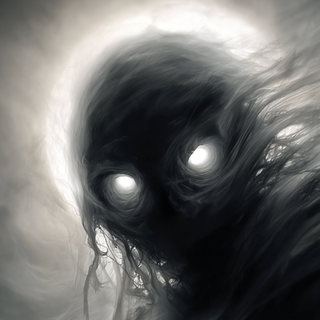
On the night of 20th January 1793, Louis XVI said goodbye to his wife, his children, and his sister in a room in the Temple prison. Marie Antoinette wailed. Their daughter fainted at his feet. The boy — the Dauphin, eight years old — clung to his father’s legs.
Louis promised them he would come back in the morning and see them again before the end. He was lying. He knew he would not come back. He had been told not to — because the parting would be unbearable. He chose the lie over the truth because the truth would have broken the children. He walked out of the room and did not look back.
He never saw them again.
THE HORROR On the morning of 21st January, Louis was driven through the streets of Paris in a closed carriage — accompanied by his confessor, Father Edgeworth de Firmont. The streets were lined with 80,000 troops. The shutters on every building were closed. The city had been ordered silent.
The carriage arrived at the Place de la Révolution — the largest square in Paris, now the Place de la Concorde. A wooden platform stood in the centre. On the platform, the guillotine.
Louis stepped down. He was calm. He removed his coat. When the executioner’s assistant tried to tie his hands, Louis refused — “I will not suffer it.” His priest convinced him. His hands were bound — with his own handkerchief, not a rope. Even the binding was personal.
His collar was cut open. His hair was cropped short at the back of the neck — by the assistant’s shears, in front of the crowd. The man who had been anointed with holy oil at Reims Cathedral was being sheared like an animal at a scaffold.
Accompanied by drum rolls, Louis climbed the steps to the platform. He walked to the left edge of the scaffold. He raised his hand. He looked at the line of drummers placed directly in front of him.
They stopped.
The drums fell silent. The square fell silent. Eighty thousand troops. Thousands of spectators. One man on a platform. Silence.
Louis spoke. His voice was clear and strong — loud enough to be heard at the bridge: “I die innocent of all the crimes imputed to me. I pardon the perpetrators of my death. I pray to God that the blood you are about to shed may never fall upon France—”
He wanted to continue.
General Antoine-Joseph Santerre gave the order. The drums resumed. Twenty sticks hitting twenty skins in unison — a wall of sound between a king and his people. His voice was buried beneath the rhythm. His last words — whatever they were — were heard by nobody. The drums stole the ending of a sentence that had begun with “I die innocent.”
His priest leaned in and whispered the last words Louis would ever hear: “Fils de Saint Louis, montez au ciel.”
The blade fell at 10:22 a.m. The executioner’s assistant seized the head and held it aloft. The crowd erupted — “Vive la Nation! Vive la République!” Some sang the Marseillaise. Some wept. Some pressed forward toward the scaffold — carrying white handkerchiefs.
They dipped the handkerchiefs in his blood. Souvenirs. The blood of a king was a relic of the new world — proof that the old one was dead. Some kept the handkerchiefs for decades. Some sold them. Several survive in museums today.
THE MODERN RELIC The executioner was Charles-Henri Sanson — who had held the post of chief executioner for twenty years. He had executed common criminals, thieves, and murderers. Now he had executed a king. He would execute nearly 3,000 people during the Terror.
He brought his son to the scaffold that morning. The son — Henri Sanson — watched his father execute Louis XVI. Nine months later, the son executed Marie Antoinette. Father and son. King and queen. Same blade. Same platform. Same family standing behind it.
The Place de la Révolution is now the Place de la Concorde — the busiest roundabout in Paris. The spot where Louis XVI was executed is somewhere beneath the traffic. The Luxor Obelisk — a 3,300-year-old Egyptian monument, a gift from the Pasha of Egypt in 1833 — now stands approximately where the guillotine stood. A pharaoh’s monument marks the place where a king was silenced by drums.
The handkerchiefs are in museums. The blood has been tested. The drums are gone. The words they drowned are gone. “I die innocent” survived. Everything after it did not.
Nearby on the Dark Atlas
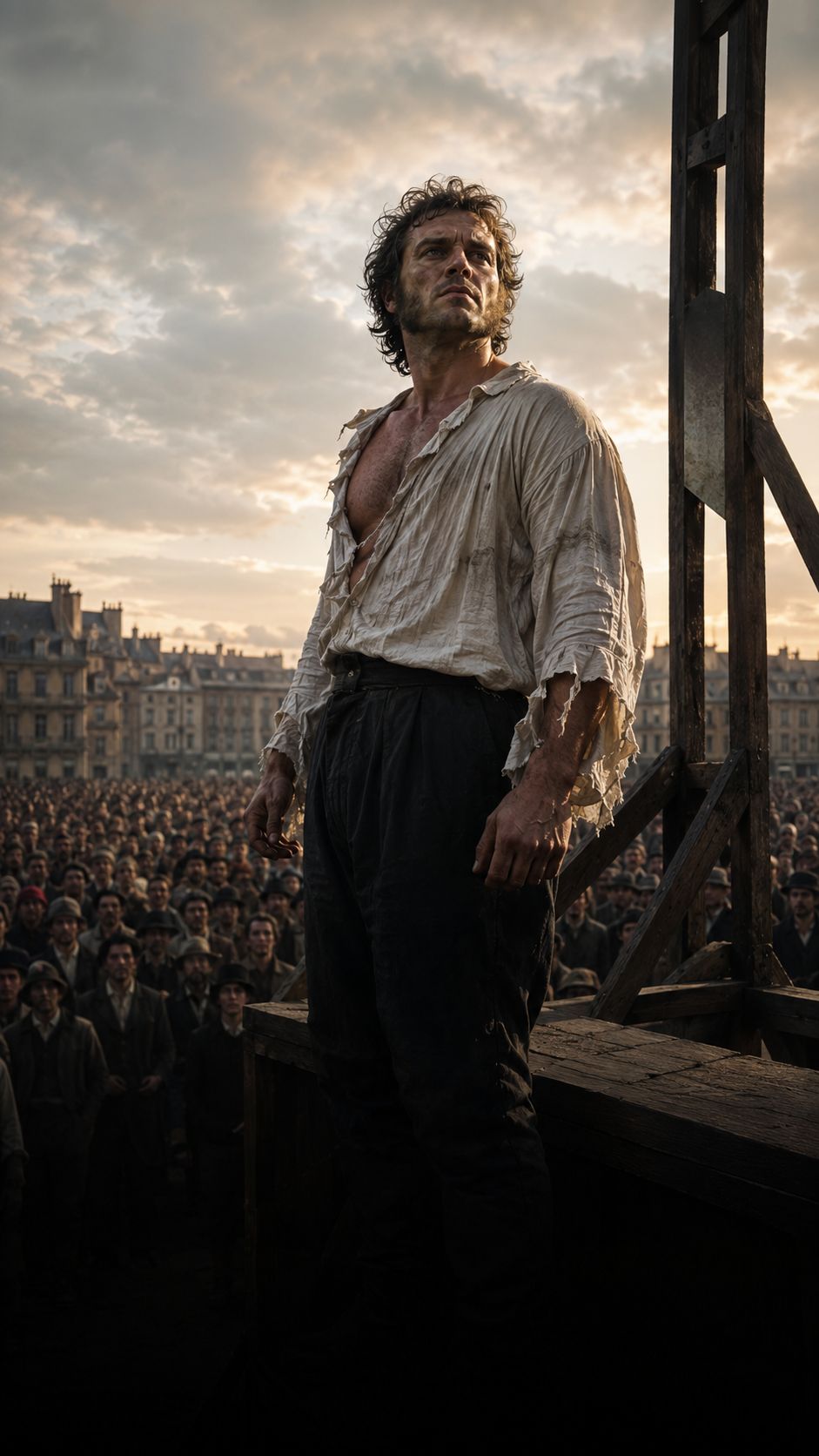 Betrayed By The Friend Who Stood At Their Wedding
The revolutionary firebrand and his devoted wife were destroyed by the very friend who once witnessed their marriage.
Place de la Révolution, Paris, France · 1794 · same site
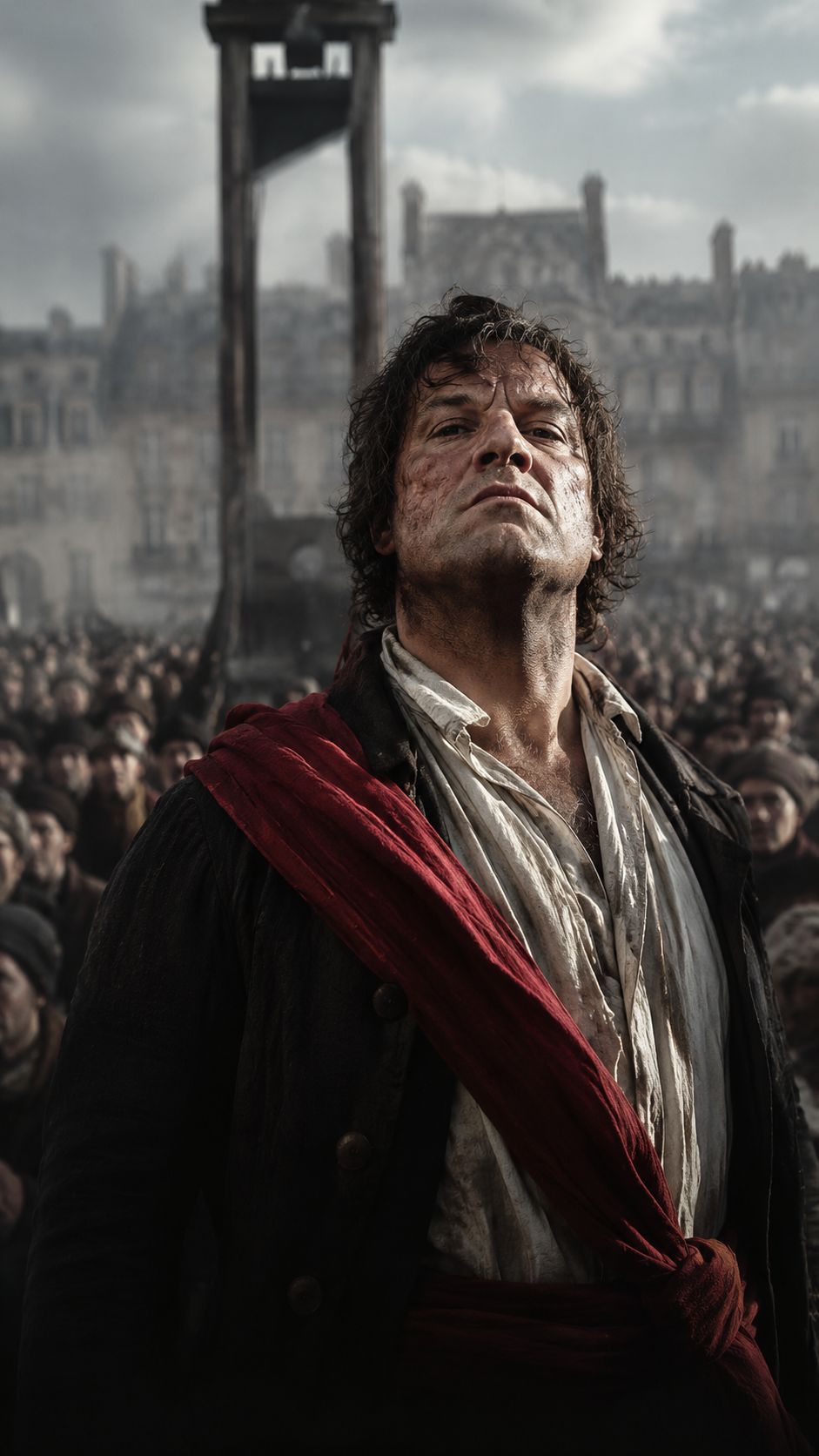 Devoured By The Revolutionary Machine He Built
He helped build the tribunal that sent thousands to the guillotine, and then it turned on him too.
Place de la Révolution, Paris, France · 1794 · same site
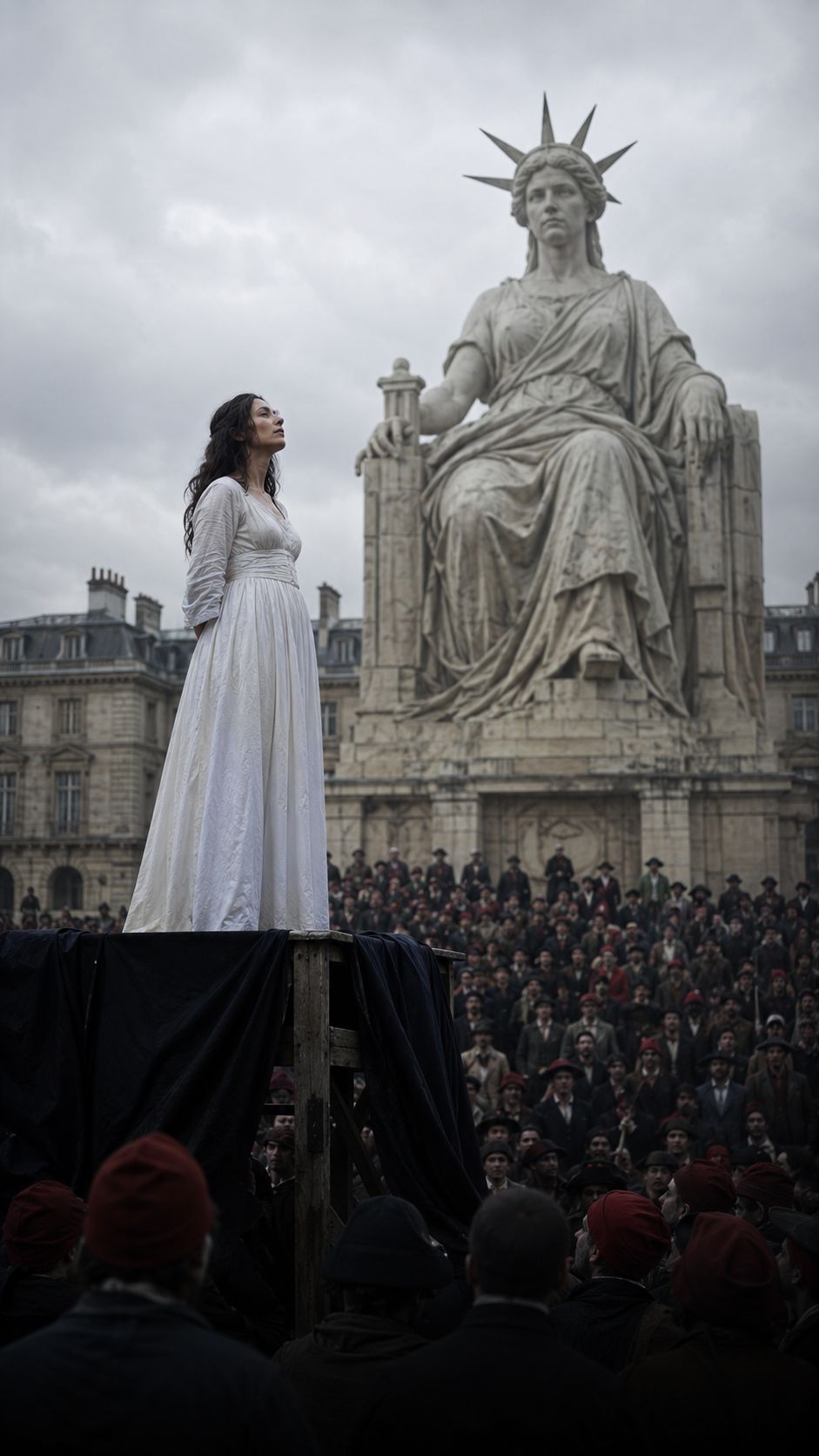 She Faced The Statue Of Liberty Before The Blade Fell
Destroyed by the revolution she helped build, she turned to a statue of Liberty for her final, famous words.
Place de la Révolution, Paris, France · 1793 · same site
 She Wrote Women's Rights Into Existence And Was Guillotined
She demanded the Revolution include women too, and was sent to the same scaffold she had once written about.
Place de la Révolution, Paris, France · 1793 · same site