
The execution was so medieval that the executioners had to rub heavy handfuls of coarse rock salt directly into his exposed muscles just to keep him from passing out too early. In 1588, a rebellious French knight named Pierre de Pierre-Buffière was condemned to the absolute extreme of judicial torture: being flayed alive. The executioners didn’t use an axe or a rope; instead, they pinned him flat to a wooden table and used specialized, curved crescent knives to systematically separate his skin from his flesh, beginning at his shoulders and moving downward. The entire procedure was engineered with terrifying precision to keep the major arteries intact, forcing the knight to remain entirely conscious and feel the raw air hitting his nerves for hours before the final lethal strike was delivered.
Interesting Fact The psychological cruelty of flaying was intensely calculated by medieval states. The preserved skin of high-profile rebels was frequently tanned and nailed directly to the heavy wooden doors of local town halls or cathedrals, turning a human being’s outer layer into a permanent, weather-resistant piece of psychological propaganda for the public to stare at daily.
Nearby on the Dark Atlas
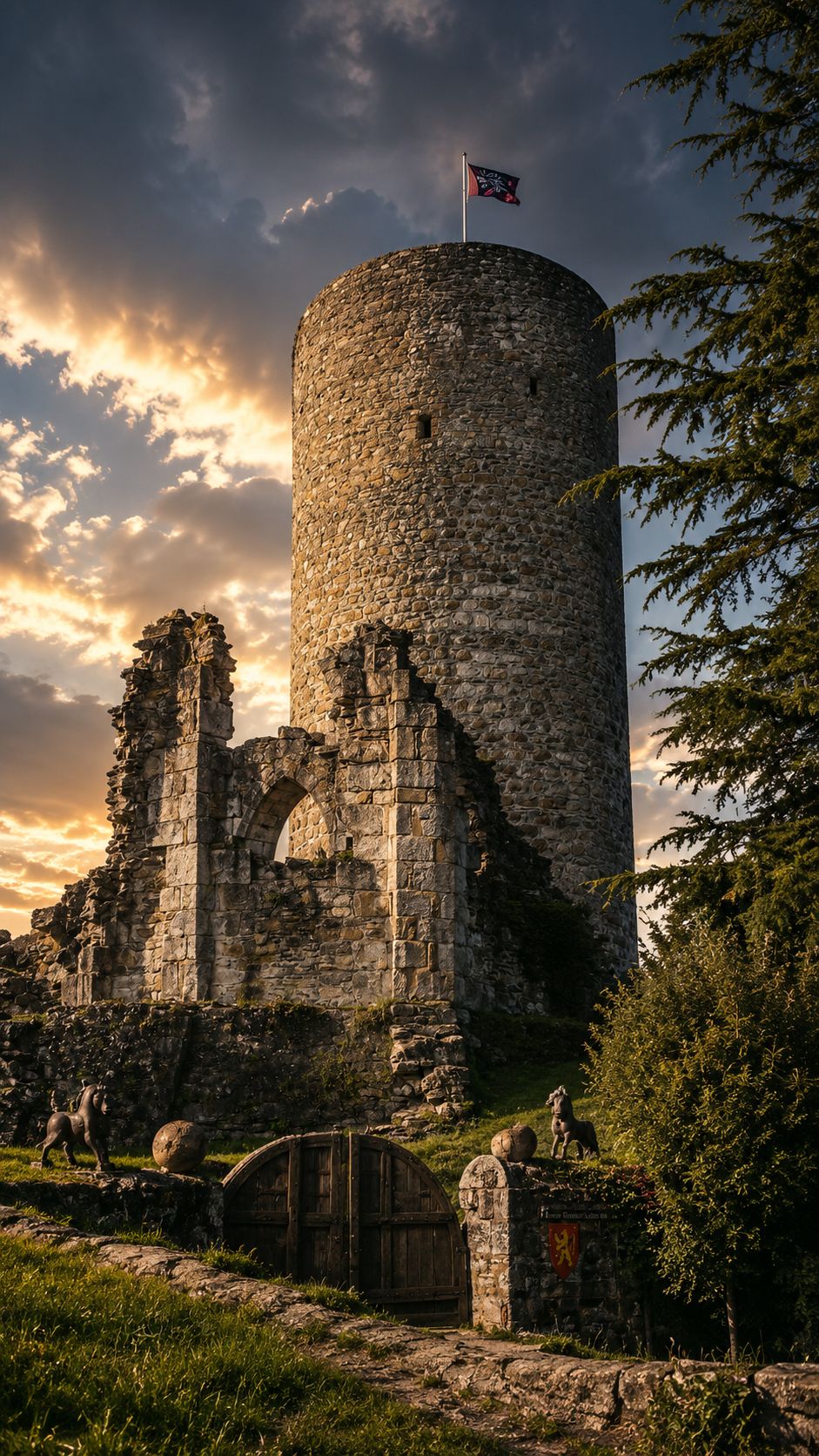 The Crossbow Bolt That Killed A Crusader King
A rich king besieging a tiny castle over buried treasure took an arrow he never saw coming.
Châlus-Chabrol, France · 1199 · 130 km away
- The Parish Registers Of The Beast's Victims
Between 1764 and 1767 something killed roughly a hundred people, recorded in the registers as 'devoured by the beast.'
Saugues, France · 1764 · 223 km away
- The King's Favourite Who Bet Against Richelieu
A dazzling young courtier gambled his head against Cardinal Richelieu, and lost it in a public square.
Place des Terreaux, Lyon, France · 1642 · 245 km away
- The Blade That Shattered on the Block
A half-blind stand-in executioner's first swing shattered a young nobleman's jaw instead of his neck.
Lyon, France · 1642 · 245 km away