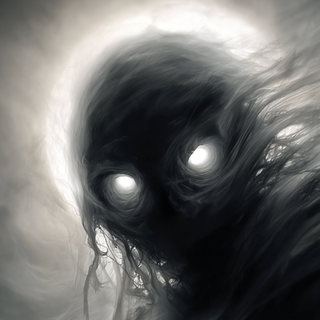
Between June 1764 and June 1767 something walked out of the granite hills of the Gévaudan and killed roughly a hundred people. That is not a legend and it is not an approximation for effect. It is the number kept in the parish burial registers of the Margeride mountains — a strip of ferocious, thinly-farmed upland in what is now the Lozère département of southern France — under the notation dévoré par la bête, ‘devoured by the beast.’ The first name in that ledger is Jeanne Boulet. She was fourteen. On the afternoon of 1 June 1764 she was tending sheep near the village of Les Hubacs, close to Saint-Étienne-de-Lugdarès. The village of Langogne is a few miles east. The animal killed her by the throat in front of witnesses who were too far away to intervene. In the record kept by the parish priest her death is the first the priest attributes to la Bête. For the next three years the killings did not stop. The victims were nearly all women, girls, and children — the people sent alone to watch the family’s cattle or gather firewood at the tree line. The beast was described in eyewitness accounts to gendarmes, priests and later royal investigators with startling consistency: about the size of a young cow, red-brown fur with a black stripe along the back, a long tail with a tuft, wide chest, unusually long teeth, and a habit of standing up on its back legs to strike at a rider’s throat. It attacked in broad daylight. It ignored dogs. In several cases it dragged the victim’s head off entirely and left the body untouched — a detail confirmed by multiple parish records, not by later chapbooks. Musketballs at close range often failed to bring it down. The panic was national. In the winter of 1764–65 King Louis XV, alarmed by the volume of desperate letters reaching Versailles from the mountains, sent professional wolf-hunters — the Dennevals, father and son — followed by his own personal gun-bearer, François Antoine, at the head of a small army. Antoine hunted for months. On 21 September 1765, at Les Chazes, he shot an enormous wolf. He had the carcass measured, stuffed, sent by wagon to Versailles and paraded through Paris. The court declared the crisis over. Louis rewarded Antoine with 6,000 livres and a place at court.
The Horror
The killings resumed within weeks. Whatever had been shot at Les Chazes, it was not the animal doing this. Through the winter and spring of 1766 la Bête worked its way back through the same villages — Chastel-Nouvel, La Besseyre-Saint-Mary, Auvers — throat wounds, decapitations, mothers finding their children’s bodies half a mile from the sheep. The court refused to acknowledge the failure. Peasants who wrote to the crown reporting fresh kills were ignored on the assumption they were exaggerating for the reward money. What Voltaire wrote in a letter that year survives in his collected correspondence: ‘It seems that the wolves of the Gévaudan are more dangerous than any Jansenist’ — a scoff that read badly to the farmers still burying their children. It ended on 19 June 1767. Near Mont Mouchet, in the parish of La Besseyre-Saint-Mary, a local farmer named Jean Chastel was part of an organised beat with three hundred hunters. Chastel was reading his Bible in a clearing when the beast walked out into the open a few metres from him. He shot it. Later legend added silver bullets blessed by a priest; the surviving contemporary accounts say only that he loaded and fired, that the animal dropped, and that the killing stopped that afternoon. Chastel had the carcass loaded into a cart and started for Versailles, showing it in villages for a coin as he went. By the time he reached the court weeks later, in the July heat, the body had putrefied so badly that the king ordered it buried immediately in an unmarked grave. Louis paid Chastel a fraction of what Antoine had received. The naturalist Buffon never got to examine it. The autopsy notes taken by a local surgeon before the journey record undigested human remains — a piece of a shoulder — in the stomach cavity. The parish books close the count at somewhere between 88 and 113 dead, depending on which historian is counting. Modern scholars — most recently Jay M Smith in Monsters of the Gévaudan (Harvard, 2011) — argue the beast was almost certainly not a single animal but a small population of unusually aggressive wolves, possibly wolf-mastiff hybrids, operating in a landscape where the wolf population had been driven into competition with human food sources. No cryptozoological reading of the evidence has ever gained scholarly footing. The film Le Pacte des Loups turned it into a conspiracy about a secret Jansenist brotherhood. The parish records turned it into a list of names, most of them under sixteen.
The Modern Relic
You can still walk the paths of the killings. The village of Saugues has a Musée Fantastique de la Bête du Gévaudan with life-size reconstructions and a wall of the victims’ names. Auvers, La Besseyre-Saint-Mary and Chastel’s home village of La Besseyre still stand. Chastel’s grave lies in the small parish cemetery of La Besseyre-Saint-Mary. Antoine’s stuffed ‘beast’ vanished from Versailles during the Revolution and has never been found. The parish burial registers listing dévoré par la bête are still in the Archives départementales de la Lozère in Mende — the primary source that no film adaptation has been able to soften.
Nearby on the Dark Atlas
 The Night A French Town Lost Its Mind
A whole town began hallucinating after eating bread from one bakery, and people started jumping from windows.
Pont-Saint-Esprit, France · 1951 · 116 km away
- The Blade That Shattered on the Block
A half-blind stand-in executioner's first swing shattered a young nobleman's jaw instead of his neck.
Lyon, France · 1642 · 134 km away
- The King's Favourite Who Bet Against Richelieu
A dazzling young courtier gambled his head against Cardinal Richelieu, and lost it in a public square.
Place des Terreaux, Lyon, France · 1642 · 135 km away
- The Real Revenge Behind The Count Of Monte Cristo
A shoemaker betrayed on the eve of his wedding became the true story behind one of literature's greatest tales of vengeance.
Nîmes, France · 1807 · 141 km away
More like this
- The Murder Dickens Turned Into Fiction
A cold, calculated murder buried a body in a Bermondsey kitchen, and became fodder for the country's most famous novelist.
Bermondsey, London, United Kingdom · 1849
- The Chair No One Is Allowed To Sit In
A murderer's cursed armchair now hangs on a museum wall, five feet off the ground, so no one can sit in it again.
Thirsk, United Kingdom · 1702
- The Poisoner Who Weaponised A Town's Sweet Shops
She poisoned an entire town's confectionery to disguise the murder of a woman she hated, killing a child she never met.
Brighton, United Kingdom · 1871
 The Rape Trial That Ended In Trial By Combat
A woman's accusation of rape led to France's last judicial duel, with her own life staked on the outcome.
Paris, France · 1386