
In the eighteenth century, being born a peer of the realm was very nearly a licence. Nobles were tried by other nobles, granted privileges the common man could only dream of, and in practice rarely faced the full weight of the law. So when Laurence Shirley, 4th Earl Ferrers, was hanged at Tyburn in 1760, it was a genuine sensation — a lord dying on the public gallows, watched by a crowd who had never expected to see such a thing. Ferrers was a violent and unstable man. His marriage had ended in a formal separation by Act of Parliament after his cruelty to his wife, and management of some of his affairs had been placed in the hands of trustees. The man who administered those affairs, and who had testified in the separation proceedings, was his steward, John Johnson — a loyal, capable servant who had worked for the family for years. Ferrers came to see Johnson as the agent of his humiliation. On 18 January 1760, he summoned Johnson to his house at Staunton Harold, ordered him to kneel, and shot him. Johnson did not die at once; he lingered in agony and died the following morning. There was no mystery, no doubt, and no shortage of witnesses. Because he was an earl, Ferrers could not be tried in an ordinary court. He was tried by his peers — the entire House of Lords — in Westminster Hall, over two days in April 1760, in a spectacle of scarlet robes and ceremony. His defence was that he had been insane at the moment of the killing, and his own family gave evidence of the madness that ran in the Shirley blood. It did not save him. The lords found him guilty of wilful murder, unanimously, and he was sentenced to hang. The trial itself was a piece of national theatre. For two days the entire peerage sat in Westminster Hall in scarlet and ermine, the Lord High Steward presiding with a white staff of office that would be ceremonially broken once judgement was given, while London society scrambled for tickets to watch one of their own answer for murder. Ferrers conducted much of his own defence, and the spectacle of a lord standing before his peers to argue his own insanity was a sensation in itself. The “Ferrers temper” was notorious: the family had a reputation for violent, ungovernable rages, and Laurence in particular was known for drunkenness, cruelty and wild, erratic behaviour that a good many people around him genuinely believed to be madness. But eighteenth-century law set a merciless bar for an insanity defence, and a man who could plan — who could summon his victim, order him to kneel, and choose his moment — did not clear it. The lords convicted him without a single dissenting voice.
The Horror
What made the execution extraordinary was not cruelty but the strange collision of privilege and the gallows, and the way the machinery of a “modern,” supposedly more humane death went wrong. On the morning of 5 May 1760, Ferrers dressed not in mourning but in his pale wedding suit — light-coloured satin embroidered with silver — remarking that he thought it “at least as good an occasion for putting them on as that for which they were first made.” He was carried to Tyburn in his own landau, drawn by six horses, in a slow procession through enormous crowds that took the better part of three hours. This was the age of the “Tyburn fair,” when hangings were public entertainment, and all of London wanted to see a lord die. For the occasion, a new kind of scaffold had been prepared, fitted with a raised platform designed to drop away beneath the condemned man — an early attempt at the “drop” that was meant to be quicker and more merciful than the old method of simply hauling a man off a ladder or cart to choke. It was, in a sense, the future of hanging being tested on an earl. And it failed. When the platform was released, it did not fall far enough. Ferrers dropped only a short distance, his feet nearly brushing the boards, and his neck did not break. Instead of the quick death the new device promised, he was slowly strangled by the rope. The writer Horace Walpole, recording the event, noted that it took around four minutes for him to die — four minutes of a man twisting at the end of a rope in front of a vast, watching crowd, the “humane” innovation having delivered exactly the drawn-out death it was meant to prevent. And there is one more indignity, delivered by the law itself. Under the Murder Act of 1752, the bodies of executed murderers were denied a quiet burial: they were to be publicly dissected or hung in chains, so that the punishment continued after death. An earl was not exempt. Ferrers’s body was taken from Tyburn to Surgeons’ Hall, where it was cut open by the anatomists and put on public display for the curious to file past, before being returned to his family. The last aristocrat hanged for murder in England ended as a specimen on a slab.
The Modern Relic
Ferrers’s execution has attracted so many myths that separating them out is half the story. The most persistent is that, as a nobleman, he was granted the mercy of being hanged with a rope of silk rather than coarse hemp. It is a lovely, telling detail — and it is a myth, repeated for over two centuries and firmly denied by the records; he was hanged with an ordinary rope like anyone else. It is often said, too, that his was the first ever use of the “drop.” That is an overstatement; various drop-style mechanisms were experimented with around this period, and the truly standardised “New Drop” gallows came a little later. What is documented is that the special platform built for him worked badly and that he strangled. As for a place to stand: Ferrers’s family seat was Staunton Harold in Leicestershire, and Staunton Harold Hall and its beautiful 17th-century church still stand today, the estate now open to visitors, the church in the care of the National Trust. It was from there that he summoned John Johnson to kneel and be shot. You can walk the grounds of the house where the last hanged earl committed the murder that ended him — and, standing in that quiet English parkland, weigh how little a coronet finally bought him: not a pardon, not a silken rope, not even a clean death.
Nearby on the Dark Atlas
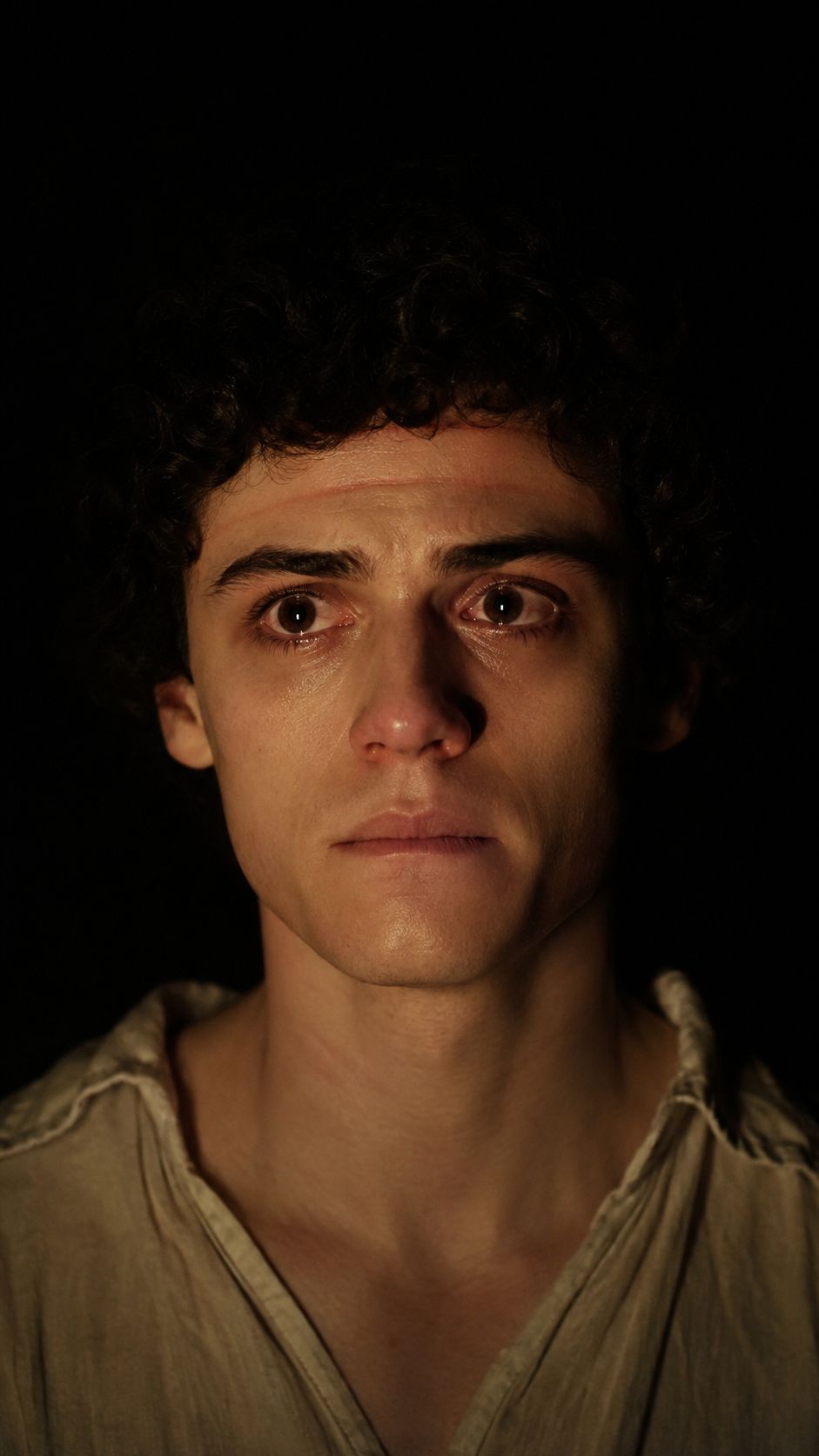 The Jesuit Who Chose the Rack Over the Court
The queen wanted him for her court, but he became a hunted priest facing rack, trial, and rope instead.
Tyburn, London, United Kingdom · 1581 · same site
- The Boy Who Woke Up on the Dissection Table
Hanged and pronounced dead at 17, he opened his eyes as surgeons prepared to cut him open.
Tyburn, London, United Kingdom · 1740 · same site
- The Last Woman Burned Alive for Politics in England
Betrayed by the man she sheltered, she arranged her own straw to make the fire catch faster and end it quickly.
Tyburn, London, United Kingdom · 1685 · same site
- The Man Who Survived His Own Hanging
He hung strangling at Tyburn for fifteen minutes before a reprieve arrived, and he lived for decades afterward.
Tyburn, London, United Kingdom · 1705 · same site