The Amityville Horror is one of the most famous “true” ghost stories ever told — a book and a hit film about a family driven from their dream home by demonic forces, that terrified millions and launched an entire franchise. And the real story behind it is a genuine lesson in how legend is made, because it contains two very different horrors: a “haunting” that was, by the admission of the very people who created it, largely a hoax invented to make money — and, beneath that invention, a real, devastating crime, the mass murder of a family, that was all too true. The true horror of Amityville was never supernatural. It was human.
To understand it, you have to separate the two stories, and start with the real one — the one that came first, and that matters most. In the early 1970s, the DeFeo family lived in a large, handsome Dutch Colonial house at 112 Ocean Avenue, in the quiet, prosperous waterfront town of Amityville, on Long Island, New York. It was, by outward appearances, a comfortable, upper-middle-class family: the father, Ronald DeFeo Sr., a car salesman; his wife, Louise; and their five children. But behind the pleasant façade, this was a troubled and unhappy household, marked by a domineering, sometimes violent father, and a deeply disturbed eldest son — Ronald DeFeo Jr., known as “Butch,” a young man in his early twenties with a history of drug abuse and volatile behaviour, and a bitter, poisonous relationship with his family.
The Horror
On the night of the 13th of November 1974, that troubled household became the scene of an atrocity. In the early hours, twenty-three-year-old Ronald DeFeo Jr. took a .35 calibre rifle, and moved through the sleeping house, and murdered his entire family. He shot his father and his mother. And then he shot his four younger siblings, as they lay in their beds: his sisters Dawn, who was eighteen, and Allison, who was thirteen; and his little brothers Mark, who was twelve, and John Matthew, who was just seven years old. Six people — two parents and four children — all killed in their beds in a single night. When police were finally called to the house that evening, they found all six victims lying face-down in their beds, in a scene of almost unimaginable horror. It is a chilling and still-unexplained detail of the case that none of the six appeared to have woken or struggled — all were found in similar positions, as though they had never stirred.
That evening, Ronald DeFeo Jr. had run into a local bar, crying out that his parents had been shot. At first, he tried to blame the killings on a mob hitman. But his story quickly fell apart, and within a day he confessed that he himself had murdered his entire family. “Once I started, I just couldn’t stop,” he reportedly said. He was put on trial, where his lawyer mounted an insanity defence — DeFeo claiming he had heard “voices” in the house telling him to kill. The jury did not believe it. On the 21st of November 1975, Ronald DeFeo Jr. was convicted on six counts of second-degree murder — one for each member of the family he had slaughtered — and sentenced to six consecutive terms of twenty-five years to life. He would die in prison in 2021. That is the true horror of Amityville: six real people, a whole family, including four children, murdered in their beds by their own son and brother. And it happened a full year before anyone ever spoke of a ghost.
The Modern Relic
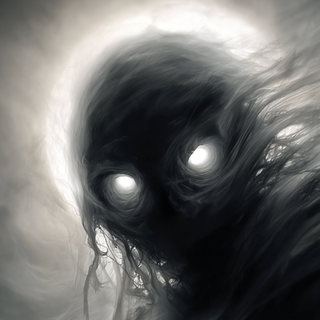
Because the “haunting” came next — and it was, by the accounts of the very people involved, largely manufactured. In December 1975, only weeks after DeFeo’s conviction, a new family moved into the now-notorious house at a bargain price: George and Kathy Lutz and their three children. They lasted just twenty-eight days before fleeing, and then began telling an extraordinary story: that during their brief stay, the house had been alive with demonic terror. They claimed George woke every night at exactly 3:15 a.m. — supposedly the time of the DeFeo murders; that the walls oozed green slime; that there were swarms of flies, foul odours, cold spots, and glowing red eyes at the windows; that a priest who tried to bless the house was driven back by a voice roaring “Get out!” This lurid story was turned into a bestselling 1977 book by an author named Jay Anson, which sold millions of copies, and then into the smash-hit 1979 film “The Amityville Horror,” starring James Brolin and Margot Kidder, one of the top-grossing films of its summer. An entire horror franchise was born, and 112 Ocean Avenue became the most famous haunted house on earth.
But it appears to have been, in large part, a fabrication. The most damning admission came from William Weber — the very lawyer who had defended Ronald DeFeo Jr. In 1979, Weber publicly stated that he, along with the Lutzes, had invented much of the haunting story. He told People magazine, in a widely quoted line, that they had “created this horror story over many bottles of wine.” Weber had a clear motive: he had hoped to use a supernatural angle to bolster DeFeo’s case, and saw the profit in a sensational story. DeFeo himself later claimed that the whole “hearing voices” element of his own defence had been concocted on his lawyer’s advice, to make the case more marketable for future books and films. And the simplest proof of all is this: in the decades since the Lutzes fled, numerous ordinary families have lived in the house at 112 Ocean Avenue — quietly, happily, and entirely without incident. No demons. No slime. No terror. Just a nice waterfront house that a series of normal families have called home. The “most haunted house in America” was, for everyone who actually lived there before and after, simply a house.
The relic still stands, and you can go and look at it — though its residents would rather you didn’t. The Amityville Horror house remains at 112 Ocean Avenue in Amityville, New York — a real, private home, now renumbered 108 Ocean Avenue in a bid to deter the endless stream of tourists, ghost-hunters, and curiosity-seekers who have flocked there for fifty years. Its most famous feature, the distinctive quarter-round “eye” windows that made it look like a face on the movie posters, were long ago removed by owners tired of the attention. It sits there today, a pleasant Dutch Colonial by the water, lived in by an ordinary family who never asked for any of it. And the real lesson of Amityville is written in the gap between the two horrors it holds. The world remembers the ghosts — the slime, the red eyes, the demonic “Get out!” — a story spun for profit over bottles of wine, that was probably never real at all. But it too easily forgets the truth that the whole legend was built on top of: that in that house, on one November night in 1974, six real human beings — Ronald and Louise DeFeo, and their children Dawn, Allison, Mark, and little John Matthew, aged just seven — were murdered in their beds. They were not characters in a ghost story. They were a real family. And they are the true, and only, horror of Amityville.
Nearby on the Dark Atlas
- The Cook Who Refused to Believe She Was Typhoid Mary
She infected dozens as an asymptomatic carrier and spent 26 years in forced isolation, still insisting she was innocent.
North Brother Island, New York, United States · 1938 · 43 km away
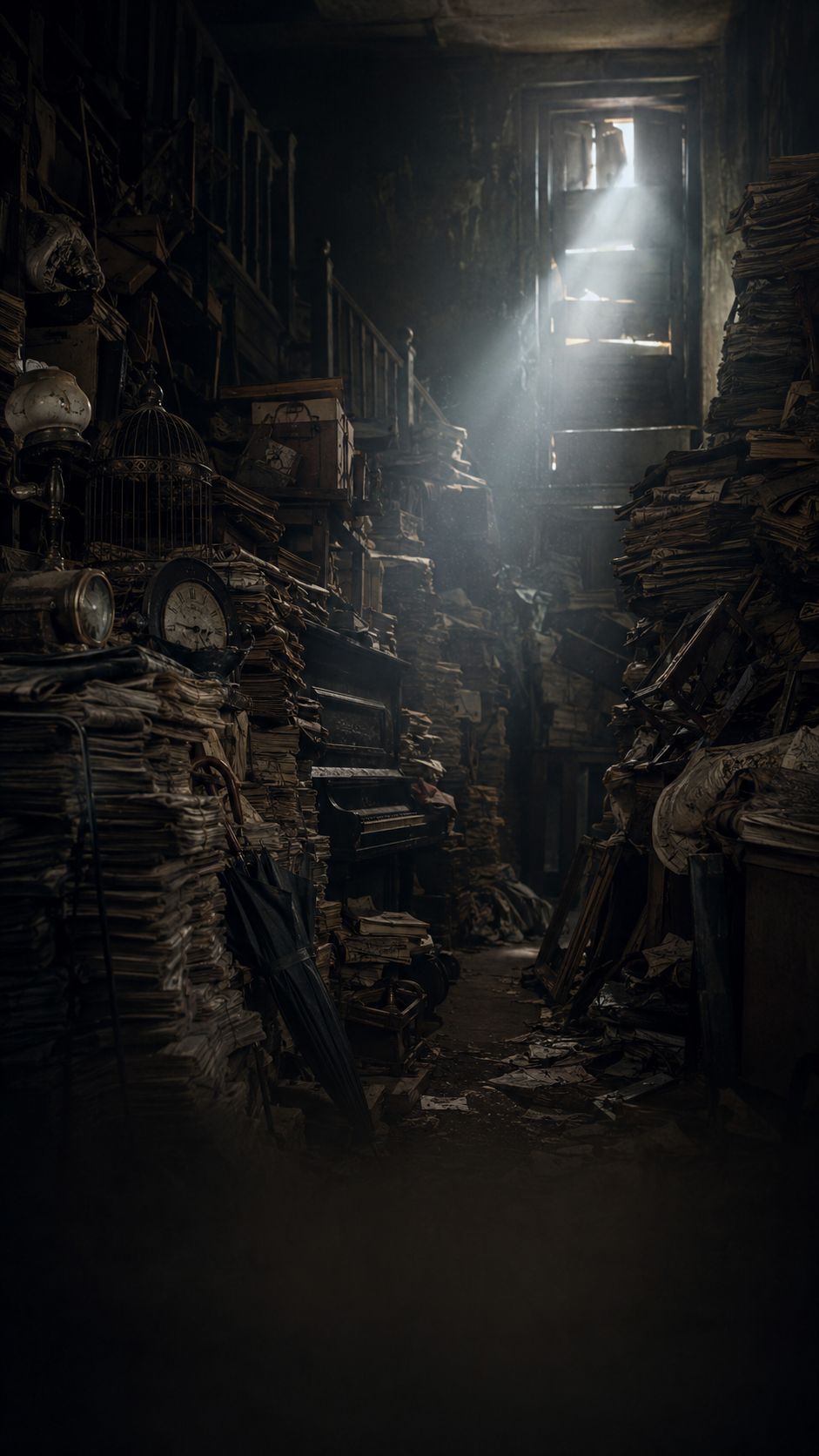 The Hoarders Who Died Buried In Their Own Mansion
Two wealthy, brilliant brothers sealed themselves inside a mansion with 140 tons of hoarded junk, and died trapped in it.
Harlem, New York City, United States · 1947 · 47 km away
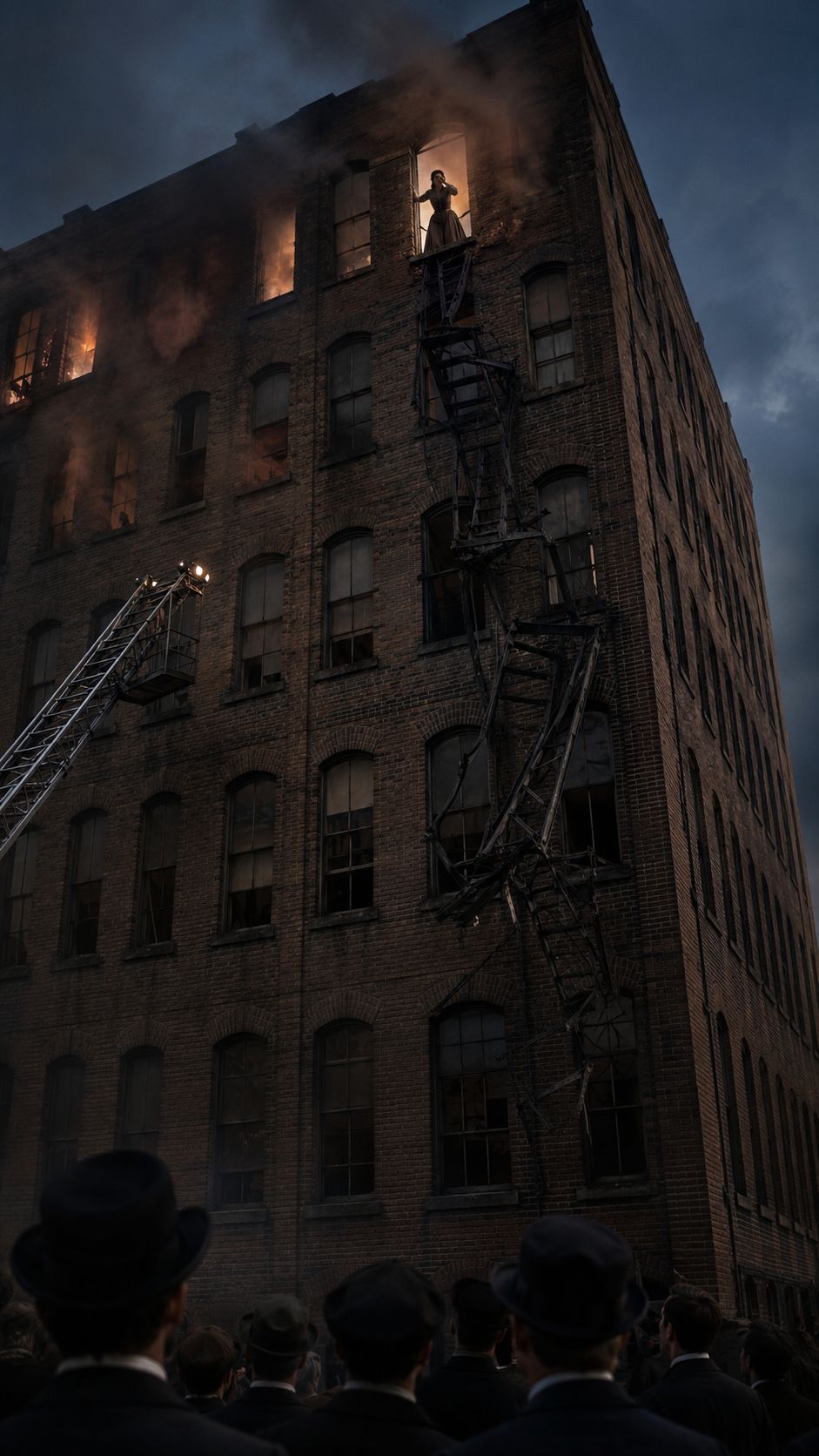 The Fire That Changed Workplace Safety
Hundreds of young immigrant women are locked inside a garment factory when a scrap bin catches fire near closing time.
New York City, United States · 1911 · 49 km away
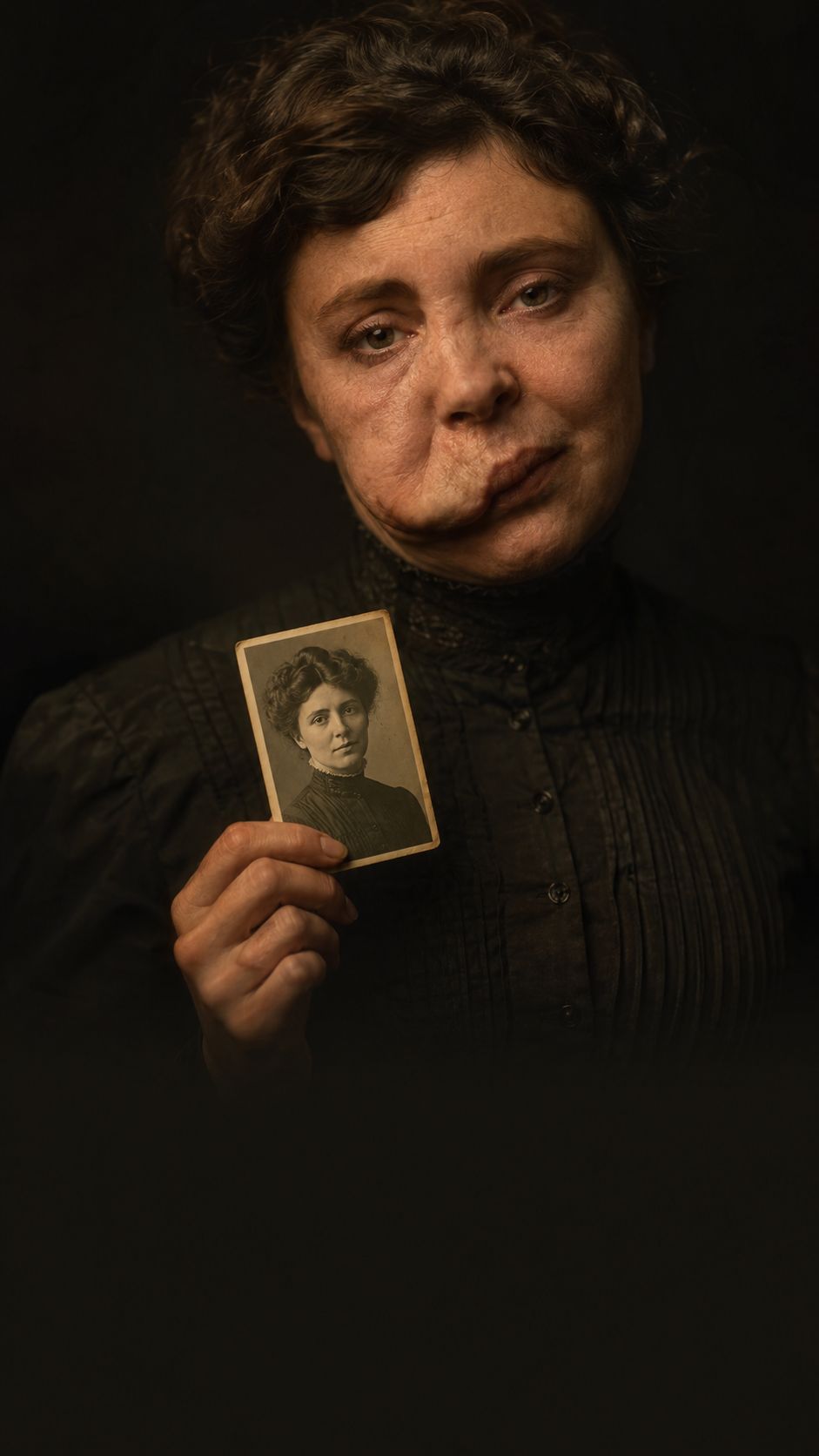 The Ordinary Woman Billed As The World's Ugliest
A tumour transformed a nurse and mother's face beyond recognition, and a circus turned her survival into a sideshow act.
Coney Island, New York, United States · 1920 · 49 km away