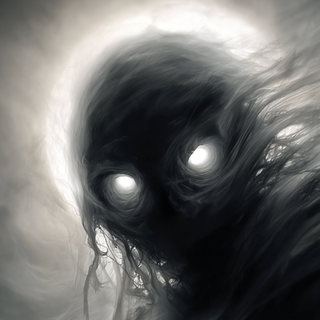
The story of the Collyer brothers is one of the most haunting and tragic tales in the history of New York City — two brilliant, wealthy men who sealed themselves inside a mansion, buried themselves alive in their own possessions, and died together in the dark in a way so strange and terrible that their name became a warning.
Homer and Langley Collyer were not what you’d expect. They came from a well-off, respectable family. Homer was a lawyer; Langley was an engineer and a talented pianist who had reportedly once played at Carnegie Hall. They were educated, cultured, intelligent men. In 1909, the family moved into a handsome three-storey brownstone mansion at 2078 Fifth Avenue, in Harlem. And there, over the following decades, the brothers slowly withdrew from the world entirely.
The Horror
After their parents died, the two bachelor brothers were left alone in the great house, and their eccentricity deepened into something darker. As the neighbourhood around them changed and grew poorer, they became targets — their home was burgled, and local children threw rocks at their windows. The brothers responded by turning inward and shutting the world out. They boarded up the windows. They barricaded the doors. They had the telephone, the gas, the electricity, and the water all cut off. And they began, obsessively, to hoard.
Over the years, Langley — who became the caretaker of the pair — filled the mansion with an almost unimaginable quantity of stuff. He would go out only at night, scavenging the streets and hauling home anything he found, and fetching water in buckets from a public tap blocks away. And he saved everything. The house filled, floor to ceiling, room after room, with a staggering, crushing mass of junk — eventually totalling around 140 tons of material.
But the true heart of the tragedy was Homer. In the 1930s, Homer went blind, and was later crippled by rheumatism, leaving him paralysed and utterly helpless — unable to see, unable to walk, entirely dependent on his brother. And Langley devoted himself to caring for him with a strange, obsessive love. Refusing to trust doctors, Langley invented his own cure for his brother’s blindness: a diet of one hundred oranges a week, plus black bread and peanut butter, convinced it would one day restore Homer’s sight. And he began hoarding vast quantities of newspapers — hundreds of thousands of them — saving them all so that when Homer’s sight miraculously returned, his brother would be able to catch up on all the years of news he had missed. It was madness, but it was madness born of devotion.
To protect his blind, helpless brother from the intruders he feared, Langley did something fateful. Through the mountains of hoarded material, he dug a network of narrow tunnels — the only way to move through the packed house. And he rigged those tunnels with booby traps: tripwires connected to massive piles of junk, deadfalls of debris and bundled newspaper set to collapse and crush anyone who blundered through without knowing the secret way. The brothers lived like this for years — two men in a pitch-dark, sealed mansion, one blind and paralysed, the other crawling through booby-trapped tunnels of garbage to bring him his oranges.
In March 1947, an anonymous caller told the police there was a dead body in the Collyer house, and a terrible smell. When officers arrived, they couldn’t get in — every door and window was barricaded or packed solid with junk. They had to break in through an upper window and physically dig their way through the debris. After two hours of tunnelling through the wreckage, they found Homer Collyer. The blind, paralysed brother was dead, sitting hunched in an old bathrobe, his long grey hair down to his shoulders. He had died of starvation.
But where was Langley? The brother who cared for him was nowhere to be found. And so began one of the strangest searches in the city’s history.
THE MODERN RELIC For weeks, the mystery of Langley’s whereabouts gripped New York. There were false sightings all over — one rumour had him fleeing on a bus to Atlantic City — and a citywide manhunt began, even as workers laboured to empty the incredible house. What they hauled out became legendary: the 140 tons of hoarded material included fourteen grand and upright pianos, an organ, the chassis of a Model T Ford, thousands of books, baby carriages, human medical specimens pickled in jars, a horse’s jawbone, guns, and countless bundles of those saved newspapers. The house was a monument to a mind consumed by hoarding.
And then, on the 8th of April — nearly three weeks after Homer was found — the searchers made the grim discovery. Langley’s decomposing body was found just ten feet away from where his brother had died. And the full, devastating truth of what had happened became clear.
Langley had died first. While crawling through one of his own narrow tunnels, carrying food to his helpless brother, Langley had accidentally triggered one of his own booby traps. An avalanche of debris and bundled newspaper had come crashing down and crushed him, killing him and burying his body right there in the tunnel — which is why the search had taken so long, and why the smell had been detected. The man who built the traps to protect his brother was killed by his own creation.
And Homer — blind, paralysed, unable to move or see or call for help — had been left completely alone. His brother and sole caretaker lay dead just a few feet away, but Homer had no way of knowing, no way of reaching him, no way of getting food or water or summoning aid. And so, over the following days, Homer Collyer slowly starved to death in the darkness, beside the body of the brother who had spent his life caring for him. It is one of the most desperately sad deaths imaginable.
The story of the Collyer brothers seized the public imagination and never let go. Their name entered the language: for generations, New York parents told their children to clean their rooms “or you’ll end up like the Collyer brothers.” Their condition — what we now understand as compulsive hoarding disorder — was barely recognised in 1947, and their case became one of the most famous examples in the world, still cited by psychologists today. The term “Collyer Brothers Syndrome” is still sometimes used for extreme hoarding.
The relic is a quiet green space you can visit. The Collyer mansion, packed with decades of hoarded life and two lonely deaths, was so ruined and dangerous that it was demolished just months after the bodies were found. And on the empty lot where it once stood, at Fifth Avenue and 128th Street in Harlem, the city eventually created a small pocket park. It is called, to this day, Collyer Brothers Park — a patch of calm and green on the spot where two brilliant, broken, devoted brothers sealed themselves away from the world, and died together in the dark.
Nearby on the Dark Atlas
- The Cook Who Refused to Believe She Was Typhoid Mary
She infected dozens as an asymptomatic carrier and spent 26 years in forced isolation, still insisting she was innocent.
North Brother Island, New York, United States · 1938 · 4.2 km away
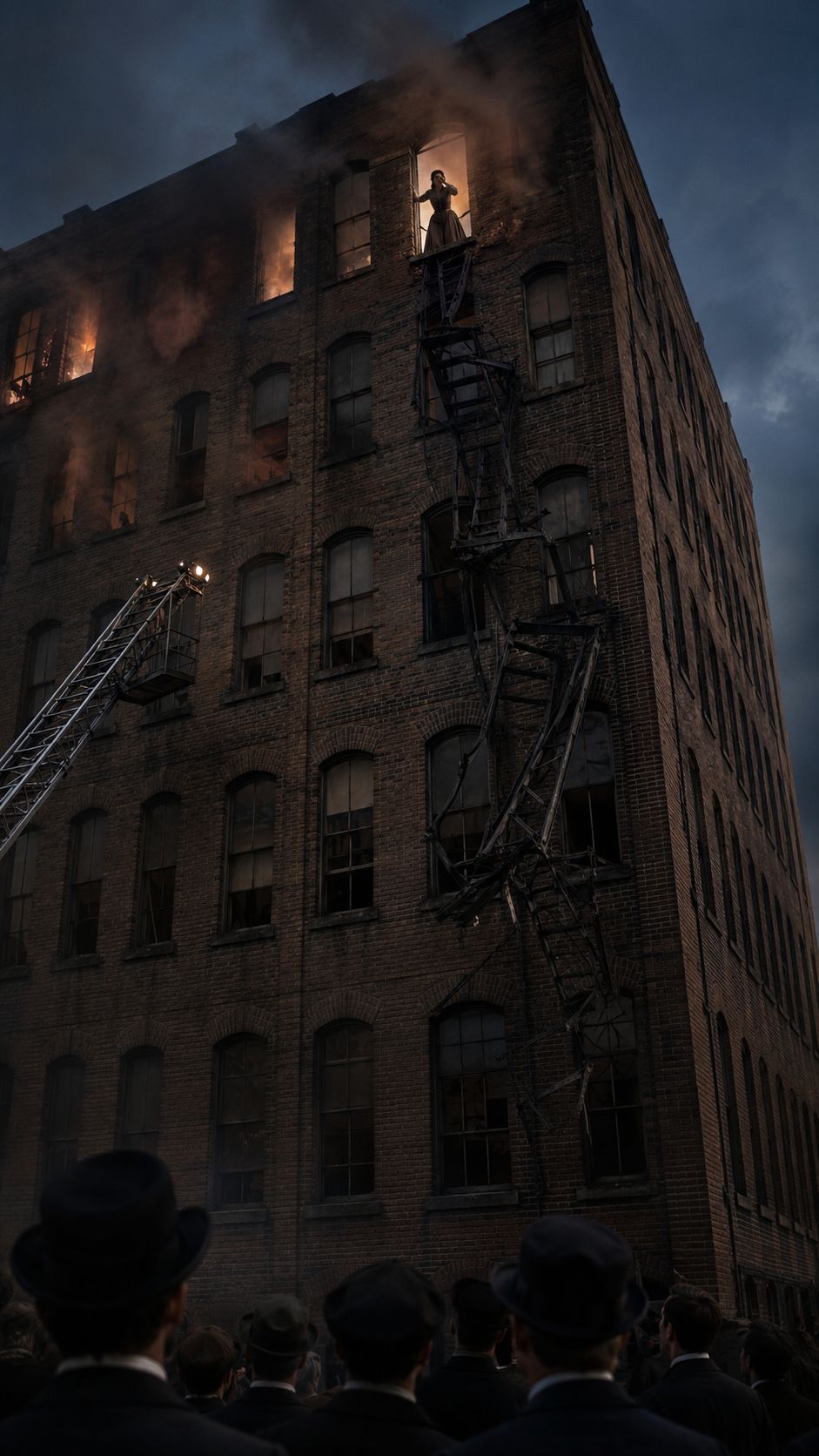 The Fire That Changed Workplace Safety
Hundreds of young immigrant women are locked inside a garment factory when a scrap bin catches fire near closing time.
New York City, United States · 1911 · 10 km away
- The Novel That Predicted The Titanic
Fourteen years before Titanic sank, a novelist described an 'unsinkable' liner hitting an iceberg on an April night, with eerie precision.
New York City, United States · 1898 · 12 km away
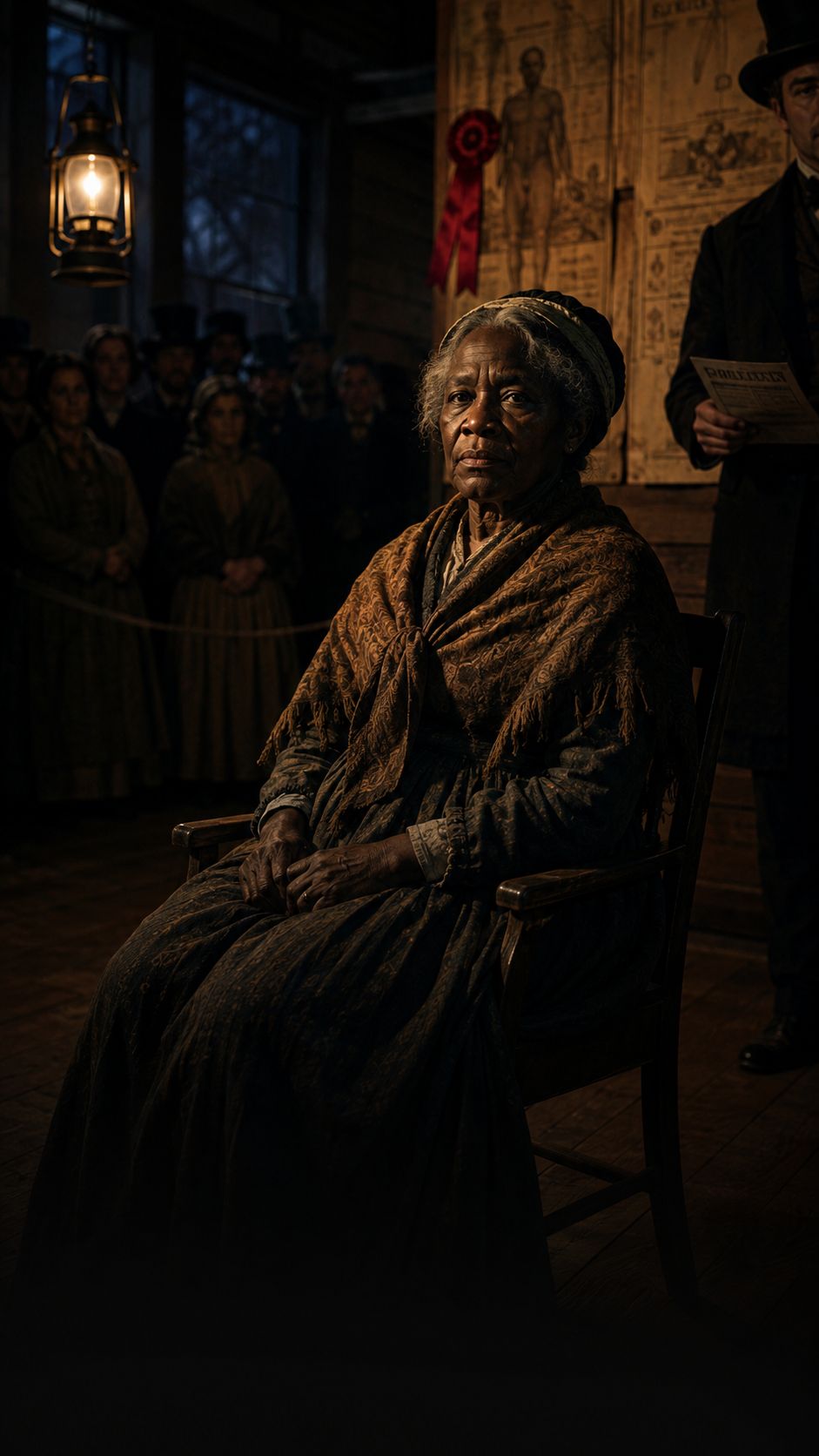 The Showman Who Sold Tickets To A Dissection
P.T. Barnum built his fortune exhibiting an enslaved woman alive, then sold tickets to watch her autopsy.
New York City, United States · 1836 · 12 km away
More like this
- The Leper King's Story No Film Would Show
Kingdom of Heaven gave him a dignified death behind a silver mask, the truth was far crueller.
Jerusalem, Israel · 1185
 The Rape Trial That Ended In Trial By Combat
A woman's accusation of rape led to France's last judicial duel, with her own life staked on the outcome.
Paris, France · 1386
- The Parish Registers Of The Beast's Victims
Between 1764 and 1767 something killed roughly a hundred people, recorded in the registers as 'devoured by the beast.'
Saugues, France · 1764
- The Manufacturing Of England's Most Haunted House
For decades it was called the most haunted house in England, until its ghost story revealed how a haunting gets made.
Borley, Essex, United Kingdom · 1929