Between 1845 and 1852, roughly 1.1 million people starved to death in Ireland. Another million emigrated — packed into ships so overcrowded and disease‑ridden they were called “coffin ships.” By the time the famine ended, Ireland had lost about a quarter of its population.
The immediate cause was potato blight — a fungus that turned the staple crop to black mush in the ground. About a third of the population depended almost entirely on potatoes for survival. When the crop failed — not once, but repeatedly — they had nothing else.
Except there was food. Ireland was full of food. It was leaving the country.
The Horror
Throughout the famine years, Ireland continued to export large quantities of food to Britain: wheat, oats, barley, butter, eggs, beef and pork left Irish ports under armed escort while families who had helped produce that food died in ditches.
This wasn’t a hidden scandal. It was the logic of the system. The British government operated under a strict belief in laissez‑faire economics: markets must be left alone; private property must not be interfered with. If landlords and merchants chose to sell grain abroad, the state would not stop them — even if the labourers who grew it were starving.
The man who oversaw famine policy from London was Sir Charles Trevelyan, a senior civil servant in the Treasury. He restricted direct food relief, wound down government soup kitchens, and insisted that aid be temporary and tightly limited. He declared the crisis effectively over in 1847, while it still killed thousands.
His letters and reports show that his reasoning was theological as much as economic. He wrote:
“The judgement of God sent the calamity to teach the Irish a lesson; that calamity must not be too much mitigated.”
And:
“The real evil with which we have to contend is not the physical evil of the famine, but the moral evil of the selfish, perverse and turbulent character of the people.”
The official in charge of keeping the Irish alive believed the famine was a divine punishment and that easing it too much would interfere with God’s lesson.
On the ground, the lesson looked like this:
Mothers begging by the roadside with dead infants in their arms.
Bodies lying unburied until dogs fed on them.
People eating grass until their lips turned green.
Mass graves dug hurriedly, so shallow that bones surfaced for decades.
Workhouses designed for hundreds crammed with thousands, where typhus and cholera finished what hunger began.
And the grain ships kept sailing.
The Modern Relic
On the eve of the famine, in the 1841 census, the island of Ireland had about 8.2 million inhabitants. Today, combining the Republic and Northern Ireland, the figure is around 7 million — still below the pre‑famine peak nearly two centuries later.
Almost every major European country has seen its population multiply since the mid‑19th century. Ireland is the outlier: the famine shattered its demographic trajectory so violently that it never returned to what it once was.
Emigration became a permanent habit. Generation after generation left for America, Britain, Australia and beyond. The Irish diaspora now vastly outnumbers the population on the island. There are more people of Irish descent in the United States than there are people in Ireland itself.
In 1847, the Choctaw Nation — a Native American people who had themselves recently been forced from their homeland along the Trail of Tears — heard about the Irish famine and raised $170 for relief. They were poor and dispossessed. They sent what they had. One people uprooted by empire reaching across an ocean to another.
In the 2010s and again during the COVID‑19 pandemic, Irish donors raised millions of dollars for Navajo and Hopi communities, explicitly referencing the Choctaw gift of 1847. The gesture was remembered for more than 170 years.
Trevelyan was knighted in 1848 for his service — including his management of famine policy. While people were still dying, the man who saw the famine as God’s judgement and refused to “too much mitigate” it received a medal from the Crown.
Across Ireland today, famine memorials show families walking toward ports, clutching bundles, hollow‑eyed. The countryside is dotted with derelict cottages and “famine roads” that lead nowhere. The census tables show a country that never returned to the number it once had.
The grain exports are in the ledgers. The knighthood is in the records. The Choctaw gift is in the sculpture called “Kindred Spirits,” nine steel feathers forming a bowl. The population graph is still below its pre‑famine height.
The numbers never recovered. The memory did.
Nearby on the Dark Atlas
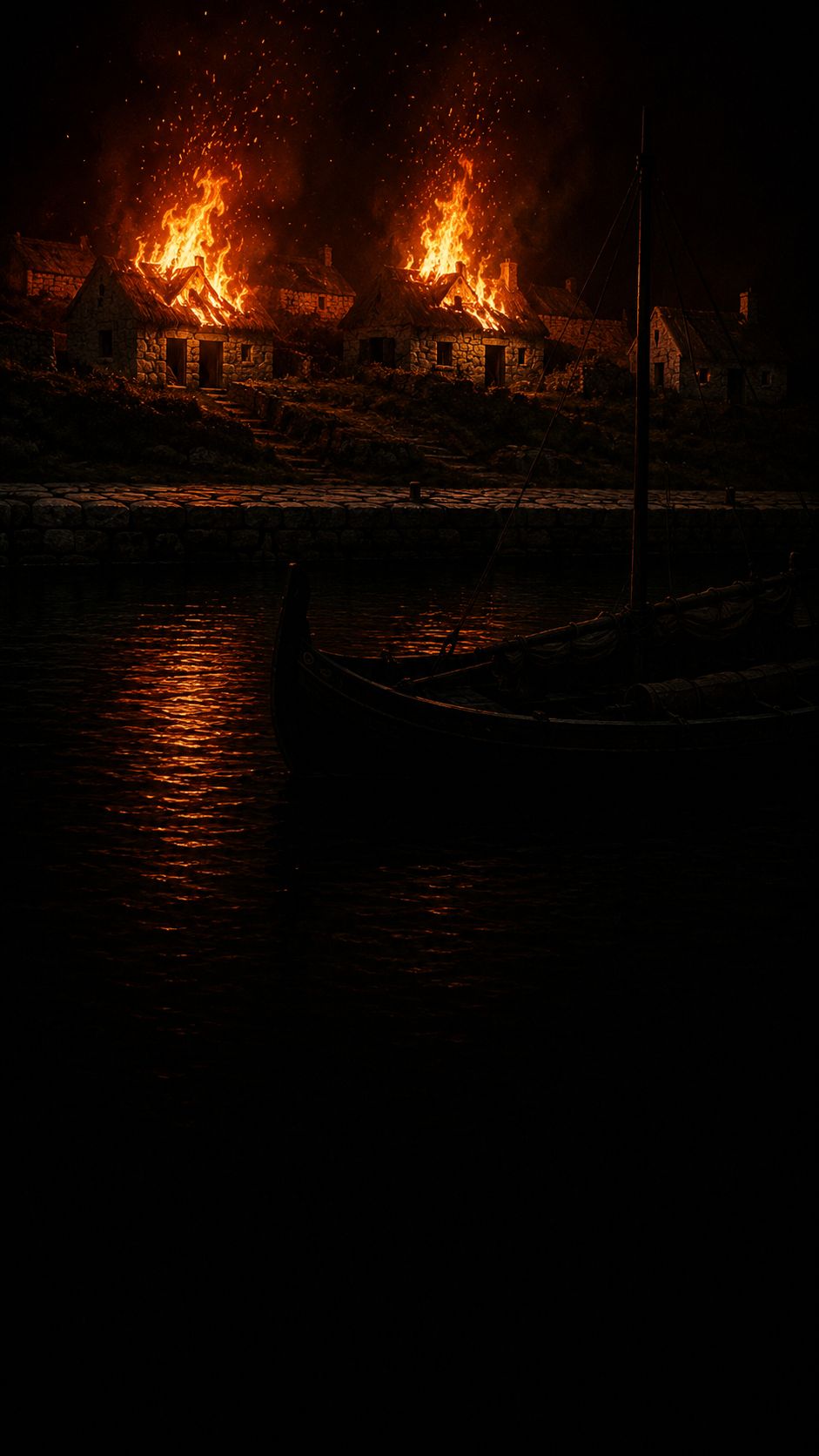 The Village Sold To Barbary Slavers
A captured fisherman guided Barbary corsairs into an Irish village at night, betraying his neighbours into slavery to save his own life.
Baltimore, County Cork, Ireland · 1631 · 10 km away
- The Liner Torpedoed In Eighteen Minutes
A U-boat's torpedo tipped the deck so steeply that half the lifeboats never made it into the water.
Old Head of Kinsale, Ireland · 1915 · 51 km away
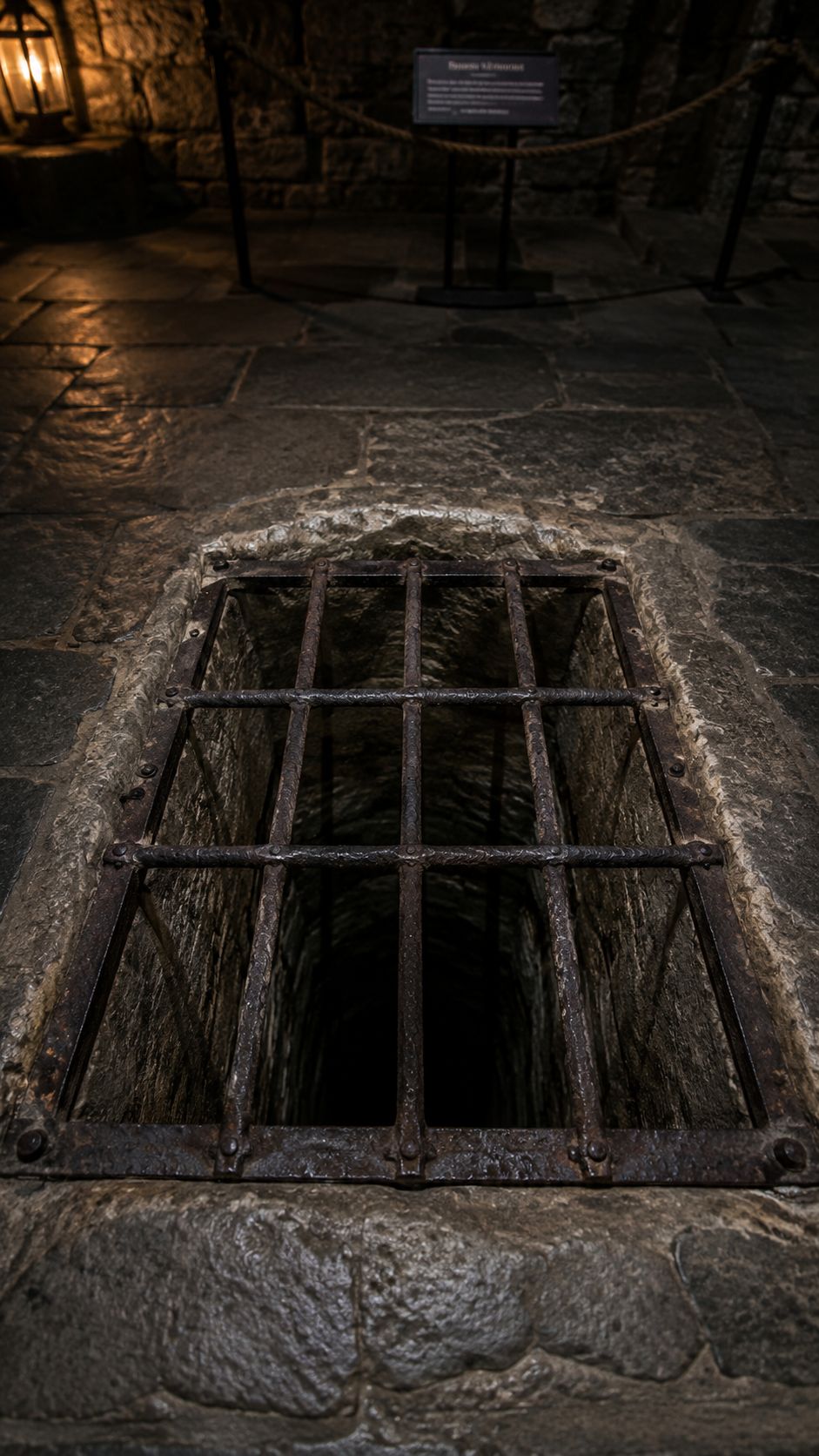 The Pit Built To Make You Forgotten
Unlike a dungeon with doors and gaolers, this drop into darkness offered no sentence, no ransom, and no way out.
Leap Castle, Ireland · 1250 · 182 km away
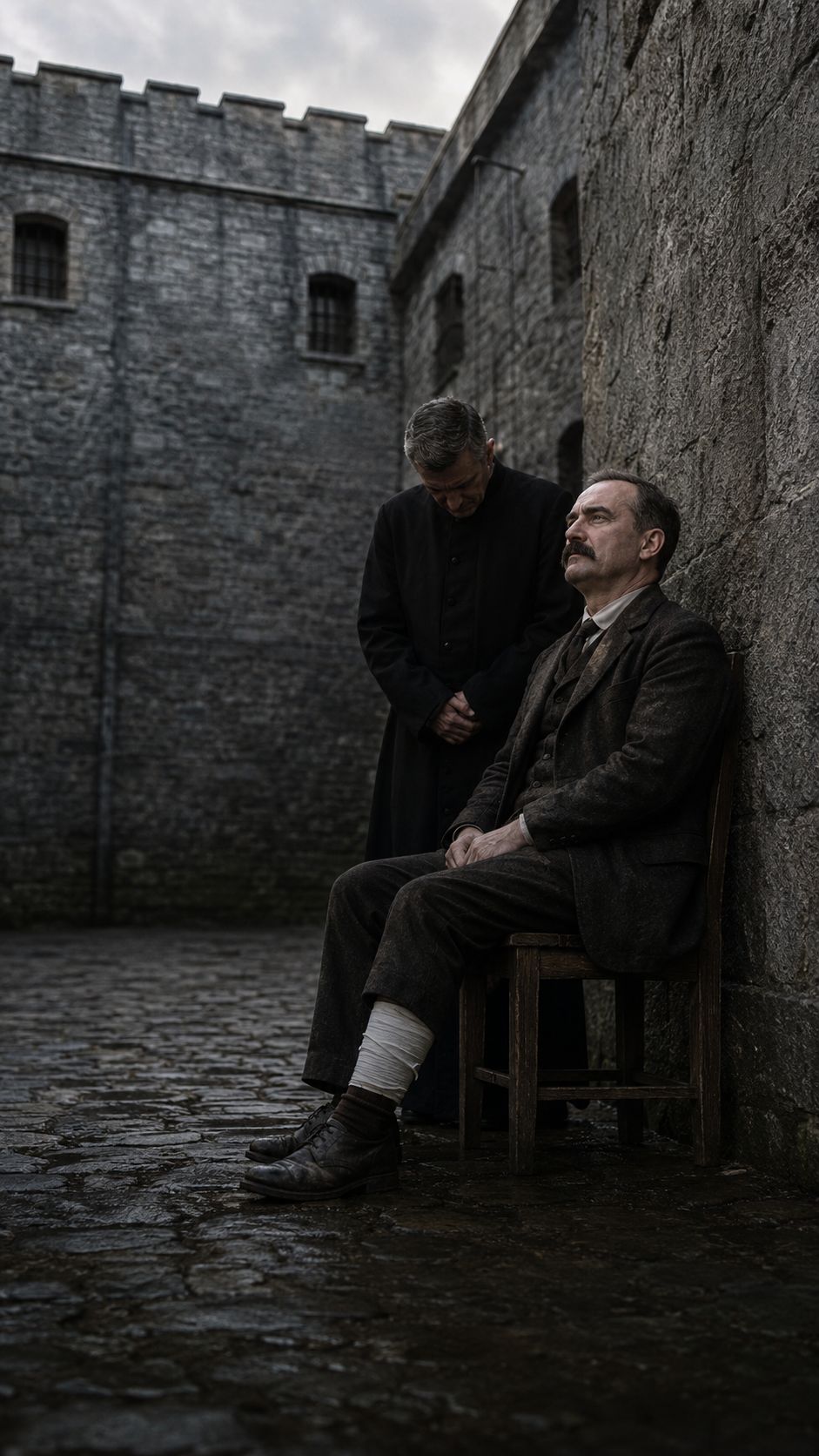 The Execution That Turned Dublin Against Britain
A dying, wounded rebel leader was tied to a chair and shot, an act so brutal it turned Ireland toward independence.
Kilmainham Gaol, Dublin, Ireland · 1916 · 282 km away
More like this
- The Murder Dickens Turned Into Fiction
A cold, calculated murder buried a body in a Bermondsey kitchen, and became fodder for the country's most famous novelist.
Bermondsey, London, United Kingdom · 1849
- The Chair No One Is Allowed To Sit In
A murderer's cursed armchair now hangs on a museum wall, five feet off the ground, so no one can sit in it again.
Thirsk, United Kingdom · 1702
- The Poisoner Who Weaponised A Town's Sweet Shops
She poisoned an entire town's confectionery to disguise the murder of a woman she hated, killing a child she never met.
Brighton, United Kingdom · 1871
 The Rape Trial That Ended In Trial By Combat
A woman's accusation of rape led to France's last judicial duel, with her own life staked on the outcome.
Paris, France · 1386