
“We hold these truths to be self-evident, that all men are created equal.”
They are among the most famous and important words ever written — the founding creed of American liberty, penned by Thomas Jefferson in the Declaration of Independence. Jefferson is enshrined in history as a champion of freedom, a philosopher of human rights, and the third President of the United States.
But there is a profound and genuinely dark hypocrisy at the heart of his life.
The man who wrote that all men are created equal enslaved more than six hundred human beings — and fathered children with a teenage girl he owned.
This is the founding contradiction that America spent two centuries trying not to look at.
Let’s start with the sheer scale of it.
Over the course of his life, Thomas Jefferson enslaved more than 600 people. His beautiful Virginia estate, Monticello — the elegant mansion that appears on the American nickel — was built, maintained, and run through enslaved labour. The comfortable, cultured, philosophical life that Jefferson led, the life that gave him the leisure to write about liberty, was made possible by the forced, unpaid toil of hundreds of men, women, and children whom he legally owned as property.
The Horror
And Jefferson knew the contradiction. That is what makes it so stark.
As a young man, he had spoken out against slavery. He called the slave trade “an assemblage of horrors,” a “cruel war against human nature,” and he tried to include a passage condemning the slave trade in the Declaration of Independence itself, though it was removed by other delegates.
But as the years passed, his opposition curdled into silence and then into active participation.
He profited from the labour of the enslaved, and from buying and selling human beings. He built his lifestyle around it. He remained an enslaver until his death.
And rather than confront the hypocrisy, he designed Monticello to make the work of slavery less visible to his guests.
The house used below-ground service passages, side entrances, dependencies, and workspaces tucked behind the elegant façade. Enslaved cooks, servants, craftspeople, and labourers could sustain the household while remaining largely outside the genteel visual world Jefferson presented to visitors.
It was not simply a matter of architecture.
It was a system of concealment.
Visitors could admire the great apostle of liberty without always seeing the bondage that sustained his life.
But the darkest and most personal part of Jefferson’s story concerns one enslaved woman: Sally Hemings.
And to understand it, you have to understand who she was.
Sally Hemings was, by blood, the half-sister of Jefferson’s wife, Martha. Both women were daughters of the same white man, Jefferson’s father-in-law, John Wayles. Wayles fathered Sally with an enslaved woman, Elizabeth “Betty” Hemings.
So when Jefferson inherited Sally as human property after Wayles’s death, he was enslaving his late wife’s own half-sister.
After Martha Jefferson died, Jefferson began a relationship with Sally Hemings that would last for decades and produce at least six children, four of whom survived to adulthood.
And it is crucial to be honest about what this relationship was, and what it was not.
It was not a romance between equals.
It could not have been.
Sally Hemings was enslaved.
Jefferson owned her.
He held total legal and physical power over her body, her life, and the lives of any children she bore.
The relationship appears to have begun when Sally was still a teenager — likely around sixteen or seventeen — while Jefferson was in his forties and in a position of absolute control.
By any honest modern understanding, this was a profoundly coercive situation in which free consent was impossible.
Sally Hemings was a victim of the total power that slavery gave one human being over another.
The Modern Relic
And yet, within that powerlessness, Sally Hemings made one extraordinary act of agency that history should remember.
When she was about fourteen, she travelled with Jefferson’s family to Paris, where he was serving as a diplomat. In France, slavery was not recognised in the same way it was in Virginia, and Sally could have sought freedom by remaining there rather than returning to America.
And by the account later given by her son, Madison Hemings, she initially resisted returning.
She only agreed to return to enslavement in Virginia after negotiating a promise directly from Jefferson: that any children she bore would be freed when they came of age.
Imagine that — a teenage enslaved girl, bargaining with one of the most powerful men in the world, extracting a promise for the freedom of children not yet born, using the only leverage she would ever have.
It is a heartbreaking glimpse of a real person fighting for what little she could within a monstrous system.
For nearly two hundred years, the American establishment refused to accept any of this.
The claim that Jefferson had fathered children with Sally Hemings first surfaced publicly in 1802, from journalist James Callender, and it was furiously denied. Jefferson’s white descendants insisted for generations that it was a vile political slander, that a man like Jefferson would never have had such a relationship.
The oral history passed down proudly by Sally Hemings’s own descendants — that they were the children of Thomas Jefferson — was dismissed and ignored by many historians for two centuries.
And then, in 1998, science changed the debate.
A landmark DNA study, published in the journal Nature, tested the Y-chromosome passed down the male lines. It established a genetic link between the Jefferson male line and a direct descendant of Sally Hemings’s youngest son, Eston.
The DNA did not, by itself, identify Thomas Jefferson personally; several male relatives in the extended Jefferson family theoretically shared that Y-chromosome.
But when researchers combined the DNA evidence with the documentary record, Jefferson’s known presence at Monticello when Hemings conceived, and the Hemings family’s oral history, the conclusion became overwhelmingly persuasive.
Thomas Jefferson was the father of Sally Hemings’s children.
Today, Monticello itself — Jefferson’s own estate, now a historic site — officially acknowledges that conclusion.
There is one final, telling detail.
Over his entire life, Thomas Jefferson freed almost none of the more than six hundred people he enslaved. He formally freed only a tiny number during his life and in his will. The people he legally freed were members of the extended Hemings family, including several of his children with Sally.
He would write that all men are created equal, and enslave hundreds.
He would free only a handful of people, many of them his own blood.
And even then, he never formally freed Sally Hemings herself.
After his death, his daughter Martha allowed Sally to leave Monticello. Sally lived in Charlottesville with her sons and was later recorded as free.
So this is the founding hypocrisy, laid bare.
The man who gave the world its most ringing declaration of human equality spent his life denying that equality to hundreds of people he owned, concealing their labour behind and beneath the elegant world of his mansion, fathering children with a teenage girl he held as property, and letting his descendants deny it for two centuries until science and historical evidence forced the truth into the light.
Jefferson’s words changed the world for the better — they truly did, and they still inspire.
But the man who wrote them did not, and would not, live by them.
And the people who paid the price for that contradiction were the more than six hundred human beings whose names history almost forgot, and one enslaved woman named Sally Hemings, who bargained for her children’s freedom because it was the only freedom she would ever be allowed to win.
Nearby on the Dark Atlas
- The Assassin Torn Apart With Molten Lead
A student's failed attempt on the King's life ended with red-hot pincers and molten lead poured into his open wounds.
Paris, France · 1594 · same site
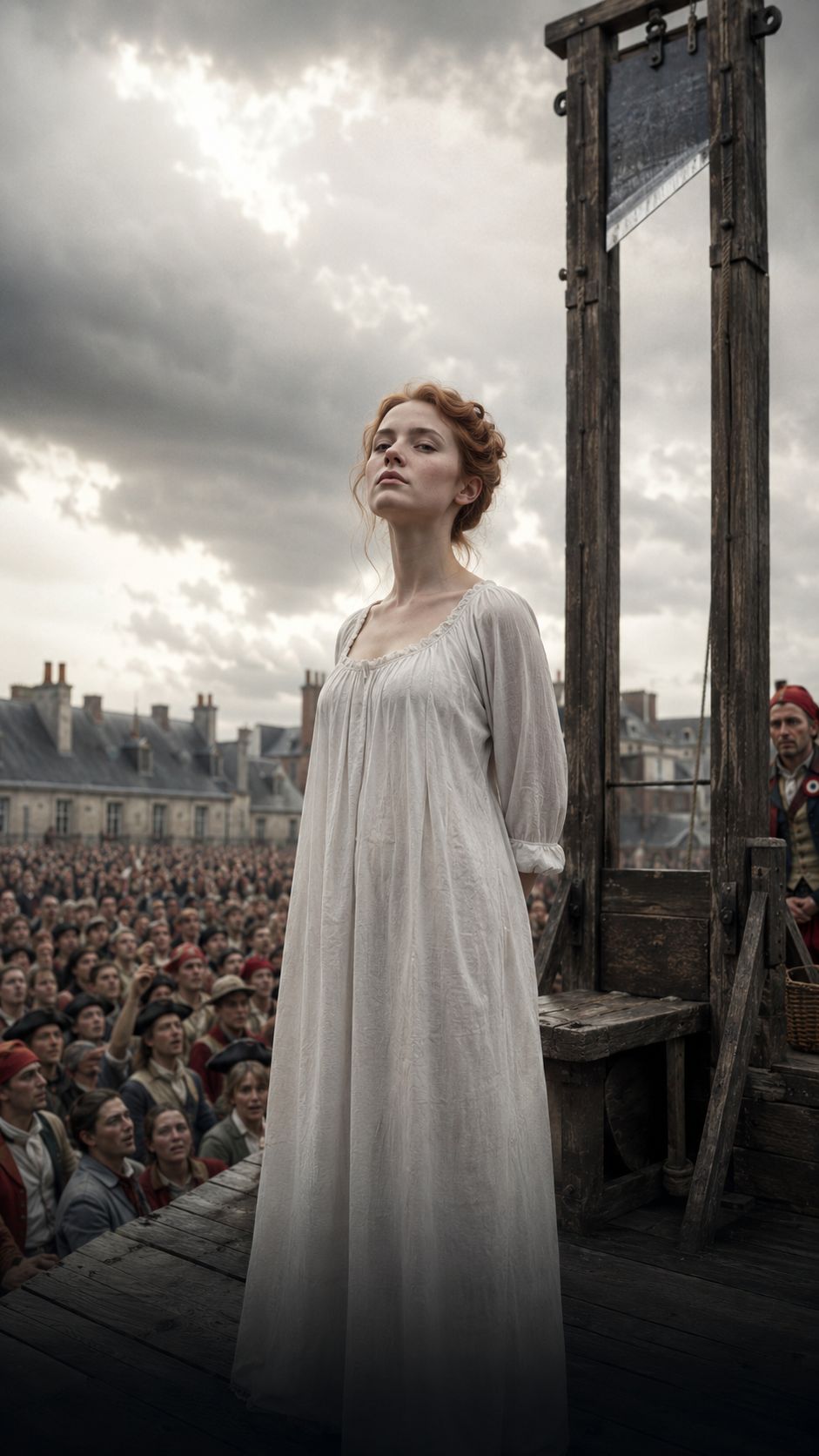 The Assassin Whose Severed Head Blushed
She murdered a revolutionary leader in his bath to save France, and witnesses swore her severed head reddened afterward.
Paris, France · 1793 · same site
 The Book That Outlived Its Author's Pyre
A woman was burned for writing that the soul could reach God without the Church, but her banned book kept circulating in secret for centuries.
Paris, France · 1310 · same site
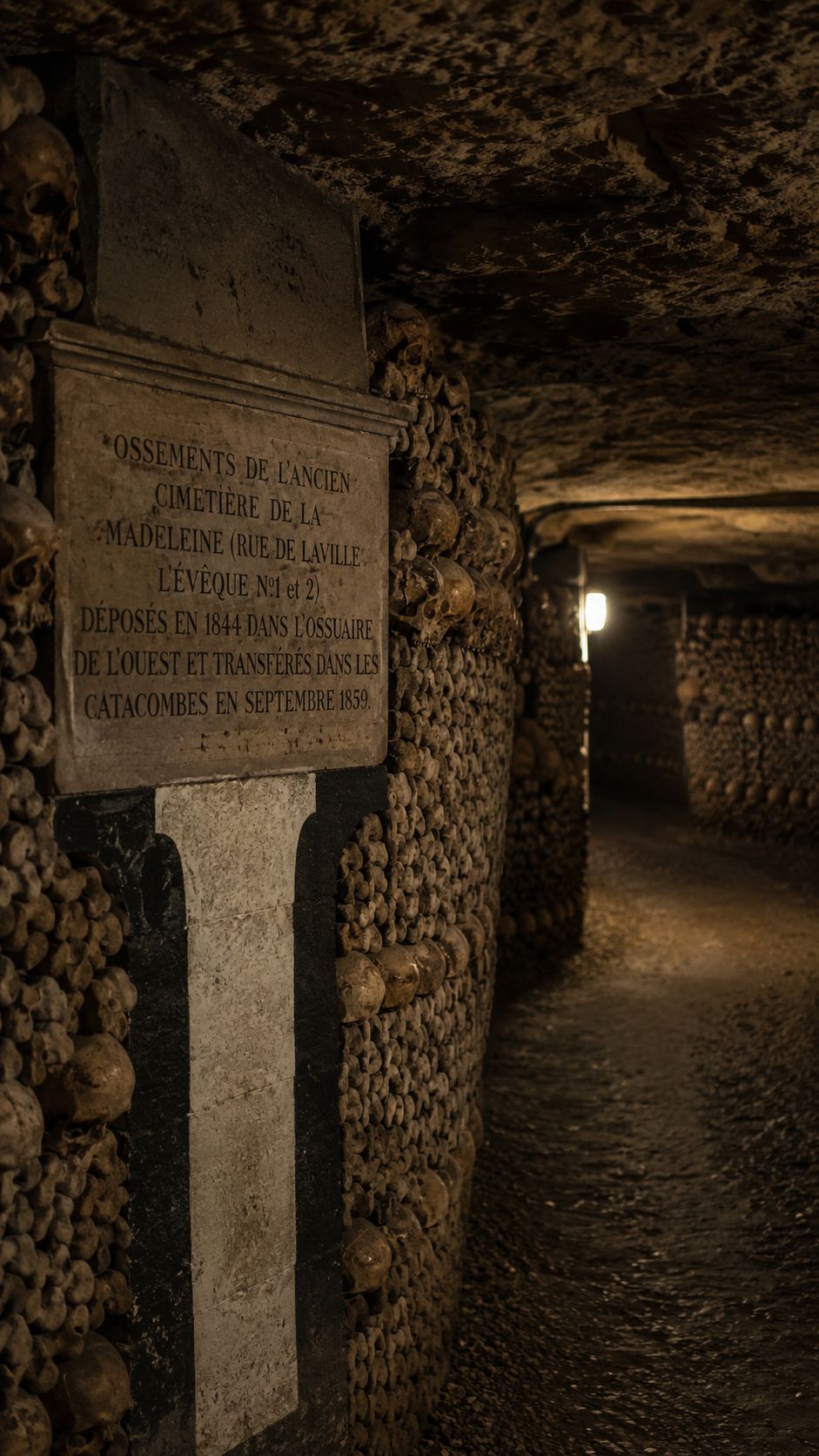 The Cemetery That Rose Above The Streets
Centuries of bodies raised a Paris graveyard eight feet above the surrounding streets before it finally gave way.
Paris, France · 1780 · same site
More like this
- England's Most Fought-Over Haunted Castle
Centuries of border warfare and torture wrote Chillingham's darkness into history long before anyone spoke of ghosts.
Chillingham, Northumberland, United Kingdom · 1245
- The Blood And Blindness In The Original Cinderella
There is no fairy godmother in the Grimms' first Cinderella, only a grave, mutilation, and eyes pecked out by birds.
Kassel, Germany · 1812
- The Christmas Gift Book Full Of Horror
A cheerful hand-coloured children's book shows a boy's thumbs sliced off and a girl burning to ash.
Frankfurt am Main, Germany · 1845
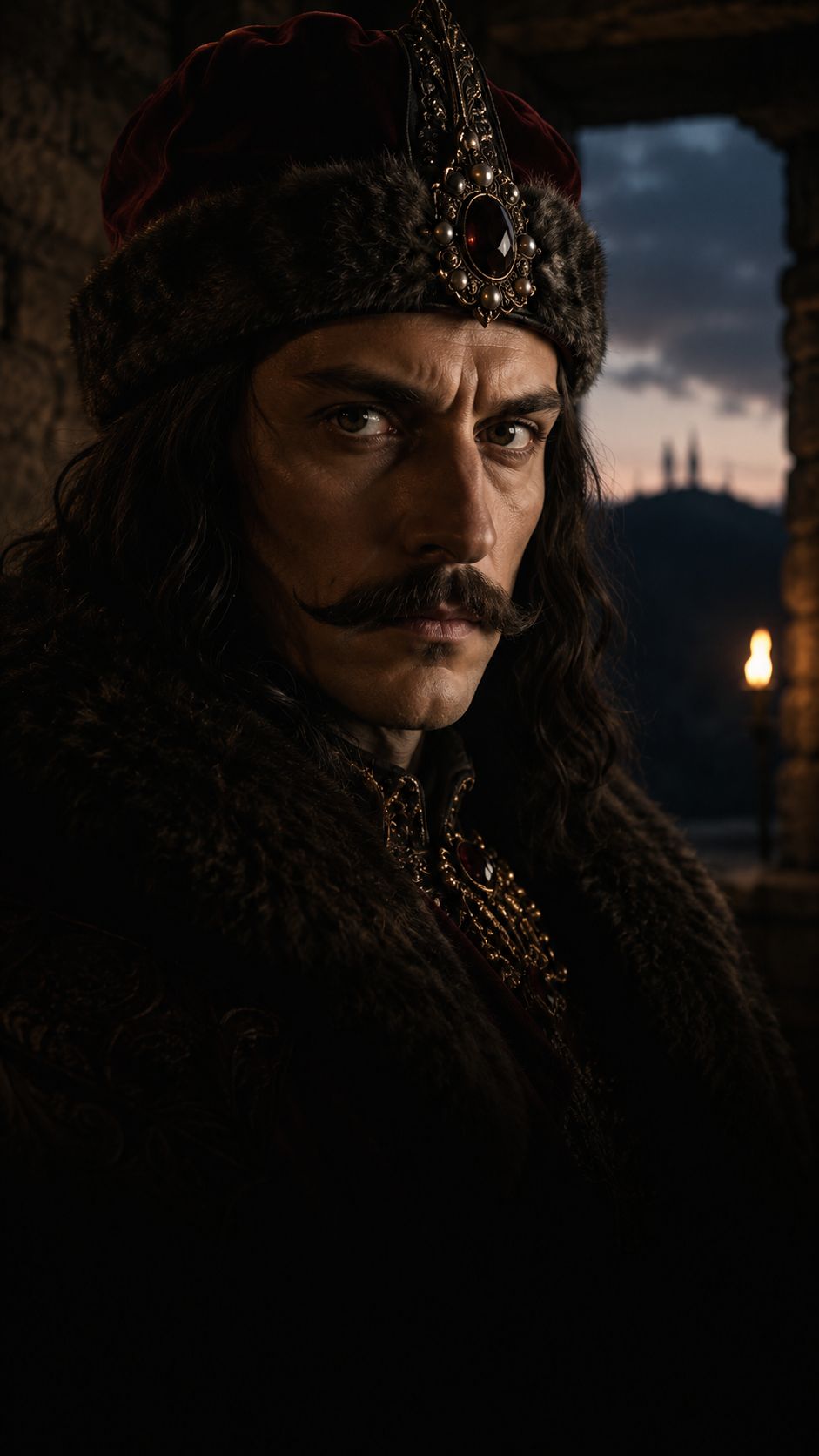 The Real Warlord Behind Count Dracula
Behind the caped movie vampire lies a real medieval warlord whose deeds were more horrifying than Bram Stoker's fiction.
Târgoviște, Romania · 1462