In the summer of 1793, the French Revolution had curdled into the Reign of Terror. The guillotine ran daily. Paris was ruled by fear, and one of the loudest voices demanding blood was a journalist named Jean-Paul Marat — a radical who used his newspaper to name enemies of the Revolution and call, relentlessly, for their heads. Thousands were dying. And a young woman from the provinces decided that if she killed one man, she could stop the slaughter.
Her name was Charlotte Corday. She was twenty-four years old.
THE HORROR — the deed: Corday was, ironically, from minor aristocratic stock — a descendant of the playwright Corneille — but she was a passionate republican who had genuinely believed in the Revolution’s early promise of liberty. She was horrified by what it had become: the massacres, the Terror, the daily executions. She blamed Marat above all, seeing him as the bloodthirsty monster driving France into an abyss of murder. She decided, entirely alone, to sacrifice her own life to end his.
On the 13th of July 1793, she bought a kitchen knife with a six-inch blade, travelled to Paris, and talked her way into Marat’s home, claiming to have the names of traitors to give him. Marat, it turned out, was so ill with a painful skin disease that he spent most of his day soaking in a medicinal bath, working from the tub. So Charlotte Corday was shown to a man sitting in his bathtub, a board across it serving as a desk.
She gave him names. Marat wrote them down, and said with satisfaction that within days he’d have them all sent to the guillotine.
Those were his last words. Corday drew the knife from her dress and drove it into his chest in a single blow, piercing his heart and a major artery. Marat cried out once — “Help me, my dear!” — and died in his bloodied bathwater within moments. Corday didn’t run. She stood there, and let herself be seized. She had come to die.
She was arrested on the spot, tried before the Revolutionary Tribunal, and — having freely admitted everything, declaring she had “killed one man to save a hundred thousand” — sentenced to death. Throughout her imprisonment and trial she was serene, articulate, and utterly without regret. She wrote calm farewell letters. She even asked to have her portrait painted so people would remember her face, and sat composedly for the artist during her final hours.
THE HORROR — the scaffold: On the 17th of July 1793, four days after the killing, Charlotte Corday was taken to the guillotine at the Place de la Révolution. She was ten days short of her twenty-fifth birthday.
The journey to the scaffold was long, through streets packed with people screaming abuse at her. She ignored them completely. She rode in the tumbril with total composure — witnesses were astonished by it. She chatted quietly and pleasantly with the executioner, Charles-Henri Sanson, during the ride. When he warned her the journey was long, she replied lightly that they were sure to get there in the end. A sudden rainstorm soaked the cart; then the sky cleared as they reached the scaffold. One young German, Adam Lux, was so struck by her calm beauty and courage that he became obsessed, published a pamphlet declaring she was greater than Brutus and that it would be beautiful to die with her — and was himself guillotined for it months later.
She climbed the scaffold steps without hesitation. Her fichu — the shawl around her neck and shoulders — was removed to bare her neck for the blade, and witnesses recorded that a blush of embarrassment crossed her face at being exposed before the crowd. She was strapped to the plank, tipped forward, her neck locked into place. And the blade came down.
And then came the moment that made Charlotte Corday unforgettable, and that haunted Paris for years.
One of the executioner’s assistants — a carpenter named François Legros — lifted her severed head out of the basket to show it to the crowd, and, in a gesture of pure spite toward the dead woman, slapped it hard across the cheek.
The crowd recoiled. Because, according to numerous horrified eyewitnesses, the face reacted. The pale cheeks of the severed head flushed red — both cheeks, not just the struck one — and the dead face took on an expression that observers described as one of unmistakable indignation, of anger, of offended dignity. A woman minutes dead, her head in a stranger’s hands, appeared to blush with fury at being struck.
It caused an uproar. The public was appalled by Legros’s act — it was seen as a monstrous breach of decency, and the man was reportedly imprisoned for three months for it. And the blush itself became one of the most famous and disturbing episodes of the entire Revolution, because of the terrible question it raised.
The Modern Relic
Did Charlotte Corday’s head feel that slap?
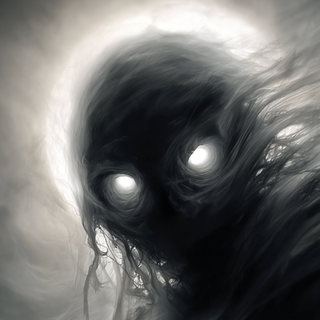
The guillotine was supposed to be humane — a swift, instant, painless death. But the blushing head of Charlotte Corday made people wonder, with real horror, whether that was true. Did consciousness survive the blade? Did the severed head remain aware — able to see, to feel, to understand what had happened to it — for seconds or even minutes after being cut off? Charlotte Corday’s indignant, reddening face suggested, to the people who saw it, that something had still been in there.
That single moment is one of the historical sparks behind later scientific debates about whether the guillotined remained conscious after decapitation. For decades afterward, physicians would rush to the scaffold to call the names of the freshly executed, to look for a flicker of recognition in the eyes — a grim inquiry that traces, in part, right back to the blush on Charlotte Corday’s slapped face. It’s a question that has never been fully settled.
The relics of Charlotte Corday are scattered and strange. Her body was thrown into a mass grave with the other victims of the Terror — including, soon after, Marie Antoinette. But the Revolution wasn’t finished with her: convinced that a mere woman couldn’t have planned such an act alone, and that a lover must have masterminded it, the authorities had her body autopsied specifically to check whether she was a virgin. She was — a final, grotesque invasion of a woman they had already killed. And legend holds that her skull was quietly kept and passed from hand to hand among Parisian collectors for generations afterward, a macabre trophy of the “Angel of Assassination.”
The greatest relic hangs in a museum, and it’s one of the most famous paintings in the world — but it’s not of her. Marat’s ally, the painter Jacques-Louis David, immortalised the victim: The Death of Marat, showing the murdered journalist slumped serenely in his bloodied bath, a pale secular saint of the Revolution. It’s a masterpiece of propaganda, painted to make Marat a martyr and, by implication, Corday a monster. Charlotte herself appears nowhere in it — she has been erased from the image of her own act.
And there’s the final irony. Charlotte Corday killed Marat believing it would end the Terror and save France. It did the opposite. His murder made him a martyr, inflamed the radicals, and the Terror grew worse — Marie Antoinette, the Girondin deputies Corday had hoped to save, and thousands more went to the same guillotine in the months after. She sacrificed her life to stop the killing, and instead accelerated it.
But the image that survived was not the one anyone intended. Not David’s serene dead Marat. It was the face in the executioner’s hand — the head of a calm, courageous 24-year-old woman that, when a man slapped it in front of Paris, appeared to flush crimson with one last, unmistakable flash of contempt. They cut off her head. And it still, they swore, found a way to look furious.
Nearby on the Dark Atlas
- The Assassin Torn Apart With Molten Lead
A student's failed attempt on the King's life ended with red-hot pincers and molten lead poured into his open wounds.
Paris, France · 1594 · same site
 The Book That Outlived Its Author's Pyre
A woman was burned for writing that the soul could reach God without the Church, but her banned book kept circulating in secret for centuries.
Paris, France · 1310 · same site
 The Cemetery That Rose Above The Streets
Centuries of bodies raised a Paris graveyard eight feet above the surrounding streets before it finally gave way.
Paris, France · 1780 · same site
 The Designer Who Spied For The Nazis
While Paris starved under occupation, the fashion icon lived at the Ritz as a documented Nazi intelligence agent.
Paris, France · 1943 · same site