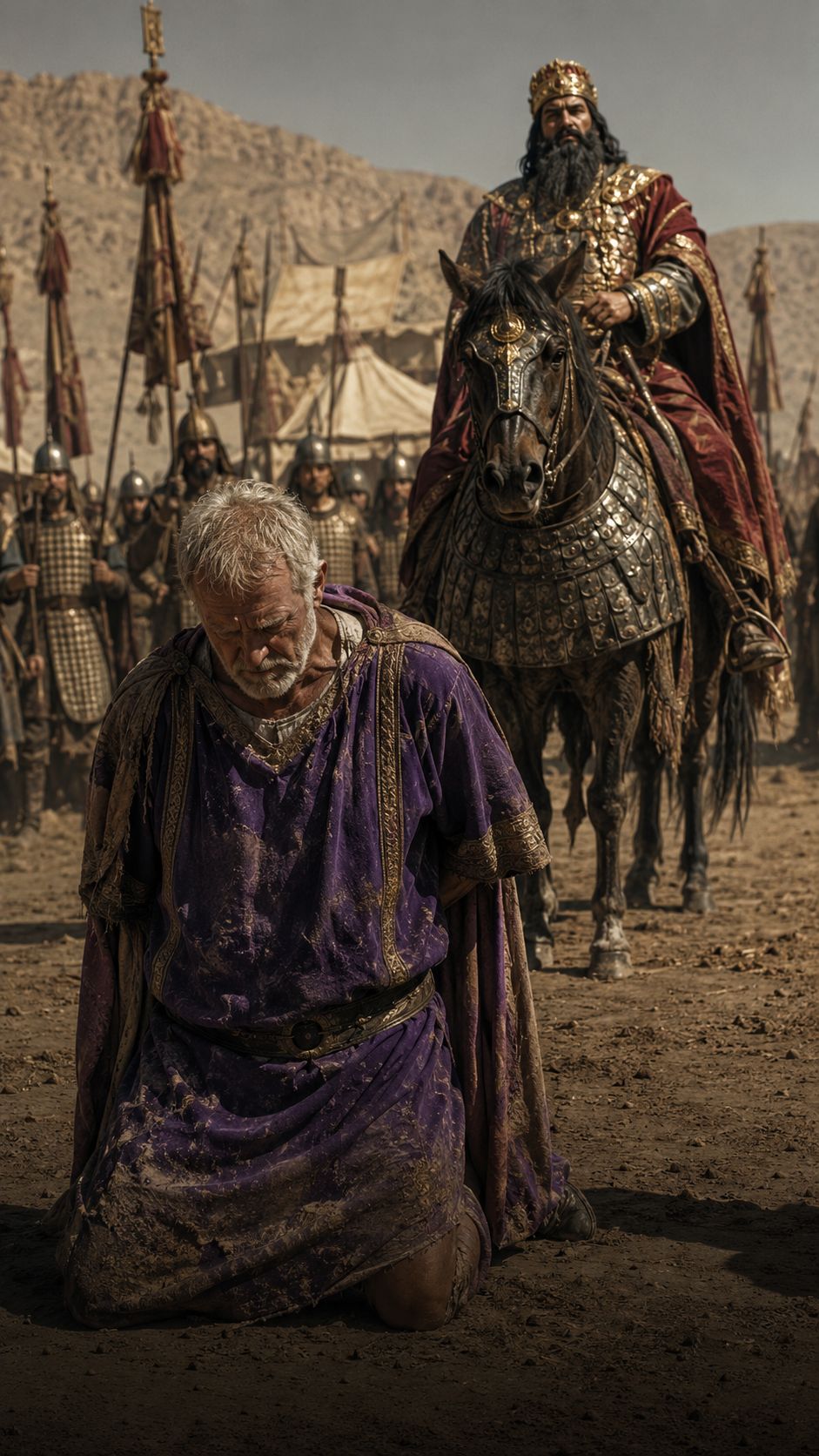
Under later Greek writers, the royal court of ancient Persia acquired a reputation for using one execution so elaborate that it sounds like a medical experiment: scaphism, “the Boats.”
If Plutarch is to be believed, this was not a quick public spectacle like crucifixion or the sword, but a carefully maintained, days‑long unmaking of a human body, designed to send a message about imperial power.
The Horror
In Plutarch’s account, the condemned man is laid in a hollowed‑out wooden boat and then covered with a second one, so that his head, arms, and legs protrude while his torso is locked in a dark wooden shell. He is not left to starve. The executioners force‑feed him milk and honey, day after day. When he refuses, they prod and torment him until he swallows. The diet quickly causes violent diarrhoea and bloating.
The waste has nowhere to go. It accumulates in the sealed cavity between the boats, saturating his skin and clothing. The same milk and honey are smeared on his exposed face and limbs. Insects follow the sugar. Flies, beetles, and other vermin swarm to the sticky surfaces, drawn by the heat and the stench. Plutarch describes the man’s flesh swelling, ulcerating, and becoming a breeding ground; larvae feed in the sores; infection spreads inward.
The victim, according to this tradition, remains conscious for days, sometimes more than a week, as his own metabolism, waste, and the insects around him combine into a slow biological engine. Death finally comes from dehydration, sepsis, and total exhaustion — a body turned into its own executioner.
Ancient authors present this as a one‑off horror used for high treason under Artaxerxes II, not as a routine punishment. Modern historians debate how literally to take the story, and whether it reflects an actual Persian practice or a Greek attempt to demonise a rival empire. What it does show, beyond doubt, is how the ancient imagination could weaponise the very idea of decay.
The Modern Relic
The Achaemenid royal centres at Persepolis and Naqsh‑e Rostam near Shiraz, Iran, are still there — monumental terraces, audience halls, and cliff‑cut tombs carved with processions of tribute‑bearers and kings. Walking beneath those stone reliefs of ordered court ritual means walking through the same political world that Plutarch later filled with tales of “the Boats” — an empire where, in Greek memory at least, absolute power could be imagined turning biology itself into a slow instrument of terror.