
In the winter of 1615, Johannes Kepler — Imperial Mathematician, the man who had proved that planets move in ellipses, the mind reshaping Europe’s understanding of the cosmos — received a letter from home.
His mother had been accused of witchcraft.
He dropped everything. He left his calculations and rode south in winter. The man who was working out the orbits of planets went home to stop his mother being burned alive.
THE HORROR Katharina Kepler was 68 years old. She was an herbalist. She made remedies from plants. She was sharp‑tongued, difficult, and deeply unpopular with her neighbours. In a region of Germany where witch hunts had already killed thousands, being an old, disliked woman who mixed potions was as good as a death sentence.
Twenty‑four witnesses testified against her. Their accusations were elaborate and absurd. They claimed she had slipped through locked doors by magic. That she had paralysed a schoolmaster with a cup of wine. That a touch on a girl’s arm caused “inhuman pain.” That she had ridden a calf to death and roasted it.
Her own son Heinrich — Johannes’s brother — accused her of the calf episode and wanted to denounce her formally.
The case dragged on for six years. From 1615 to 1621, while Johannes Kepler was composing Harmonices Mundi — the work that contains his Third Law of Planetary Motion — he was also drafting legal arguments to keep his mother alive. The mathematics that would later guide satellites and space missions was being written in the same years as his mother’s defence.
He produced a 100‑plus page legal brief. He dissected every charge with the same disciplined method he used on astronomical data. He argued that the illnesses described could be explained by natural causes. He highlighted contradictions in the testimony. He showed how the case rested on gossip, resentment and old quarrels dressed up as demonology.
The family cracked under the strain. His brother Christoph withdrew support. His sister Margaretha could not leave her own household to help.
Katharina was eventually arrested and chained to the floor of a cell, guarded day and night, for fourteen months. She was 73.
When imprisonment failed to produce a confession, the court turned to territio — the formal terrorising of the accused. Katharina was taken into a chamber where the instruments of torture were laid out and described to her one by one: hot irons, pincers, long needles, the rack, a gallows for drawing and quartering. The executioner explained what each would do to her body.
She listened. Then she said: “You can do whatever you want with me. Even if you pull every vein from my body, I have nothing to confess.”
Her son later testified that he had never seen his mother cry — not when her husband abandoned the family, not while she raised four children alone, not through the hardships of her life. She simply did not weep.
The court twisted this into evidence against her. A woman who did not cry when faced with torture, they argued, could not be natural; her composure was itself a sign of demonic support.
On 28th October 1621, after years of proceedings and months in chains, Katharina Kepler was finally released. She returned home, physically free but exhausted. She died on 13th April 1622, about six months later, aged around 74.
THE MODERN RELIC Kepler’s Harmonices Mundi was published in 1619, in the middle of the witchcraft case. His Third Law of Planetary Motion — which links a planet’s orbital period to its distance from the sun — emerged from his calculations during the same period that his mother sat in a cell. The law that underpins modern orbital mechanics was born alongside a witch trial.
There is a statue of Kepler in his birthplace, Weil der Stadt. A major space telescope was named after him. A lunar crater bears his name. His equations are printed in textbooks and coded into software that plots spacecraft trajectories.
There is no memorial to Katharina.
The woman who looked at the rack and the irons and said “pull every vein from my body” has no statue, no plaque, no named observatory or crater. Her story survives in trial records and in the margins of her son’s life.
The universe remembers the man who defended her. It does not remember the woman who refused to break.
Nearby on the Dark Atlas
 How A Volcano Gave Us The Bicycle
A volcanic eruption on the far side of the world triggers failed harvests, a horse shortage, and the invention that changed how the world moves.
Mannheim, Germany · 1817 · 86 km away
 The Plague That Made A City Dance Itself To Death
One woman started dancing for no reason, and within weeks hundreds joined her, dancing uncontrollably until some dropped dead.
Strasbourg, France · 1518 · 96 km away
- The Monk Who Defied the Emperor and Survived
Declared an outlaw who anyone could kill without consequence, he stood before the empire and refused to take back a word.
Worms, Germany · 1521 · 105 km away
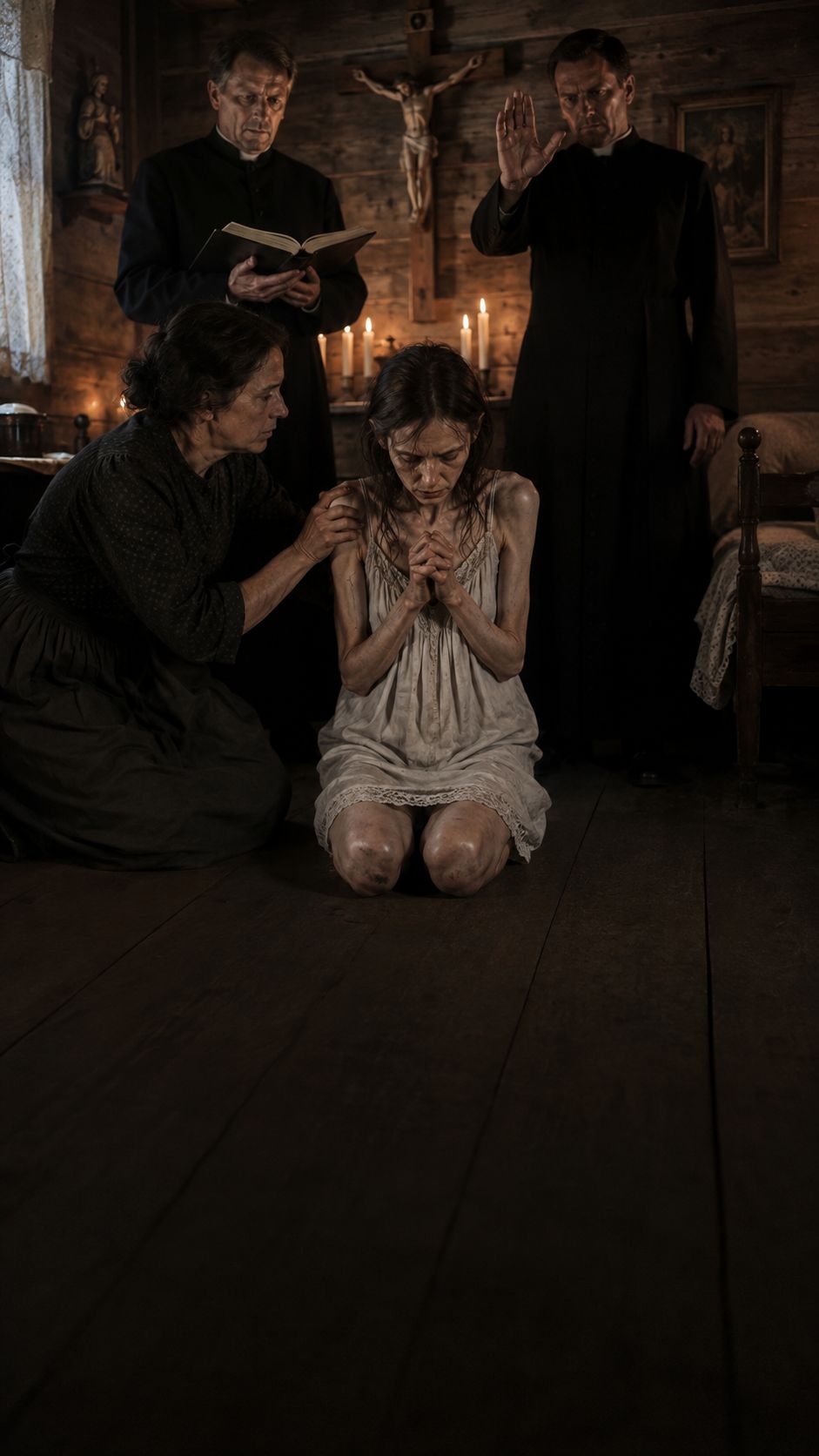 The Exorcism That Killed Her
A young woman's epilepsy was treated with 67 exorcism rites instead of medicine, until her body finally gave out.
Klingenberg am Main, Germany · 1976 · 109 km away
More like this
- The Poisoner Who Weaponised A Town's Sweet Shops
She poisoned an entire town's confectionery to disguise the murder of a woman she hated, killing a child she never met.
Brighton, United Kingdom · 1871
- The Poisoner Of The Sun King's Court
Behind Versailles' glittering court, a fortune-teller ran a thriving trade selling poison to desperate noblewomen.
Place de Grève, Paris, France · 1680
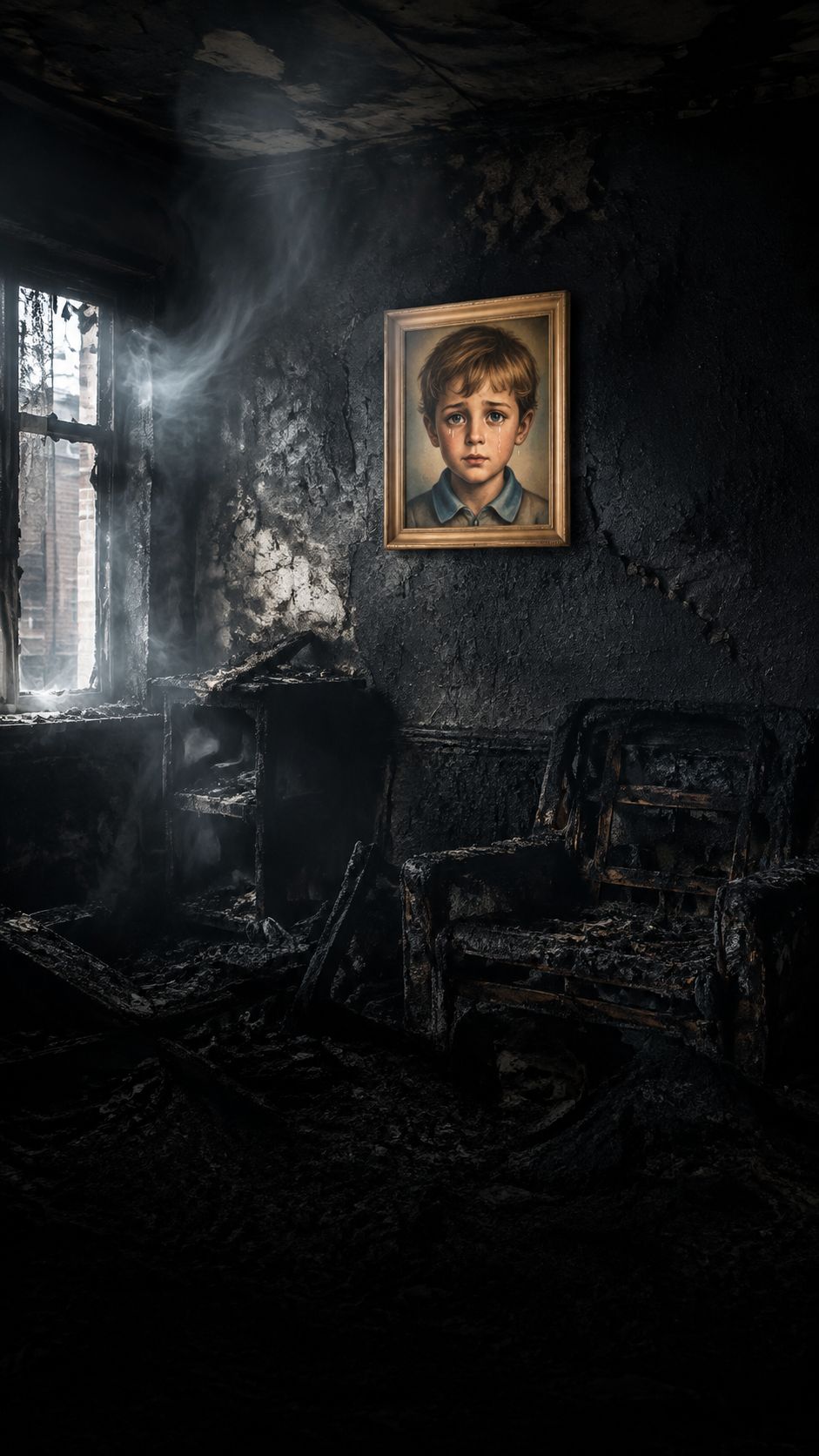 The Cursed Painting That Survived House Fires
A cheap mass-produced print sparked a nationwide panic that it caused fires, and always survived the ashes untouched.
London, United Kingdom · 1985
 The King Left To Starve Beneath Rome
A Numidian king who beat Rome with bribery for years was finally stripped naked and left to starve in a pit.
Rome, Italy · 104 BC