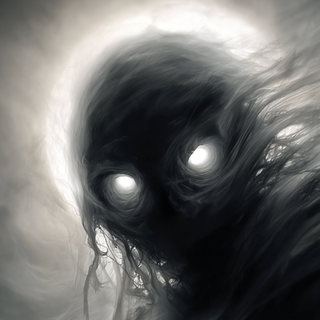
The Dancing Plague of 1518 is one of the strangest and most disturbing events in all of recorded history — a real, documented episode in which hundreds of people in a European city danced uncontrollably, for days and weeks on end, until some of them literally dropped dead. It sounds like a myth or a fairy tale. It is not. It genuinely happened, and it is written into the historical records of the city of Strasbourg.
It began in the sweltering July of 1518, in Strasbourg — then a free city within the Holy Roman Empire, today part of France. On the 14th of July, on a narrow cobbled street, a woman named Frau Troffea stepped out of her home and, with no music playing and no apparent reason at all, simply began to dance.
The Horror
At first, it must have looked merely odd. But Frau Troffea did not stop. She danced through the day, her body seemingly moving on its own, driven by some compulsion she could not control. Her husband begged her to stop. She couldn’t. She danced until she collapsed from sheer exhaustion — and then, after a brief rest, she got up and danced again, and again, day after day, on feet that were becoming swollen, blistered, and bloody. She danced for somewhere between four and six days, apparently unable to make herself stop.
And then something happened that turned one woman’s bizarre affliction into a full-blown nightmare: her neighbours started dancing too.
Within days, more than thirty other people in Strasbourg had been seized by the same uncontrollable urge, joining Frau Troffea in her ceaseless, frenzied dancing. And it kept spreading. People from all walks of life — men, women, and children, tradespeople and beggars alike — were pulled into the growing throng of dancers, their bodies jerking and spinning and flailing as if bewitched, seemingly powerless to stop. Within about a month, the dancing mob had swelled to around four hundred people.
This was not joyful dancing. There was no festival, no celebration, no music that they were dancing to. Eyewitness accounts describe a horrifying scene: people dancing with vacant, exhausted, tormented expressions, their feet raw and bleeding, dancing far past the point of pain, past the limits of human endurance, unable to stop even as their bodies broke down. And the most terrible part: people began to die. As the frenzy went on, dancers started to drop dead — from heart attacks, from strokes, from sheer exhaustion and dehydration. According to some accounts, at the peak of the mania, several people were dying every single day, collapsing lifeless in the streets while all around them, others danced on.
But perhaps the most astonishing, almost unbelievable part of the whole story is how the authorities of Strasbourg responded. Faced with hundreds of their citizens dancing themselves to death, the city’s baffled leaders turned to the physicians of the day for a solution. And the physicians made a catastrophic diagnosis. They concluded that the dancing was caused by “hot blood” — an overheating of the body — and that the only way to cure the afflicted was to let them dance it out of their system. In other words, the prescribed treatment for people dancing themselves to death was: more dancing.
So the city acted on this advice with horrifying enthusiasm. They cleared out guildhalls for the dancers to use. They built a large wooden stage. And, incredibly, they actually hired musicians — pipers and drummers — to play music to accompany the dancers and keep them moving, and even brought in healthy people to dance alongside them to encourage them. The result was exactly what you’d expect: instead of curing the plague, the music and the stage and the spectacle drew even more people into the frenzy, and the death toll climbed. The authorities had, catastrophically, poured fuel on the fire.
THE MODERN RELIC When it finally became horribly clear that more dancing was killing people rather than curing them, the authorities reversed course completely. They banned music and public dancing throughout the city. And, falling back on faith, they decided the dancers must be suffering under a curse from Saint Vitus — a saint who, in the belief of the time, had the power to afflict sinners with exactly this kind of compulsive dancing. So they gathered up the worst-afflicted dancers, loaded them into wagons, and carried them off to a shrine dedicated to Saint Vitus, to pray for the curse to be lifted.
And then, as mysteriously as it had begun, the Dancing Plague came to an end. By around September 1518, after roughly two months, the mania faded away, and the surviving dancers finally stopped. Strasbourg was left to count its dead and try to make sense of what had just happened to it.
So what on earth caused it? For five hundred years, people have tried to explain the Dancing Plague, and it remains one of history’s great mysteries. One popular theory blamed ergot — a toxic, hallucinogenic mould that grows on damp rye and can cause convulsions and delusions — though most historians now doubt this could produce sustained, coordinated dancing. The leading modern explanation, argued by the historian John Waller, is that it was a case of mass psychogenic illness — a “mass hysteria.” In 1518, Strasbourg was a city in agony: it had been battered by repeated famines, crop failures, and outbreaks of terrible diseases like smallpox and syphilis. The people were starving, terrified, and pushed to the psychological brink. And crucially, that region had a deep, genuine cultural belief in exactly this affliction — the legend that an angry Saint Vitus could strike people down with an uncontrollable dancing curse. Waller’s theory is that this perfect storm — extreme stress and despair, combined with a powerful, pre-existing belief that dancing manias were real and could seize you — created a psychological contagion: a stress-induced trance state that spread from person to person through fear and suggestion, so that once one desperate, traumatised woman began to dance, the terrified belief that they too might be cursed literally made others start dancing as well.
The relic is the historical record itself, and the city where it happened. The Dancing Plague of 1518 is the best-documented case of “choreomania” in history — recorded in Strasbourg’s own municipal records, in physicians’ notes, and in contemporary chronicles, which is how we know, in such vivid detail, that it truly occurred. It was not the only such outbreak — smaller dancing manias struck other towns across medieval and Renaissance Europe — but Strasbourg’s was the largest and deadliest. The city of Strasbourg still stands, its medieval streets and its great cathedral much as they were, and somewhere on those old cobbled lanes, one summer five centuries ago, a woman named Frau Troffea started to dance and couldn’t stop — and hundreds of her neighbours danced with her, some of them all the way to their deaths, in one of the strangest true horrors the world has ever seen.
Nearby on the Dark Atlas
 The Astronomer Who Raced Home To Save A Witch
While her son mapped the orbits of planets, a sharp-tongued old herbalist sat in a cell accused of witchcraft.
Leonberg, Germany · 1615 · 96 km away
 How A Volcano Gave Us The Bicycle
A volcanic eruption on the far side of the world triggers failed harvests, a horse shortage, and the invention that changed how the world moves.
Mannheim, Germany · 1817 · 114 km away
- The Duke Who Fell In A Frozen Ditch
One of Europe's richest rulers ended as a half-frozen corpse in a marsh, identifiable only by his scars.
Nancy, France · 1477 · 116 km away
- The Monk Who Defied the Emperor and Survived
Declared an outlaw who anyone could kill without consequence, he stood before the empire and refused to take back a word.
Worms, Germany · 1521 · 126 km away
More like this
 The Rape Trial That Ended In Trial By Combat
A woman's accusation of rape led to France's last judicial duel, with her own life staked on the outcome.
Paris, France · 1386
- The Parish Registers Of The Beast's Victims
Between 1764 and 1767 something killed roughly a hundred people, recorded in the registers as 'devoured by the beast.'
Saugues, France · 1764
- The Poisoner Of The Sun King's Court
Behind Versailles' glittering court, a fortune-teller ran a thriving trade selling poison to desperate noblewomen.
Place de Grève, Paris, France · 1680
- The Manufacturing Of England's Most Haunted House
For decades it was called the most haunted house in England, until its ghost story revealed how a haunting gets made.
Borley, Essex, United Kingdom · 1929