In September 1665, a parcel of cloth arrived in the small Derbyshire village of Eyam, ordered by the local tailor, George Vicars, from plague‑stricken London. The fabric had fleas in it. Within days, Vicars was dead.
More deaths followed. The signs were unmistakable: buboes, fever, rapid decline. The Great Plague that was killing tens of thousands in London had reached a village of around 350 people.
The Horror
Panic spread. Some villagers prepared to flee — to nearby towns, to farms, to anywhere not touched by the disease. Then the rector, William Mompesson, and his predecessor, the nonconformist minister Thomas Stanley, made a proposal that was as simple as it was devastating.
They asked Eyam to lock itself down. Voluntarily.
The plan had several parts:
No one would leave the village until the plague had run its course.
No one from outside would be allowed in.
Church services would be moved outdoors to places where families could stand apart, instead of gathering inside.
Families would bury their own dead near their houses to avoid funeral gatherings.
Stones were placed around the village’s edge to mark the boundary: beyond them, no one from Eyam would go. Neighbours from surrounding communities left food, medicine and other supplies at designated points just outside this line.
In return, Eyam villagers left payment in bowls or drilled holes filled with vinegar and water — believing the vinegar would disinfect the coins. Mompesson’s Well, a spring on the hillside, was used in the same way: food and goods left at the rim, coins in vinegar inside.
The quarantine held for about fourteen months, from late 1665 to November 1666. During that time, somewhere between 250 and 260 villagers died, including Mompesson’s wife Catherine. Some families were wiped out entirely. The Hancock family’s graves at Riley, on a hillside outside the village, mark the place where Elizabeth Hancock buried her husband and six of her seven children in just eight days.
By the end, fewer than a quarter of the original population survived. But the surrounding towns and villages appear to have been spared a major outbreak. Eyam’s sacrifice contained the disease.
Not everyone has agreed it was wise. In the 19th century, medical historian Charles Creighton argued that the villagers were “sacrificed to an idea” and might have been safer if they had dispersed individually instead of staying together. But whatever the scientific verdict, the human reality is plain: they chose to stand still and burn so that others did not catch fire.
The Modern Relic
Today, Eyam is known simply as “the plague village.” Visitors walk past cottages with plaques listing the names and dates of the dead. The Eyam Museum tells the story with letters, parish records and reconstructed scenes.
Out in the fields, the boundary stones still mark the line where supplies were left and coins were dropped into vinegar. Mompesson’s Well still sits above the village, ringed by low stone, overlooking the valley. The Riley Graves still hold the Hancock family and stand as a cluster of headstones in an otherwise empty field.
Modern visitors leave coins at the stones and wells, not for disinfecting but as a tribute. The names of Eyam’s dead are carved into church memorials and printed on museum walls.
The neighbouring towns that might have received fleeing villagers — places like Stoney Middleton and Bakewell — never became plague centres. Eyam’s self‑imposed cordon held.
The village survived. The decision worked. Most of the people who made it did not live to see the outcome.
Nearby on the Dark Atlas
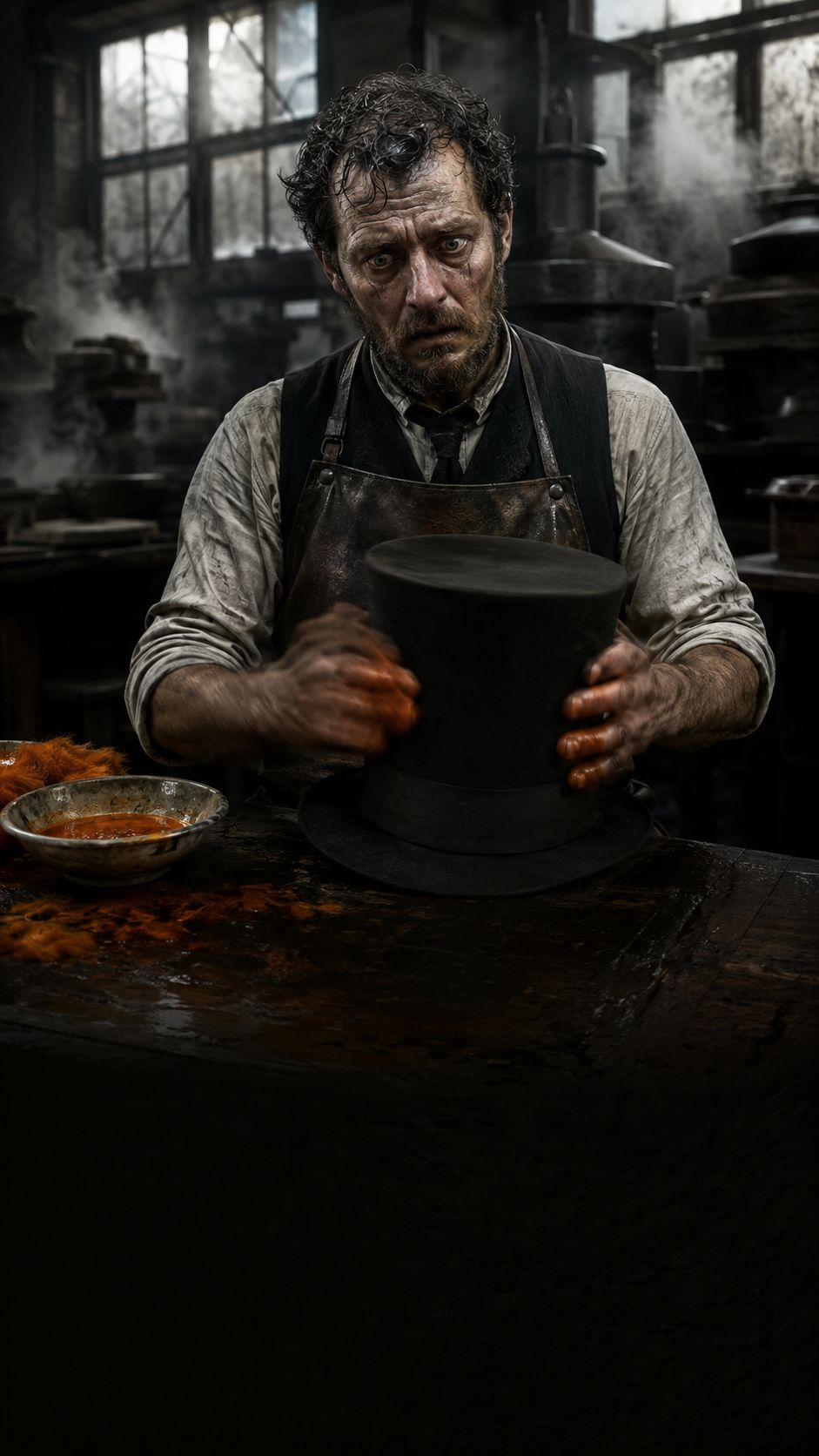 The Poison Behind The Mad Hatter
Generations of hatters were slowly poisoned by mercury, giving English a phrase before Lewis Carroll ever used it.
Stockport, United Kingdom · 1829 · 35 km away
 The Man Who Saved Britain And Was Destroyed By It
The mathematician who shortened the war was systematically destroyed by the country he had saved, and his death still isn't fully explained.
Wilmslow, United Kingdom · 1954 · 37 km away
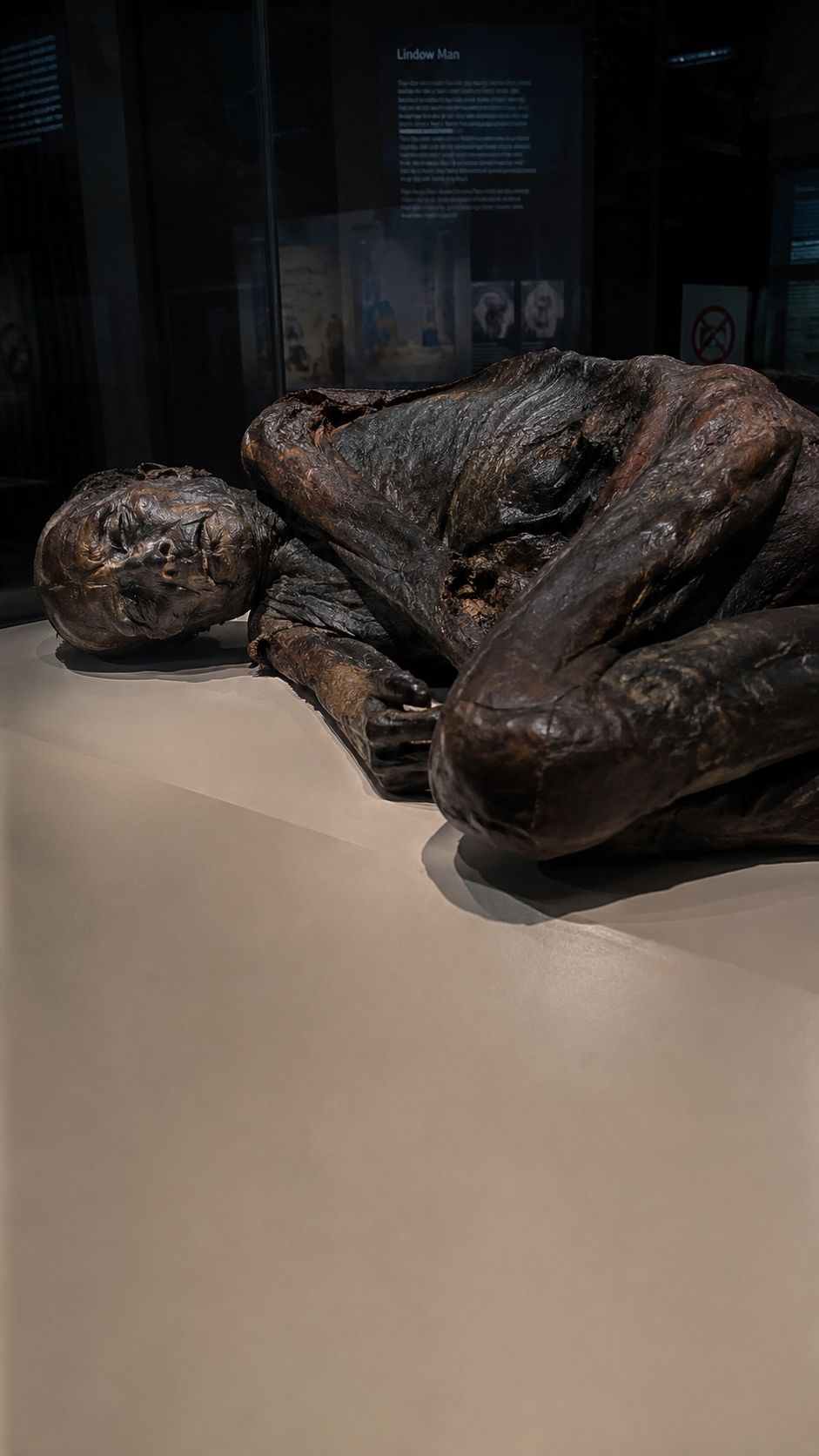 The Bog Body With Three Ways To Die
A 2,000-year-old body pulled from a Cheshire bog bore a smashed skull, a garrotte, and a slit throat.
Lindow Moss, Wilmslow, United Kingdom · 60 · 37 km away
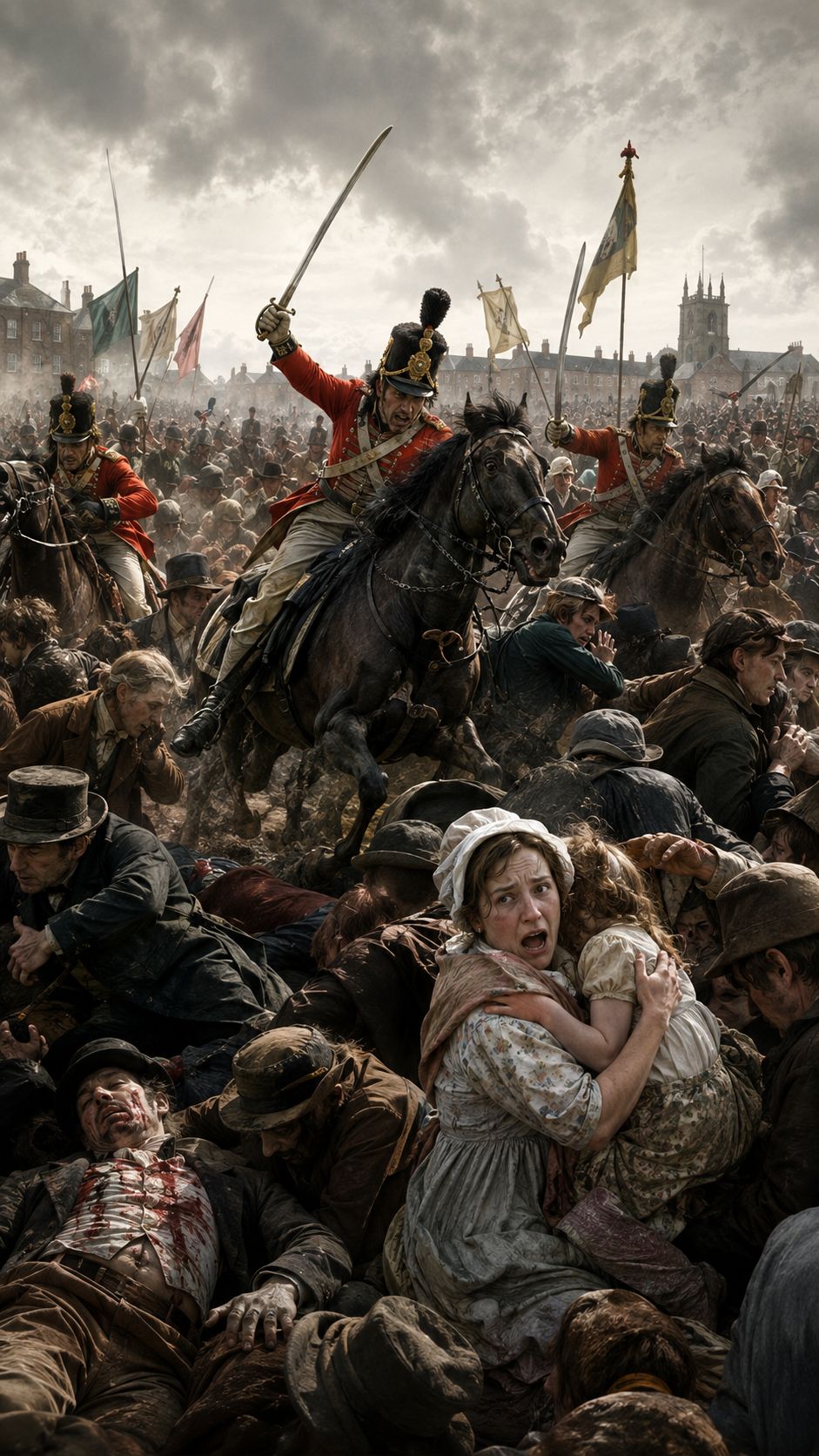 The Law Behind Reading The Riot Act
A phrase for a stern telling-off was once the legal warning before cavalry charged a crowd with sabres drawn.
Manchester, United Kingdom · 1819 · 44 km away
More like this
- The Heretic Burned By The Reformers Who Fled Rome
Calvin's Geneva burned a brilliant Spanish physician for his beliefs, then, centuries later, erected a monument of atonement.
Champel, Geneva, Switzerland · 1553
 The Heretic Burned For What He Thought
After eight years of imprisonment, he refused to recant his vision of an infinite universe, and paid with his life.
Campo de' Fiori, Rome, Italy · 1600
 The Poltergeist That Attacks Visitors In Edinburgh
Over 350 visitors have reported being scratched, bruised and knocked unconscious at one graveyard tomb.
Greyfriars Kirkyard, Edinburgh, United Kingdom · 1999
 The Parson Who Danced To His Own Burning
A beloved country parson faced being burned alive with such joy that he turned his execution into a triumph.
Hadleigh, Suffolk, United Kingdom · 1555