Alice’s Adventures in Wonderland is one of the most beloved children’s books ever written — a story of nonsense, wordplay, and dream logic that has been read by generations and adapted into dozens of films. The 1951 Disney version made it a Technicolor fantasy. The 2010 Tim Burton version made it a feminist adventure. But the reality of how the book was born, and who its author was, is so much stranger and more unsettling than any Cheshire Cat or Queen of Hearts — because the man who wrote it was a 30-year-old mathematics lecturer at Oxford who spent his life surrounded by little girls, photographing many of them naked, and whose family burned the evidence.
Charles Lutwidge Dodgson was born in 1832 in Daresbury, Cheshire, the son of a vicar. He was a brilliant mathematician, a deacon in the Church of England, and from his mid-twenties onward, he developed what he called a “special friendship” with children — almost exclusively girls. He would meet them in parks, invite them to his rooms at Christ Church, Oxford, take them on boat trips, and photograph them. He kept meticulous registers of every child he met: their names, ages, addresses, and the dates of their visits.
The Horror
Alice Pleasance Liddell was the daughter of Henry Liddell, the Dean of Christ Church. Dodgson met her when she was four. By the time she was ten, he was taking her on extended boat trips up the Thames with her sisters, telling them stories to pass the time. On 4 July 1862, during one such trip, Dodgson told the story that would become Alice’s Adventures in Wonderland. Alice begged him to write it down. He did.
But the friendship had darker undertones. Dodgson was an avid photographer — one of the earliest serious photographers in England — and his surviving portfolio contains over 3,000 images. Of these, roughly 30 are of nude or semi-nude children, almost all girls. A surviving photograph from 1858 shows Alice Liddell herself, aged about six or seven, naked except for a loose piece of fabric, posed against a studio backdrop. The image is held today in the Princeton University Library collection. Dodgson’s family later claimed he photographed nude children only with parental permission and as “studies of innocence.” But the context is impossible to ignore: a grown man, alone in his rooms with little girls, asking them to undress for the camera.
In June 1863, something happened. The Liddell family suddenly cut off all contact with Dodgson. The exact reason is unknown — the pages of his diary covering April to May 1863 were destroyed by his family after his death. One theory, recorded by his nephew, is that Mrs. Liddell discovered Dodgson’s interest in Alice was “unhealthy” and demanded he stay away. Another suggests he proposed marriage to the family’s governess. Whatever the cause, the Liddells barred him from their home. He never photographed Alice again. He continued, however, to photograph other children — nude and clothed — until he gave up photography entirely in 1880. He never married. He never had adult romantic relationships that are recorded. He died in 1898, and his family spent the next decade censoring his papers, burning letters, and sanitizing his image for publication.
The Modern Relic
The relic is the photograph. The image of Alice Liddell, naked at six or seven, still exists in an archive at Princeton University — a physical object that connects the whimsical book to the unsettling reality of its creation. Dodgson’s original manuscript of Alice’s Adventures Under Ground, handwritten and illustrated by him for Alice personally, is preserved in the British Library. You can see it today — the neat Victorian handwriting, the sketches of a small girl in a dress, the story that began on a boat trip with a man who would later be banned from her home. The book is a masterpiece of children’s literature. The man who wrote it was, at best, a man who could not form adult relationships and channeled his emotional life into the company of little girls. At worst, he was something far darker — and his family made sure we would never know for certain.
Nearby on the Dark Atlas
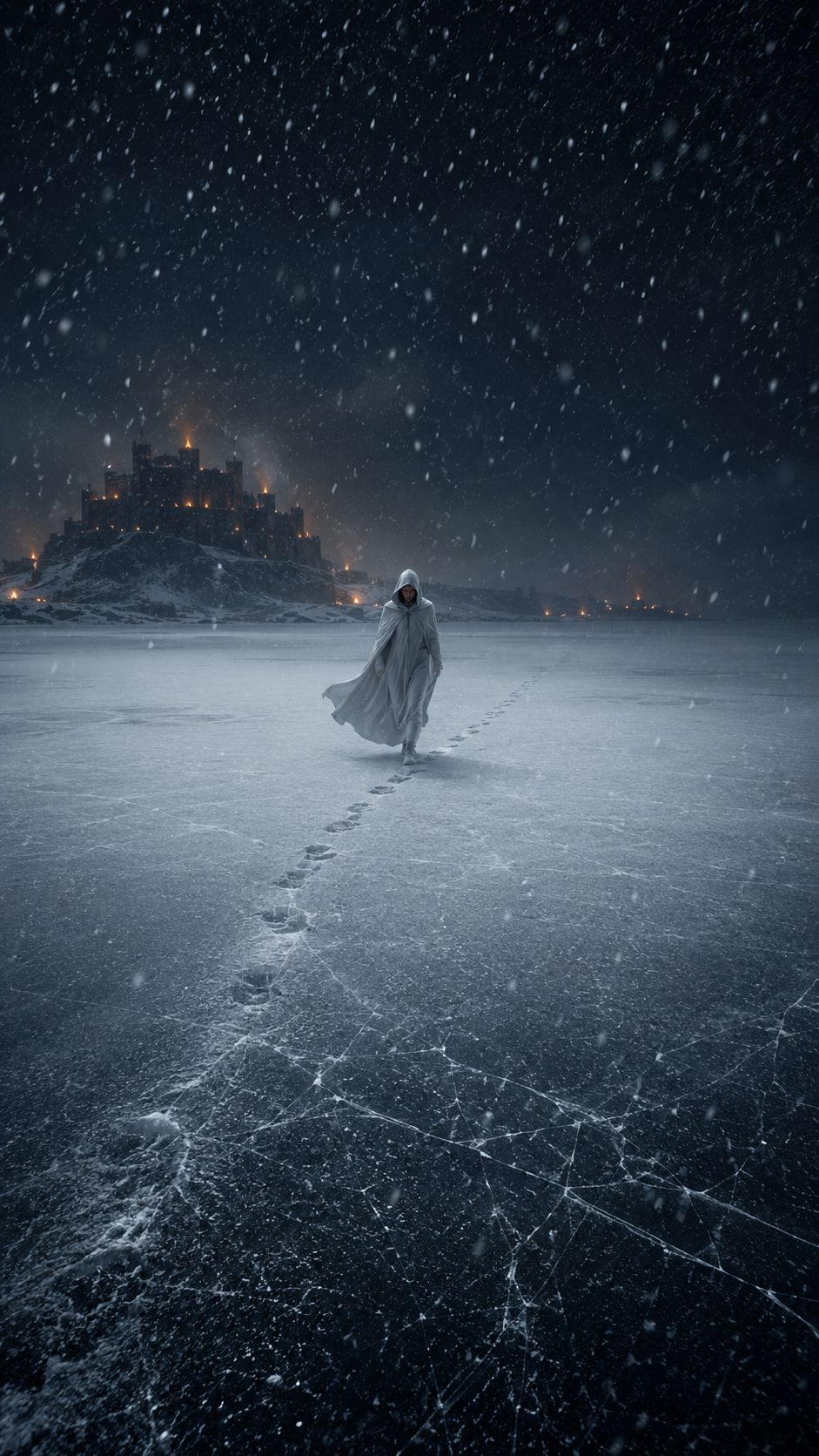 The Empress Who Escaped Through The Snow
Trapped in a besieged castle, England's rightful heir was lowered by rope into a snowstorm in white and walked to freedom.
Oxford Castle, Oxford, United Kingdom · 1142 · same site
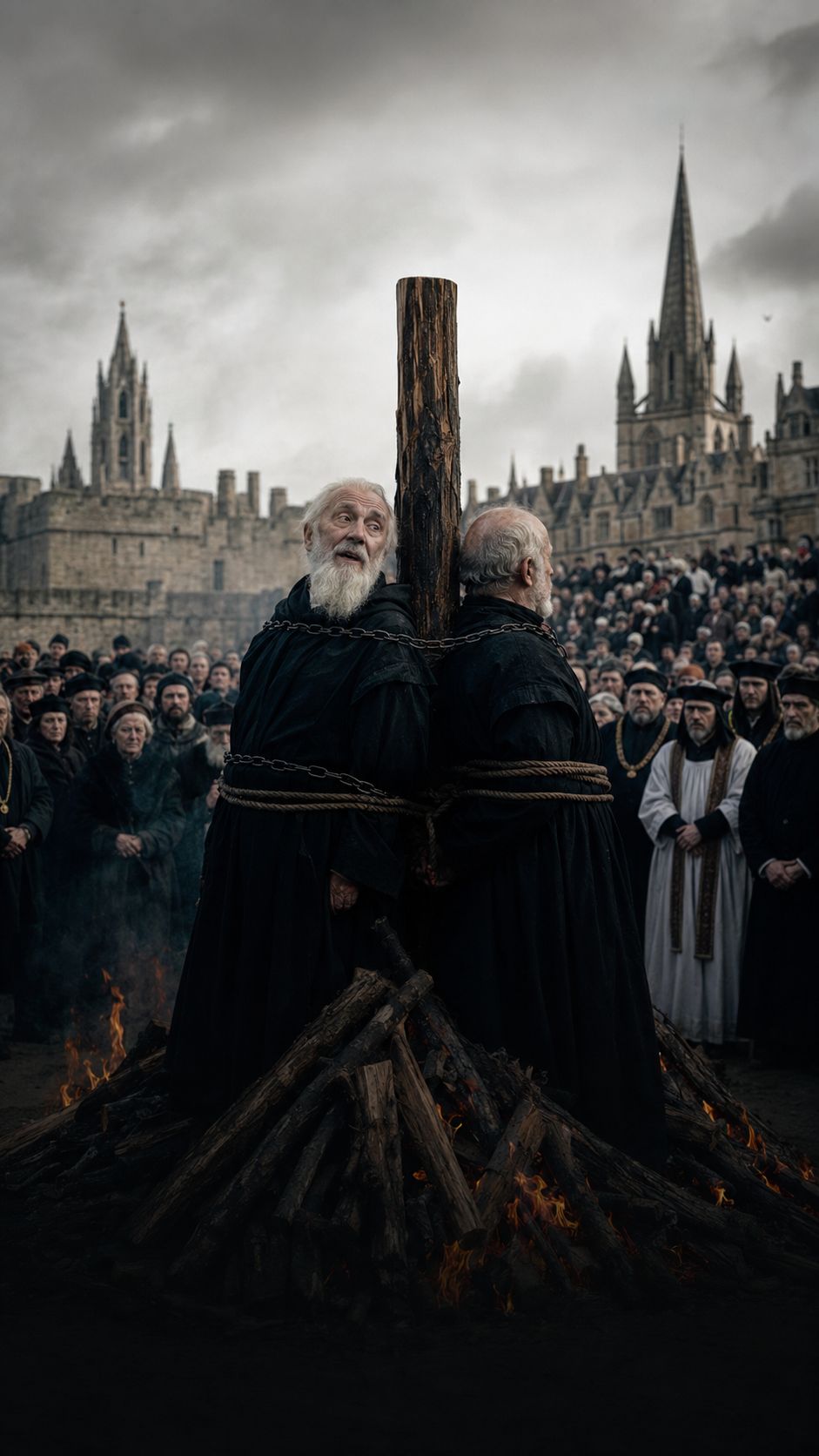 The Bishop's Candle That Lit The Reformation
Burning at the stake beside a fellow bishop, he promised their deaths would light a candle that could never be put out.
Oxford, United Kingdom · 1555 · same site
- The Candle That Would Never Be Put Out
Burned together for their faith, one died quickly while the other screamed in agony for nearly an hour.
Oxford, United Kingdom · 1555 · same site
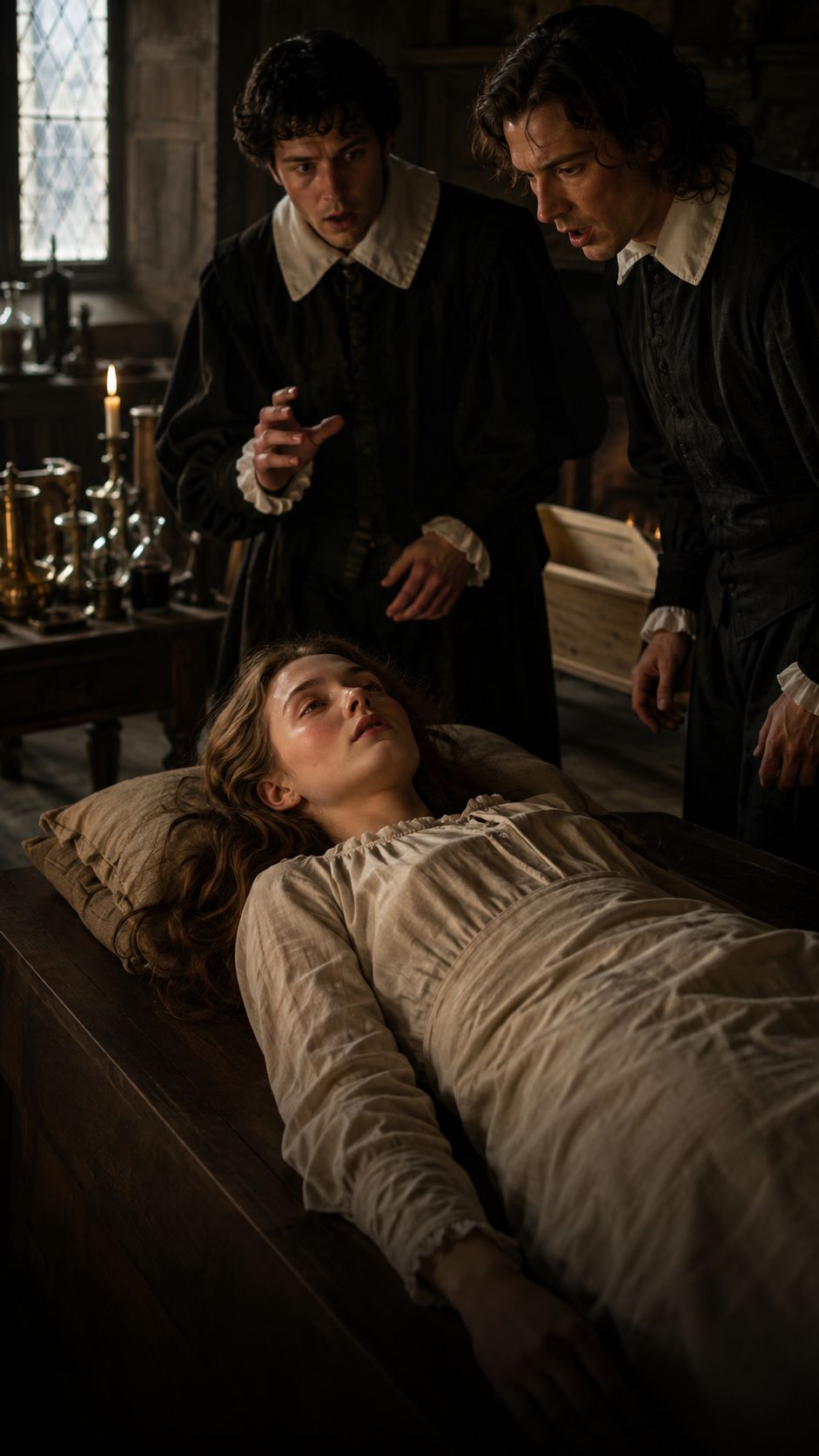 The Woman Who Woke Up In Her Own Coffin
Hanged, sealed in a coffin, and delivered to anatomists with knives ready, she was found alive when they opened the lid.
Oxford, United Kingdom · 1650 · same site
More like this
 The Rape Trial That Ended In Trial By Combat
A woman's accusation of rape led to France's last judicial duel, with her own life staked on the outcome.
Paris, France · 1386
- The Parish Registers Of The Beast's Victims
Between 1764 and 1767 something killed roughly a hundred people, recorded in the registers as 'devoured by the beast.'
Saugues, France · 1764
- The Manufacturing Of England's Most Haunted House
For decades it was called the most haunted house in England, until its ghost story revealed how a haunting gets made.
Borley, Essex, United Kingdom · 1929
- The Truth Behind The Elephant Man
The real man behind the famous film was quieter, stranger and far more heartbreaking than any screenplay.
Whitechapel, London, United Kingdom · 1890