
Everyone knows the fairy tale of the Pied Piper of Hamelin — the colourful piper who rids a town of rats with his magic music, is cheated of his payment, and takes his terrible revenge by luring away the town’s children. It’s a children’s story, a Brothers Grimm classic. But here is the part almost no one knows: it is based on a real, documented event. A real medieval town genuinely recorded that on one summer day, 130 of their children vanished — and to this day, more than 700 years later, no one knows what happened to them.
The Horror
The town is Hamelin — Hameln — a real place in Lower Saxony, in northern Germany, that still exists today. And the people of Hamelin did not treat the loss of their children as a story. They treated it as a real tragedy, a wound in their community, and they recorded it obsessively for centuries.
The oldest evidence is not a book — it’s a picture. Around the year 1300, the townspeople of Hamelin had a stained-glass window installed in their Market Church, and it depicted a piper in bright, multicoloured clothing leading a group of children, dressed in white, out of the town. This window was made to commemorate a real event that the town wanted never to forget. The original was destroyed in 1660, but descriptions and copies of it survive, and they all show the same haunting scene: the piper, and the children following him away.
And then there are the written records — and they are chilling in their simplicity. An entry in the town chronicle of Hamelin, written in 1384, contains a single, heartbreaking line. It says, simply: “It is 100 years since our children left.” A hundred years later, the town was still counting, still grieving, still marking the anniversary of the day their children walked away.
The town of Hamelin, in fact, began to reckon their calendar from the event, as if it were the most important thing that had ever happened to them. On a gate built into the town walls in 1556, an inscription was carved that read: “In the year 1556, 272 years after the magician led 130 children out of the town, this portal was erected.” They were literally dating their buildings by how long it had been since the children vanished.
The oldest surviving detailed written account, a manuscript from around 1440, gives us the specifics that the town preserved: “In the year of 1284, on the day of Saints John and Paul on the 26th of June, by a piper clothed in many kinds of colours, 130 children born in Hamelin were seduced, and lost at the place of execution near the Koppen” — the Koppen being the hills outside the town. A precise date. A precise number: one hundred and thirty. A piper in “pied” — multicoloured — clothing. And a vanishing.
Now, here is the twist that makes the real story so different from the fairy tale you know. The rats — the whole famous plague of rats, the piper being hired as a rat-catcher, the mayor refusing to pay him, and the piper taking the children as revenge — none of that is in the original accounts. The earliest records say nothing at all about rats or about revenge. They speak only of the piper and the vanished children. The rats were not added to the story until around the middle of the 1500s — nearly 300 years later — and the whole rat-catcher-and-revenge plot was cemented much later still, by writers including the Brothers Grimm in the 19th century. The comforting fairy-tale logic — the piper had a reason, the town brought it on themselves — was grafted on centuries after the fact. Strip it away, and what’s left in the original record is far more unsettling: 130 children simply followed a stranger out of their town on a summer’s day, and were never seen again. No reason. No explanation. Just a number, a date, and an absence.
So what really happened to the children of Hamelin? The honest answer is that nobody knows for certain, and historians have argued over it for centuries. There are several theories. Some believe the “piper” is a symbol for death itself — that the children died in a mass tragedy, perhaps a plague, a drowning in the River Weser, a landslide, or a catastrophe during a midsummer festival, and the town wrapped the horror in the image of a piper leading them away. Some think it refers to the Children’s Crusade, one of the medieval movements in which the young were swept up and marched off, most of them to death, disaster, or slavery, never to return home.
But the leading modern theory is, in some ways, the saddest and most human of all. Many historians now believe the “piper” was a real man — but a recruiter. In this period, German lands to the east were being colonised and settled, and professional recruiters, sometimes called “locators,” would travel through towns dressed in bright, eye-catching clothing, drumming up young people to leave home and start new lives as settlers in distant eastern territories like Brandenburg, Pomerania, and Silesia. One researcher traced surnames from the Hamelin region and found them appearing in exactly those eastern settlement areas in the right period. In this reading, the “children” of Hamelin — perhaps meaning the town’s young people — did not die at all. They were led away by a colourful stranger, following the promise of a new life, and they marched off to the east and never came home to Hamelin again. To the parents left behind, whose sons and daughters vanished over the horizon and never returned, it would have felt exactly like a loss, like a death — a whole generation gone, following a piper into the unknown.
THE MODERN RELIC And here is the most haunting proof of all that this was real to the people of Hamelin — a relic you can walk down today. In Hamelin, there is a street called Bungelosenstrasse — which means, roughly, “the street without drums.” It is believed to be the very street down which the 130 children passed on their way out of the town, for the last time. And for centuries, right up to the present day, out of respect and mourning for the lost children, it has been forbidden to play music or to dance on that street. To this day, if a wedding or a funeral procession with a band passes through Hamelin, the music falls silent as it crosses Bungelosenstrasse, and only resumes on the other side. Seven hundred and forty years later, the town still holds its breath in silence on the street where its children were last seen.
The town of Hamelin still stands, and it has never forgotten. It embraces its haunting legend, with statues and reenactments and the famous “Rat-catcher’s House.” But beneath the tourist-friendly fairy tale lies that stark, real, medieval record — a window, a chronicle, a silent street — testifying that once, on a midsummer day in 1284, 130 children walked out of a real town behind a man in motley colours, and never, ever came back. It is one of the oldest cold cases in the world, and the children of Hamelin have never been found.
Nearby on the Dark Atlas
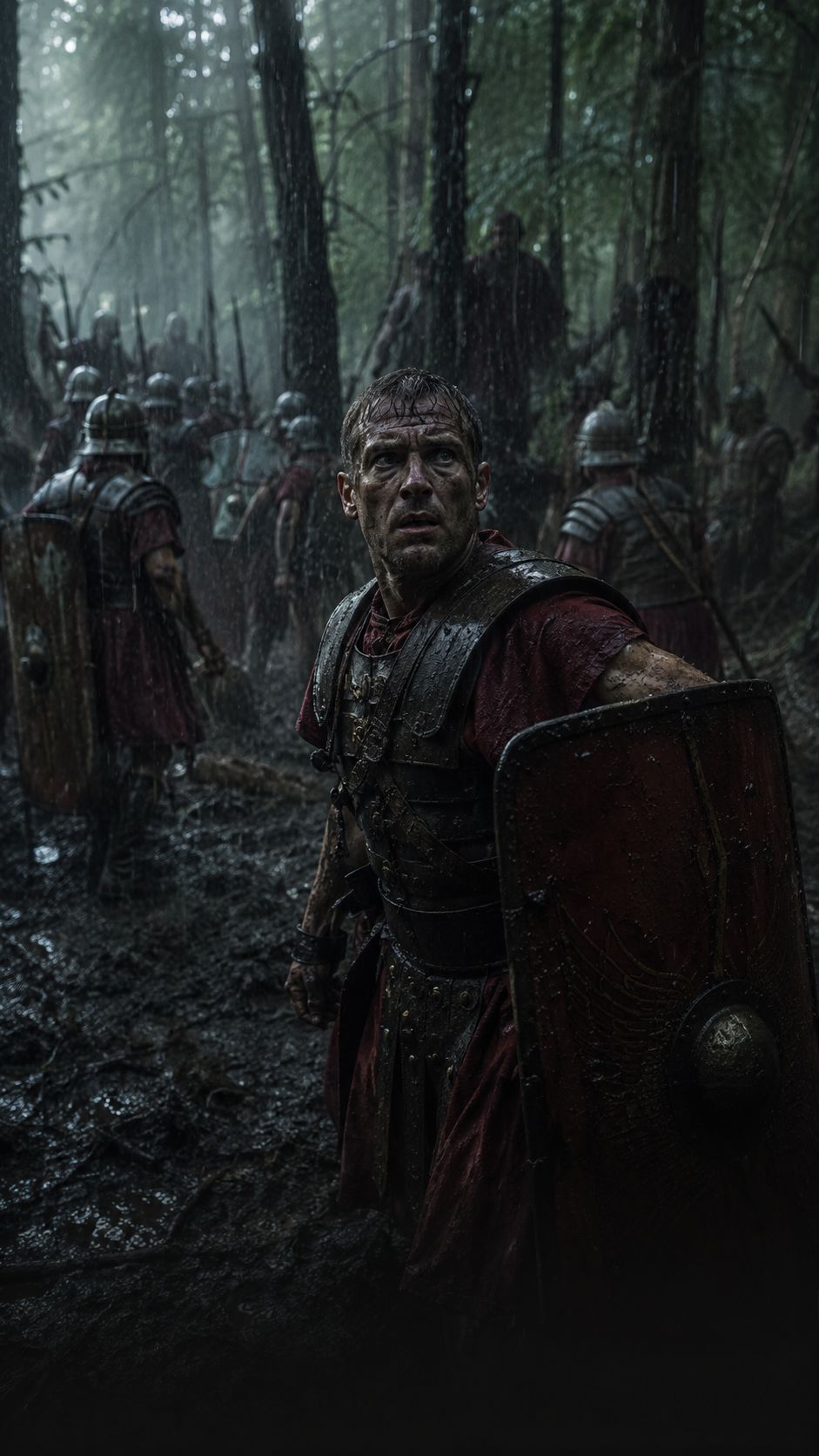 The Betrayal That Cost Rome Three Legions
A trusted Germanic prince led three Roman legions into an ambush so total the survivors found only bleached bones years later.
Teutoburg Forest, Germany · 9 · 60 km away
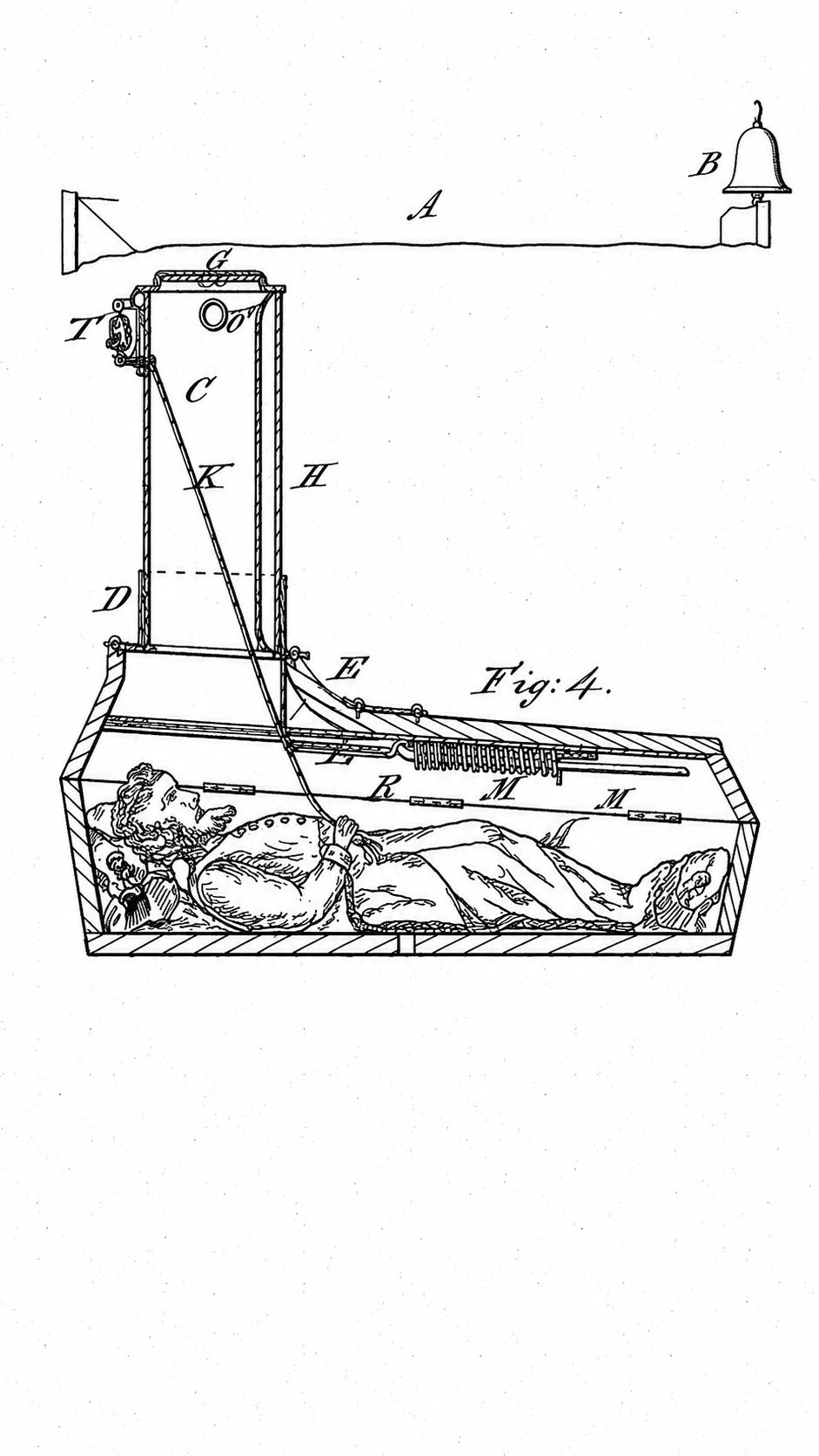 The Bells Rigged For The Not-Quite-Dead
Before the stethoscope existed, doctors couldn't reliably tell the dead from the merely unconscious, so inventors built coffins with bells attached.
Braunschweig, Germany · 1798 · 82 km away
- The Blood And Blindness In The Original Cinderella
There is no fairy godmother in the Grimms' first Cinderella, only a grave, mutilation, and eyes pecked out by birds.
Kassel, Germany · 1812 · 88 km away
- The Original Snow White's Own Mother
In the Grimms' first edition, it isn't a stepmother who wants Snow White dead, it's her own mother.
Kassel, Germany · 1812 · 88 km away
More like this
 The Rape Trial That Ended In Trial By Combat
A woman's accusation of rape led to France's last judicial duel, with her own life staked on the outcome.
Paris, France · 1386
- The Parish Registers Of The Beast's Victims
Between 1764 and 1767 something killed roughly a hundred people, recorded in the registers as 'devoured by the beast.'
Saugues, France · 1764
- The Manufacturing Of England's Most Haunted House
For decades it was called the most haunted house in England, until its ghost story revealed how a haunting gets made.
Borley, Essex, United Kingdom · 1929
- The Truth Behind The Elephant Man
The real man behind the famous film was quieter, stranger and far more heartbreaking than any screenplay.
Whitechapel, London, United Kingdom · 1890