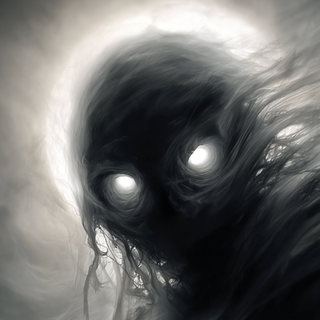
In 1508, Pope Julius II — the “Warrior Pope,” famous for his campaigns and explosive temper — summoned Michelangelo Buonarroti to Rome and ordered him to paint the ceiling of the Sistine Chapel.
Michelangelo refused. He was a sculptor. He had just completed the David in Florence. He was working on Julius’s own tomb, a vast sculptural project he considered his true calling. Painting large frescoes was not what he wanted to do.
He wrote to friends that this was “not my profession.” He suspected that his rival, the painter Raphael, had encouraged the commission specifically to humiliate him: force the great sculptor to paint, watch him fail, and take the glory. Whether that conspiracy was real or imagined, the pressure was real.
Julius did not care. When the Pope insists, you do not decline.
The Horror
Michelangelo spent the next four years — from 1508 to 1512 — covering more than 500 square metres of ceiling, about 20 metres above the chapel floor. He designed and built his own scaffolding, mixed his own plaster, and eventually dismissed most of his assistants because he found their work inadequate. The ceiling, with its hundreds of figures, is overwhelmingly his hand.
Contrary to the popular image from films like The Agony and the Ecstasy, he did not lie on his back to paint. He worked standing upright on platforms, head tilted back, arms raised overhead, painting onto the curved vault above him day after day.
The physical toll was brutal. In a famous satirical poem, accompanied by a small sketch of himself bent under the ceiling, he described his posture and suffering. In loose translation, he complains that:
His belly is pushed up under his chin.
His beard points toward heaven.
His neck has a hump and his breast feels warped.
Paint drips down constantly, making “a rich pavement” of his face.
His loins are jammed into his belly, his backside stuck like a saddle.
He ends: “I am not in the right place — I am not a painter.”
He wrote that his eyesight changed from staring upward so long; for a time he could only read comfortably by holding pages above his head. His neck and spine were strained and reshaped by years of craning backward.
Yet while complaining, he painted 343 figures: prophets, sibyls, ignudi, and nine central scenes from Genesis. The Creation of Adam — the two reaching hands that have become one of the most reproduced images in history — was painted by a man standing on a wooden platform, neck screaming, eyes stinging from dripped pigment, muttering in verse that he shouldn’t be doing this.
When the ceiling was unveiled on 1 November 1512, Rome was astonished. Raphael — the rival Michelangelo feared — reportedly entered, looked up, and remarked that he was fortunate to have been born in the age of Michelangelo.
The project that Michelangelo had seen as an insult and a torture became the work that defined him for half a millennium.
The Modern Relic
Today, millions of visitors file into the Sistine Chapel each year. They shuffle into the crowded space, tilt their heads back for a few minutes, take forbidden photos with phones held overhead, and then are ushered out.
Above them, the Creation of Adam, the Separation of Light from Darkness, the prophets and sibyls all sit on a surface that once left the artist nearly blind with fatigue and covered in falling paint.
Michelangelo’s complaint‑poem survives in his own handwriting, preserved in Florentine archives. Beside the text is his small sketch: a tiny figure on a scaffold, arm stretched up, head bent back, paint dripping down. It is a self‑portrait of discomfort drawn by the greatest artist of his age about the greatest commission he never wanted.
Every poster, postcard and phone case showing God’s hand reaching toward Adam rests on years of pain and a line of poetry: “I am not a painter.”
Nearby on the Dark Atlas
 Michelangelo's Hidden Face In The Sistine Chapel
Hidden in his most famous fresco, the master painted his own tormented face on a flayed, empty human skin.
Sistine Chapel, Vatican City, Vatican City · 1541 · same site
 The Legend Of A Woman On The Papal Throne
Legend says a brilliant woman disguised herself as a monk and rose to become Pope, until the truth was exposed in the street.
Vatican City, Vatican City · 855 · same site
 The Pope Who Ran The Church Like A Crime Family
Rodrigo Borgia allegedly bought the papacy, then turned the Vatican into a den of poison and scandal.
Vatican City, Vatican City · 1492 · same site
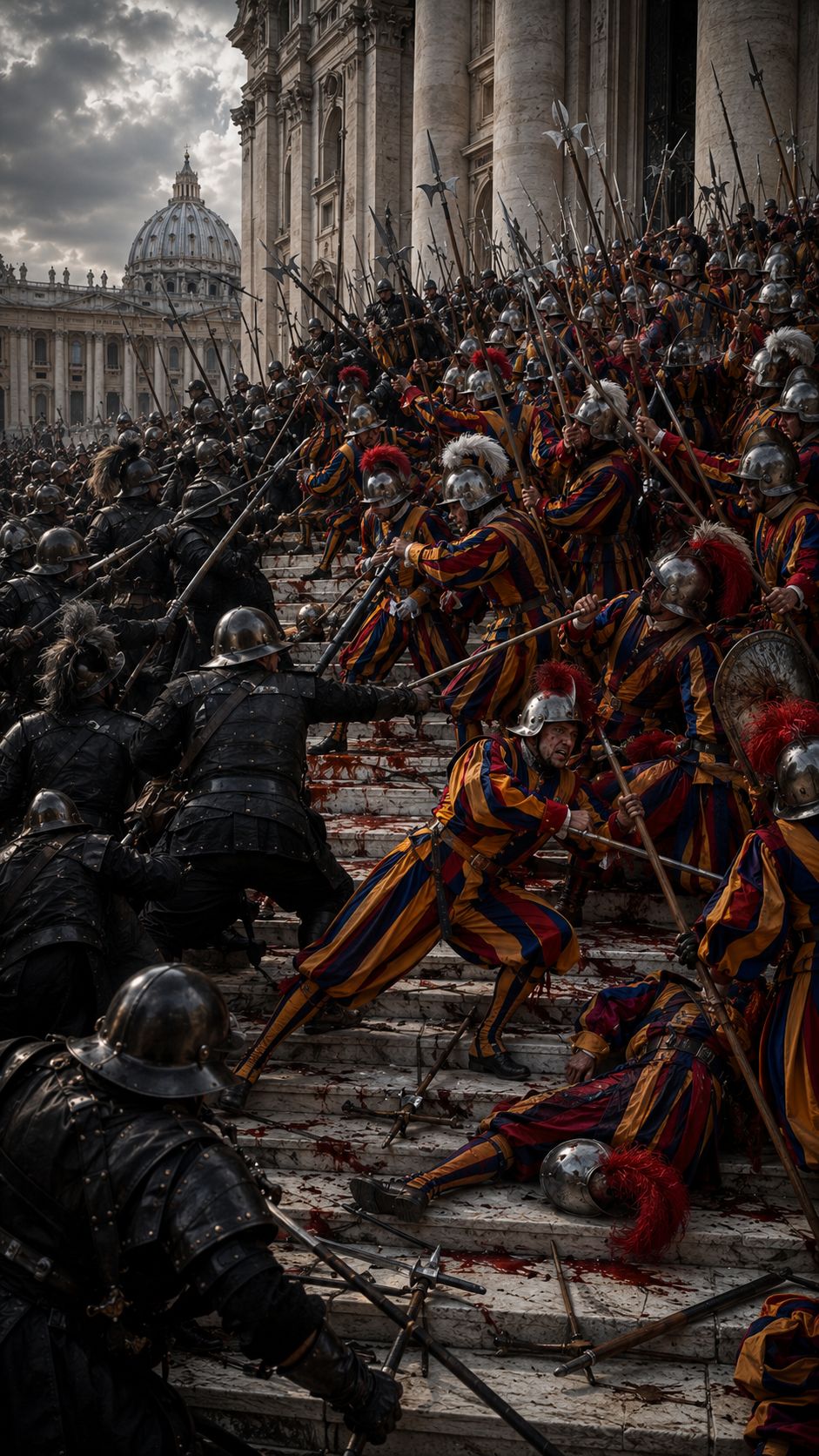 The 147 Who Died Defending The Pope
A leaderless mob of mercenaries stormed Rome, and 189 Swiss Guards held the line at the Vatican until almost none were left.
Vatican City, Vatican City · 1527 · same site
More like this
- The Heretic Burned By The Reformers Who Fled Rome
Calvin's Geneva burned a brilliant Spanish physician for his beliefs, then, centuries later, erected a monument of atonement.
Champel, Geneva, Switzerland · 1553
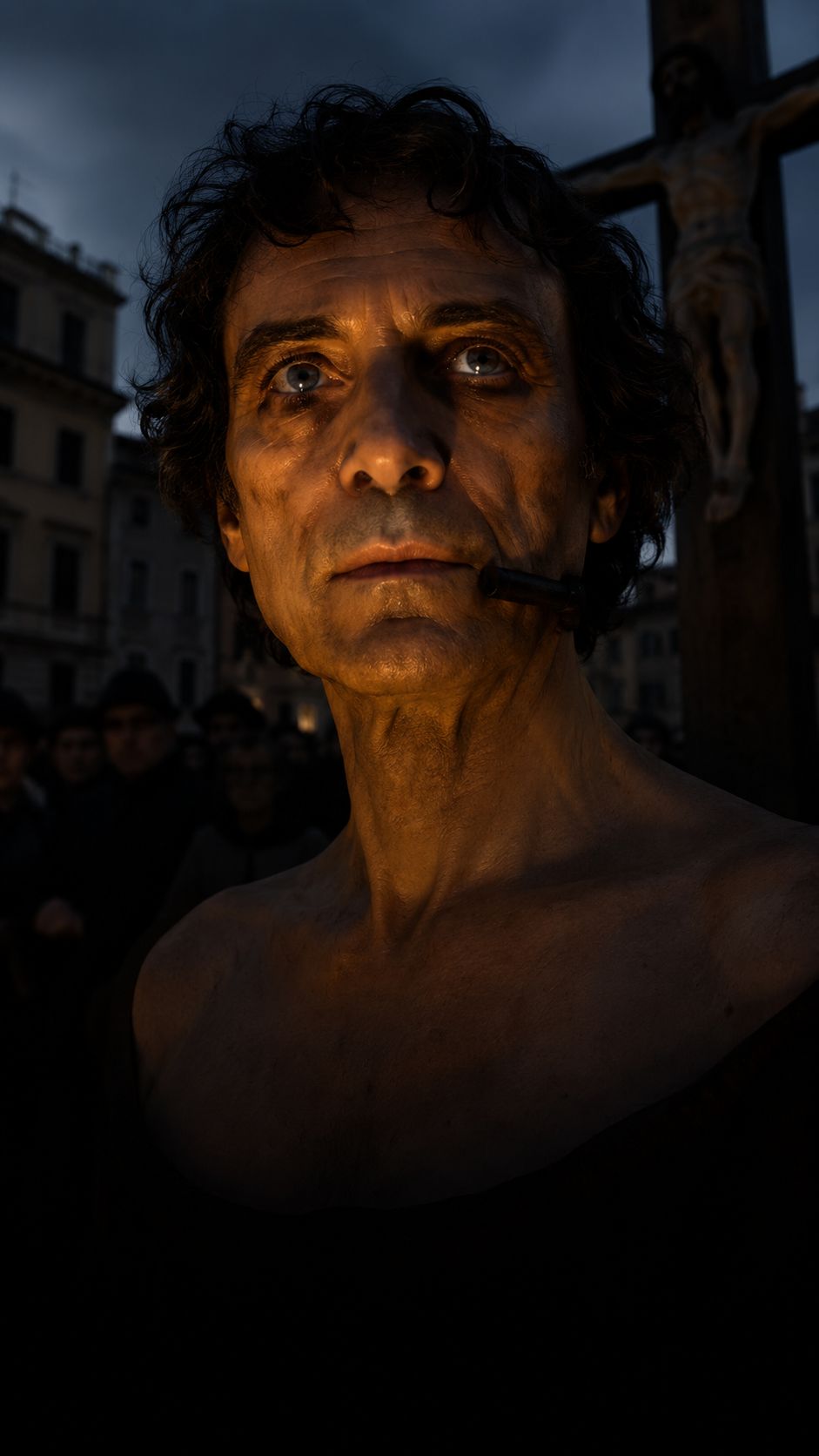 The Heretic Burned For What He Thought
After eight years of imprisonment, he refused to recant his vision of an infinite universe, and paid with his life.
Campo de' Fiori, Rome, Italy · 1600
 The Poltergeist That Attacks Visitors In Edinburgh
Over 350 visitors have reported being scratched, bruised and knocked unconscious at one graveyard tomb.
Greyfriars Kirkyard, Edinburgh, United Kingdom · 1999
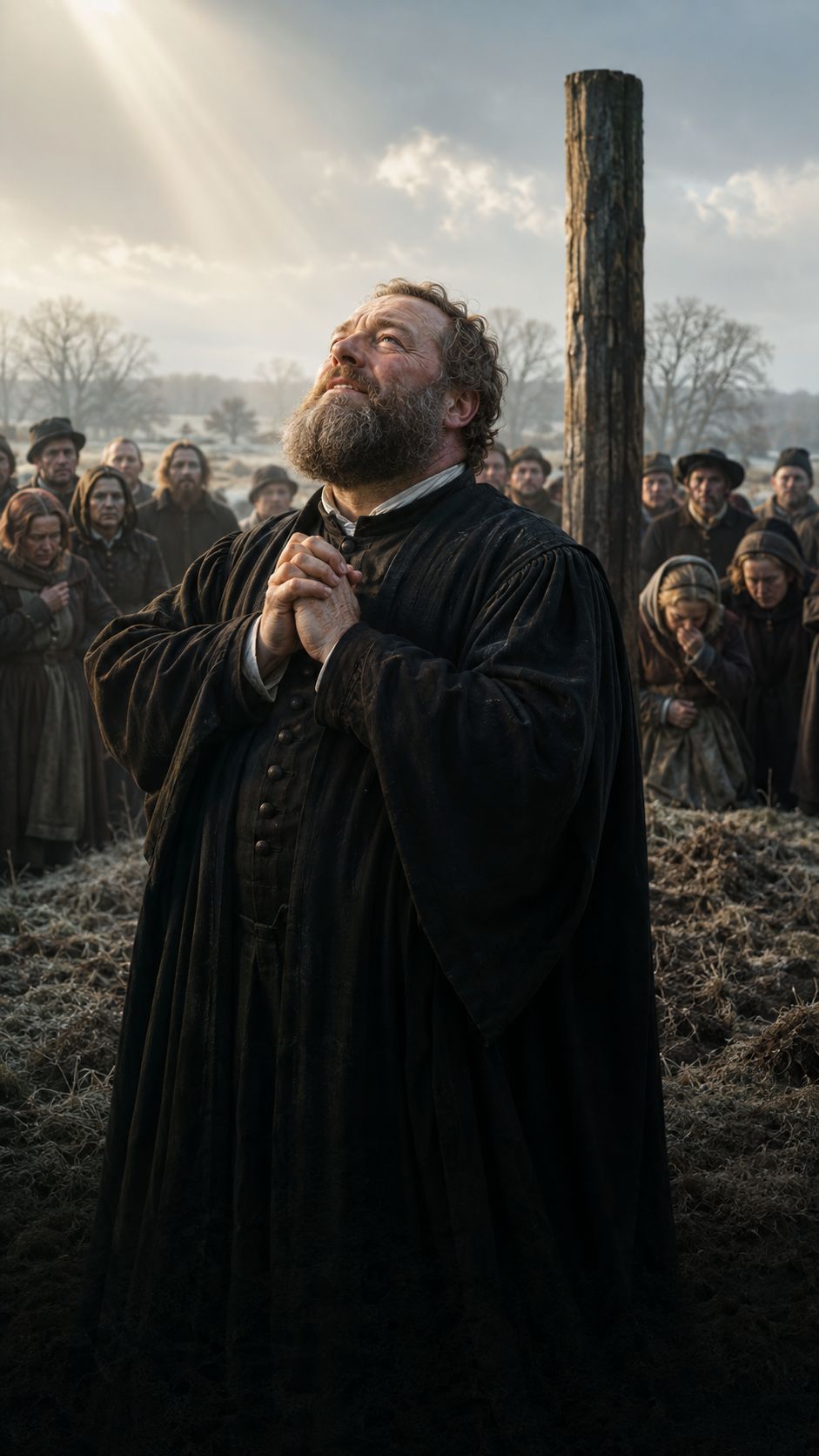 The Parson Who Danced To His Own Burning
A beloved country parson faced being burned alive with such joy that he turned his execution into a triumph.
Hadleigh, Suffolk, United Kingdom · 1555