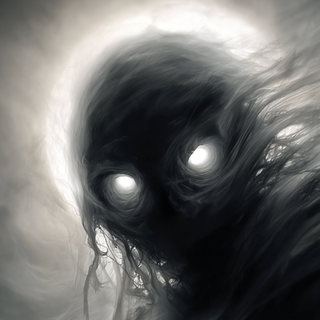
Michelangelo is remembered as the greatest artist who ever lived — the creator of the David, the Pietà, the Sistine Chapel. But behind that towering genius lay a dark and secret obsession, and a haunting, hidden confession that he buried in his most famous work: his own face, flayed from his body, hanging over the pits of Hell.
To understand it, you have to understand where his genius came from. Michelangelo’s figures — in marble and in paint — have a quality that no artist before him ever achieved: they look genuinely, breathtakingly alive. Their muscles ripple with real tension, their veins seem to carry blood, their bodies twist and strain as if flesh and bone lay just beneath the surface. And that was no accident, and no mere gift. It was the product of a secret, gruesome apprenticeship carried out in the dead of night.
The Horror
In 1492, Michelangelo was just seventeen years old, a prodigy in Florence. And he made an extraordinary arrangement. He went to the prior — the head — of the church and monastery of Santo Spirito, which ran a hospital, and he asked for permission to do something few people had the stomach for: to dissect the corpses of the patients who died there.
The prior agreed. And so, for the next several years, the teenage Michelangelo spent his nights alone in a back room of the hospital, by the flickering light of a single candle, cutting open dead human bodies. He peeled back skin. He separated muscles from bone. He traced tendons and ligaments and studied how the joints moved, how the body was constructed from the inside out. It was patient, methodical, and, by the standards of the time, deeply taboo — the Church frowned heavily on the dissection of the dead, and it was a grim, secretive, unsettling business, working over rotting corpses in the dark. But Michelangelo was relentless. He wanted to understand the human body more completely than any artist ever had — to know it so well that he could carve or paint it from memory, from the bone outward.
He kept this up for years, from around the age of seventeen to twenty. And in gratitude to the prior who had given him the bodies, Michelangelo carved a beautiful wooden crucifix from the hospital’s own leftover wood and gave it to the church — a crucifix that still hangs in Santo Spirito in Florence to this day, a quiet relic of that dark bargain.
Everything Michelangelo made afterward was built on what he learned in that candlelit room full of the dead. The David, standing perfect and tense; the muscular, straining figures of the Sistine ceiling; the exquisite anatomy of the Pietà — all of it flows from those years spent cutting open corpses. He had learned to see through the skin.
But the flesh that gave him his genius also seems to have haunted him. Michelangelo was a famously tormented, brooding, deeply religious man, who wrote of himself as a penitent tortured by the sufferings and burdens of “the flesh.” And near the end of his life, all of that darkness poured out into one final, astonishing image.
Between 1536 and 1541, in his sixties, Michelangelo painted his last great masterpiece: The Last Judgment, the colossal, terrifying fresco that covers the entire altar wall of the Sistine Chapel. It shows the end of the world — Christ rising in judgment, the saved ascending to Heaven, and the damned being dragged down, screaming, into Hell. It is one of the most powerful and disturbing images in the history of art. And it caused a scandal in its own time, because Michelangelo painted the holy figures nude, exposed — which outraged critics who thought it obscene to show such nakedness in the most sacred church in Christendom.
THE MODERN RELIC And it is in this vast, swirling vision of judgment that Michelangelo hid his final, chilling secret.
Just below and to the right of Christ sits the figure of St. Bartholomew — one of the twelve apostles, who, according to Christian tradition, was martyred by being flayed alive, his skin cut from his living body. And so Bartholomew is painted holding the symbols of his martyrdom: a flaying knife in one hand, and in the other, draped and dangling from his grip, his own empty human skin — a limp, sagging, flayed hide, the whole surface of a person peeled off and hanging loose over the abyss, with the fires of Hell below.
And when you look closely at the face on that empty, flayed skin — the drooping, distorted, hollow features of the hide hanging from Bartholomew’s hand — it is a portrait. It is Michelangelo himself. The greatest artist in history painted his own face onto a piece of flayed human skin, a limp and lifeless husk, dangling over Hell in his masterpiece.
Art historians have puzzled over what it means for centuries, and it is one of the most haunting self-portraits ever made. Some see it as a raw confession of Michelangelo’s spiritual anguish — the tormented artist depicting himself as an empty shell, his soul flayed and stripped bare, hanging in terror between Heaven and Hell, begging for salvation. Some read it as a bitter comment on how the brutal, all-consuming labour of his art had, in a sense, flayed him alive — how he had poured his very flesh and being into his work until nothing was left but an empty skin. And some connect it to the fierce criticism the fresco received: a self-mocking, defiant response to those who attacked him, painting his own face as a discarded hide. Whatever he meant, the image is unforgettable: the man who learned the human body by peeling apart corpses in the dark ended his masterpiece by peeling his own face from his body and hanging it over Hell.
The relics are the works themselves, and you can go and stand before them. The wooden crucifix Michelangelo carved as payment for the corpses still hangs in the church of Santo Spirito in Florence. And in the Sistine Chapel in Vatican City, beneath the famous ceiling, on the great altar wall, the Last Judgment still looms — and if you look for it, just below Christ, you can find the flayed skin of St. Bartholomew, drooping and empty, with the tortured, hollow face of Michelangelo Buonarroti gazing out of it, forever. The genius who saw through the skin of the human body left his own hanging in the most sacred room in the world — a secret, ghostly confession from the greatest artist who ever lived.
Nearby on the Dark Atlas
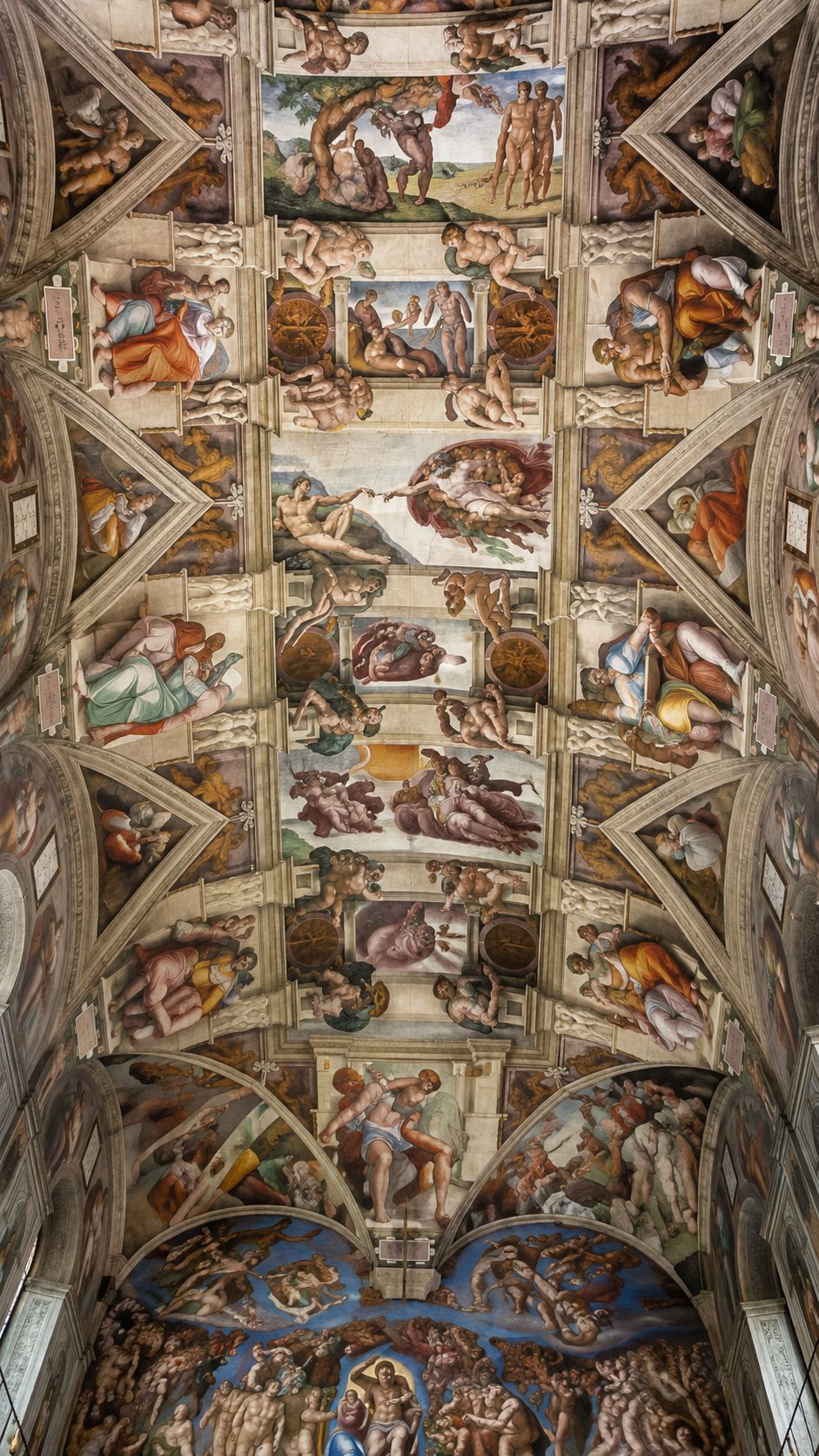 The Sculptor Forced To Paint A Masterpiece
A sculptor who insists painting isn't his profession is ordered by a warrior pope to cover an entire chapel ceiling instead.
Vatican City, Rome, Italy · 1508 · same site
 The Legend Of A Woman On The Papal Throne
Legend says a brilliant woman disguised herself as a monk and rose to become Pope, until the truth was exposed in the street.
Vatican City, Vatican City · 855 · same site
 The Pope Who Ran The Church Like A Crime Family
Rodrigo Borgia allegedly bought the papacy, then turned the Vatican into a den of poison and scandal.
Vatican City, Vatican City · 1492 · same site
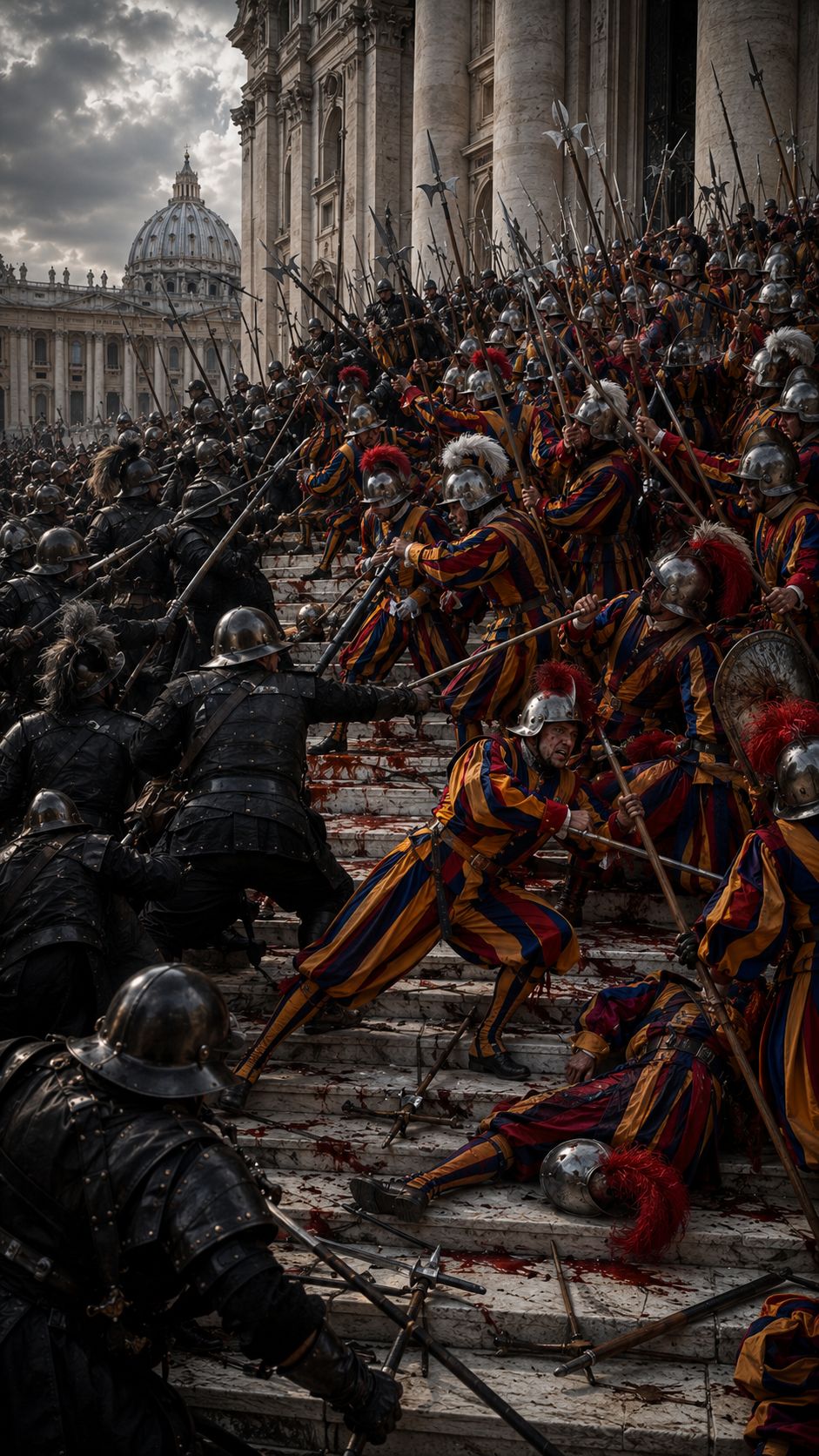 The 147 Who Died Defending The Pope
A leaderless mob of mercenaries stormed Rome, and 189 Swiss Guards held the line at the Vatican until almost none were left.
Vatican City, Vatican City · 1527 · same site
More like this
- The Leper King's Story No Film Would Show
Kingdom of Heaven gave him a dignified death behind a silver mask, the truth was far crueller.
Jerusalem, Israel · 1185
- The Heretic Burned By The Reformers Who Fled Rome
Calvin's Geneva burned a brilliant Spanish physician for his beliefs, then, centuries later, erected a monument of atonement.
Champel, Geneva, Switzerland · 1553
- The Truth Behind The Elephant Man
The real man behind the famous film was quieter, stranger and far more heartbreaking than any screenplay.
Whitechapel, London, United Kingdom · 1890
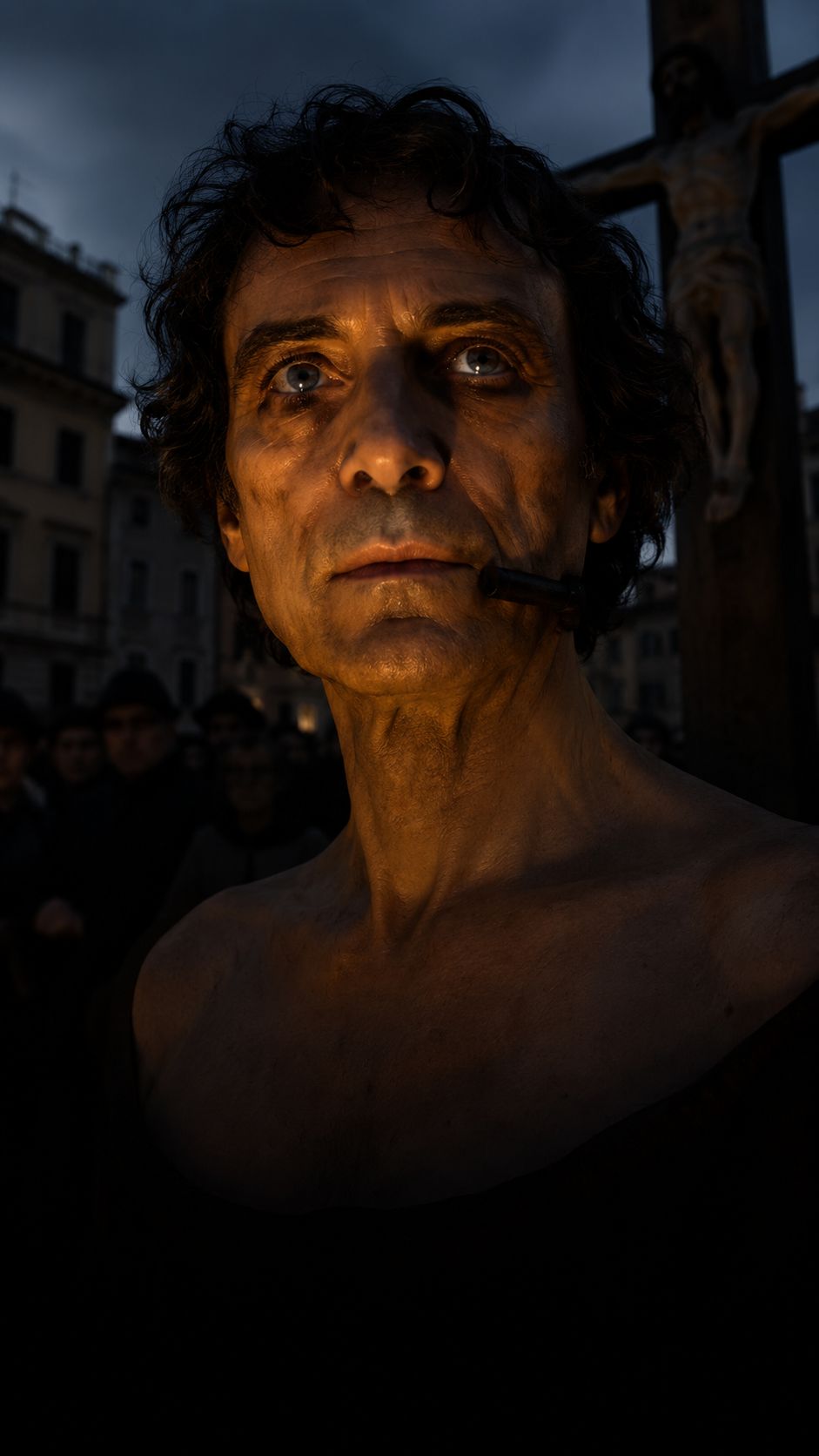 The Heretic Burned For What He Thought
After eight years of imprisonment, he refused to recant his vision of an infinite universe, and paid with his life.
Campo de' Fiori, Rome, Italy · 1600