Túpac Amaru II is one of the most powerful and tragic figures in the history of the Americas — a man who led the greatest rebellion the Spanish colonial empire in the Americas ever faced, who was subjected to one of the most horrifying public executions ever recorded, and whose final, defiant words turned a broken body in a Peruvian square into an immortal symbol of resistance that echoes to this very day.
To understand him, you have to go back to the Andes of the 18th century, to a land groaning under Spanish colonial rule. The indigenous peoples of Peru lived under a brutal system of forced labour and crushing taxation — worked to death in the silver mines of Potosí, exploited by corrupt officials who forced them to buy worthless goods at inflated prices. Into this world was born José Gabriel Condorcanqui — an educated, relatively wealthy man who was a kuraka, a hereditary indigenous chief, and who claimed direct descent from the last ruler of the Inca resistance. That ruler had been named Túpac Amaru, and he had been beheaded by the Spanish in Cusco’s main square in 1572. José Gabriel took his ancestor’s name — becoming Túpac Amaru II — and with it, took up his ancestor’s fight, two hundred years later.
In November 1780, he struck — seizing the hated local Spanish governor, trying him for his abuses, and hanging him in the town square of Tungasuca. Within weeks he had gone further, decreeing the emancipation of every enslaved person in Peru — decades before the wider world caught up — and his rebellion spread like wildfire. Tens of thousands of indigenous men and women flocked to his banner, and the revolt swept across southern Peru and into what is now Bolivia and Argentina. At his side, as his most trusted commander and adviser, was his formidable wife, Micaela Bastidas — a brilliant strategist who, historians have argued, was the sharper military mind of the two. In January 1781 they dared to besiege Cusco itself, the ancient Inca capital, with an army tens of thousands strong. For six furious months, Túpac Amaru II and Micaela led the largest uprising in the whole history of colonial Spanish America. But the rebellion, for all its fury, could not overcome the organised power of the colonial state. In April 1781, betrayed by some of his own followers, Túpac Amaru II was captured, along with Micaela and much of his family, and dragged to Cusco to face the vengeance of Spain.
The Horror
The Spanish authorities wanted to do more than kill him. They wanted to annihilate him, and through him, the very idea of Inca rebellion — to stage a spectacle so terrifying that no one would ever dare rise again. On the 18th of May 1781, Túpac Amaru II was brought to the Plaza de Armas, the great main square of Cusco. And his punishment began not with his own body, but with the destruction of everyone he loved, in front of his eyes. He was forced to watch as, one by one, his family and captains were executed before him: his uncle, his brother-in-law, his captains. He was made to watch the execution of his beloved wife, Micaela Bastidas — she fought her executioners, and they cut out her tongue; she was sentenced to the garrote, a hand-cranked iron collar, but when the screw could not take her slender neck, the accounts say, they finished her with a rope, a club, and kicks — in front of her husband. And most agonising of all, he was forced to witness the hanging of his own eldest son, Hipólito. His youngest son, the boy Fernando, only about ten, was made to stand and watch the entire horror.
Only after Túpac Amaru II had been broken by watching his world die did they turn to him. First, the executioner cut out his tongue. Then came the sentence the Spanish judges had specifically designed: to be torn into four pieces, alive. His arms and his legs were bound with strong ropes, and each rope was tied to a horse. The four horses were driven toward the four corners of the square, each straining to pull the rebel leader’s body apart in a different direction. It was meant to rip him into quarters. But it did not work. According to the accounts, the horses strained and heaved, and Túpac Amaru II’s body was pulled taut, his limbs dislocating from their sockets — but his body would not tear apart. Finally, sickened or simply defeated by the failure of the method, they gave up — and Túpac Amaru II was beheaded, in the very same square where his ancestor, the first Túpac Amaru, had been executed two centuries before.
The Modern Relic
The Spanish were merciless in erasing him. The official sentence survives, and it is a document of pure calculated terror: his head was sent to be displayed on a pike at the entrance of Tinta, one arm to Tungasuca, the town he had ruled as chief, the other to Carabaya, his legs to the provinces that had risen with him — and his torso burned on the hill overlooking Cusco. Micaela’s body was scattered in the same fashion. His houses were demolished and the ground sown with salt. His documents were burned, his relatives declared infamous. The colonial government even banned Inca clothing, the use of Inca titles, and the very act of calling oneself “Inca,” and tried to suppress the Quechua language in official life — a deliberate campaign to wipe out the culture that had produced him. They wanted nothing of Túpac Amaru II to survive.
They failed completely. Because the story handed down tells that, in that square, having watched his family destroyed and facing his own dismemberment, Túpac Amaru II is said to have delivered a final, defiant prophecy to his judges: “I will return, and I will be millions.” And in a sense, he did. Far from erasing him, his horrific death made him a martyr and an eternal symbol. The rebellion did not even die with him: his cousin and his surviving son Mariano fought on for two more years. His name became the rallying cry of the independence movements that would, decades later, finally throw Spanish rule out of South America. In the 20th century, revolutionary movements across the continent took his name; the Peruvian government has honoured him as a national hero. His name travelled the world — the American rapper Tupac Shakur was named after him. And the relic is the place itself: the Plaza de Armas of Cusco, where he was torn between four horses and beheaded, still stands at the heart of the city, one of the most visited and beautiful public squares in all of South America. Millions of people walk across those stones every year, on the exact ground where an empire tried to tear a man into four pieces to kill an idea — and where the idea, instead, became immortal.
Nearby on the Dark Atlas
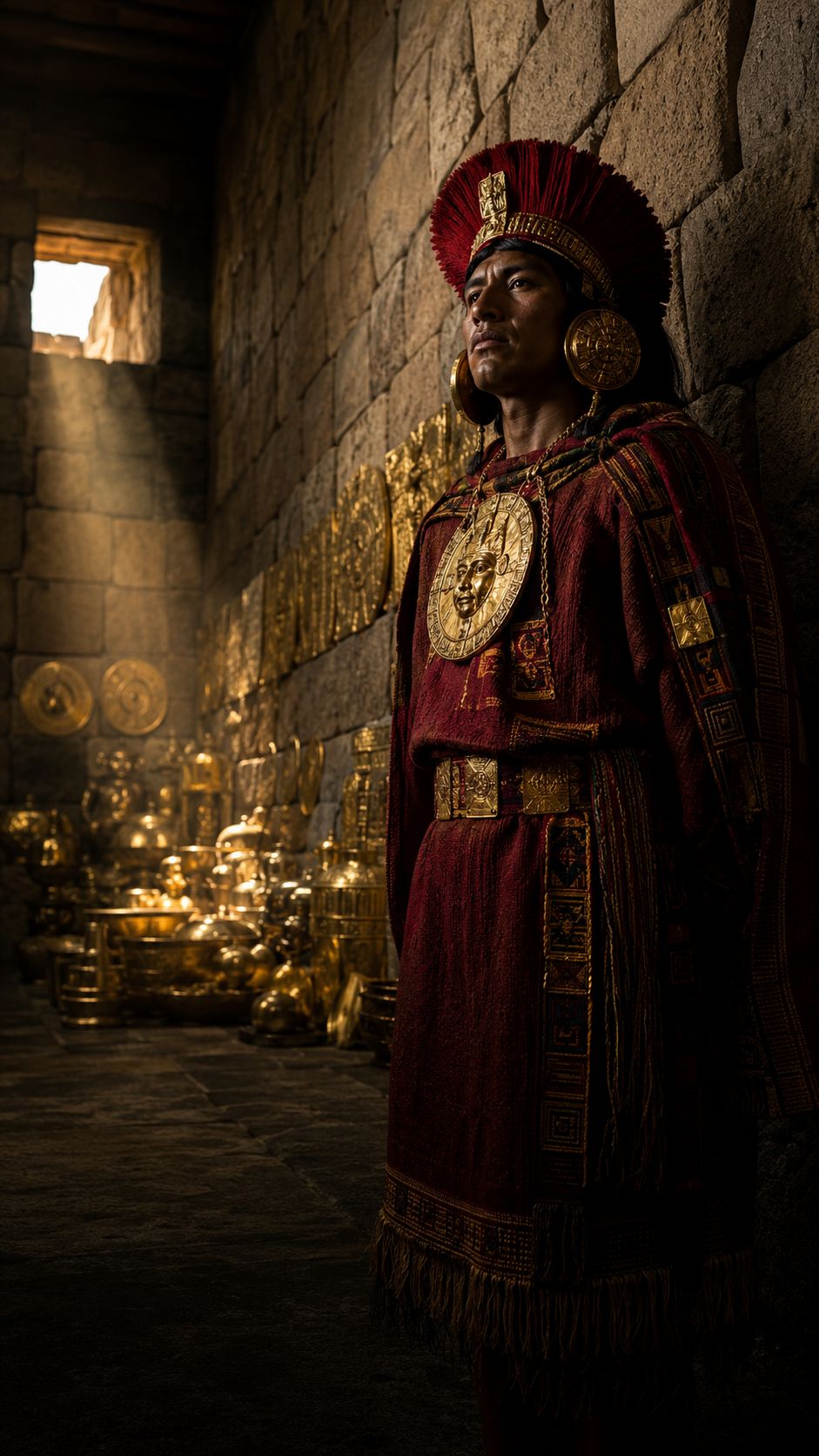 The Ransom That Could Not Save An Emperor
A tiny band of conquistadors murdered the Inca emperor after taking the largest ransom in history.
Cajamarca, Peru · 1533 · 1007 km away
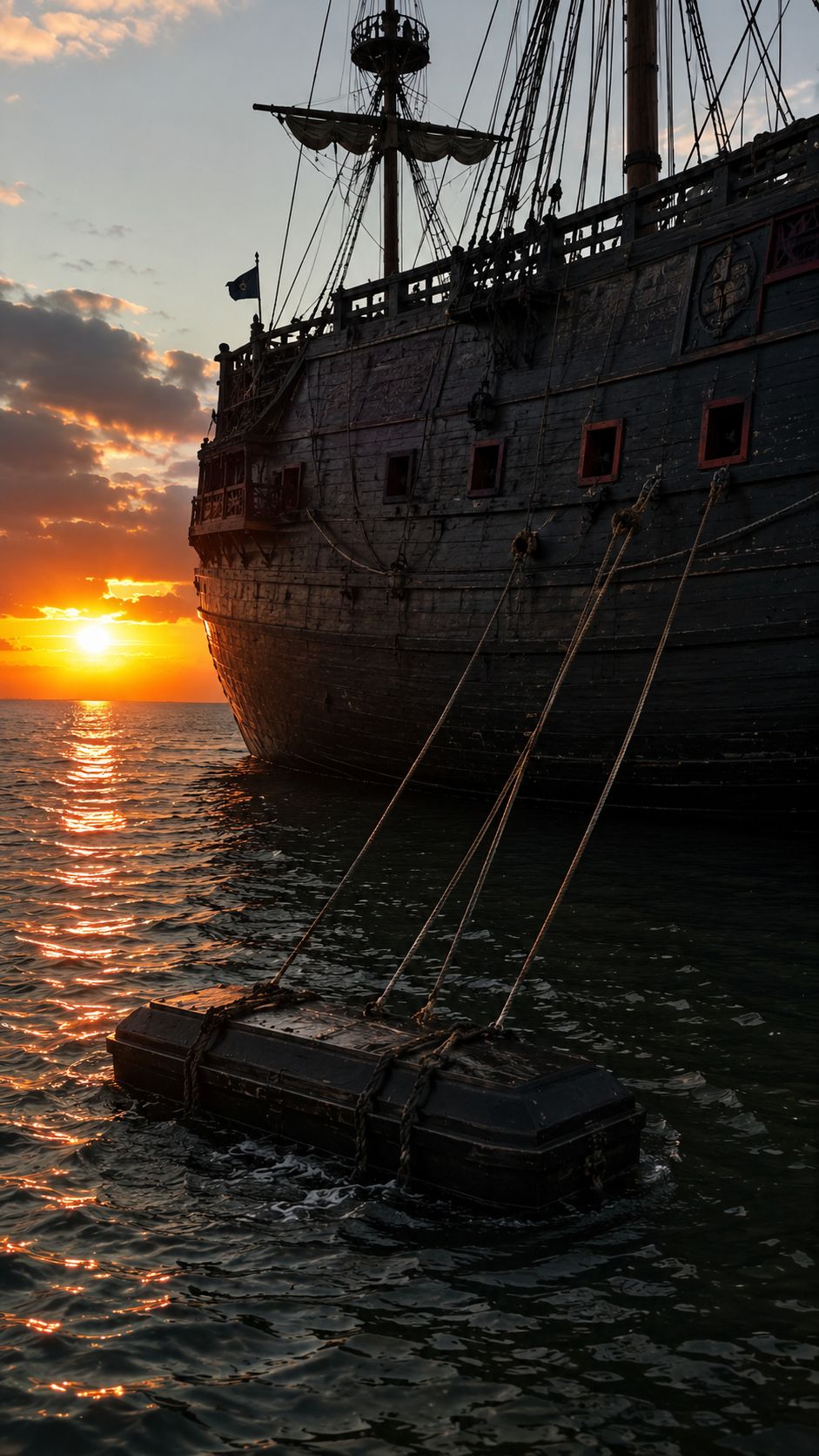 The Dragon Spain Wanted Dead
Spain put a fortune on the head of the English privateer who circled the globe and burned their ports, and church bells rang when he finally died.
Portobelo, Panama · 1596 · 2704 km away
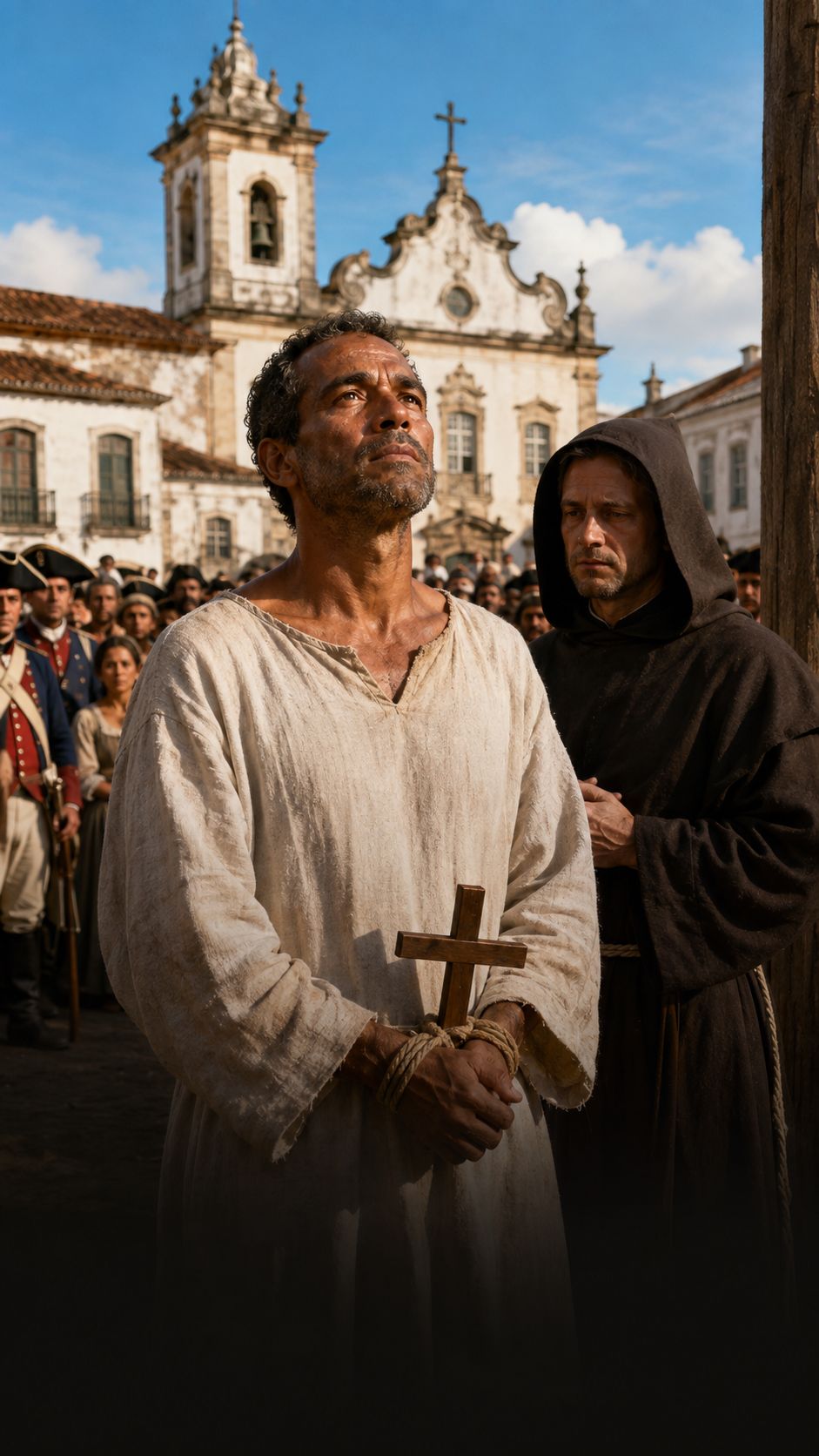 The Martyr Who Took The Blame For Brazil
A self-taught dreamer took the entire blame for a failed conspiracy to save his comrades, and was hanged and hacked to pieces for it.
Rio de Janeiro, Brazil · 1792 · 3208 km away
- The Coffins That Would Not Stay Still
Every time the tomb was sealed, its heavy coffins were found thrown violently across the crypt.
Oistins, Barbados · 1820 · 3260 km away