
Tiradentes is the great national hero and founding martyr of Brazil — a humble, self-taught man who dreamed of a free Brazilian republic, who took the entire blame for a failed conspiracy onto his own shoulders to save his comrades, and who was hanged and hacked into pieces for it, only to become, a century later, the symbol of the nation itself. His is one of the most extraordinary stories of self-sacrifice and defiant dignity in all of the history of the Americas.
To understand him, you have to go to the captaincy of Minas Gerais — “General Mines” — in colonial Brazil in the late 1700s. This was gold country, the source of an immense river of wealth that was being pumped across the Atlantic to enrich Portugal, the colonial power that ruled Brazil. The people of Minas Gerais laboured and lived under a heavy, resented burden of Portuguese taxation on that gold. And the man who would become Tiradentes knew that burden intimately. Born around 1746, Joaquim José da Silva Xavier had lived a hard and varied life — he had been a miner, a trader, a peddler, and a soldier, an ensign in the local cavalry. He was also, in the practical, self-taught way of a frontier man, a dentist — he pulled and made teeth for people who had no one else — and it was this that gave him his enduring nickname: “Tiradentes,” which means, quite literally, “the tooth-puller.” It began as a slightly mocking name for a low-status man. He would make it one of the most honoured words in the Portuguese language.
As Tiradentes travelled the long road between Rio de Janeiro and the mining town of Vila Rica, he saw the wealth of his land being stripped away, and he was inspired by the great revolutionary ideas of his age — the Enlightenment, the recent American Revolution that had thrown off British rule, the dream of liberty. He became the most passionate voice in a group of Minas Gerais intellectuals, poets, and officials who began, around 1789, to plot a rebellion: the Inconfidência Mineira, the “Minas Conspiracy.” They dreamed of throwing off Portuguese rule and founding an independent Brazilian republic. Tiradentes, an admirer of the American constitution, was its most fervent republican — and its loudest, most tireless propagandist, spreading the word of freedom wherever he went.
The Horror
But the conspiracy was a dream that never became a deed. The plotters talked and planned, but they were divided and hesitant, and the rising never actually happened. And before it could, they were betrayed. One of their own number, a man named Joaquim Silvério dos Reis, sold them out to the Portuguese authorities — informing on his comrades in exchange for the forgiveness of his own crushing debts to the Crown. The arrests began. Tiradentes was seized in Rio de Janeiro in 1789, and he and his fellow conspirators were thrown into prison to await judgement in a trial that would drag on for three long years.
And it was in that courtroom that Tiradentes performed the act that made him immortal. As the investigation ground on, and frightened men tried to save themselves by minimising their roles, Tiradentes did the opposite. He stood up and claimed the entire conspiracy as his own. He declared himself the leader and the driving force of the whole plot, taking full responsibility upon himself, and defending the republican cause — the dream of a free Brazil — with what the accounts describe as great dignity, eloquence, and force. He deliberately drew the guilt onto himself, shielding his co-conspirators. And the Portuguese Crown obliged him. In April 1792, the sentences came down. Queen Maria I of Portugal, in an act of calculated “mercy,” commuted the death sentences of the other conspirators to exile and banishment. All of them were spared. All but one. Tiradentes — the man who had claimed it all, the low-born tooth-puller deemed “unworthy of royal mercy” — was condemned to die, alone, as a terrifying example to anyone who might dream of Brazilian freedom.
On the morning of the 21st of April 1792, he was led through the streets of Rio de Janeiro to a scaffold, his head and beard shaved, dressed in a coarse white robe, a crucifix in his hands, a friar at his side. A great crowd had gathered. And Tiradentes met his horrific death with a serene, unbroken calm that stunned the witnesses — he climbed the steps and faced his fate, as the records put it, “without a whimper.” He was hanged. And then the full, savage sentence was carried out on his body: he was drawn and quartered, his corpse cut into four pieces. His severed head was carried to Vila Rica and raised high on a pole in the public square, as a warning to the town where he had preached rebellion. His quartered limbs were nailed up on posts along the very road between Rio and the mines that he had travelled for years, spreading his message of freedom. His house in Vila Rica was demolished and the ground where it had stood was sown with salt, so that nothing would ever grow there again. His children and descendants were declared infamous, their bloodline stained. The Portuguese did everything in their power not merely to kill Tiradentes, but to erase him, and to make the very idea of Brazilian independence die in horror with him.
The Modern Relic
It was one of the great miscalculations in the history of empire. The over-the-top brutality of the execution backfired completely. By killing him alone, so publicly and so savagely, the Portuguese did not extinguish the dream of a free Brazil — they gave it a martyr. In 1822, just thirty years after his death, Brazil did indeed become independent from Portugal. And over the following decades, the memory of the tooth-puller who had died for that dream grew and grew. When Brazil became a republic in 1889, Tiradentes was elevated into the supreme national hero — the founding martyr of the Brazilian nation, the man who had given his life and his body for the republic long before it was born. The mocking nickname became a title of the highest honour.
The relic is a whole nation’s veneration, and it is impossible to miss. Tiradentes is everywhere in Brazil. The 21st of April — the anniversary of his execution — is a national public holiday, Tiradentes Day, observed across the entire country every year. His face and image appear on monuments, statues, and public squares; the grand Praça Tiradentes squares in Rio de Janeiro and other cities bear his name; a whole town in Minas Gerais is named Tiradentes after him. He is depicted, in the national imagination, almost as a Christ-like figure — bearded, robed, serene — the humble man who took the sins of the conspiracy upon himself and died so that a nation might one day be free. The Portuguese scattered his head and his limbs along a colonial road and salted the earth beneath his home, trying to make certain that nothing of him would ever remain. Two centuries later, his is one of the most honoured names in Brazil, spoken every 21st of April by two hundred million people — the tooth-puller who claimed the blame, faced the axe without a whimper, and became, in death, the father of a nation.
Nearby on the Dark Atlas
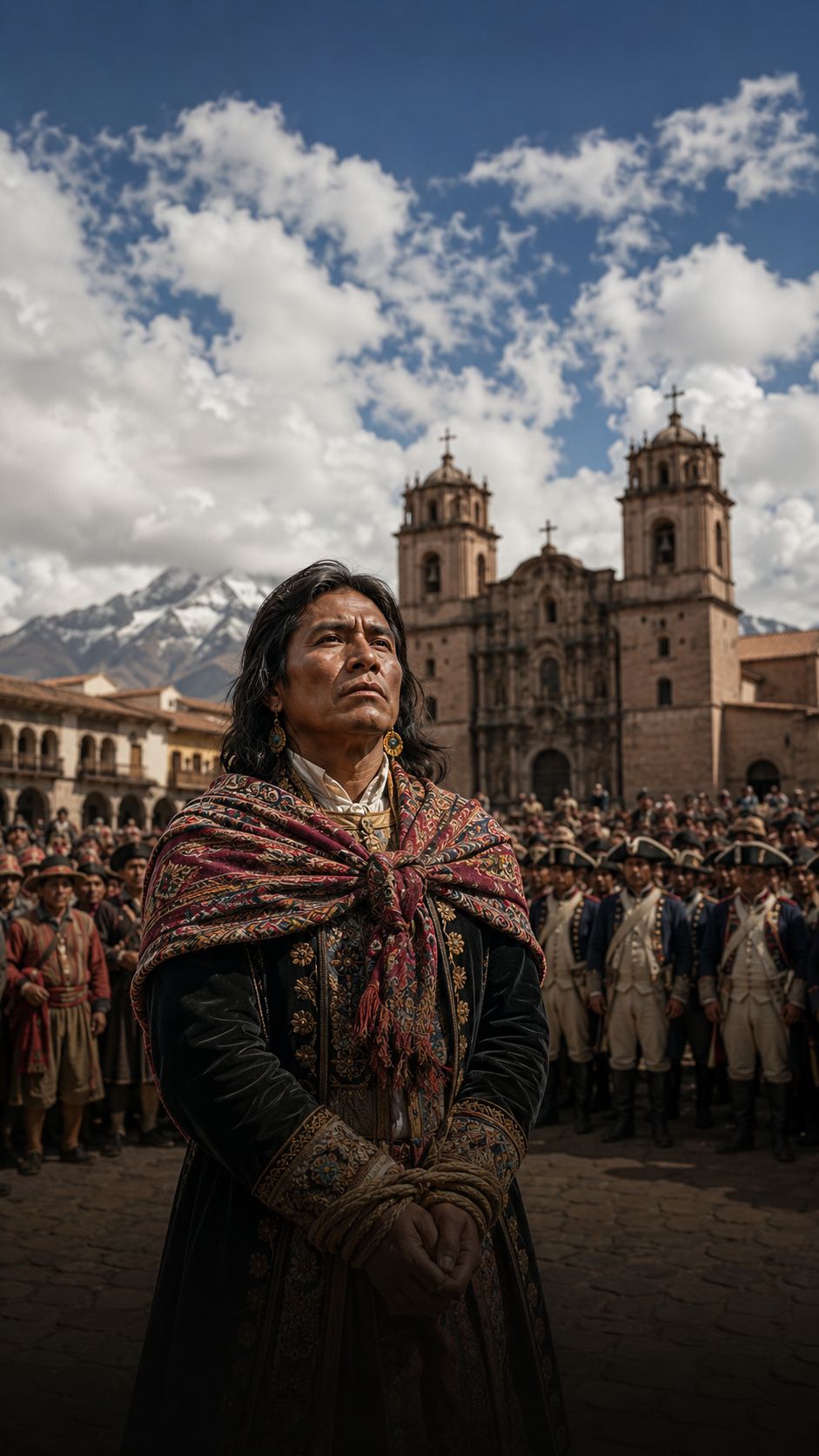 The Rebel Torn Apart In A Peruvian Square
A doomed uprising against Spanish rule ended in one of the most horrifying public executions ever recorded — and an immortal symbol of defiance.
Cusco, Peru · 1781 · 3208 km away
- The Poison In Napoleon's Wallpaper
A dying emperor believed he was being murdered, and centuries later his own wallpaper became a suspect.
Longwood House, Saint Helena, Saint Helena · 1821 · 3997 km away
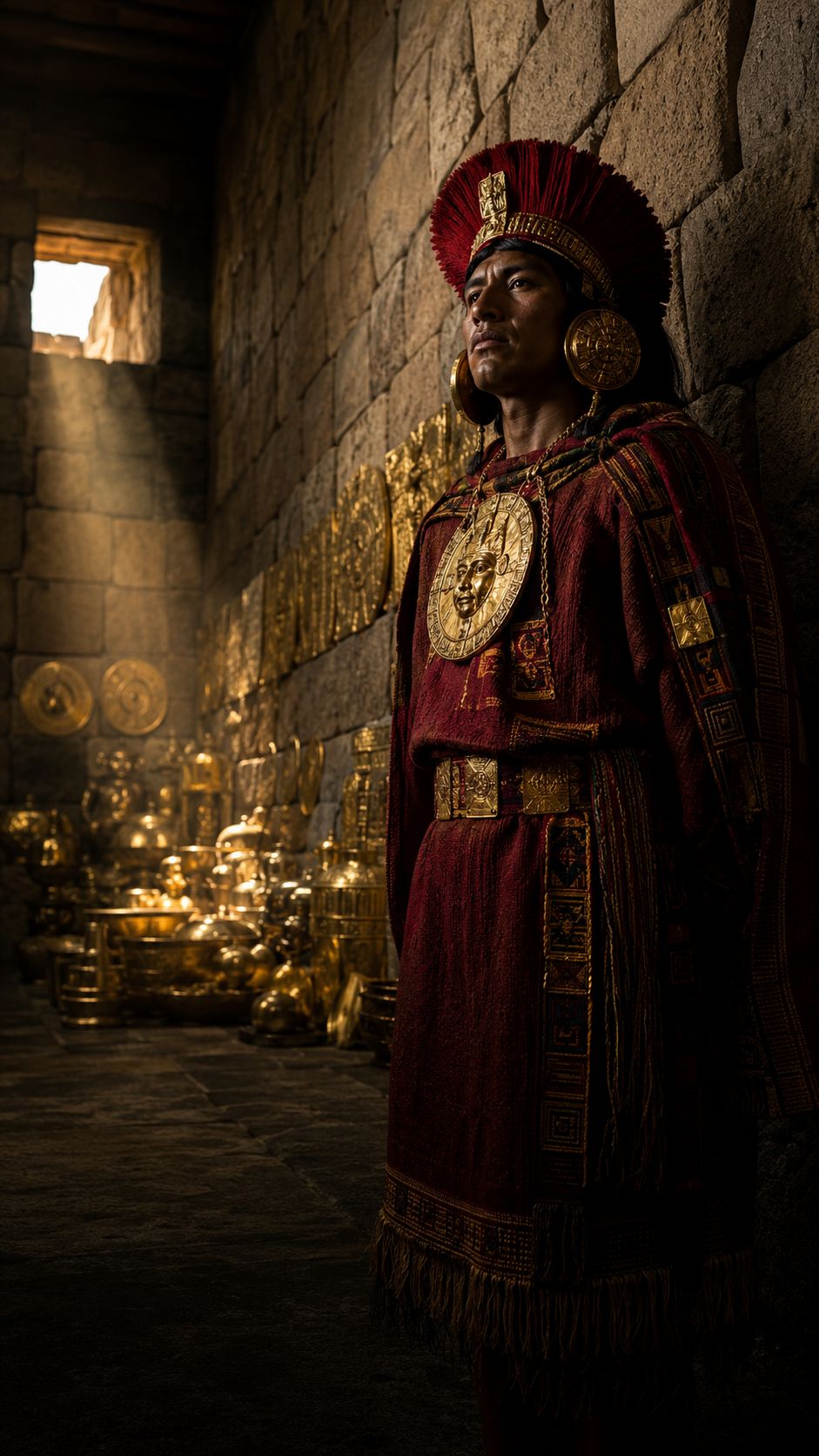 The Ransom That Could Not Save An Emperor
A tiny band of conquistadors murdered the Inca emperor after taking the largest ransom in history.
Cajamarca, Peru · 1533 · 4162 km away
- The Coffins That Would Not Stay Still
Every time the tomb was sealed, its heavy coffins were found thrown violently across the crypt.
Oistins, Barbados · 1820 · 4379 km away