In June 1462, Sultan Mehmed II — the conqueror of Constantinople and destroyer of the Byzantine Empire — marched into Wallachia at the head of a vast army, variously estimated by contemporaries between about 60,000 and 90,000 men (and exaggerated in some sources to even more). His target was a petty Danubian prince who had stopped paying tribute, killed Ottoman envoys, and impaled their men on stakes.
The prince was Vlad III Dracula, son of Vlad Dracul. With perhaps 20,000–30,000 troops at most, he knew he could not win a pitched battle in the open. So he set out not to defeat the Ottoman army in conventional terms, but to break its will.
The Horror
As Mehmed’s columns advanced, Vlad ordered a scorched‑earth retreat. Villages were emptied and burned, crops destroyed, and wells fouled; livestock and people were evacuated into the forests and mountains. For days, one of the largest armies in the world tramped through a country that seemed to have dissolved ahead of it — no forage, no water, no captives, only occasional night raids from invisible enemies in the woods.
On the night of 16–17 June 1462, Vlad launched a surprise cavalry attack on the Ottoman encampment near Târgoviște, later known as the Night Attack. Under cover of darkness, Wallachian horsemen slipped past pickets and struck deep into the camp, aiming to reach Mehmed’s own pavilion. They killed many, sowed panic, and narrowly missed the Sultan, attacking the wrong tent and cutting down high officials and guards instead. By dawn, they had withdrawn, leaving the Ottoman host shaken but still intact.
Then came the forest.
As Mehmed’s army approached the abandoned capital of Târgoviște, it encountered a sight that later chroniclers struggled to describe. The Byzantine historian Laonikos Chalkokondyles wrote of a “field of stakes” covering miles: an area roughly three miles long and one mile wide, studded with tens of thousands of tall sharpened poles. On each stake, a body. According to several accounts, around 20,000 impaled corpses — Ottoman soldiers, prisoners, local collaborators, and captives — rotted in the summer air, some already skeletonised, others still decomposing, birds nesting in eye sockets and rib cages.
On one of the tallest stakes, sources place the mutilated body of an important Ottoman commander or envoy — often identified in retellings as a pasha who had previously come to demand tribute — raised higher than the rest as a personal insult to Mehmed. His limbs were said to have been cut off, his tattered clothing snapping in the wind above the forest of the dead.
Chalkokondyles preserves the Sultan’s reported reaction: confronted with this engineered landscape of horror, Mehmed II “was seized with amazement and said that it was not possible to deprive of his country a man who had done such great deeds, who had such a diabolical understanding of how to govern his realm and its people.”
Mehmed advanced no further into central Wallachia. He did not suffer a decisive battlefield defeat, but the campaign stalled; with disease, supply problems, and a demoralised army in hostile terrain — and with Vlad’s pro‑Ottoman brother Radu gaining support in the south — the Sultan eventually withdrew, leaving Wallachia to be contested by local factions rather than annexed outright.
In later memory, what stopped the conqueror of Constantinople was not a line of soldiers, but a forest of corpses. No swords drawn; only stakes.
Centuries later, in the summer of 1890, an Irish theatre manager named Bram Stoker sat in Whitby’s public library, researching eastern Europe. He found William Wilkinson’s 1820 book An Account of the Principalities of Wallachia and Moldavia. In it, a brief passage mentions a Wallachian “voivode Dracula” who fought the Turks, and a footnote explains that “Dracula in the Wallachian language means Devil.” Stoker copied these notes verbatim into his working notebook.
He took the name “Dracula,” moved his story to Transylvania, and fused scraps of Wallachian history with European vampire folklore. The real Vlad III, who died in battle around 1476 and left no known grave, became a fictional immortal feeding on blood instead of inspiring terror with forests of stakes.
The Modern Relic
Today, Bran Castle in Transylvania is marketed worldwide as “Dracula’s Castle,” but there is no clear evidence Vlad ever lived there; at most he may have passed through as a prisoner. The fortress most directly tied to him is Poenari Castle, perched on a narrow ridge in the Carpathians above the Argeș Gorge.
Poenari — rebuilt by Vlad as a stronghold — is reached by climbing 1,480 concrete steps up a steep forested slope from the modern road. From the ruined walls at the top, you can look out over the same valleys and passes where 15th‑century armies once moved and where messengers would have carried news of Mehmed’s approach.
The forest of stakes has long since rotted back into the soil. The name it helped cement — Dracula — is printed on airport souvenirs. The cliff fortress where the real Vlad watched for marching banners still stands, reachable only on foot, a long way from the nearest gift shop.
Nearby on the Dark Atlas
- The Forest of Corpses That Turned Back an Empire
He left 20,000 impaled bodies outside his capital, and the sight was so horrifying it made the conquering Ottoman army retreat.
Targoviste, Romania · 1462 · same site
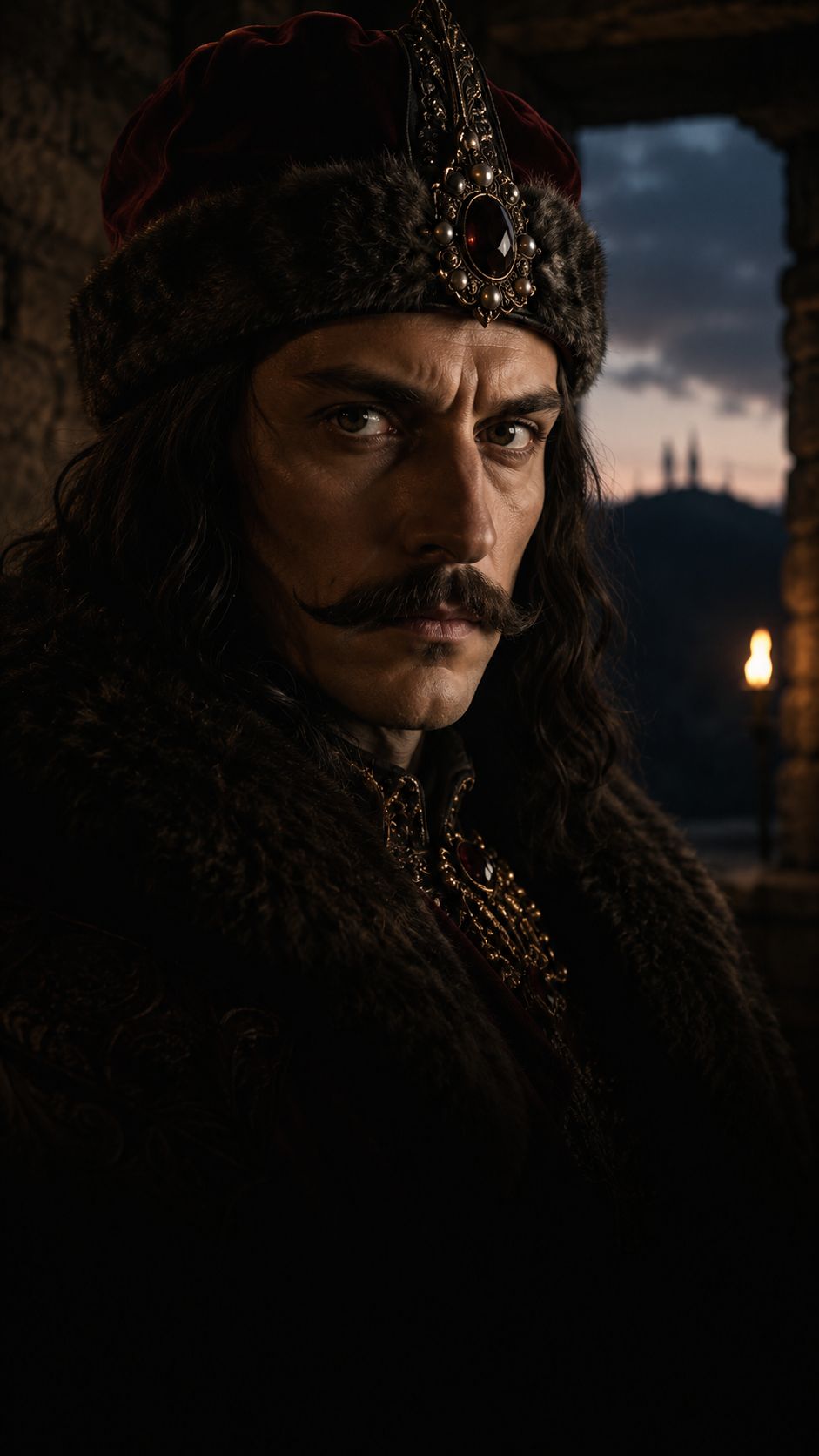 The Real Warlord Behind Count Dracula
Behind the caped movie vampire lies a real medieval warlord whose deeds were more horrifying than Bram Stoker's fiction.
Târgoviște, Romania · 1462 · same site
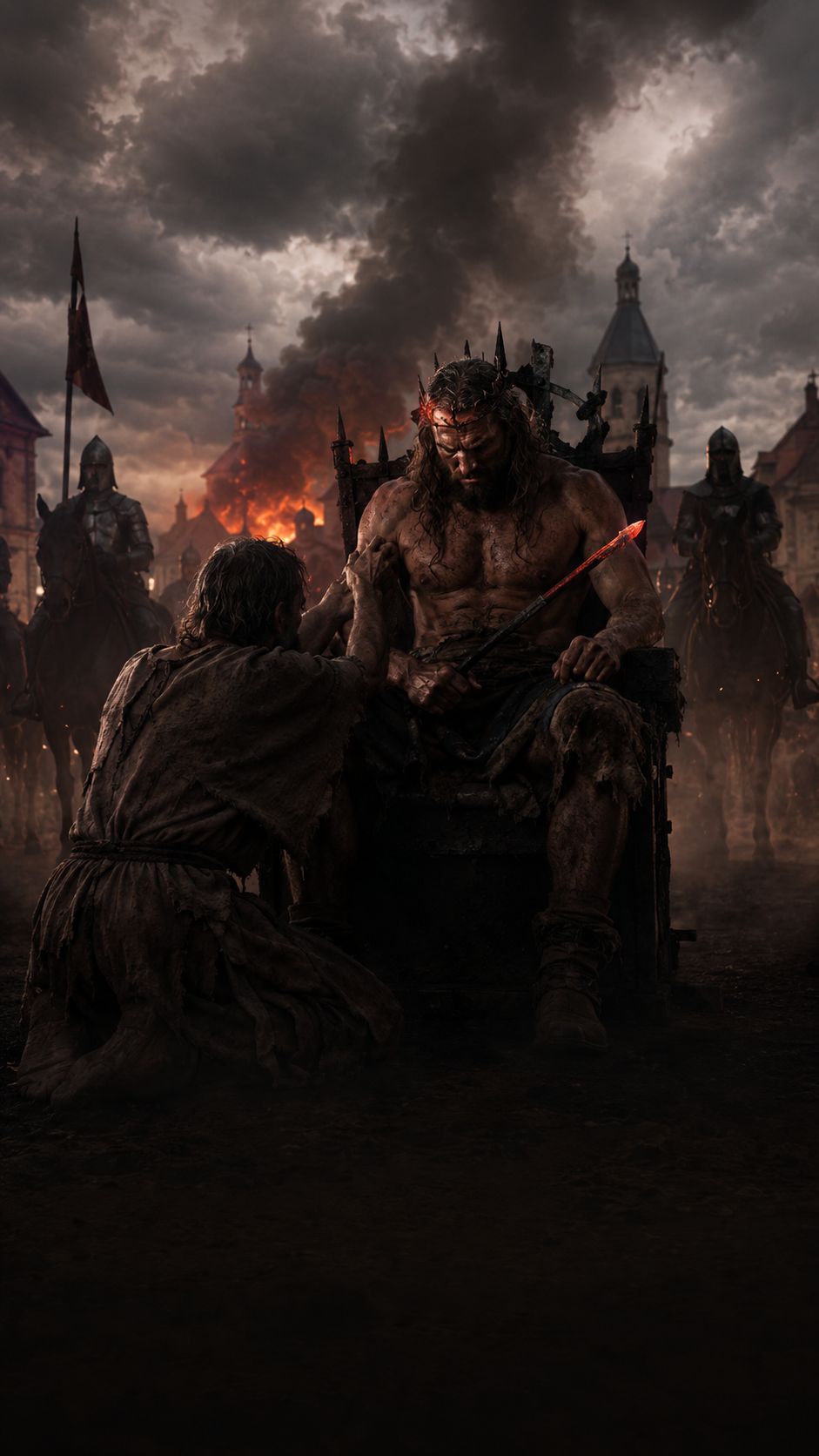 The Peasant King Burned On An Iron Throne
A soldier who led forty thousand peasants to the gates of power was destroyed by an execution designed to erase the very idea of him.
Timișoara, Romania · 1514 · 344 km away
- The Emperor Who Blinded an Army
Fifteen thousand captured soldiers were blinded almost to a man, leaving only one in a hundred to lead the rest home.
Kleidion, Bulgaria · 1014 · 429 km away