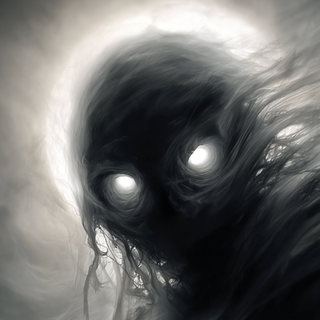
György Dózsa is one of the most haunting figures in Eastern European history — a Székely soldier who rose from the ranks of a man-at-arms to command an army of 40,000 desperate peasants, who came within 25 kilometres of the Hungarian capital, and who was destroyed not just by defeat, but by an execution so barbarous that it shocked even a continent inured to public cruelty. The nobility who crushed him did not merely want him dead. They wanted to erase the very idea that a peasant could claim kingship.
Dózsa was born around 1470 in Transylvania, then part of the Kingdom of Hungary. He was a Székely — a Hungarian-speaking ethnic group with a warrior tradition — and he had served as a man-at-arms in the wars against the Ottoman Empire. In the spring of 1514, the Archbishop of Esztergom preached a crusade against the Turks, and thousands of peasants flocked to the banner. But when the nobility refused to equip them or grant them the rights they had been promised, the crusade became a revolt. Dózsa emerged as its leader. His armies seized fortresses, routed noble cavalry, and advanced to within sight of Buda. For a moment, it seemed the social order of Hungary might be overturned.
But the nobles rallied. An army of 20,000 led by John Zápolya and Stephen Báthory crushed the peasant forces at Temesvár on 15 July 1514. Dózsa was captured. And the nobility, terrified by what a peasant army had nearly achieved, decided that his death would be a sermon in flesh.
The Horror
The execution was staged as a mock coronation. Dózsa was brought to a public square and seated on a throne of heated iron, which smouldered beneath him. A red-hot iron crown was placed on his head, burning into his scalp. A heated iron sceptre was forced into his hand. The message was unmistakable: you wanted to be a king, so we will crown you — with fire.
But the throne was only the beginning. While Dózsa suffered on the iron seat, his younger brother Gergely was brought before him. Despite Dózsa’s pleas for mercy, Gergely was cut into three pieces in front of his eyes. Then a procession of nine fellow rebels — who had been starved for days beforehand — was led to the throne. Executioners pulled red-hot pliers from a fire and forced them into Dózsa’s skin, tearing flesh from his body. And then came the final, unthinkable command: the starving rebels were ordered to bite the wounds where the hot pliers had been inserted, and to swallow the flesh they tore from their leader. Those who refused — three or four of them — were immediately cut to pieces as an example to the others. The rest complied. Dózsa died on his iron throne, consumed by his own followers under duress, while the nobility watched. Afterward, his remains were quartered and sent around Hungary for display.
The scale of the repression that followed was staggering. Some 70,000 peasants were tortured in the wake of the revolt. The Hungarian Diet, led by István Werbőczy, passed the Tripartitum — a legal code that codified the rights of the nobility and reduced the peasantry to near-serfdom, erecting what historians have called an “iron curtain” between the classes that would last until 1848. And the brutality of Dózsa’s end had a darker consequence still: it so divided and weakened Hungary that when the Ottoman Empire invaded in 1526, the kingdom collapsed at Mohács. The nobility had eaten their peasant king alive — and in doing so, they devoured their own future.
The Modern Relic
The relic is the city where it happened. Temesvár — modern Timișoara, in western Romania — still stands on the ground where Dózsa’s army was destroyed and where he was burned alive on his iron throne. The city has changed hands and names many times since 1514: Hungarian, Ottoman, Habsburg, Romanian. But the site of his execution is still part of its fabric. A monument to Dózsa stands in the city, and his name is remembered across Hungary and Romania as both a warning and a symbol of resistance. The iron throne itself is long gone, melted down or lost. But the image of it — a peasant soldier crowned with fire, forced to watch his brother die and his own flesh eaten — has endured for five centuries as one of the most terrifying executions ever devised.
Nearby on the Dark Atlas
- The Warlord Who Died On His Wedding Night
A man who terrified the Roman Empire for decades survives every battlefield only to die drowning in his own blood in bed.
Hungarian Plain, Hungary · 453 · 204 km away
 The Assassination That Started A World War
A bungled bomb attack fails to kill him, and then his car takes a wrong turn straight past a gunman who had already given up.
Sarajevo, Bosnia and Herzegovina · 1914 · 305 km away
 The Real Warlord Behind Count Dracula
Behind the caped movie vampire lies a real medieval warlord whose deeds were more horrifying than Bram Stoker's fiction.
Târgoviște, Romania · 1462 · 344 km away
 The Prince Who Broke An Empire's Will To Fight
Outnumbered by an Ottoman army, a Wallachian prince chose terror over battle — and made a sultan turn back.
Târgoviște, Romania · 1462 · 344 km away