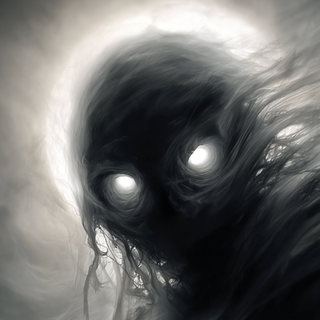
On this day, the 6th of August 768, a man named Constantine — who had, for about a year, called himself Pope — was formally overthrown in Rome. His rivals had won. And their revenge tells you everything about one of the most sinister practices in the history of power: they did not kill him. They dragged him from the monastery where he was held, and they put out his eyes. In the brutal logic of the age, blinding was not the cruel alternative to death. It was the calculated one.
Constantine II had come to the papacy by force — a layman and soldier, violently installed by his powerful brother, a duke, in the chaotic scramble for control of Rome. When the rival faction seized the city and took him captive, they deposed him and elected their own pope in his place. And then they blinded him. Some accounts say they went further — that his tongue was cut out and he was paraded through the streets in public humiliation — before he was locked away in a monastery, sightless, to vanish from history. But Constantine was only one victim of a practice that ran through the medieval world, and especially the Byzantine Empire, for centuries: the deliberate, systematic blinding of political rivals.
The Horror
To understand why they took the eyes instead of the life, you have to understand a peculiar belief at the heart of the Byzantine world. The emperor, they held, was God’s chosen representative on earth, and as such his body had to be perfect — whole, unblemished, unmarked. A ruler with a visible, permanent disfigurement could not embody divine perfection, and so, by law and custom, could never take or hold the throne. This belief handed ambitious men a terrible weapon. If you killed a rival emperor or usurper, you committed the grave sin of murdering an anointed sovereign, and you risked turning him into a martyr. But if you blinded him — if you destroyed his eyes — you disqualified him from the throne forever, permanently and irreversibly, without technically killing him at all. You removed him from the game while keeping your own soul, at least in theory, clean.
The Byzantine chronicler Zonaras captured the cold reasoning perfectly. Writing of two rivals who had been blinded, he observed that they had lost “both their happiness and their lust for kingship or imperial authority.” That was the whole point. Blinding did not merely take a man’s sight. It severed him, in a single act, from his ambition, his followers, his future, and his very claim to rule. A blind man could not lead an army, could not command respect as a living symbol of divine order, could not be crowned. He was, politically, dead — while still breathing.
And it had evolved to be so final precisely because earlier, lesser mutilations had failed. Before blinding, they had tried slitting the noses of deposed rulers. But there was a famous problem: the emperor Justinian II had his nose cut off and was exiled — and then he came back, retook the throne of Constantinople by force, and ruled again, reportedly wearing a golden prosthetic nose over the wound. His return proved that cutting off a nose was not enough to keep a determined man from power. So the political class drew the obvious, chilling conclusion, and moved to something that could not be worked around. You cannot rule if you cannot see.
The methods were as horrific as you would imagine. The eyes were destroyed with a red-hot iron held close to burn them, or by pouring in boiling vinegar, or by gouging. And the primary sources that survive are genuinely harrowing. One account describes a nobleman having his eyes gouged out and then rising from the ground, leaning on a friend, and facing his ruined future with astonishing courage — “no change of colour in his face, no crying out, no groaning.” Another describes the deposed emperor Michael V, who in 1042 was dragged to be blinded alongside a companion. Forced to watch the other man’s eyes destroyed first, and seeing in that torment the exact fate about to befall him, Michael broke down completely, beating his hands together, striking his own face, and “bellowing in agony” before his turn came.
The Modern Relic
This was not a punishment reserved for a wicked few. It was a routine instrument of statecraft, applied for centuries across the medieval Roman world, and it did not spare the young. In one of its most infamous uses, an emperor crushed a rebellion and had the defeated usurper blinded — along with his sons, mere children, whose eyes were also put out to erase any future claim their bloodline might make. Whole dynasties could be extinguished not with a sword but with a hot iron, snuffing out not lives but futures. Emperors, empresses, pretenders, princes, and popes all fell to it. To rise too high in that world was to gamble your eyes as much as your neck.
The relic of this haunting practice survives in the pages of medieval manuscripts. In illuminated Byzantine chronicles like the Madrid Skylitzes, you can still see the scenes painted in bright medieval colour: figures held down, the executioner leaning in with the iron, the deposed and the defeated having their sight taken from them, image after image, a visual record of an empire that had turned blinding into a tool of government. And it all connects back to that day in Rome, the 6th of August 768, when a fallen pope had his eyes put out and disappeared into the dark — one of countless men and women across the medieval centuries who learned that in the merciless world of power, losing was often not punished with death, but with something its practitioners considered far more useful: a lifetime of darkness, and the permanent, unblinking certainty that you could never rise again.
Nearby on the Dark Atlas
- How Crucifixion Actually Killed Its Victims
The nails weren't the killer — the Romans built a death that came from suffocation, one agonising push-up at a time.
Rome, Italy · 100 · same site
 Nero Never Fiddled While Rome Burned
The most famous image of imperial cruelty in Roman history turns out to be almost entirely fabricated.
Rome, Italy · 64 · same site
 Six Thousand Crucified Along The Appian Way
The slave rebellion Hollywood romanticised did not end with one man on a cross, but six thousand.
Rome, Italy · 71 BC · same site
 The Borgia Pope's Unsolved Family Murder
The pope's own favourite son was murdered and dumped in the Tiber, with suspicion pointing straight at his own brother.
Rome, Italy · 1497 · same site