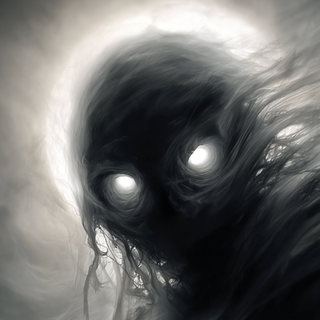
“Nero fiddled while Rome burned.” It is one of the most famous phrases in the entire English language — a byword for a callous, decadent ruler gloating while catastrophe engulfs his people. Everyone knows the image: the mad emperor Nero, playing music and laughing on a balcony as the Great Fire of Rome devours the city he supposedly set alight himself. It is one of history’s most enduring stories. And almost every single part of it is false.
Let’s start with the most obvious problem: the fiddle. Nero could not possibly have fiddled while Rome burned, for the simple reason that the fiddle did not exist. Bowed string instruments like the fiddle weren’t invented until around the 11th century AD — more than a thousand years after Nero was dead. The mental image at the very heart of the legend is a literal impossibility.
The Horror
But the real deception goes far deeper than the instrument. Because when the Great Fire of Rome broke out on the night of the 18th of July, 64 AD, and began to tear through the city, Nero was not standing on a balcony watching it with glee. He wasn’t gloating. He wasn’t playing music. In fact, he wasn’t even in Rome. According to Tacitus — the most reliable Roman historian we have — Nero was some thirty-five miles away, at his villa in the coastal town of Antium, when the fire began.
And when the news reached him, Nero did not sit back and enjoy the spectacle. He rushed back to the capital. And then he did the exact opposite of what the legend claims: he personally threw himself into the relief effort. Tacitus records that Nero flung open his own private gardens, the Campus Martius, and the great public buildings of the city to take in the vast crowds of homeless, traumatised refugees who had lost everything. He organised emergency shelter. He arranged for food supplies to be brought in and slashed the price of grain so people could eat. He paid for much of this relief out of his own imperial pocket. Far from being an indifferent monster, the historical record shows an emperor scrambling to house and feed his devastated people.
So where did the monstrous legend come from? Where did we get the callous tyrant fiddling on the rooftop? The answer is one of the most important lessons in all of history: it matters enormously who gets to write the story down.
Every one of our major sources for Nero’s life — Tacitus, Suetonius, and Cassius Dio — was either a senator or a member of the Roman aristocratic elite. And they all wrote decades, even a century or more, after Nero was already dead. Tacitus and Suetonius wrote around fifty years later; Cassius Dio wrote around 150 years later. None of them were eyewitnesses. And, crucially, the Roman senatorial class from which they came had every reason to hate Nero. Nero had clashed bitterly with the aristocracy, taxed them, executed some of them, and — worst of all in their eyes — courted the love of the common people over the nobles. To the men who wrote the history books, Nero was a class traitor and an enemy. And so they blackened his name at every turn, exactly as later writers would unfairly demonise Marie Antoinette.
Even the specific “fiddling” story reveals the trick. Tacitus does mention a tale that Nero sang about the fall of Troy while the city burned — but Tacitus explicitly states that this was only a rumour, circulating among the unhappy masses, and that it was not confirmed by any reliable witness. He was too honest a historian to state it as fact. But later writers, and then two thousand years of retelling, simply dropped Tacitus’s careful “this is only a rumour” and turned the slander into hard history. A piece of unverified gossip, invented by his enemies, became the single most famous “fact” about Nero.
The Modern Relic
And here is the detail that shatters the legend completely. If Nero was truly the universally hated monster of the story, then everyone should have rejoiced when he finally died in 68 AD. But that is not what happened. Tacitus himself tells us the truth: when Nero died, it was the senators and the nobility — the very class that wrote the history — who celebrated. But the common people of Rome, the ordinary poor, actually mourned him. They grieved for the emperor who they felt had genuinely cared about their interests over those of the rich.
Their love for him did not stop at his death. For years afterward, ordinary Romans continued to visit Nero’s tomb and lay flowers on his grave. And in the strange period after his death, so many people refused to believe he was truly gone that a series of impostors — “false Neros” — appeared in the eastern empire, each claiming to be the beloved emperor returned from the dead, and each finding eager followers. You do not get flowers on your grave and people longing for your return if you are simply a hated monster. The real Nero was, to a huge portion of Rome, a genuinely popular ruler.
Now — and this is important — the real Nero was no saint, and this isn’t about turning him into a hero. He did real and terrible things. After the fire, with rumours swirling that he himself was to blame, Nero looked for a scapegoat and found one in the small, distrusted new sect of the Christians, whom he blamed for the blaze and persecuted with genuine, horrifying brutality — a real atrocity that helped ensure Christian writers would loathe his memory forever. He used the land cleared by the fire to build himself a colossal, gaudy golden palace, the Domus Aurea, which looked appalling to a homeless population. And he was capable of real cruelty, including the murder of his own mother. The point is not that Nero was good. The point is that the specific, world-famous story we all “know” — the fiddling emperor gleefully watching his own city burn, doing nothing — is demonstrably, provably false. A propaganda cartoon, painted by his enemies, that has completely replaced the real, far more complicated man.
The relic is the phrase itself — the most successful piece of character assassination in history. “Fiddling while Rome burns” is now one of the most widely used idioms on Earth, applied to any leader accused of ignoring a crisis, from politicians to CEOs. Every time someone uses it, they are unknowingly repeating a 2,000-year-old smear invented by aristocrats who despised a dead emperor. The real ruins of Nero’s Rome, and even parts of his fabulous Golden House, can still be visited beneath the modern city today. But his true monument is that immortal, inaccurate sentence — proof that if your enemies outlive you and get to write the history, they can make the whole world believe you fiddled while your city burned, even when you weren’t even there.
Nearby on the Dark Atlas
- How Crucifixion Actually Killed Its Victims
The nails weren't the killer — the Romans built a death that came from suffocation, one agonising push-up at a time.
Rome, Italy · 100 · same site
 Six Thousand Crucified Along The Appian Way
The slave rebellion Hollywood romanticised did not end with one man on a cross, but six thousand.
Rome, Italy · 71 BC · same site
 The Borgia Pope's Unsolved Family Murder
The pope's own favourite son was murdered and dumped in the Tiber, with suspicion pointing straight at his own brother.
Rome, Italy · 1497 · same site
 The Boy Emperor Rome Tried To Erase
Rome hated him so completely that after killing him, they tried to stuff his body down a sewer to deny him even a grave.
Rome, Italy · 222 · same site
More like this
- The King's Favourite Who Bet Against Richelieu
A dazzling young courtier gambled his head against Cardinal Richelieu, and lost it in a public square.
Place des Terreaux, Lyon, France · 1642
- The Leper King's Story No Film Would Show
Kingdom of Heaven gave him a dignified death behind a silver mask, the truth was far crueller.
Jerusalem, Israel · 1185
- The Only Peer Ever Hanged At Tyburn
A violent nobleman was hanged before a stunned crowd who never expected to see a lord die on the public gallows.
Tyburn, London, United Kingdom · 1760
 The Rape Trial That Ended In Trial By Combat
A woman's accusation of rape led to France's last judicial duel, with her own life staked on the outcome.
Paris, France · 1386