
In 1694, a Devon‑born sailor named Henry Every (also written Avery), serving aboard an English privateer off the coast of Spain, led a mutiny when months of unpaid wages pushed the crew to breaking point. He took command, renamed the ship Fancy, and steered her south and east for the Indian Ocean.
He was hunting the richest convoy afloat: the annual Mughal treasure fleet returning from the Red Sea, carrying pilgrims and wealth from the Indian Ocean world back to India. He found it near the mouth of the Red Sea in September 1695.
The Horror
On the night of 7 September 1695, Fancy and several allied pirate ships sighted a convoy of around 25 Mughal vessels straggling near the Bab el‑Mandeb strait. Among them was the Ganj‑i‑Sawai (“Exceeding Treasure”), a massive armed ship owned by Emperor Aurangzeb, reportedly carrying 80 guns, hundreds of soldiers and more than a thousand passengers — including women related to high Mughal officials.
Every manoeuvred Fancy into position and opened fire. One of his first shots is said to have struck the Ganj‑i‑Sawai’s mainmast. Worse, one of the Mughal ship’s own guns exploded, killing members of its crew and sowing chaos. The captain reportedly fled below decks.
Every’s men boarded in a vicious but brief fight. Once resistance collapsed, the pirates spent days stripping the Ganj‑i‑Sawai of everything of value and abusing those on board; contemporary complaints from Mughal officials describe robbery, rape and murder.
The haul was unprecedented. Modern estimates, based on East India Company correspondence, put the treasure taken from the Ganj‑i‑Sawai and a smaller ship at between £325,000 and £600,000 in late‑17th‑century money — hundreds of millions of dollars in modern terms. Each of Every’s crew reportedly received about £1,000 in coin and an extra share of jewels, at a time when an ordinary Royal Navy seaman might earn around £50 a year. In one night, a common pirate could pocket the equivalent of twenty years’ wages.
Emperor Aurangzeb, ruler of one of the wealthiest and most powerful empires on Earth, was furious. He held the English East India Company responsible because the pirates were English. In retaliation he shut down several Company factories, imprisoned English factors and captains in places like Surat, and threatened to expel English trade from his dominions entirely unless the culprits were punished and massive compensation paid.
Faced with the potential collapse of their most lucrative trade, the English government and the Company acted together. They offered a reward — sources speak of at least £500, later raised toward £1,000 — for Henry Every’s capture and made him exempt from any royal pardon. They circulated descriptions and wanted notices from Europe to the Americas and the Indian Ocean. Historians often describe this effort as the first truly global manhunt for a single criminal.
A handful of Every’s men were eventually arrested in England. Six were tried in 1696 and hanged, their executions heavily publicised to reassure the Mughals. Henry Every himself was never caught.
He vanished. The last firm trace places him in Ireland in mid‑1696; after that, the records go silent. No verified arrest, no battlefield death, no authenticated grave.
One influential version of his fate comes from the early 18th‑century pirate chronicle published under the name Captain Charles Johnson (often linked to Daniel Defoe). In that account, Every eventually returned to the British Isles and made secret arrangements with Bristol merchants to launder his share of the loot — diamonds, gold and silver — into safe, legal wealth. The merchants cheated him, keeping most of the value for themselves.
When he threatened to expose them, they allegedly threatened to expose him as the world’s most wanted pirate. Trapped, he backed down. Johnson’s tale ends with Every retiring to Bideford in Devon, nearly penniless, and dying so poor that he “was not worth as much as would buy him a coffin.”
Whether that story is true or another piece of pirate lore, it fits a bleak symmetry: the man who pulled off history’s richest single ship raid, who forced an empire to the brink of war and triggered a worldwide hunt, possibly dying broke within sight of the same Devon shores he left, robbed not by navies but by respectable merchants.
The Modern Relic
Henry Every left no known grave, no memorial statue, no verified death certificate. To contemporaries he was “The King of Pirates” and “Arch Pirate”; to modern historians he is unique among major pirates of the Golden Age in that he was never definitively captured or killed in battle.
His exploit in the Red Sea reshaped piracy. Word of his success — and the sums involved — circulated quickly in Europe and the colonies. Scholars argue that his example helped ignite the Golden Age of Piracy: later figures like William Kidd, Blackbeard and Bartholomew Roberts all followed him into the same waters or patterns of attack, chasing the kind of payday Every had actually achieved.
In 2014, a metal detectorist in Rhode Island unearthed an unusual silver coin with Arabic script, later identified as a Yemeni coin minted in the 1690s. Further finds of similar coins across New England suggest they came from the Ganj‑i‑Sawai loot and were carried to America by men from Every’s crew seeking to disappear in the colonies. Those coins are now in museum collections.
The ship they came from has long since been broken up. The pirate who seized them dissolved into rumour. The treasure left scattered traces from the Red Sea to New England. Henry Every, the man at the centre, remains officially missing.
Nearby on the Dark Atlas
- The Pharaoh Murdered By His Own Harem
A CT scan finally revealed the hidden throat wound that ended the reign of Egypt's last great pharaoh.
Thebes, Egypt · 1155 BC · 1852 km away
 The Pharaoh Who Refused To Kneel To The Hyksos
Egypt had lived under foreign occupation for a century until one pharaoh rode out to war and was butchered for it.
Thebes (Luxor), Egypt · 1550 BC · 1852 km away
 The Tomb Robber's Charge Sheet
A 3,200-year-old papyrus names the women a powerful Egyptian craftsman was accused of assaulting, and his own tomb still stands as evidence.
Deir el-Medina, Egypt · 1150 BC · 1855 km away
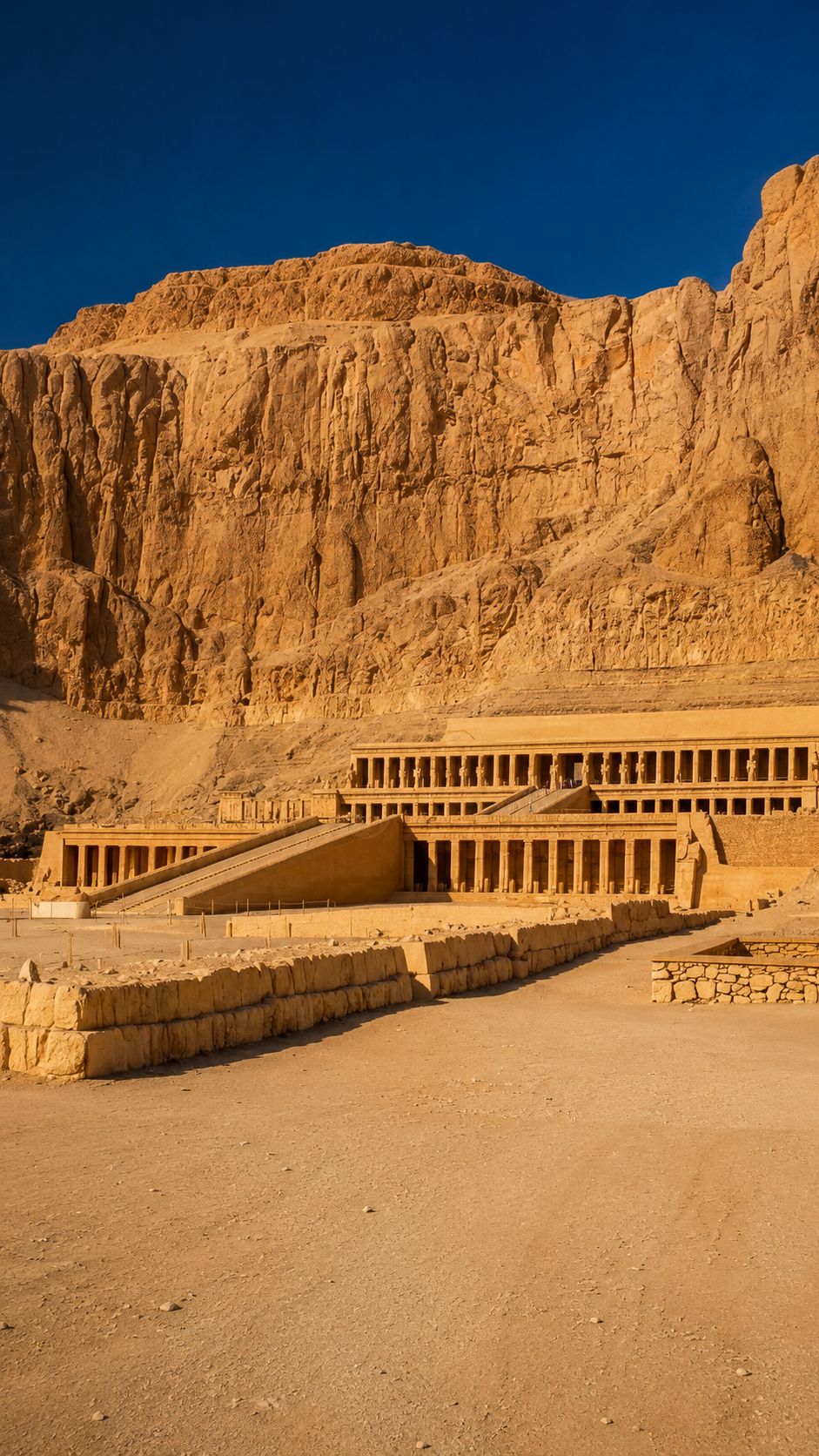 The Female Pharaoh Erased After Death
She ruled Egypt through one of its richest eras as a woman wearing the pharaoh's ceremonial beard — then someone tried to erase her.
Deir el-Bahri, Luxor, Egypt · 1458 BC · 1856 km away
More like this
- The Murder Dickens Turned Into Fiction
A cold, calculated murder buried a body in a Bermondsey kitchen, and became fodder for the country's most famous novelist.
Bermondsey, London, United Kingdom · 1849
- The Chair No One Is Allowed To Sit In
A murderer's cursed armchair now hangs on a museum wall, five feet off the ground, so no one can sit in it again.
Thirsk, United Kingdom · 1702
- The Poisoner Who Weaponised A Town's Sweet Shops
She poisoned an entire town's confectionery to disguise the murder of a woman she hated, killing a child she never met.
Brighton, United Kingdom · 1871
 The Rape Trial That Ended In Trial By Combat
A woman's accusation of rape led to France's last judicial duel, with her own life staked on the outcome.
Paris, France · 1386