
We don’t know for certain what happened. There’s a hint: generations later, in the reign of Ramesses III, one of Paneb’s own descendants was hauled into court, and in the record of that trial someone refers back to Paneb’s trial. So the reckoning came. Some scholars believe he was severely and finally punished.
And here’s the relic — two of them, and they’re both real.
The list is in London. Papyrus Salt 124 sits in the British Museum, catalogued as Papyrus 10055 — a sheet of hieratic script bought in Luxor by a collector in the early 1800s, not translated into English until 1929. Every one of those charges is still legible.
And Paneb’s tomb is still there. Tomb TT211 at Deir el‑Medina — the one he built with stolen royal stone, on stolen royal time, using stolen royal tools. His own painted image is on the wall inside: Paneb, kneeling, making a pious offering to the goddess of the mountain.
He robbed a pharaoh’s grave to build his own. And his grave outlived him by three thousand two hundred years — with his enemy’s list of everything he ever did sitting in a glass case in another country, still telling on him.
We know almost nothing about ordinary people in ancient Egypt. We know pharaohs. We know gods. The workers who actually built it all are silent — except in one place.
Deir el‑Medina was a walled village on the west bank at Thebes, built to house the elite craftsmen who cut and painted the tombs in the Valley of the Kings. These men were literate. They wrote constantly, on broken pottery and limestone flakes, and the desert preserved it: shopping lists, divorce settlements, sick notes, love poems, gossip. It is the most complete record of daily life anywhere in the ancient world.
And buried in it is the file on a man named Paneb.
THE HORROR Paneb was raised by the village’s chief workman, Neferhotep, who had no children of his own. Neferhotep took the boy in, educated him, and treated him as a son.
Then Neferhotep was killed — assassinated by an “enemy,” in a violent period when a usurper was fighting for control of Thebes.
The job of chief workman should have passed to Neferhotep’s brother, a man named Amennakht. It didn’t. It went to Paneb.
Amennakht was certain he knew why: Paneb had taken five servants belonging to the dead man’s family and handed them to the vizier as a bribe. Paneb had used his adoptive father’s own property to buy his adoptive father’s job.
So Amennakht did what an Egyptian scribe does. He sat down and made a list.
The papyrus survives, and it is a catalogue of a man out of control. Paneb chased Neferhotep — the man who raised him — through the village. When Neferhotep hid in a room and bolted the door, Paneb picked up a rock and smashed the doors down. He announced he would kill him in the night, and men had to be posted to guard the old man’s house. That same night, Paneb beat nine men.
Neferhotep complained to the vizier, who punished Paneb. So Paneb went over his head, straight to the pharaoh — and got the vizier fired.
He told the other chief workman, a man named Hay, “I will attack you in the desert and kill you.” He climbed onto a wall at a night party and threw bricks down at people. He sent a town crier through the village to announce that nobody was to so much as look at his rival’s family when they went to make offerings to their god — cutting a man off from his own ancestors.
And then there’s what he did in the tombs. This is a man whose entire sacred duty was to build eternal houses for god‑kings. Amennakht charged that Paneb broke into the tomb of Seti II and stole the covering of the king’s chariot, storehouse goods, five doors, incense, precious oil, wine — and a statue with the king’s own name carved on it. He stole a mummified goose from the funeral of a daughter of Ramesses II, then swore an oath that he hadn’t. He stole the crew’s great chisel and broke it. He stole another tool so valuable that the workmen searched for it for an entire month — and then he quietly sneaked it back onto the site.
He made sixteen of the pharaoh’s workmen down tools and work on his own private tomb instead. He ordered them to build him a bed while their wives were made to weave him clothes. He made one man feed his ox for two months.
And he had his crew steal stone from a royal tomb and carve it into four columns — for his own tomb.
Then Paneb stood in front of everyone and swore the oath: “I did not upset a stone in the neighbourhood of the Place of Pharaoh.”
THE MODERN RELIC But there’s something on that charge sheet that historians only really started to reckon with recently.
Paneb was also accused of a string of sexual assaults, and the victims are named — real women, named in a document 3,200 years old. A woman called Yeyemwaw, whom he was accused of stripping, throwing against a wall, and violating. Tuy, the wife of the workman Qenna. Hel, the wife of Pendua. Hel again, when she was married to Hesysunebef. And then Hel’s own daughter, Webkhet.
The most chilling part isn’t the list. It’s where it sits. The assaults on these women appear low down the charge sheet, lumped together, listed almost as an afterthought — well below the theft of stone from a dead king’s tomb. In the Egypt of 1200 BC, the crime that could destroy a powerful man wasn’t what he did to the women of his village. It was what he took from a pharaoh.
The final line of Amennakht’s letter is a howl. Paneb, he writes, “is not worthy of this office. Indeed he is behaving like the wadjet eye — although he is like a madman. He killed these men so that they would not be able to make a report to Pharaoh.”
We don’t know for certain what happened. There’s a hint: generations later, in the reign of Ramesses III, one of Paneb’s own descendants was hauled into court, and in the record of that trial someone refers back to Paneb’s trial. So the reckoning came. Some scholars believe he was severely and finally punished.
And here’s the relic — two of them, and they’re both real.
The list is in London. Papyrus Salt 124 sits in the British Museum, catalogued as Papyrus 10055 — a sheet of hieratic script bought in Luxor by a collector in the early 1800s, not translated into English until 1929. Every one of those charges is still legible.
And Paneb’s tomb is still there. Tomb TT211 at Deir el‑Medina — the one he built with stolen royal stone, on stolen royal time, using stolen royal tools. His own painted image is on the wall inside: Paneb, kneeling, making a pious offering to the goddess of the mountain.
He robbed a pharaoh’s grave to build his own. And his grave outlived him by three thousand two hundred years — with his enemy’s list of everything he ever did sitting in a glass case in another country, still telling on him.
Nearby on the Dark Atlas
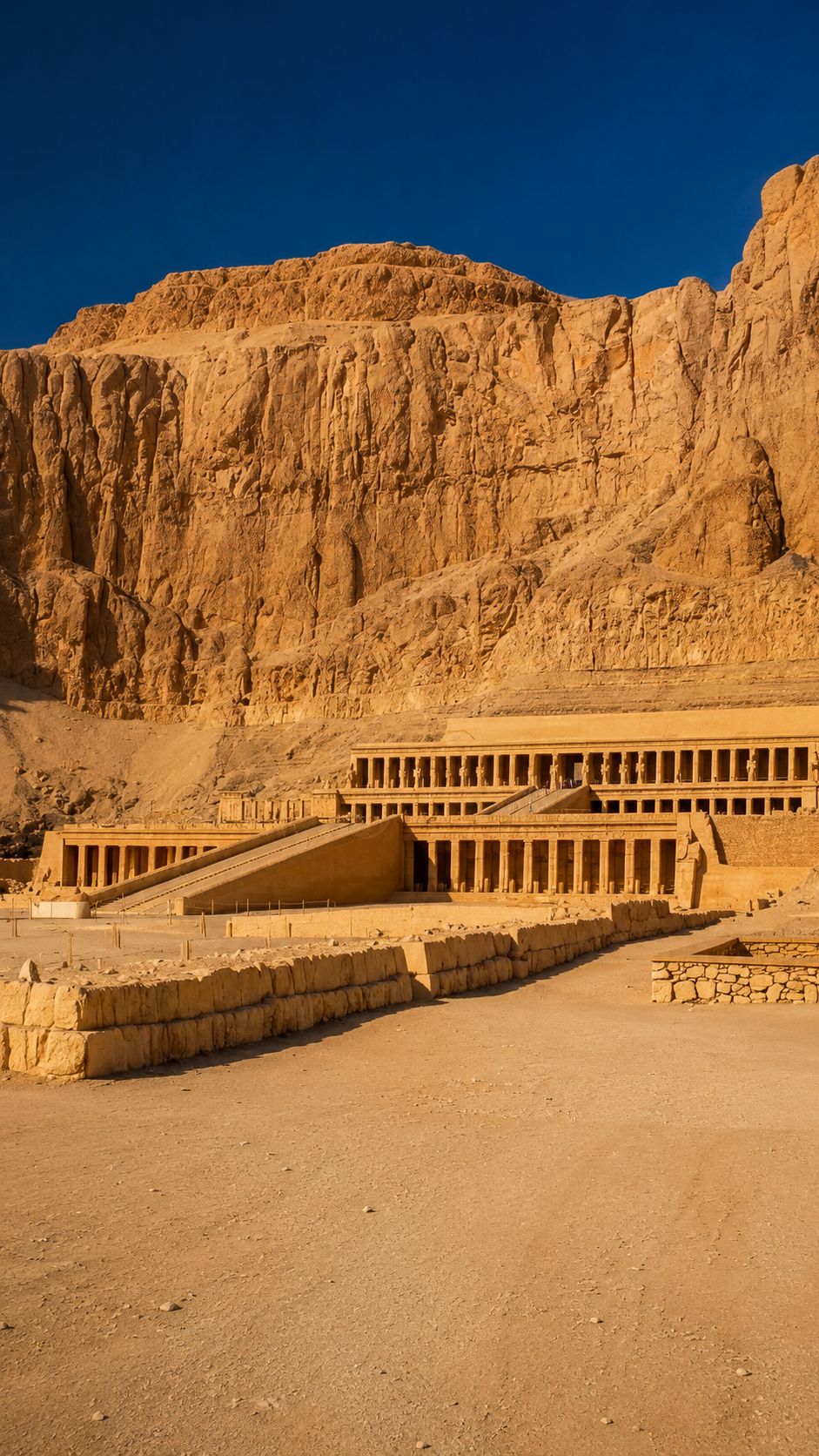 The Female Pharaoh Erased After Death
She ruled Egypt through one of its richest eras as a woman wearing the pharaoh's ceremonial beard — then someone tried to erase her.
Deir el-Bahri, Luxor, Egypt · 1458 BC · 1.3 km away
 The Curse That Followed The Boy King's Tomb
Within months of opening a pharaoh's sealed tomb, the people connected to the discovery began dying in ways that felt like a ledger being settled.
Valley of the Kings, Luxor, Egypt · 1922 · 1.3 km away
- The Pharaoh Murdered By His Own Harem
A CT scan finally revealed the hidden throat wound that ended the reign of Egypt's last great pharaoh.
Thebes, Egypt · 1155 BC · 4.0 km away
 The Pharaoh Who Refused To Kneel To The Hyksos
Egypt had lived under foreign occupation for a century until one pharaoh rode out to war and was butchered for it.
Thebes (Luxor), Egypt · 1550 BC · 4.0 km away