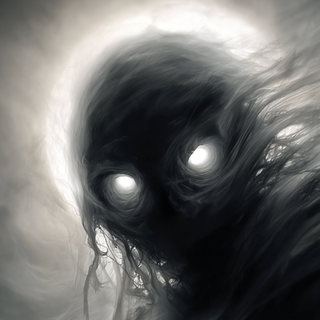
Under Roman law, killing your parent was not just murder. It was a violation of nature itself — an act so unnatural that ordinary execution was considered insufficient. The punishment had to unmake you completely.
It was called poena cullei. The penalty of the sack.
The Horror
Before execution, the condemned was beaten with rods. A wolf‑skin hood was forced over their head. Wooden clogs were strapped to their feet — because wood insulated them from Roman soil, so their corruption could not touch the earth. Then they were sewn into a heavy, watertight sack.
By the second century AD, under Emperor Hadrian, the fully developed form of the punishment included four animals sealed in with the condemned: a dog, a rooster, a monkey, and a viper.
The sack used was comparable to the large containers Romans used to transport wine — waterproof, and with a capacity later estimated at roughly 547 litres. Large enough to move. Large enough to hold enough air to keep you conscious. The sack was loaded onto a cart and driven to the river. Then thrown in.
The cart was traditionally drawn by oxen. The law and later practice specified being cast into a river or the sea: the condemned was to be erased from society in both symbolic and literal terms, denied direct contact with earth, sky, and open air at the moment of death.
The Modern Relic
The last documented uses of poena cullei were not in ancient Rome. The punishment fell out of use in late antiquity, then was revived in medieval and early modern Germany — especially in Saxony, where the final recorded cases took place in the early 18th century, between about 1734 and 1749. Saxony formally abolished the practice in 1761. The banks of the Tiber in Rome still exist — but the punishment outlived the Western Roman Empire by over a thousand years.
Nearby on the Dark Atlas
- How Crucifixion Actually Killed Its Victims
The nails weren't the killer — the Romans built a death that came from suffocation, one agonising push-up at a time.
Rome, Italy · 100 · same site
 Nero Never Fiddled While Rome Burned
The most famous image of imperial cruelty in Roman history turns out to be almost entirely fabricated.
Rome, Italy · 64 · same site
 Six Thousand Crucified Along The Appian Way
The slave rebellion Hollywood romanticised did not end with one man on a cross, but six thousand.
Rome, Italy · 71 BC · same site
 The Borgia Pope's Unsolved Family Murder
The pope's own favourite son was murdered and dumped in the Tiber, with suspicion pointing straight at his own brother.
Rome, Italy · 1497 · same site