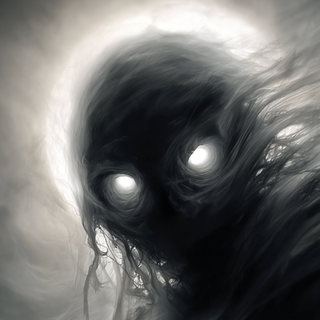
Francisco de Goya is one of the towering figures in the history of art — often called the last of the Old Masters and the first of the moderns. He painted glittering portraits of Spanish kings and queens, and then, as his life darkened, he painted things no one had ever dared put on a wall before: the horrors of war, screaming witches, executions, and, most famously, the black nightmare of Saturn Devouring His Son. He spent his final years deaf, disillusioned, and afraid of the tyranny of the Spanish king, and in 1824 he left Spain altogether, going into voluntary exile in the French city of Bordeaux. He died there in April 1828, an old man in his eighties, and was buried quietly in a Bordeaux cemetery, far from home. And there his story should have ended. It didn’t.
THE HORROR For decades, Goya lay largely forgotten in his French grave. But as the years passed, Spain came to realise the magnitude of the man it had lost, and eventually the Spanish authorities decided that their greatest painter should not rest in foreign soil. In the late 19th century, the Spanish consul in Bordeaux set in motion a plan to exhume Goya’s remains and repatriate them to Spain with honour.
So officials gathered at the cemetery, and the grave was opened. Present were the chief of police, cemetery officials, the consul, and one of Goya’s old friends, the French artist Gustave Labat, who later described what they found. They opened the box. Inside lay a skeleton, and by the cloak and rosary it was still dressed in, there was no doubt whose it was. Every bone was accounted for. Except the most important one.
The head was gone.
Goya’s skull was simply not there. The rest of the skeleton lay complete and undisturbed in its burial clothes — but where the skull should have been, there was nothing. At some point in the decades since his burial, someone had opened the grave of the greatest painter in Spain, taken his head, and left the rest of him behind to lie there, faceless, in the dark.
The officials were stunned. This was Goya — a national treasure — and his head had vanished from his own coffin. Not knowing how to proceed, the shaken consul sent an urgent telegram to his superiors in Madrid, explaining the grim discovery and asking for instructions. The reply that came back has passed into legend for its sheer, blunt indifference. It read, in effect: “Send Goya, with or without head.”
THE MODERN RELIC And so, in one of the strangest repatriations in history, the headless skeleton of Francisco de Goya was eventually brought back to Spain. There were long delays — bureaucracy and disputes over cost dragged on for years — but finally, in 1919, Goya was reburied in Madrid, in the chapel of San Antonio de la Florida. It was a fitting, and eerie, resting place: the very chapel whose ceiling and dome Goya himself had covered in glorious frescoes back in 1798. To this day, the painter lies buried directly beneath his own masterpiece — headless, with his bones resting under the angels he painted with his own hands.
As for who took the skull, and why, no one has ever proved anything. The most likely answer lies in a dark craze of the 19th century: phrenology, the now‑discredited belief that the shape and bumps of a person’s skull revealed their character and genius. Collectors and pseudo‑scientists of the era were obsessed with the heads of the brilliant and the notorious, and grave‑robbing to obtain a famous skull was disturbingly common. The head of the man who painted the human mind’s darkest corners would have been a prize beyond measure.
There are other whispers — that a doctor or fellow artist secretly kept it, that a strange old painting of a skull may actually depict Goya’s own, even a romantic legend that Goya himself asked for his head to be removed and buried beside the great love of his life, the Duchess of Alba. But none of these stories has ever been verified.
The skull was lost forever. And so the relic you can visit today is an absence: go to the little chapel of San Antonio de la Florida in Madrid, look up at the breathtaking frescoes Goya painted, and then look down, and know that the master himself lies just beneath your feet — complete, and at peace, in every part but one. The man who spent his life painting severed heads, screaming faces, and the monsters of the human mind spends eternity without a head of his own.
Nearby on the Dark Atlas
 The Crossbow Bolt That Killed A Crusader King
A rich king besieging a tiny castle over buried treasure took an arrow he never saw coming.
Châlus-Chabrol, France · 1199 · 149 km away
 The Merchant Voltaire Fought To Clear
A Protestant merchant was executed for his son's death in Catholic Toulouse, until Europe's most famous writer took up his cause.
Toulouse, France · 1762 · 212 km away
 The Untouchables of the Pyrenees
For a thousand years, a group indistinguishable from their neighbours was forced through separate, low church doors — and no one truly knows why.
Luz-Saint-Sauveur, France · 1500 · 223 km away
- The Knight Flayed Alive With Precision
Executioners used curved knives to peel his skin away with terrifying precision, keeping him conscious throughout.
France, France · 1588 · 274 km away
More like this
- The Leper King's Story No Film Would Show
Kingdom of Heaven gave him a dignified death behind a silver mask, the truth was far crueller.
Jerusalem, Israel · 1185
 The Rape Trial That Ended In Trial By Combat
A woman's accusation of rape led to France's last judicial duel, with her own life staked on the outcome.
Paris, France · 1386
- The Parish Registers Of The Beast's Victims
Between 1764 and 1767 something killed roughly a hundred people, recorded in the registers as 'devoured by the beast.'
Saugues, France · 1764
- The Manufacturing Of England's Most Haunted House
For decades it was called the most haunted house in England, until its ghost story revealed how a haunting gets made.
Borley, Essex, United Kingdom · 1929