In September 1848, Emily Brontë caught a cold at her brother Branwell’s funeral. She was thirty years old. She had published Wuthering Heights eleven months earlier under a man’s name. She was already coughing. The cold settled in her chest and did not leave.
She refused to see a doctor. She refused all remedies. She said she would have “no poisoning doctor” near her.
Every morning, she got dressed. Every morning, she came downstairs. Every morning, she sat on the sofa in the parsonage dining room and picked up her sewing, as though the act of getting dressed and going downstairs and holding a needle could hold her body together through force of routine.
Charlotte watched. Charlotte wrote to a friend: “Her resolution not to regard herself as an invalid was inflexible. She never spoke of her illness.”
The cough worsened. The weight dropped. The body that had walked the Yorkshire moors for hours — in rain, in wind, in all weathers — was shrinking. By December, her coffin would measure sixteen inches across. The carpenter who built it said it was the narrowest he had ever made.
On the morning of 19th December 1848, Emily got dressed. She came downstairs. She sat on the sofa. She picked up her sewing.
She could not thread the needle.
At noon, her breathing changed. She could only whisper. With her last audible words, she said to Charlotte: “If you will send for a doctor, I will see him now.”
It was too late. She died at two o’clock that afternoon, on the sofa, in the dining room, in the parsonage where she had lived her entire life. She was thirty years old.
THE HORROR Emily was the second. Not the first. Not the last.
Their mother Maria had died when Emily was three. Their two eldest sisters — Maria and Elizabeth — had died as children, likely from tuberculosis contracted at school. Branwell — the brother, the artist, the one who was supposed to support them — had died three months before Emily, destroyed by alcohol and opium at thirty‑one.
Five months after Emily, Anne went.
Anne Brontë — the youngest, the author of Agnes Grey and The Tenant of Wildfell Hall — had been diagnosed with the same tuberculosis. She knew what was coming. She had watched Emily die. She asked for one thing: to see the sea.
Charlotte took her to Scarborough. On 28th May 1849, Anne sat in a chair by the window of her lodgings, looking at the sea she had asked to see. She died that afternoon. She was twenty‑nine.
Three siblings dead in eight months. Branwell in September. Emily in December. Anne in May.
Charlotte survived. She was the last. She published Shirley and Villette. She was celebrated in London literary circles. She was famous.
In June 1854, she married Arthur Bell Nicholls — her father’s curate, a man she had initially disliked but grew to love. She fell pregnant almost immediately. The pregnancy made her ill — nausea so severe she could not eat, could not drink, could not keep anything down. She weakened through the winter.
On 31st March 1855, Charlotte had a moment of clarity. Her husband was kneeling beside the bed, weeping. She looked at him and said:
“Oh, I am not going to die, am I? He will not separate us, we have been so happy.”
She died that day. She was thirty‑eight. She had been married for nine months. A friend had knitted a baby bonnet in preparation. It was never used. It is in the Brontë Parsonage Museum at Haworth. Visitors look at it through glass.
THE MODERN RELIC Their father, Patrick Brontë, outlived them all. He buried his wife. He buried all six of his children. He died in 1861, aged eighty‑four, alone in the parsonage, tended by the son‑in‑law whose wedding he had tried to prevent.
The Brontë Parsonage at Haworth is now a museum. The sofa on which Emily died is on display. The dining room table where the three sisters walked in circles at night — discussing their novels, pacing shoulder to shoulder in the lamplight because the room was too small for them to walk side by side — is still there. Charlotte’s wedding bonnet is in a case. The baby bonnet is beside it. One was worn. The other was not.
The moors behind the parsonage are open to walkers. The paths Emily walked — for hours, alone, in all weathers, building a novel in her head that would outlive every person who read it — are still there. The heather is the same heather. The wind is the same wind. The parsonage is the same parsonage. Three sisters wrote three of the greatest novels in the English language at one table, in one room, in one house on the edge of the moors, and all three were dead before the age of forty.
Nearby on the Dark Atlas
- The Medieval Machine That Beheaded Petty Thieves
Centuries before the guillotine, a Yorkshire town used a wood-and-iron machine to behead anyone caught stealing over thirteen pence.
Halifax, United Kingdom · 1650 · 14 km away
- The Eleven Days Agatha Christie Vanished
Britain's best-selling novelist disappeared for eleven days and never explained where she had been.
Harrogate, United Kingdom · 1926 · 33 km away
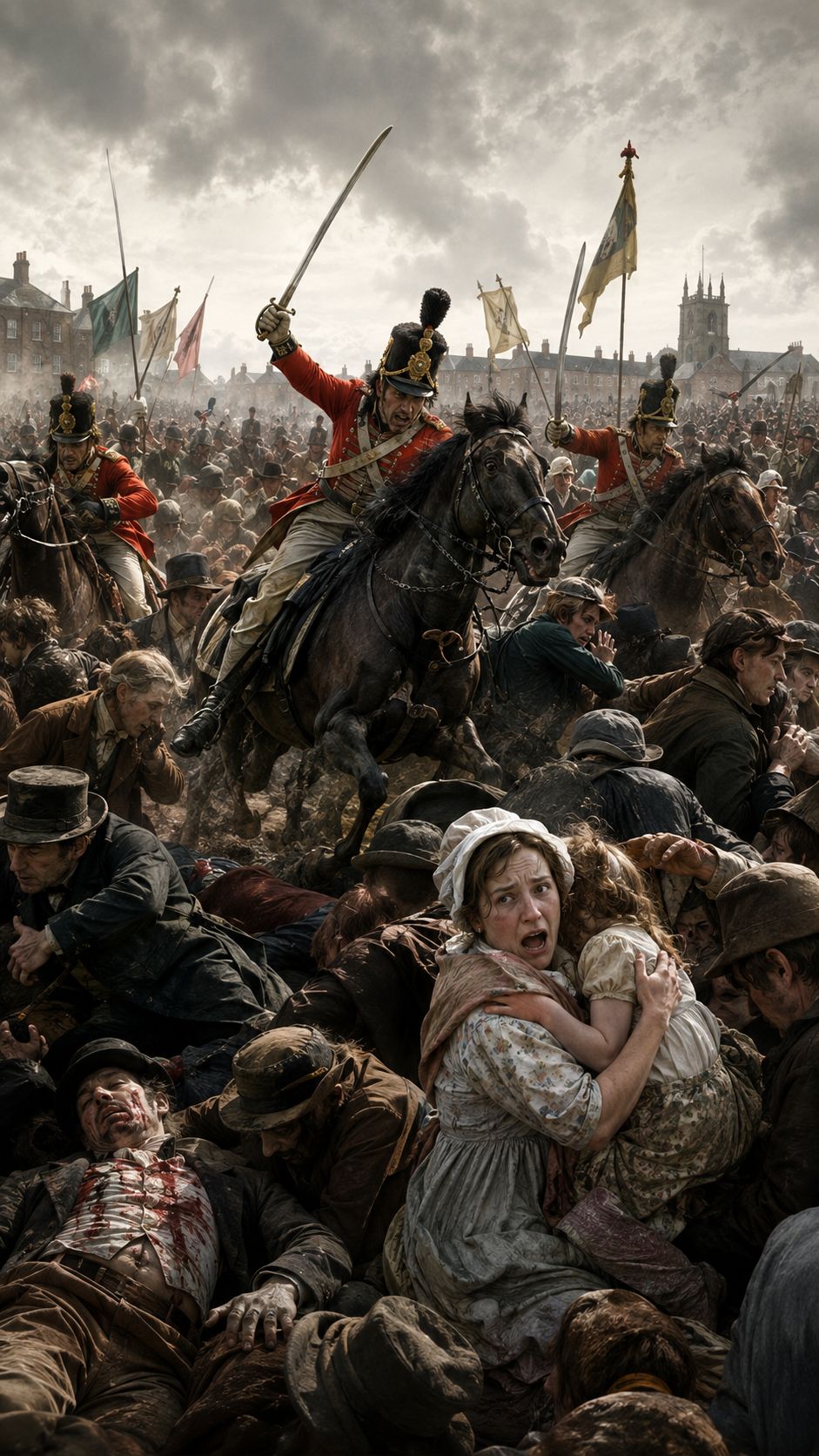 The Law Behind Reading The Riot Act
A phrase for a stern telling-off was once the legal warning before cavalry charged a crowd with sabres drawn.
Manchester, United Kingdom · 1819 · 43 km away
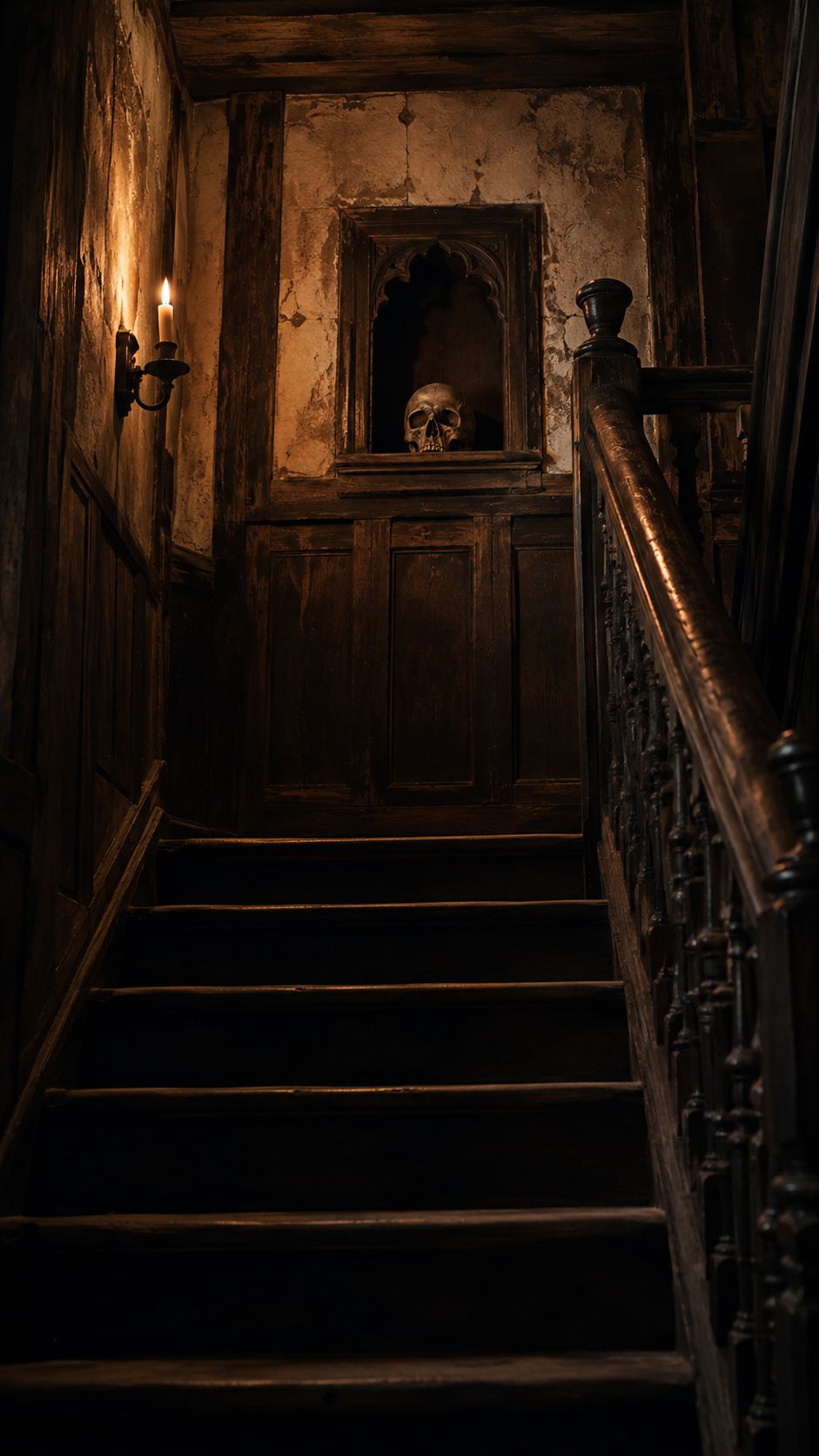 England's Screaming Skulls That Refuse To Leave
In old English houses, real human skulls are kept in niches and boxes because of one shared fear: remove them, and disaster follows.
Wardley Hall, Greater Manchester, United Kingdom · 1600 · 46 km away
More like this
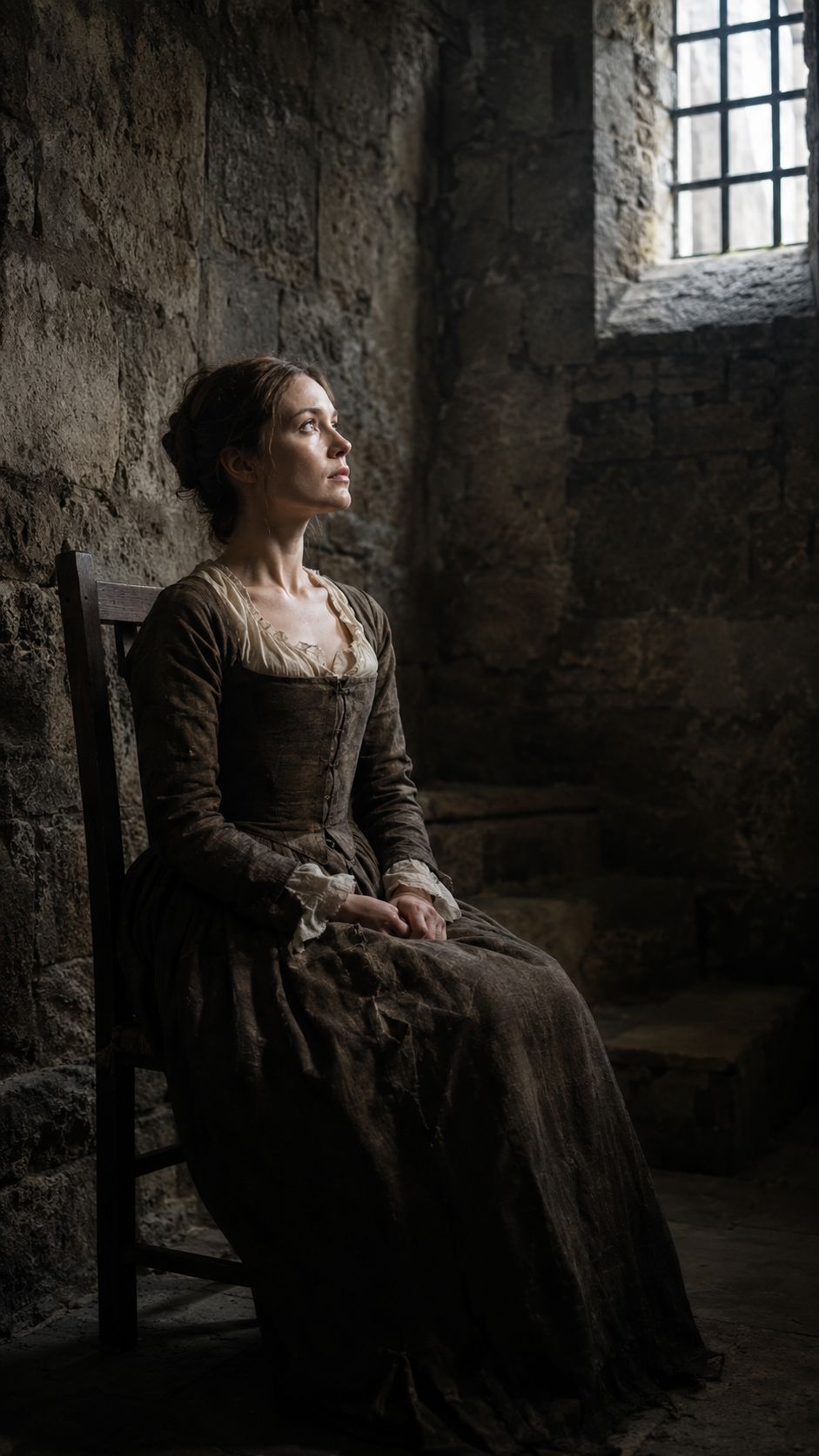 The Rape Trial That Ended In Trial By Combat
A woman's accusation of rape led to France's last judicial duel, with her own life staked on the outcome.
Paris, France · 1386
- The Parish Registers Of The Beast's Victims
Between 1764 and 1767 something killed roughly a hundred people, recorded in the registers as 'devoured by the beast.'
Saugues, France · 1764
- The Manufacturing Of England's Most Haunted House
For decades it was called the most haunted house in England, until its ghost story revealed how a haunting gets made.
Borley, Essex, United Kingdom · 1929
- The Truth Behind The Elephant Man
The real man behind the famous film was quieter, stranger and far more heartbreaking than any screenplay.
Whitechapel, London, United Kingdom · 1890