In a handful of old English houses there is a real human skull kept indoors on purpose, sometimes for centuries, because of a shared and very specific fear: that if the skull is ever taken out of the house, disaster will follow. These are England’s so-called screaming skulls. The bone is real and, in several cases, still where tradition says it must stay. The stories attached to the bone are a different matter, and in at least one case the examination of the skull demolishes the story outright.
The best documented sits at Wardley Hall, a moated timber-framed house in Worsley on the edge of Salford. It is traditionally held to be the skull of Ambrose Barlow, a Benedictine priest who spent roughly two decades quietly serving Catholic households across south Lancashire at a time when saying Mass carried a death sentence. The end came on Easter Sunday, 25 April 1641, at Morleys Hall in Astley, where Barlow and around a hundred and fifty parishioners were surrounded by the Vicar of Leigh at the head of some four hundred men. Barlow gave himself up without resistance, and his congregation were let go once their names had been taken down.
The Horror
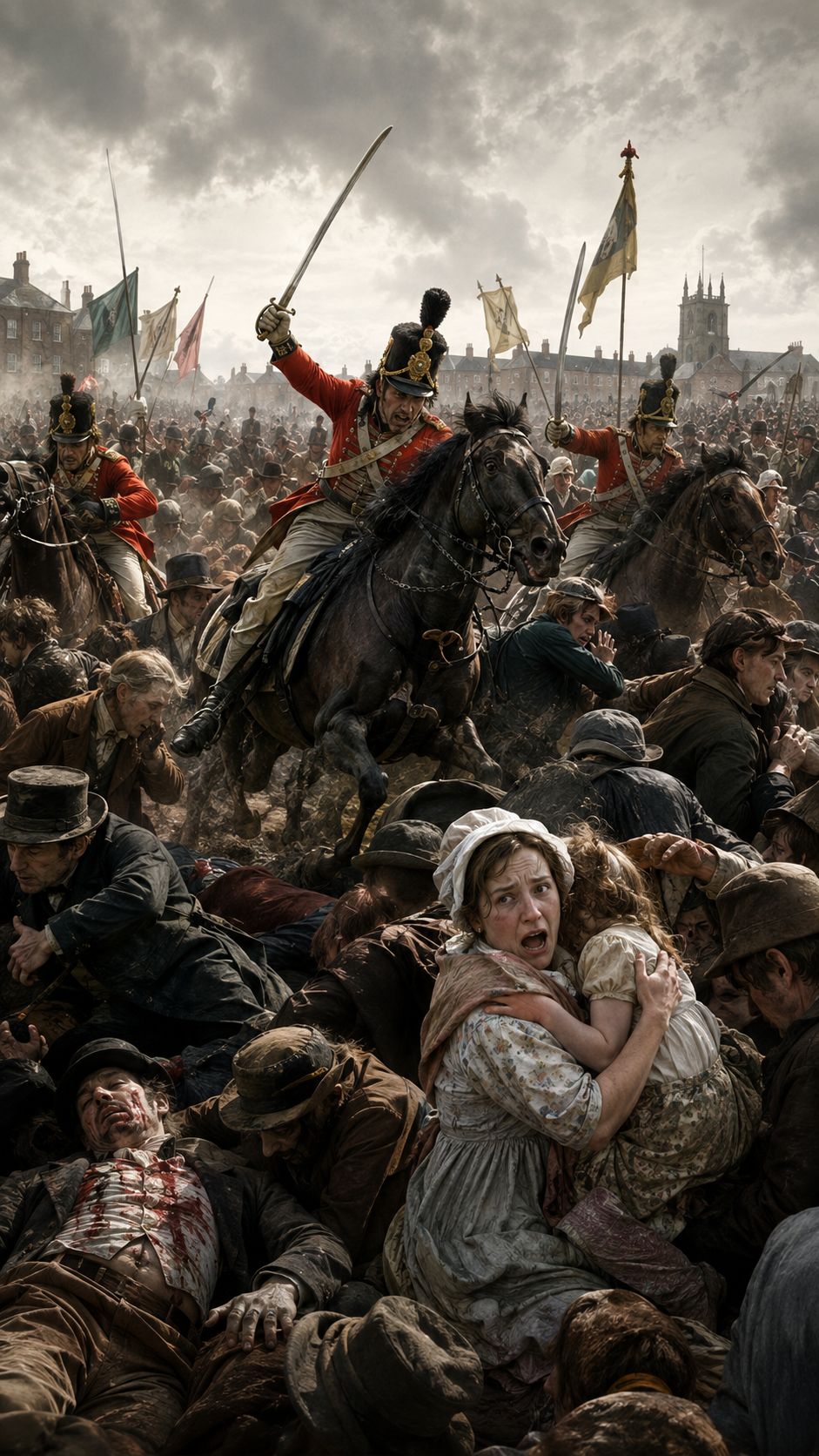
Barlow was brought before Sir Robert Heath at Lancaster, professed his faith and defended what he had done, and was convicted on 8 September 1641. Two days later, on 10 September, he was drawn to the place of execution on a hurdle, hanged, dismembered and quartered, and his remains boiled in oil. His head was set on a pike and, on the magistrate’s orders, carried to Manchester to be shown as a warning to anyone else inclined to shelter a priest. What happened next is where record thins into family tradition. A cousin, Francis Downes, is said to have recovered the head and taken it to Wardley Hall, where it was placed in a niche beside the main staircase. The house’s own account has the skull rediscovered in a casket during building work in 1745, still bearing a quantity of auburn hair and a good set of teeth. The moat story belongs firmly to legend: it is told that a servant mistook the skull for an animal’s and threw it into the water, and that storms of unnatural violence hammered the house night after night until it was fished out and put back. No contemporary record supports any of that, and the same is true of the wider tradition that misfortune falls on whoever moves it. For a long while the skull was thought to be that of Roger Downes, who bought the hall in 1601 and who the story says lost his head in a drunken brawl. When the family vault was opened his skull was found still attached, all but a small piece, which is as close to a disproof as folklore usually gets.
Bettiscombe Manor in Dorset keeps a skull of its own, and a legend that has done real damage. In the version that circulated through the nineteenth and twentieth centuries, an enslaved Black man brought back from the Pinney family’s plantations on Nevis fell ill and died at the house, having sworn that he would never rest unless his body went home; his employer refused to pay for the voyage, buried him in the churchyard, and was punished by screams from the graveyard and doors slamming inside the manor until the body was dug up and brought indoors, after which only the skull remained. That account cannot stand. Nothing in it is documented, the tellings cannot even agree which Pinney was responsible or in which decade it happened, and in 1963 the skull was examined at the Royal College of Surgeons, where the professor of anatomy, reported as Gilbert Causey, found it to be the skull of a European woman of roughly twenty-five to thirty years. There is no dead man in those bones. The enslaved servant was invented, and the invention was used for the best part of a century to make a curse sound plausible.
The Modern Relic
Wardley Hall’s skull is still in its niche by the staircase, in a house that has served as the official residence of the Roman Catholic Bishop of Salford since 1930. Forensic tests carried out at St Bartholomew’s Medical College in 1960 found a man of about fifty to sixty, with damage consistent with a sharp object driven through the skull, which fits Barlow’s age and manner of death; the diocese is careful to say that this does not prove the skull is his, nor prove that it is not. Barlow himself was beatified in 1929 and canonised by Paul VI on 25 October 1970, among the Forty Martyrs of England and Wales. The Bettiscombe skull, by contrast, is not on display at all and has reportedly spent long stretches in a box in the attic of a private house. Its legend reached print in 1872 through the Dorset folklorist John Symonds Udal, who recorded the belief that removing it would set the building rocking on its foundations and kill the culprit inside a year, and who later photographed it for the county archaeological society’s proceedings in 1910. Udal came to regret the whole business, dismissing the embellished screaming version and remarking that he almost wished he had never drawn attention to it. He was too late. The Dorset skull gave Francis Marion Crawford the foundation for his short story “The Screaming Skull”, published in Collier’s on 11 July 1908 and collected in 1911, a debt Crawford acknowledged himself in a postscript. Elsewhere the same quiet threat persists on thinner evidence still. At Burton Agnes Hall in the East Riding, built for Sir Henry Griffith between 1601 and 1610, a daughter named in different accounts as Anne or Katherine is said to have died in 1620 after being attacked on her way home, and her skull is said to be bricked into the Great Hall and to come back whenever it is taken away, though no record confirms any of it. At Chilton Cantelo in Somerset the documentation is oddly better: Theophilus Brome died in 1670, his body lies in the parish church, and his skull was separated from it on his own instructions and kept at the neighbouring farm, where attempts to bury it are said to bring noises through the house. What survives in all these places is the same bargain, kept by families who would rather live with a stranger’s bones on the staircase than find out what happens if they don’t.