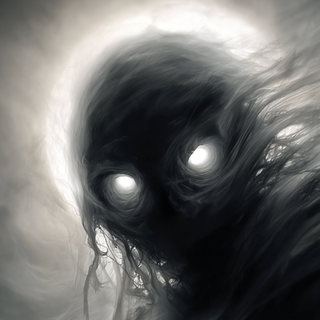
Most people picture Frankenstein’s monster as a lumbering, green-skinned brute with bolts in his neck, groaning and smashing through villages. That image comes almost entirely from a 1931 film. The real 1818 novel is something far stranger and sadder — the story of an intelligent, articulate being who teaches himself to read, quotes Paradise Lost, and is destroyed not by his own violence but by the horror and rejection of everyone who looks at him, starting with the man who made him. And the woman who wrote it lived a life so relentlessly tragic that the horror in her fiction almost seems restrained by comparison.
Mary Shelley was born in London on 30 August 1797 to the pioneering feminist writer Mary Wollstonecraft — who died just eleven days later from an infection contracted during childbirth. Mary never knew her mother except through her books and a portrait, raised instead by her philosopher father, William Godwin. As a sixteen-year-old, she fell in love with the married poet Percy Bysshe Shelley, and the two eloped to the continent together in 1814, scandalising society. She would spend the next nine years almost constantly pregnant or breastfeeding.
The Horror
The tragedies came in waves, and they started early. In February 1815, Mary gave birth to a premature daughter, also named Clara, who lived only a few days. Two weeks after the death, Mary wrote in her journal of a dream that still chills: she had dreamt that her little baby “came to life again — that it had only been cold and that we rubbed it by the fire and it lived.” Then she woke. “I awake and find no baby — I think about the little thing all day.” She was eighteen years old. In the summer of 1816, while the couple stayed near Lake Geneva with Lord Byron, Mary’s older half-sister Fanny Imlay was found dead in a Welsh inn, having taken her own life with laudanum after writing of her “unhappy life.” Just two months later, in December 1816, Percy’s abandoned first wife, Harriet, was found drowned in the Serpentine in Hyde Park — also a suicide. It was that same rain-soaked summer at Lake Geneva, cooped up indoors with Byron and his physician John Polidori, that the group began telling German ghost stories to pass the time, and Byron proposed they each write one of their own. Mary, only eighteen and pregnant with her son William, struggled for days to think of an idea — until a late-night conversation about galvanism and reanimating corpses triggered a vivid waking nightmare. She saw, in her mind’s eye, a “hideous phantasm of a man” stretched out, twitching to life. She turned that nightmare into Frankenstein; or, The Modern Prometheus, published anonymously in 1818. Many readers assumed Percy had written it. The grief kept coming. In September 1818, while the family was in Italy, their one-year-old daughter Clara Everina fell ill with dysentery. Percy insisted Mary bring the dying child to Venice immediately, despite her protests. Clara died in Mary’s arms in the doorway of an inn just outside the city, while Mary waited for Percy to fetch a doctor who never came in time. Mary blamed him. Nine months later, in June 1819, three-year-old William died of malaria in Rome. By the time Mary was twenty-one, only one of her four children was still alive — Percy Florence, born that November. She wrote to a friend that she had come to Italy to improve her husband’s health, and instead the Italian climate had “killed my two children.” She added a bitter line: “May you, my dear Marianne, never know what it is to lose two only and lovely children in one year.”
But the darkness had deeper roots. In December 1818, while Mary was still shattered from Clara’s death, Percy had gone to a courthouse in Naples and registered the birth of an illegitimate child, Elena Adelaide Shelley — listing Mary as the mother, which was a lie. The child’s real mother has never been identified. The baby was given to foster parents and died fifteen months later. Mary never mentioned it in her diaries.
Then, in June 1822, Mary suffered a near-fatal miscarriage. She hemorrhaged so badly she nearly died. Percy saved her life by plunging her into a bath of ice water, which slowed the bleeding. Three weeks later, on 8 July 1822, he set sail with two companions on a small boat off the Italian coast and never arrived. Ten days later, his body washed up on a beach near Viareggio. He was twenty-nine. His friends built a funeral pyre on the sand. As the flames consumed him, Edward Trelawny reached into the fire and snatched Percy’s heart from the blaze — intact. He gave it to Mary. She was a widow at twenty-four, having buried a mother, three children, a sister, and now a husband. And she kept his burned heart in a silk satchel for the next twenty-nine years.
The Modern Relic
Frankenstein has never gone out of print since 1818, and it created an entire genre of science-gone-wrong fiction that still dominates books and film two centuries later. But the creature at its heart has been almost completely rewritten by pop culture. In Shelley’s original, the being reads Paradise Lost and the letters of his own creator, and comes to understand, with devastating clarity, that he is a rejected outcast — closer to a grieving, self-aware Adam cast out of Eden than a mute monster. It’s Victor Frankenstein’s horror and abandonment of his own creation, not the creature’s inherent evil, that drives the novel’s tragedy. Mary Shelley spent the rest of her life as a working writer and single mother, raising her one surviving son largely alone, while continuing to publish novels, essays, and travel writing until her death in 1851.
The relic is what they found afterward. When she died, her family opened the box-desk she had kept beside her bed for decades. Inside, they found locks of her dead children’s hair, a notebook she and Percy had shared, his moving elegy “Adonaïs” — and wrapped in a page of the poem, a silk satchel containing the charred remains of Percy Shelley’s heart. She had carried her dead children and her dead husband inside her furniture for thirty years. Her original manuscript is preserved today at the Bodleian Library in Oxford, and the house near Lake Geneva where the story was born, Byron’s rented Villa Diodati, still stands overlooking the lake — the site where, on one sleepless night in June 1816, an eighteen-year-old grieving woman, pregnant with her second child, dreamed up one of the most enduring monsters in literary history. The monster was eloquent, abandoned, and hated for his face. His creator had learned all three from life.
Nearby on the Dark Atlas
 The Empress Who Walked Away From Her Own Murder
Stabbed through the heart by an assassin who wanted someone else, she got up, brushed herself off, and kept walking.
Geneva, Switzerland · 1898 · same site
- The Heretic Burned By The Reformers Who Fled Rome
Calvin's Geneva burned a brilliant Spanish physician for his beliefs, then, centuries later, erected a monument of atonement.
Champel, Geneva, Switzerland · 1553 · 1.7 km away
- The King's Favourite Who Bet Against Richelieu
A dazzling young courtier gambled his head against Cardinal Richelieu, and lost it in a public square.
Place des Terreaux, Lyon, France · 1642 · 112 km away
- The Blade That Shattered on the Block
A half-blind stand-in executioner's first swing shattered a young nobleman's jaw instead of his neck.
Lyon, France · 1642 · 112 km away
More like this
- The Leper King's Story No Film Would Show
Kingdom of Heaven gave him a dignified death behind a silver mask, the truth was far crueller.
Jerusalem, Israel · 1185
 The Rape Trial That Ended In Trial By Combat
A woman's accusation of rape led to France's last judicial duel, with her own life staked on the outcome.
Paris, France · 1386
- The Parish Registers Of The Beast's Victims
Between 1764 and 1767 something killed roughly a hundred people, recorded in the registers as 'devoured by the beast.'
Saugues, France · 1764
- The Manufacturing Of England's Most Haunted House
For decades it was called the most haunted house in England, until its ghost story revealed how a haunting gets made.
Borley, Essex, United Kingdom · 1929