
After a person was hanged for a serious crime in England — murder, highway robbery, piracy, smuggling — the punishment did not always end with death. For centuries, courts could order a second sentence: gibbeting. The body was to be displayed in public until it rotted away.
The corpse was often coated in tar to slow decomposition and keep it recognisable. It was placed inside a custom‑forged iron cage — built to the specific body, riveted shut — and hung from a tall wooden post at a crossroads, on a hilltop, or beside a major road.
Then it was left.
The Horror
Gibbets were positioned where they could not be missed — on high ground, at busy junctions, next to main routes in and out of towns. Travellers on horseback, in carriages and on foot passed beneath swinging, tarred bodies as a routine part of their journeys.
Decay was slow and public. The tar preserved skin and features for weeks, sometimes longer. Birds did the rest. Crows and ravens pecked through the tar, tore flesh through the bars and nested on the beams above. In summer the smell could carry far downwind.
The iron cages themselves were sturdy, designed to outlast the bodies they held. When the flesh was gone and the bones licked clean, the skeleton remained in its fitted cage, hanging and creaking in the wind.
Over time, gibbets became part of the landscape. They appeared on maps. Travellers used them as navigation points: “Take the road past the gibbet.” Inns were named for them — Gibbet Inn, Gibbet Hill — and roads became Gibbet Lane or Gibbet Street. The dead turned into geography.
In some places, a gibbeted body hung so long that local people simply absorbed it into daily life. Children walking to school saw the same skeleton year after year. Farmers worked fields within sight of a cage they had grown up with. The extraordinary became ordinary; the horror became a piece of scenery.
The practice was not abolished in England until 1834. The last known judicial gibbeting, that of James Cook for a particularly brutal murder in Leicester, was in 1832. His tarred body hung at a crossroads on what is now Saffron Lane for about two years. Contemporary reports record that locals’ main complaint was not the corpse but the crowds — so many people came to look that it caused traffic problems.
The Modern Relic
A handful of gibbet cages survive in museums and town halls. One of the most notorious belongs to John Breads, who murdered Allen Grebell in Rye, Sussex, in 1742. Breads’s cage — human‑shaped, built from heavy iron bands — is displayed in Rye Town Hall. It has separate sections for torso, arms and legs. The metal curves match a particular body: it was, in effect, a bespoke iron suit made specifically for him.
In other cases, cages were rediscovered with bones still inside — vertebrae, ribs, fragments that had dropped into the bottom and become trapped as the iron rusted. The body had long gone from view, but parts of it remained welded in place.
Across England, place names still mark where gibbets once stood: Gibbet Hill, Gibbet Lane, Gibbet Street, Gibbet Corner. The posts and cages are gone. The road names remain, quietly telling you that this is where a corpse once swung for years, long enough to become a reference point.
“Turn left at the gibbet” no longer directs anyone to a hanging body. The left turn is still there. The memory of why it was called that is mostly forgotten — except in the iron cages behind glass and the rows of letters on modern maps that still spell out the word.
Nearby on the Dark Atlas
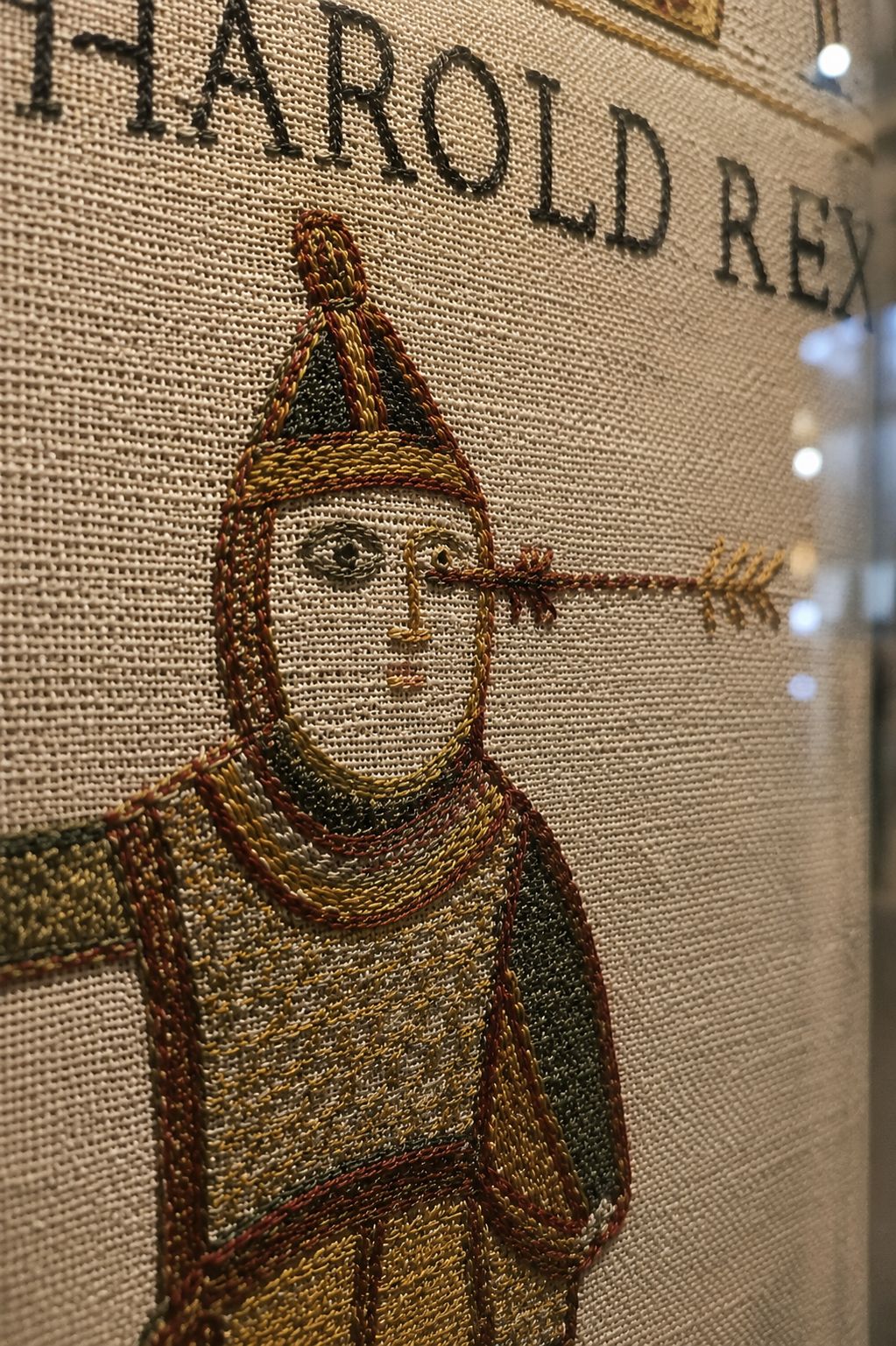 The King Who May Not Have Died By Arrow
Every schoolchild knows the arrow through the eye from the Bayeux Tapestry, but the embroidery may be telling a different story.
Battle, East Sussex, United Kingdom · 1066 · 18 km away
 The Real Boy Behind Winnie-The-Pooh
A teddy bear from Harrods and a Sussex wood became the world's most famous children's books — and a lifelong burden for the real boy inside them.
Hartfield, East Sussex, United Kingdom · 1926 · 41 km away
 The Archbishop Murdered At His Own Altar
Killed inside his own cathedral by men acting on a king's wish, his blood-soaked murder shocked all of Christendom.
Canterbury Cathedral, Canterbury, United Kingdom · 1170 · 44 km away
 The Wife Henry VIII Called Ugly To Survive
Henry VIII destroyed his fourth wife's reputation to escape their marriage, and she outlived every wife who came after her.
Hever Castle, Edenbridge, United Kingdom · 1540 · 51 km away