On his first birthday, in August 1921, a London boy was given a teddy bear from Harrods. He named him Edward. Later, after a famous Canadian black bear at London Zoo called Winnipeg — Winnie for short — the bear got a new name. And a swan the family knew contributed a surname. Winnie-the-Pooh. The boy was Christopher Robin Milne. His father, A.A. Milne, was one of the most successful writers in England — a Punch columnist, a West End playwright. Between 1924 and 1928, Milne wrote four small books: two collections of verse and two storybooks about his son, his son’s toys, and the wood behind their Sussex farmhouse. They became the most famous children’s books on earth. And that was the catastrophe. Because A.A. Milne did not invent a boy. He used his actual son — his real name, his real bear, his real nursery. Christopher Robin was not a character inspired by a child. He was the child, and the child was him, and from the age of four the whole world knew his name, his face, and his bedtime prayers.
The Horror
At first, Christopher liked it. He made public appearances. He even recorded songs from the books. But childhood ends, and the books did not end with it. At boarding school, the poems followed him. His father’s most famous verse, “Vespers,” pictured him kneeling to say his prayers — and the other boys twisted it into a mocking chant: “Hush, hush, nobody cares — Christopher Robin has fallen downstairs.” They knew the poems about him by heart, and they used them like weapons. He learned to box to defend himself. He was, by his own account, saved by growing older and tougher — but the damage was a kind of haunting: wherever he went, people met not him but the golden-haired boy in the book. He fought in the Second World War — a sapper, wounded in Italy. He came home to find that nothing had faded. In 1948 he married his first cousin, Lesley de Sélincourt, against his mother’s wishes, and in 1951 he did the one thing guaranteed to test his wounds daily: he opened a bookshop. The Harbour Bookshop in Dartmouth, Devon, was a success — and a pilgrimage site. Fans travelled to find him and asked the real Christopher Robin to sign their Pooh books. He served them. He was polite. One can only imagine the cost. Then 1956 took everything at once. His father died. Months later, his daughter Clare was born with severe cerebral palsy. And his relationship with his mother collapsed entirely — after his father’s death, Daphne Milne saw her son only once in the last fifteen years of her life, and by some accounts refused to see him even on her deathbed. He never went back to Cotchford Farm, the house where Pooh was born. For years he wanted nothing to do with his father’s royalties — then, when the money was needed to help care for Clare, he accepted his share, and later gave almost all of it away rather than keep it for himself. The books had taken his childhood; he would not let them enrich him.
The Modern Relic
Christopher Robin Milne died in 1996, aged seventy-five, having made his peace — his memoir, he said, finally let him stand in the sunshine and look both his father and Christopher Robin in the eye. But the strangest relic of all sits three thousand miles from the wood where it began. Christopher gave the original toys — Pooh, Piglet, Eeyore, Kanga and Tigger — to his books’ American editor, and in 1987 they were donated to the New York Public Library. They are still there today, in a glass case in the children’s centre on Fifth Avenue: the real Winnie-the-Pooh — small, bald in patches, loved nearly to pieces. Children press their faces to the glass. Most have no idea that the bear belonged to a real boy, or what being that boy cost him. England has occasionally asked for the bear back. New York has politely declined. So the world’s most famous teddy stays in exile — a threadbare little monument to a childhood that belonged to everyone except the child.
Nearby on the Dark Atlas
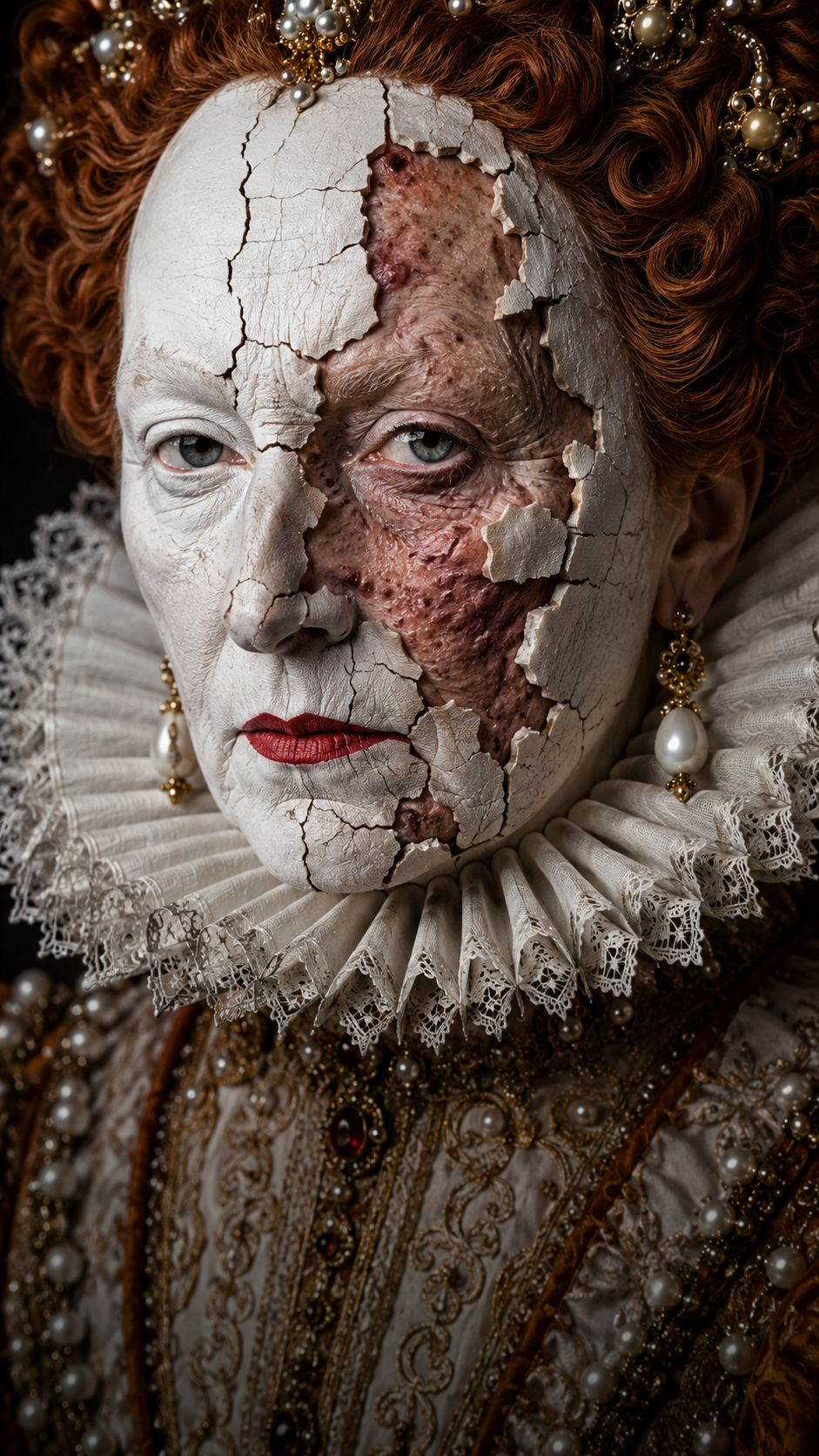 The Wife Henry VIII Called Ugly To Survive
Henry VIII destroyed his fourth wife's reputation to escape their marriage, and she outlived every wife who came after her.
Hever Castle, Edenbridge, United Kingdom · 1540 · 16 km away
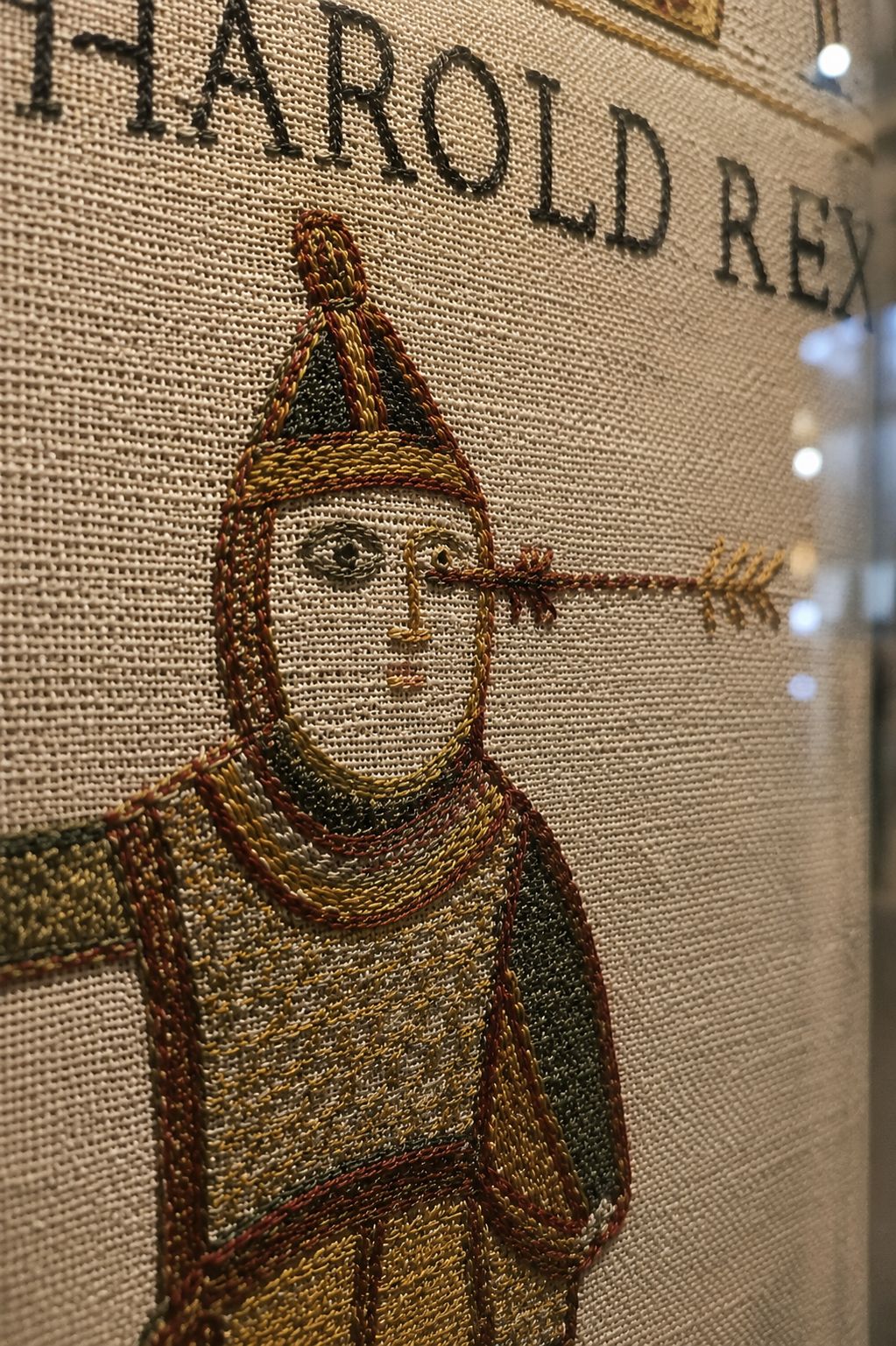 The King Who May Not Have Died By Arrow
Every schoolchild knows the arrow through the eye from the Bayeux Tapestry, but the embroidery may be telling a different story.
Battle, East Sussex, United Kingdom · 1066 · 27 km away
 The Queen's Cousins Hidden And Presumed Dead
Listed as dead for decades, two first cousins of the Queen were quietly living in a long-stay institution.
Redhill, United Kingdom · 1987 · 31 km away
- The Poisoner Who Weaponised A Town's Sweet Shops
She poisoned an entire town's confectionery to disguise the murder of a woman she hated, killing a child she never met.
Brighton, United Kingdom · 1871 · 33 km away
More like this
 The Rape Trial That Ended In Trial By Combat
A woman's accusation of rape led to France's last judicial duel, with her own life staked on the outcome.
Paris, France · 1386
- The Parish Registers Of The Beast's Victims
Between 1764 and 1767 something killed roughly a hundred people, recorded in the registers as 'devoured by the beast.'
Saugues, France · 1764
- The Manufacturing Of England's Most Haunted House
For decades it was called the most haunted house in England, until its ghost story revealed how a haunting gets made.
Borley, Essex, United Kingdom · 1929
- The Truth Behind The Elephant Man
The real man behind the famous film was quieter, stranger and far more heartbreaking than any screenplay.
Whitechapel, London, United Kingdom · 1890