
The Persians, the Romans, the Chinese, the Moroccan sultans, and the Cambodians all independently arrived at the same method of execution — hanging a person upside down by their ankles and sawing them in half from the groin downward with a large two-handled saw, and the reason they hung them upside down was not cruelty for its own sake but engineering, because the blood rushing to the head kept the brain oxygenated and the person conscious and alive long past the point where gravity alone would have killed them, allowing the saw to reach the abdomen before death finally came, and in 1705 in Morocco a rebel official named Melec was sawn from the groin upward until the saw reached his stomach and he was still conscious, and the executioners then began sawing from his skull downward to meet in the middle, and this method was documented in use from ancient Persia in 500 BC to Cambodia in 1975, and a British diplomat in Persia reported witnessing it in 1808.
Interesting Fact: The Roman Emperor Caligula used a variant — sawing through the middle horizontally rather than vertically — which caused faster death and was considered by some sources to be used as a form of dark entertainment at his banquets. The Sikh martyr Bhai Mati Das was executed in Delhi in 1675 by being sawn in half from the skull downward while still alive, by two men using a two-handled sword, while a Mughal official read him the Quran and offered to stop if he converted. He refused and continued reciting his own prayers until the saw reached his chest. The executioners who developed the upside-down method understood that keeping blood in the brain extended consciousness — meaning the technique required anatomical knowledge specifically to maximise suffering. It was not improvised. It was designed.
Nearby on the Dark Atlas
- The Heart Thrown Into Battle Against The Enemy
Surrounded and facing certain death, the knight hurled his dead king's heart into the enemy line and followed it.
Teba, Spain · 1330 · 351 km away
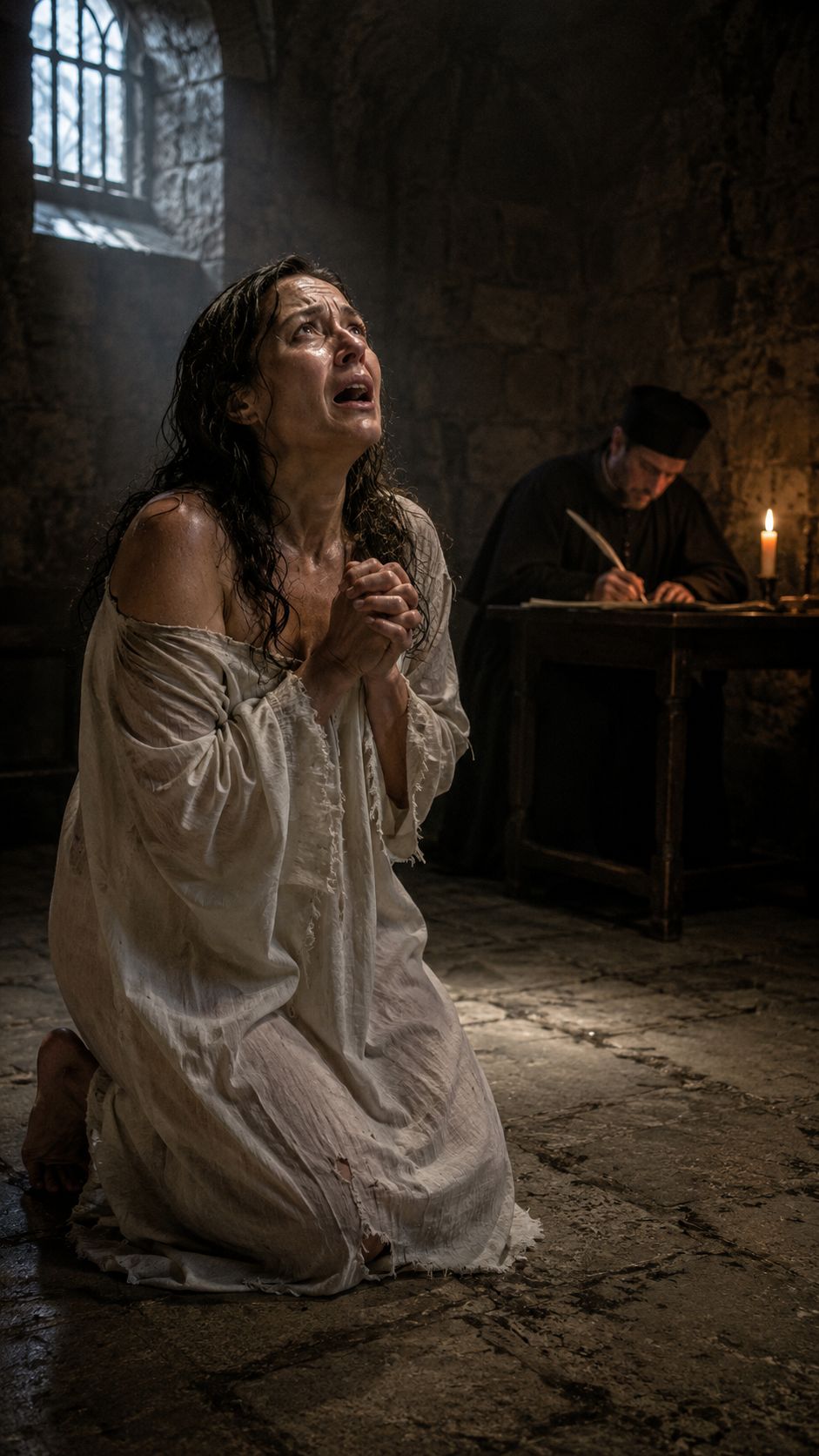 The Woman Condemned For Clean Clothes
Not eating pork and washing on Saturdays was enough for the Spanish Inquisition to put her to the rack.
Toledo, Spain · 1567 · 677 km away
 The Lovers Portugal Crowned After Death
A king's mistress was murdered in front of her children — and her lover later crowned her corpse queen.
Coimbra, Portugal · 1355 · 746 km away
 The Queen Locked Away For Forty-Six Years
Branded 'mad' by the men who wanted her throne, she may have been one of history's most cruelly wronged queens.
Tordesillas, Spain · 1509 · 847 km away