
In October 1793, the National Convention sent Jean‑Baptiste Carrier to the city of Nantes with one instruction: suppress the counter‑revolution by any means necessary. The prisons were overflowing; disease was spreading from the cells into the city. Carrier needed a solution that was fast, quiet, and did not waste ammunition.
He looked at the Loire River.
The Horror
On the evening of 16 November 1793, around ninety Catholic priests were transferred from confinement in Nantes to a specially prepared vessel at the docks. Contemporary accounts describe flat‑bottomed boats or barges with rails to stop people jumping overboard, and openings in the hull that could be uncorked once they reached deeper water. The boat was towed out into the middle of the Loire. The plugs were pulled.
Ninety men drowned in the dark on the first night. Almost nobody in the city heard it happen.
Carrier and his men quickly developed a grim vocabulary. The drownings were nicknamed “immersions,” “baptêmes républicains” — “republican baptisms” — and “bain national,” the “national bath.” Carrier himself took to calling the Loire “the national bathtub.” In reports back to the Committee of Public Safety in Paris, he hinted darkly that “miracles” were happening on the Loire, without spelling out what that meant.
The drownings at Nantes continued from November 1793 into early 1794. Priests, suspected royalists, women, children — no real distinction was made. Before each operation, prisoners were systematically searched and stripped of valuables: rings, watches, jewellery, coins, anything that could be itemised. The possessions were recorded. The prisoners were herded aboard the boats.
At Carrier’s trial, witnesses told stories of “mariages républicains” — “republican marriages,” in which naked men and women, sometimes priests and nuns, were tied together before being drowned. Later historians have argued over how often, or even whether, these specific pairings really happened as described, but there is no dispute that thousands of men, women, and children were drowned in the Loire at Nantes.
Robespierre, disturbed by rumours of chaos and corruption, sent an eighteen‑year‑old Jacobin agent, Marc‑Antoine Julien, to Nantes to report on what was happening. Julien wrote about the misery of the prisons and the excesses of local authorities, but his report did little to halt the drownings. The boats kept going out.
Estimates of the total dead vary wildly. Conservative counts suggest at least 1,800 people were drowned in the noyades; other researchers argue for 4,000 or more, and some nineteenth‑century writers claimed as many as 10,000 victims. Even the lowest numbers make the Loire at Nantes one of the deadliest killing grounds of the French Revolution.
In 1794, the political wind shifted. Carrier was recalled to Paris, arrested, and brought before the Revolutionary Tribunal. Witnesses described the barges, the drownings, the searches, the property taken from the dead. The jury found him guilty without hesitation. On 16 December 1794, barely a year after the first noyades, Jean‑Baptiste Carrier was guillotined.
The Revolution drowned thousands in a river. Then it guillotined the man who did the drowning. The machine consumed its own operator.
The Modern Relic
The Loire still flows through Nantes. The old quays where barges once loaded prisoners are now a riverside promenade lined with bars, restaurants, and cultural venues. The stretch of water where boats slipped out into the current is visible from the Île de Nantes — a redeveloped island that now markets itself as the creative heart of the city.
Along the riverbank, the Mémorial de l’abolition de l’esclavage stretches beneath the quay: a long, glass‑walled passage honouring victims of the Atlantic slave trade and reflecting on the city’s history with ships, chains, and human cargo. It is not a dedicated memorial to the noyades, but it stands within sight of the same river, on the same waterfront, where prisoners once boarded their last boats. The water is calm. It was calm then too.
Nearby on the Dark Atlas
- The Knight Who Became Bluebeard
A war hero who rode beside Joan of Arc went home to his castles and became something monstrous.
Nantes, France · 1440 · same site
 The Widow Who Became A Pirate For Revenge
After the King of France beheaded her husband, a noblewoman sold everything, took to the sea, and hunted French ships for years.
Nantes, France · 1343 · same site
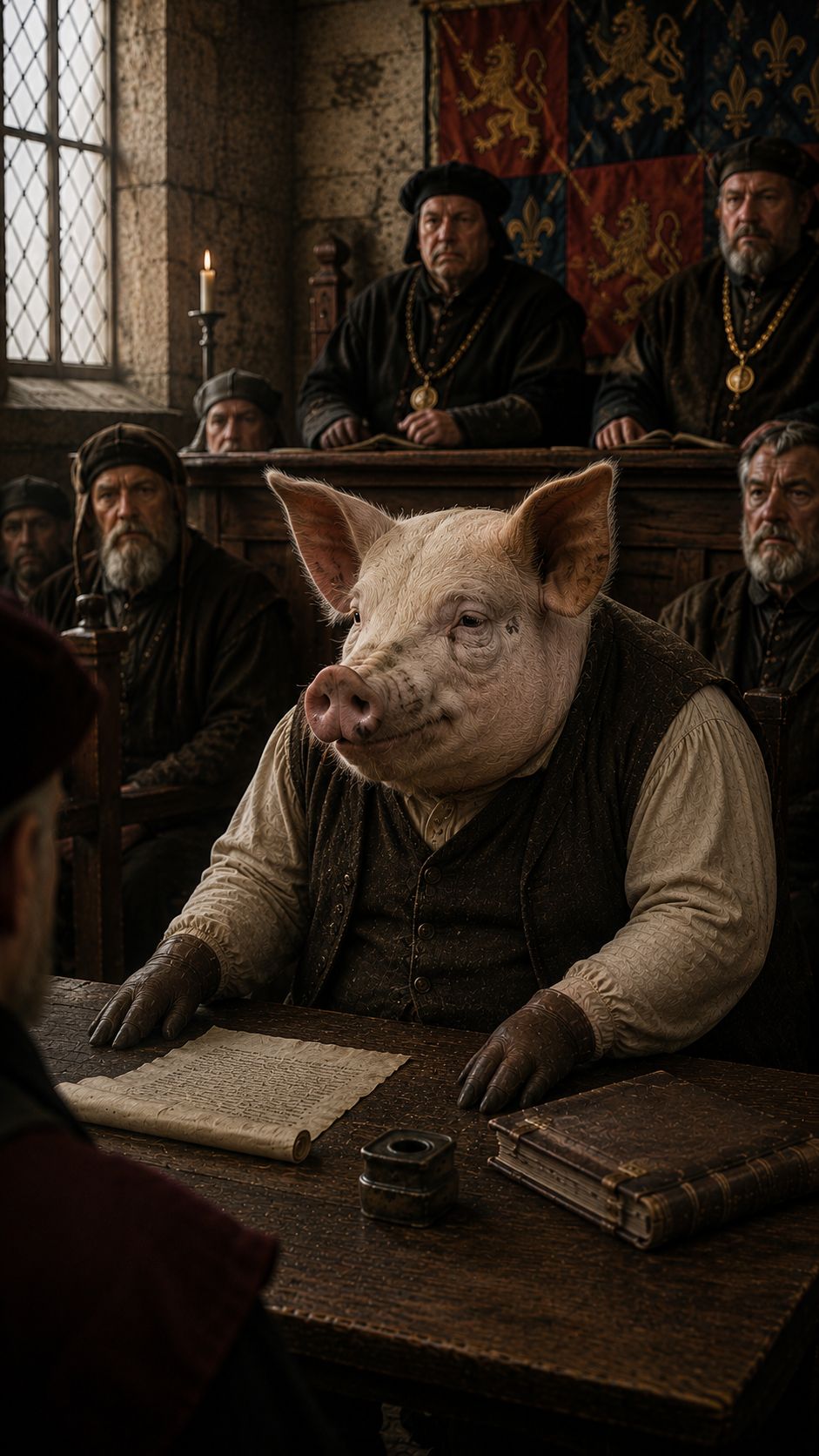 The Pig Put On Trial For Murder
A pig was arrested, given a lawyer, tried in a real court, dressed in human clothes, and hanged for killing a baby.
Falaise, France · 1386 · 212 km away
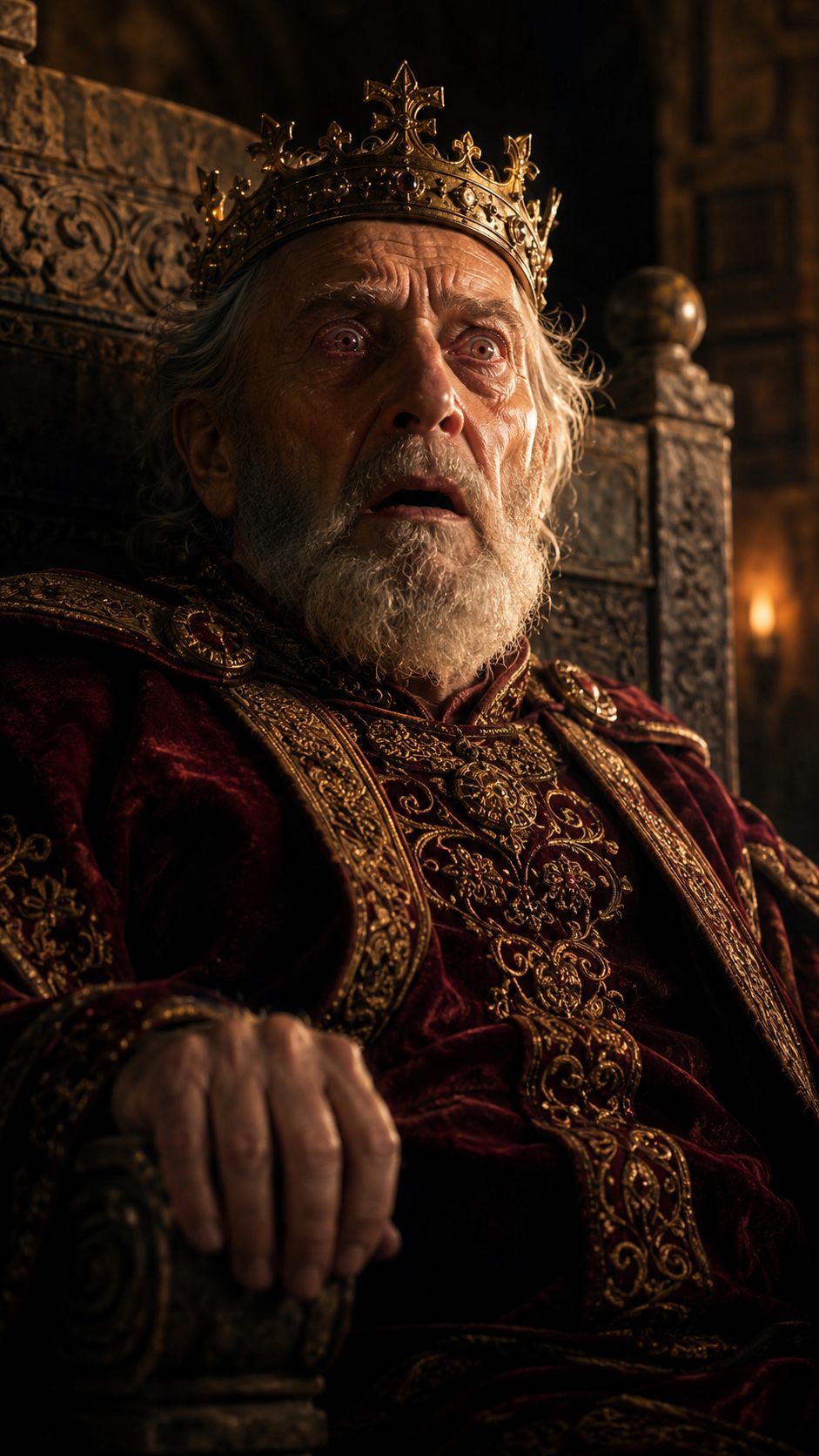 The Conqueror Whose Funeral Fell Apart
The king who took England died alone, stripped of his valuables, and his funeral turned into a grotesque disaster.
Caen, France · 1087 · 235 km away