
Some battles are won by the biggest army. This one was won by a hundred and fifty men who refused to run. On the afternoon of 22nd January 1879, at a tiny mission station on the Buffalo River in Natal, a handful of British soldiers and sick men dragged from hospital beds stood behind a barricade of corn sacks and biscuit boxes, and waited for four thousand Zulu warriors to arrive. What followed was twelve hours of the most desperate close-quarter fighting in British history — a defence so against the odds it won eleven Victoria Crosses, the most ever awarded for a single action. This is Rorke’s Drift — the day the impossible held. To understand Rorke’s Drift, you have to understand the catastrophe that came before it. In January 1879, Lord Chelmsford led a British invasion force into the independent kingdom of Zululand, determined to crush the Zulu king Cetshwayo. Chelmsford was confident his rifles and artillery made the result a formality. He established his main camp beneath a rocky outcrop called Isandlwana — and then, fatally, split his force, marching away with half of it to chase a Zulu diversion. He left seventeen hundred men to guard the camp, with orders that amounted to ‘defend it if anyone turns up’. Nobody believed anyone would turn up. They were wrong. On the morning of 22nd January, the main Zulu army — twenty thousand warriors hiding in a valley — was found by a British patrol, and the battle nobody expected began. Wave after wave of Zulu regiments struck the camp. The firing line was overextended, the ammunition resupply failed, and when the line broke it broke completely. In a few hours an entire British column was annihilated; of the seventeen hundred men in the camp, thirteen hundred were killed — the worst defeat inflicted on a modern army by an indigenous force. Then the Zulu regiments who had missed the killing turned towards the river, looking for more. Their next target was Rorke’s Drift — a mission station being used as a supply depot and field hospital. When two exhausted survivors of Isandlwana rode in carrying the news, the garrison faced a terrible decision. In command were Lieutenant John Chard of the Royal Engineers, there to build a bridge, and Lieutenant Gonville Bromhead of the 24th Foot. Between them they had one hundred and fifty men — many of them hospital patients. Retreat meant a slow convoy of sick men caught in the open by the fastest infantry in Africa. Chard made the call: they would stay. The men turned mealie sacks and biscuit boxes into an improvised fort.
The Horror
At half past four, the first Zulu regiments — four thousand warriors — swept around the hill of Shiyane and charged. The attack crashed into the south wall and never stopped for twelve hours. The Zulu surged up to the barricades, grabbing the defenders’ rifles with their bare hands, stabbing over the sacks with their assegai spears. The fighting was so close that men fired into faces inches away, and when the rifles were torn aside the work continued with bayonets. Again and again they came, dying in heaps and coming again. On the horizon they could see the smoke of Isandlwana; they knew what happened to men who were overrun. The worst of it came at the hospital. Around six o’clock the Zulu set fire to its thatched roof, and the sick and wounded fought for their lives among the burning beds. Private Henry Hook and others broke through the walls, room by room, as flames and spears came in behind them. Men were dragged from their beds and killed; others leapt from windows into a storm of assegais. Surgeon James Reynolds moved among them, tending the wounded. When it was abandoned, the burning roof lit the station — and by its light they could see thousands of warriors massing in the dark. They fell back to a final redoubt of biscuit boxes, thirty yards across, and prepared to die there. All through the night the attacks came in waves. By the glow of the burning hospital, the men of the 24th fired until their rifles were too hot to hold — nearly twenty thousand rounds that night. Commissary Dalton, who had stiffened the defence at its wavering moment, was shot through the body and kept fighting anyway. Old colour sergeants and teenage drummer boys stood shoulder to shoulder. Then, around four in the morning, impossibly, the attack died away. The Zulu regiments, having lost perhaps five hundred dead, withdrew into the darkness. When the sun rose, the defenders stood amid the wreckage and realised they had won. The cost was seventeen men killed or mortally wounded — but the garrison had expected to be annihilated to a man. When the news reached London, a Britain reeling from the shame of Isandlwana seized on Rorke’s Drift as proof that courage could redeem disaster. Eleven Victoria Crosses were awarded — the most for any single action in the history of the award. They went to Chard and Bromhead, to Reynolds, to Dalton, to Private Hitch, badly wounded and fighting on, and to Sergeant Frank Bourne — the ‘boy sergeant’ of twenty-three, who was offered a commission on the spot and turned it down.
The Modern Relic
You can stand exactly where they stood today. The battlefield of Rorke’s Drift, in the hills of KwaZulu-Natal, is one of the most completely preserved Victorian battlefields. The mission buildings have been reconstructed on their original foundations, the lines of the mealie-bag barricades are marked out, and the final biscuit-box redoubt can still be walked. In the little cemetery, the graves of the seventeen defenders lie together in the red earth, alongside a memorial to the hundreds of Zulu dead buried in mass graves. And at Brecon in Wales, the regimental museum of the Royal Welsh keeps the relics — medals, uniforms and weapons carried that night. Here is the honest part of the story. Rorke’s Drift was a magnificent act of courage, but it was fought in an unjust war. The invasion had been provoked by British officials who wanted the Zulu kingdom destroyed, and Cetshwayo had spent months trying to avoid it. The four thousand men who attacked that night were defending their own homeland — and within six months the British had crushed the Zulu army at Ulundi. The 1964 film Zulu made Michael Caine a star, but it smeared Private Hook as a cowardly malingerer — a complete invention. Hook’s family walked out of the premiere in disgust. The real men were braver than the film allowed, and the real war was uglier. Seventeen graves in the red earth. Twenty thousand rounds in a single night. Four thousand warriors against one hundred and fifty men behind corn sacks. Rorke’s Drift endures not because the cause was just, but because the courage was real — on both sides of the barricade. The Zulu wounded were tended by the same surgeon they had tried to kill, and the defenders marvelled at the men who kept coming. It was a battle nobody was supposed to fight, at a place nobody was supposed to defend, won by men who simply refused to leave. And the barricade line is still there today, drawn on the ground where the biscuit boxes stood, waiting for you to stand where the impossible held.
Nearby on the Dark Atlas
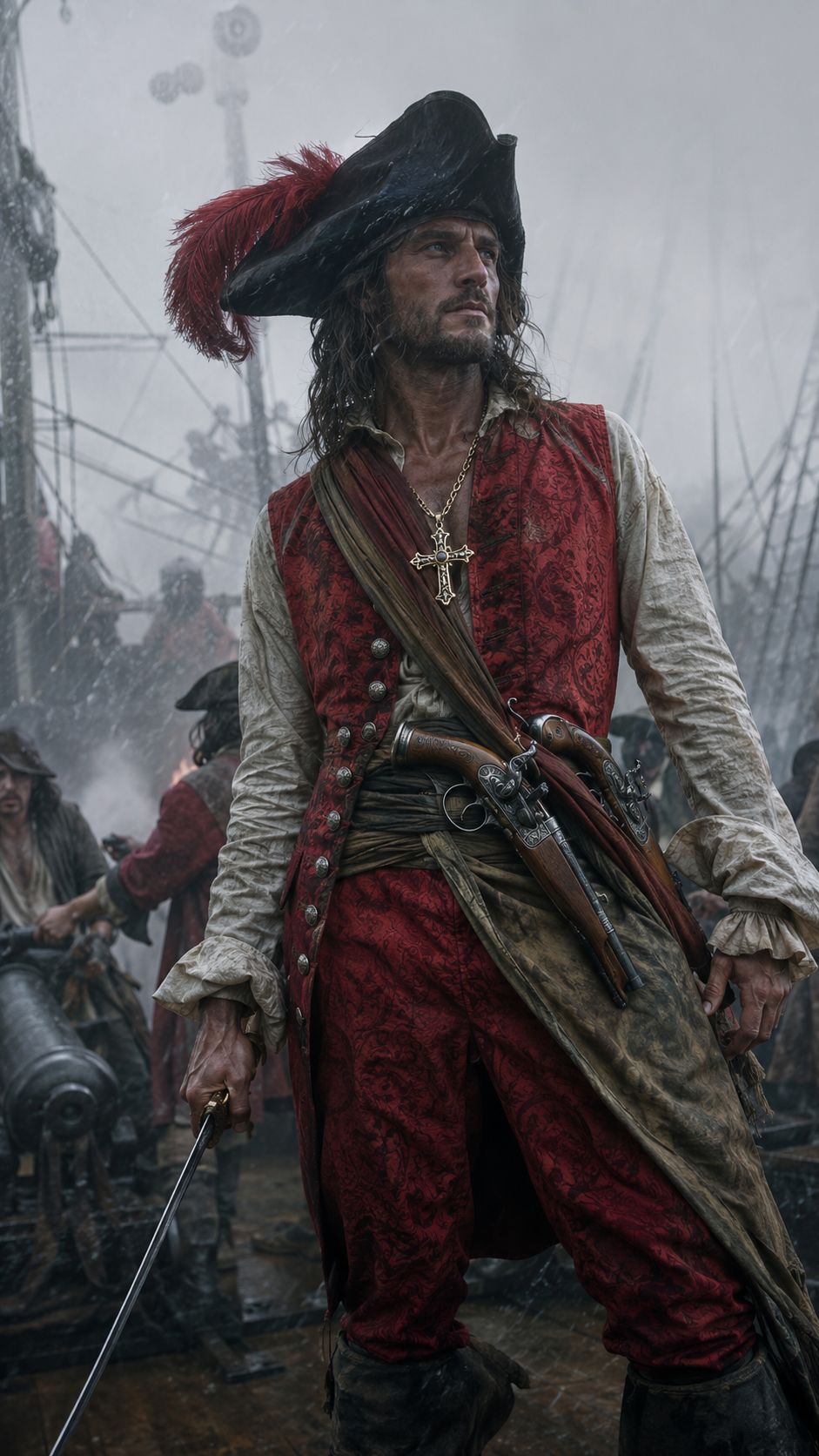 The Reluctant Pirate Who Became King
Pressed into piracy against his will, a Welsh sailor became the most successful pirate in history before a warship caught him at breakfast.
Cape Lopez, Gabon · 1722 · 3861 km away
- The Poison In Napoleon's Wallpaper
A dying emperor believed he was being murdered, and centuries later his own wallpaper became a suspect.
Longwood House, Saint Helena, Saint Helena · 1821 · 3958 km away
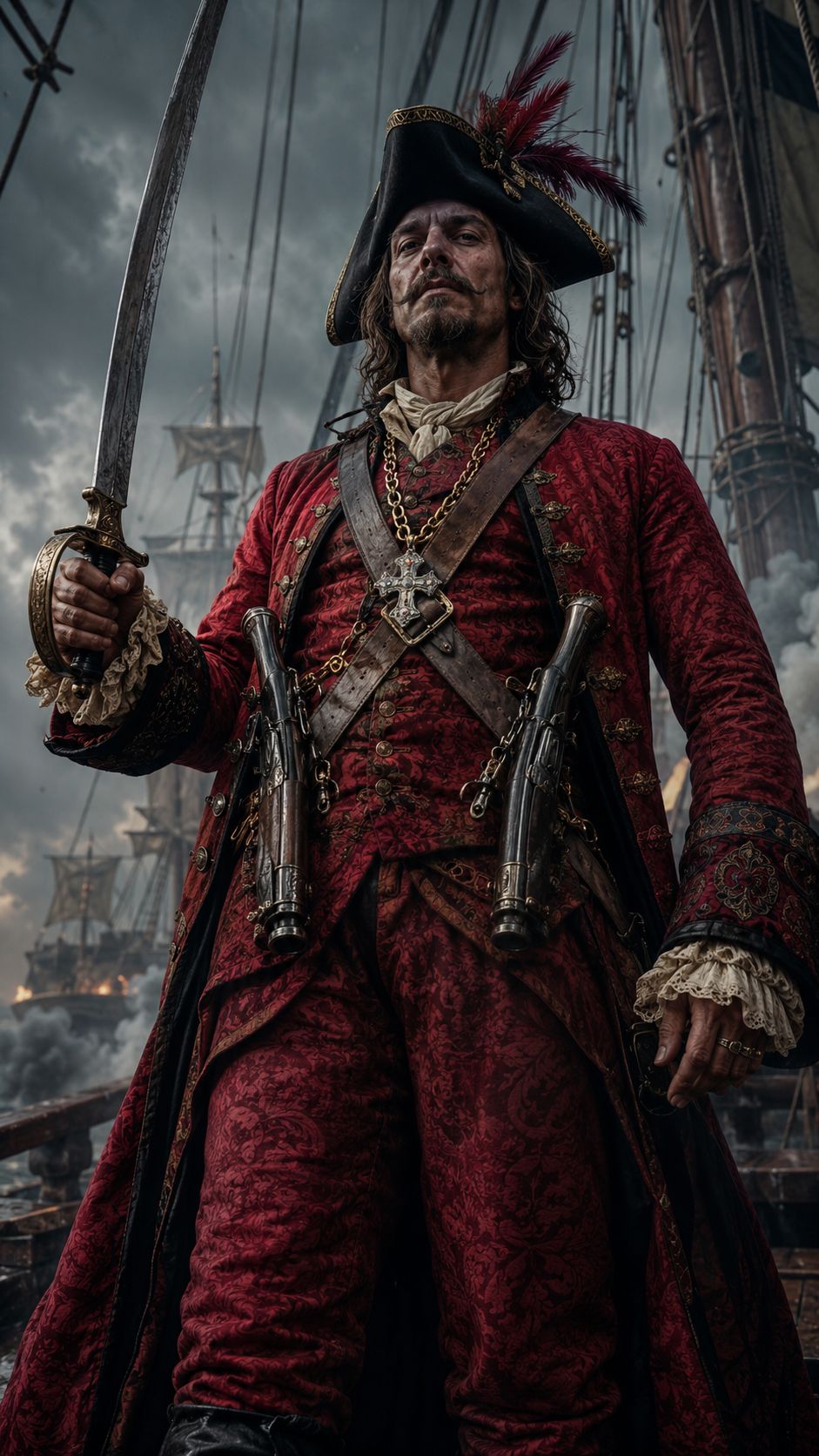 The Pirate King Who Vanished With The Treasure
He mutinied over unpaid wages, hunted down the richest treasure fleet afloat, and then simply disappeared forever.
Bab-el-Mandeb Strait, Yemen · 1695 · 4747 km away
- The Pharaoh Murdered By His Own Harem
A CT scan finally revealed the hidden throat wound that ended the reign of Egypt's last great pharaoh.
Thebes, Egypt · 1155 BC · 6015 km away