
The story of Anne Mowbray is one of the most poignant and strange in all of English history — a little girl used as a pawn by kings, who died before she was nine, and whose small coffin was lost for nearly five hundred years before it was accidentally torn open by a digging machine in 1960s London.
Anne was born in 1472 at Framlingham Castle, the only child of John Mowbray, the Duke of Norfolk. And when her father died suddenly in 1476, four-year-old Anne became something extraordinarily valuable: the sole heiress to one of the greatest fortunes in England. She was, overnight, the richest little girl in the country — and that made her a target.
The Horror
King Edward IV saw an opportunity to funnel that vast fortune into his own family. So he arranged a marriage. On the 15th of January 1478, in St Stephen’s Chapel at Westminster, Anne Mowbray was married — she was five years old. Her groom was the King’s younger son, Richard, Duke of York, who was four. The two tiny children, both far too young to even legally marry, required a special dispensation from the Pope, partly because they were also distant cousins. They weren’t just betrothed, as was normal for children — they were fully married, so that the crown could take control of Anne’s enormous estates immediately.
It was, in truth, a business transaction dressed up as a royal wedding, conducted between a five-year-old and a four-year-old. Anne went to live in the royal household, presumably to be raised until she was old enough for the marriage to be real.
But she never grew up. On the 19th of November 1481, at the palace of Greenwich, Anne Mowbray died — just a few weeks short of her ninth birthday. We don’t know what killed her; some illness of childhood, lost to history. She had been a wife for three years and was dead at eight, leaving her little husband Richard a widower at the age of eight.
She was given a grand state funeral befitting her rank and wealth, and was laid to rest in a small lead coffin in a beautiful chapel, the Chapel of St Erasmus, which her mother-in-law, Queen Elizabeth Woodville, had recently had built in Westminster Abbey.
And here is where her husband’s story becomes one of the darkest in English history — because Richard, Duke of York, the little boy Anne left behind, was one of the two Princes in the Tower. Less than two years after Anne’s death, her boy-widower and his older brother, the young King Edward V, were taken into the Tower of London by their uncle, who seized the throne as King Richard III. And the two princes were never seen again — vanished, presumed murdered, their fate the most famous unsolved mystery in English history. The little girl and the little boy who were married as children both died young and strangely: she of some forgotten illness at eight, and he swallowed forever by the Tower.
3️⃣ THE MODERN RELIC But Anne’s story didn’t end with her burial — because her body would not stay put. In about 1502, King Henry VII decided to demolish the little Chapel of St Erasmus where Anne lay, to build his own magnificent new Lady Chapel. Anne’s coffin was dug up and moved — taken across London to the Abbey of the Minoresses, a convent of nuns near Aldgate, where her mother had gone to live. And there, over the centuries, as the convent was dissolved and the buildings were demolished and built over again and again, the small coffin of Anne Mowbray was simply… lost. Forgotten. Buried deep beneath the changing streets of east London, her name and her story fading completely from memory.
For nearly 460 years, no one knew where she was.
Then, on the 11th of December 1964, workmen were excavating a site in Stepney, in the East End of London, clearing old ground for new construction. A digging machine broke through into a hidden brick vault, eleven feet down. And inside, among the rubble, was a small lead coffin — only about four and a half feet long, clearly the coffin of a child.
The workmen, astonished, pulled it out. In a very 1960s touch, they telephoned the newspapers and posed for photographs with their find before handing it over to the police. The police, suspecting it was historic, passed it to a field officer from the London Museum, who took the little coffin away in the back of his Land Rover. And when they read the Latin inscription on the plaque wrapped around it, they realised what they had: this was Anne Mowbray, the child Duchess of York, dead since 1481, lost since 1502 — found again by chance under a building site.
When they examined her, they found her remarkably preserved for her age — and, most movingly of all, her hair had survived: a little girl’s reddish-gold hair, still there after nearly five centuries. She had been eight years old.
There was a public outcry over the disturbance of a royal child’s remains, and Anne’s descendant, Lord Mowbray, protested. The matter was resolved with great care and dignity. And on the 31st of May 1965, Anne Mowbray was brought back to Westminster Abbey. Her small remains, surrounded by white roses, were laid in state in the Abbey’s Jerusalem Chamber — exactly as they had been nearly five hundred years before — and then she was reburied in the Abbey, as close as could be managed to where she had originally been laid to rest as a little girl.
The relic is her resting place, and you can find it. Anne Mowbray lies once more in Westminster Abbey, in the Lady Chapel, under a memorial stone recording her strange journey — married at five, dead at eight, lost for centuries, and found by workmen in 1964. And there is a haunting final twist: because Anne’s bones were scientifically studied when she was found, and because her boy-husband Richard was a direct Plantagenet, some historians believe her remains hold a genetic key that could one day help identify the bones in the Tower — and finally solve the mystery of what happened to the Princes in the Tower, one of whom was the little boy she was married to. The child bride who was lost and found may yet help find the child husband who was lost forever.
Nearby on the Dark Atlas
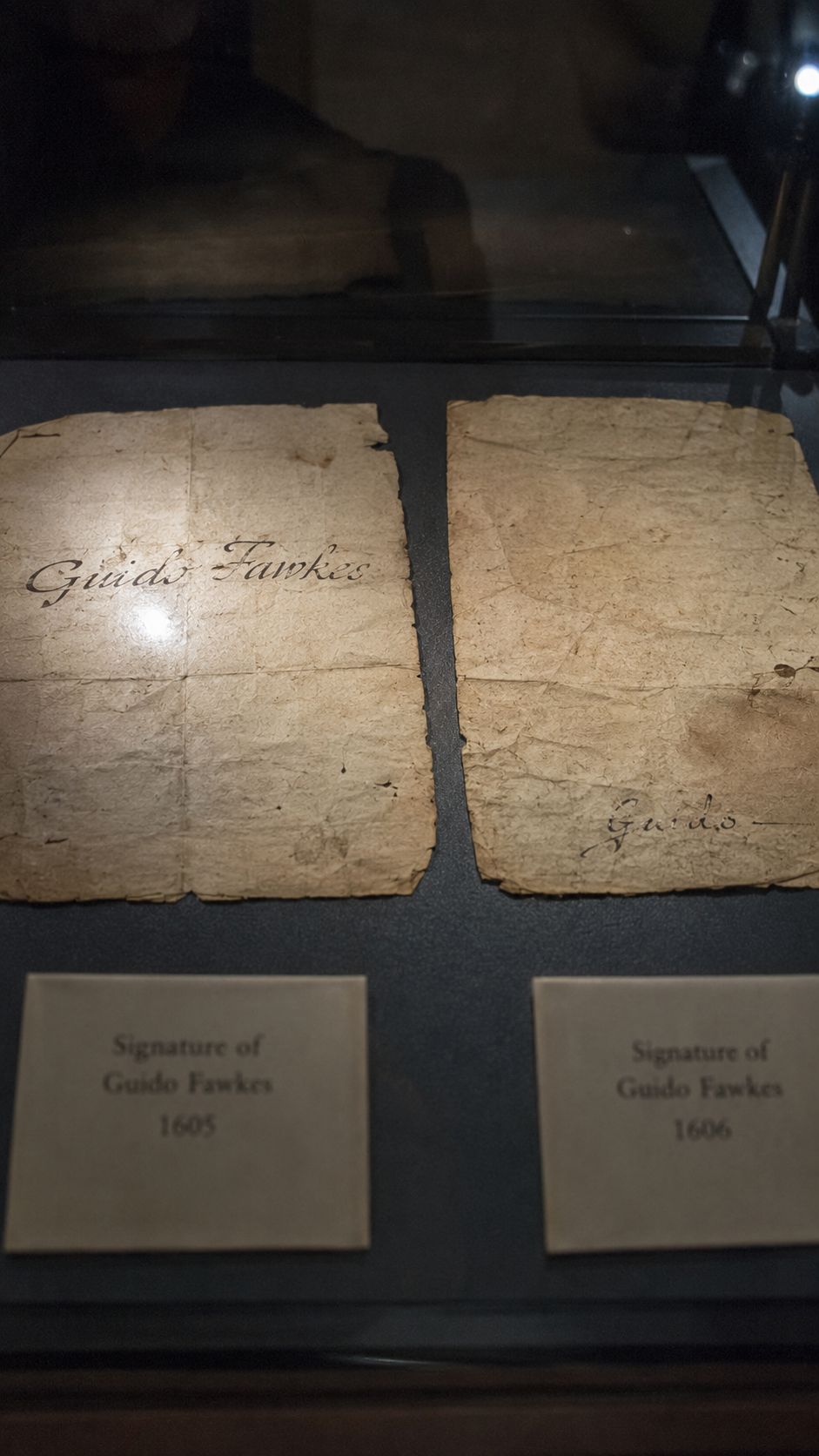 The Signature That Broke Under Torture
Found in a cellar beneath Parliament with 36 barrels of gunpowder, his confident signature collapsed into a scrawl after days on the rack.
Westminster, London, United Kingdom · 1605 · same site
 The Sword That Sealed a Traitor's Fate
Before a word was spoken, prisoners at Westminster Hall could read their fate in which way the ceremonial blade pointed.
Westminster Hall, London, United Kingdom · 1521 · same site
- The Widow Who Carried Her Husband's Head
A courtier condemned on a treason charge many believed engineered walks to the scaffold after one last failed gamble for gold.
Old Palace Yard, Westminster, London, United Kingdom · 1618 · same site
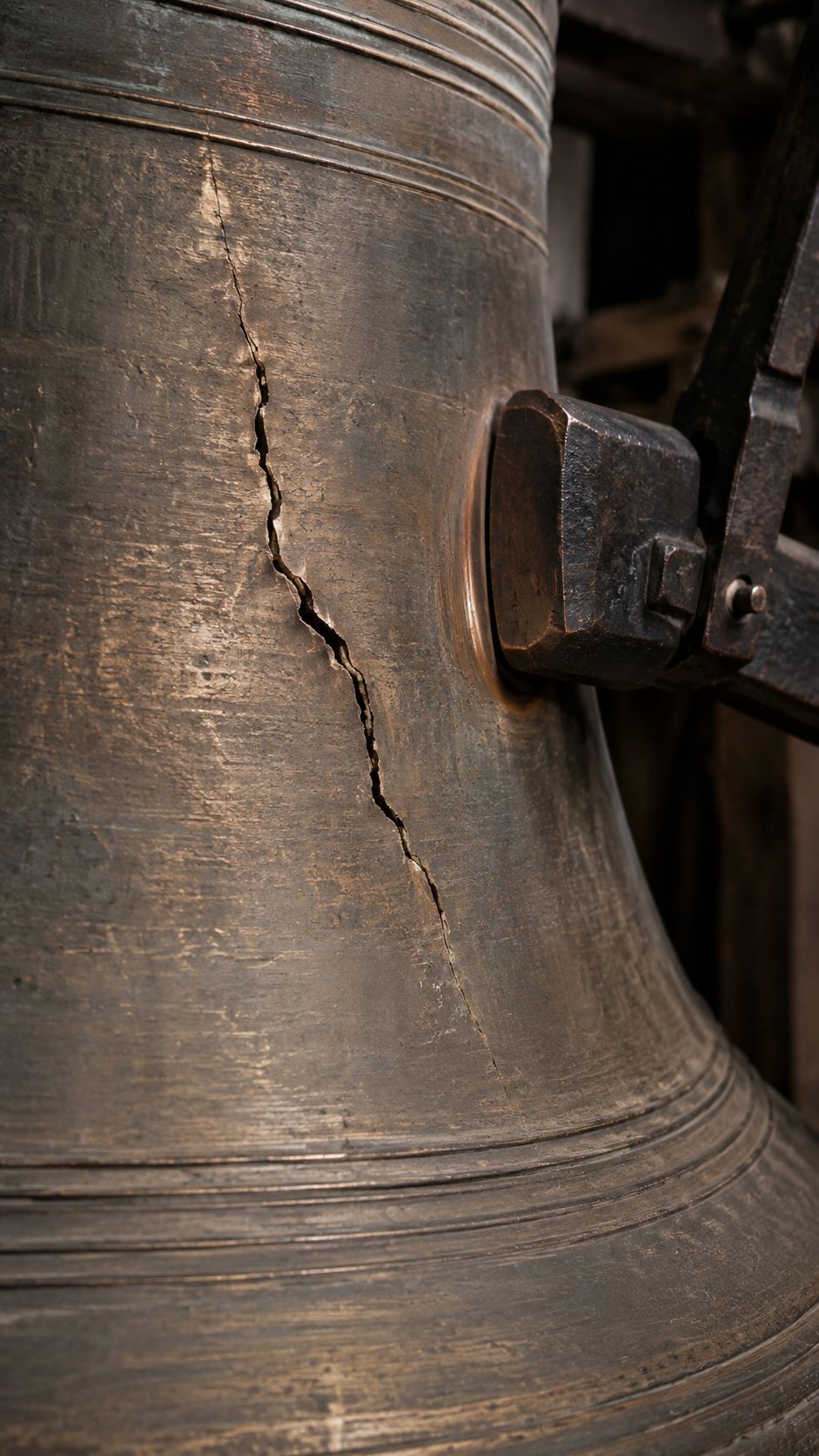 The Bell That Cracked Before It Ever Rang
Britain's largest bell ever cast splits during testing before it ever rings in the tower, and nobody has ever fully fixed it.
Westminster, London, United Kingdom · 1859 · same site
More like this
- The King's Favourite Who Bet Against Richelieu
A dazzling young courtier gambled his head against Cardinal Richelieu, and lost it in a public square.
Place des Terreaux, Lyon, France · 1642
- The Leper King's Story No Film Would Show
Kingdom of Heaven gave him a dignified death behind a silver mask, the truth was far crueller.
Jerusalem, Israel · 1185
- The Only Peer Ever Hanged At Tyburn
A violent nobleman was hanged before a stunned crowd who never expected to see a lord die on the public gallows.
Tyburn, London, United Kingdom · 1760
 The Rape Trial That Ended In Trial By Combat
A woman's accusation of rape led to France's last judicial duel, with her own life staked on the outcome.
Paris, France · 1386