
Every Roman child grew up knowing one date: the 18th of July. For the next eight hundred years, it was marked on the Roman calendar as dies ater — a black day. No business. No battles. Nothing begun. It was the anniversary of the day Rome died.
THE HORROR In 390 BC, Rome was not yet an empire. It was a confident regional city‑state that had never lost anything that mattered — and it was about to make a catastrophic mistake.
An Etruscan city called Clusium was being threatened by a Gallic warband under a chieftain named Brennus, and asked Rome for help. Rome sent three young aristocrats from the Fabius family as neutral negotiators. Instead of negotiating, one of them drew a sword and killed a Gallic chieftain — a flagrant violation of the rules of war. Then Rome refused to hand them over and instead elected them to high office.
Brennus abandoned his siege and turned his entire army south. Along the way, the Gauls left the countryside untouched, shouting only one word at everyone they passed: “Rome.”
Rome was not worried. Rome had legions. These were barbarians.
On the 18th of July, about eleven miles north of the city, at a small stream called the Allia, roughly 15,000 Romans met a Gallic army perhaps twice that size. And the Romans, in Livy’s furious telling, did everything wrong. They pitched no camp. They dug no ditch. They didn’t consult the gods. And, terrified of being outflanked, they stretched their line so thin that the centre could barely hold together.
The Romans had never seen anything like what came at them. Not a phalanx — a screaming mass of enormous fair‑haired men with long slashing swords that outreached anything the Romans carried, some of them fighting completely naked.
Brennus attacked the reserves first. They broke and ran without a sword being drawn. Then the centre collapsed. The Roman left disintegrated entirely, and men trying to escape across the Tiber were dragged under and drowned by the weight of their own armour. Fewer than a third of the Roman army survived. The Gauls lost almost nobody.
Livy’s most damning line: the Gauls were obstupefactos — dumbstruck. They couldn’t believe it had been that easy. They thought it was a trap.
THE MODERN RELIC What happened next is one of the eeriest scenes in ancient history.
The survivors fled — most to Veii, some back to Rome — and in their panic they left the city gates standing wide open and the walls unmanned. Everyone who could flee, fled. The fighting men who remained shut themselves up on the Capitoline Hill, the citadel, and abandoned the rest of Rome to its fate.
Three days later, the Gauls came through the Colline Gate and into a great city that was completely, silently empty.
And then they reached the houses of the nobility. And they stopped.
Because Rome’s eldest senators — the men too old to fight, too old to climb to the citadel — had refused to run. They had made a decision. They put on their finest ceremonial robes and their military decorations, carried their ivory chairs out to the open doorways of their own homes, and sat down in the street. And they waited, motionless, leaning on their staves, gazing into one another’s faces, in absolute silence.
Plutarch says Brennus was astonished. Hardened warriors who had just slaughtered an army froze in the street. The old men didn’t flinch, didn’t speak, didn’t even look at them. They were too still. Too magnificent. The Gauls genuinely could not tell whether they were looking at living men or at statues of gods — and they hesitated to go near them.
Finally, one Gaul screwed up his courage, walked up to a senator named Marcus Papirius, and reached out to stroke his long beard, just to see if he was real.
Papirius swung his ivory staff and cracked him across the skull.
He was the first to die. The rest were butchered where they sat, in their chairs, in their robes. And after that, the spell broke, and Rome burned. The Gauls killed everyone they found — men, women, children, the old — and rifled the houses and set them alight, while the men trapped up on the Capitoline listened to it: the shouts of the enemy, the shrieks of women and boys, the roar of the flames, and the crash of houses falling in.
The Capitoline held out for months. When the Gauls tried to scale the cliff at night, the sacred geese in Juno’s temple started honking and woke the garrison — the geese that saved Rome. That temple was Juno Moneta, Juno the Warner, and later Rome’s mint was built beside it. Which is why, today, you have the word money in your language.
Eventually, starving on both sides and with plague in the Gallic camp, Rome bought them off: a thousand pounds of gold. And when the Romans noticed the Gauls were using rigged weights and complained, Brennus threw his sword onto the scales and said two words that have echoed for 2,400 years: Vae victis.
Woe to the vanquished.
The relic is the city itself. Go to Rome and look at the Servian Wall — huge blocks of it still stand right outside Termini station, and you can walk up and touch them. Rome built those walls because of this. The trauma of Brennus is physically written into the stones of the city.
And there’s a second relic, less visible but bigger: it is the reason the Roman Empire existed at all. The rigid phalanx that failed at the Allia was thrown out and replaced by the flexible maniple. The complacency was replaced by a permanent, gnawing terror of the north. Rome spent the next several centuries making absolutely certain that no one would ever walk through her open gates again — and in the process built the machine that conquered the Mediterranean.
An old man hit a barbarian with a stick, and eight hundred years later Romans were still marking the day in black.
Nearby on the Dark Atlas
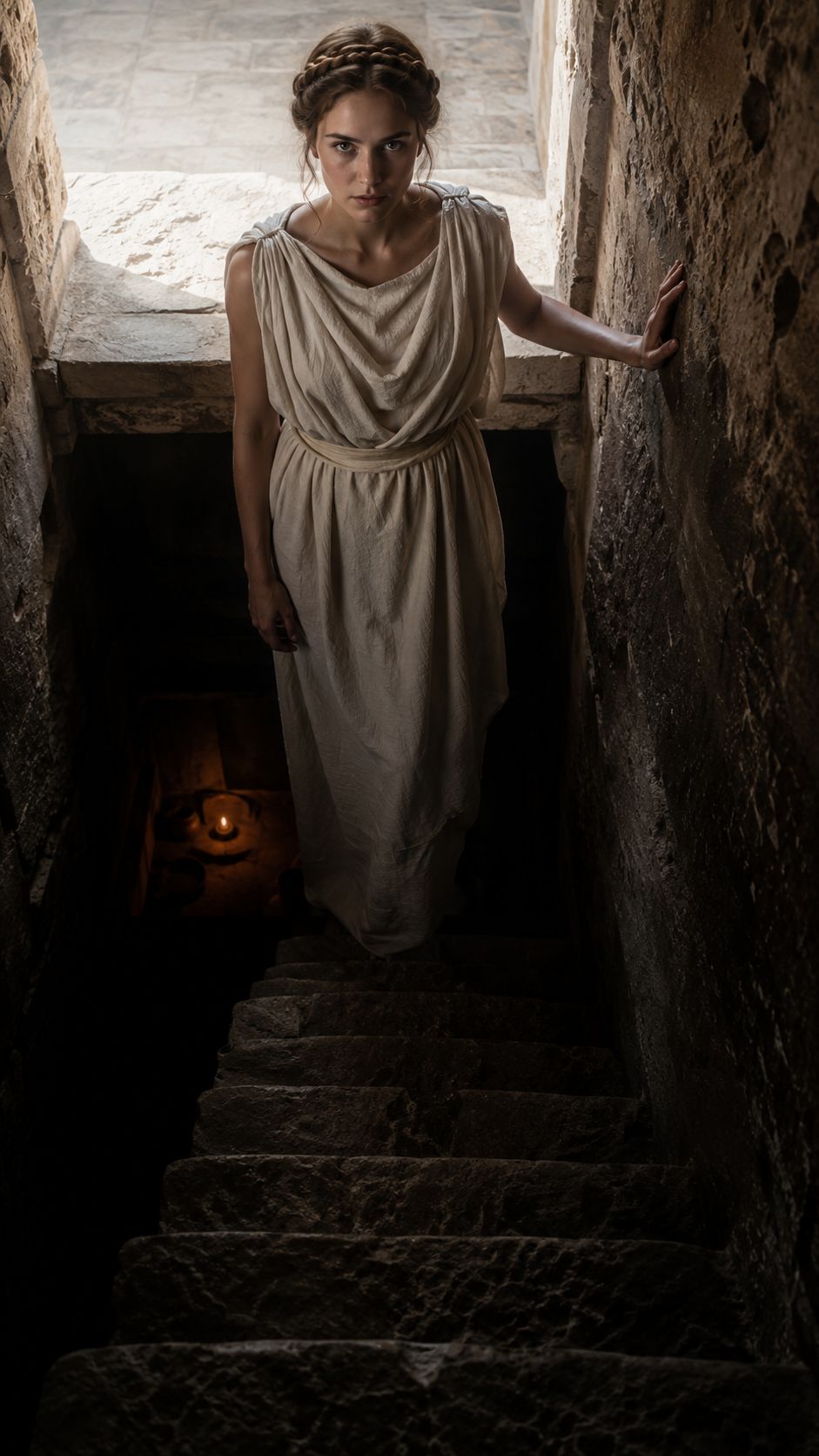 Buried Alive to Avoid Shedding Her Blood
Roman law forbade killing a Vestal or burying her in the city, so they sealed the condemned underground alive instead.
Rome, Italy · 100 BC · same site
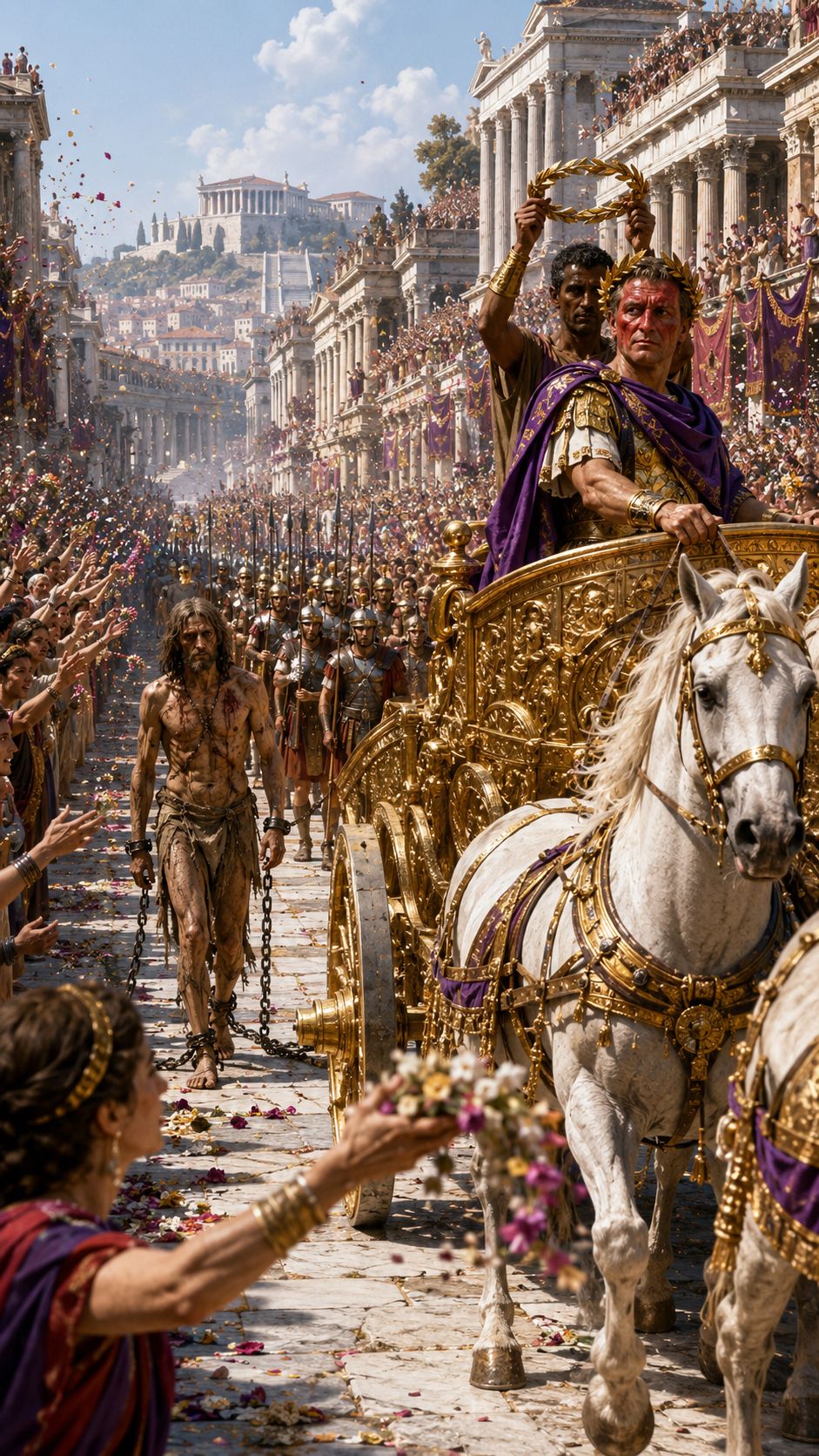 The Chieftain Who Surrendered To Save His People
The Gallic leader who nearly beat Caesar rode out to surrender rather than let his starving people die, and spent six years dying slowly in a Roman prison.
Rome, Italy · 46 BC · same site
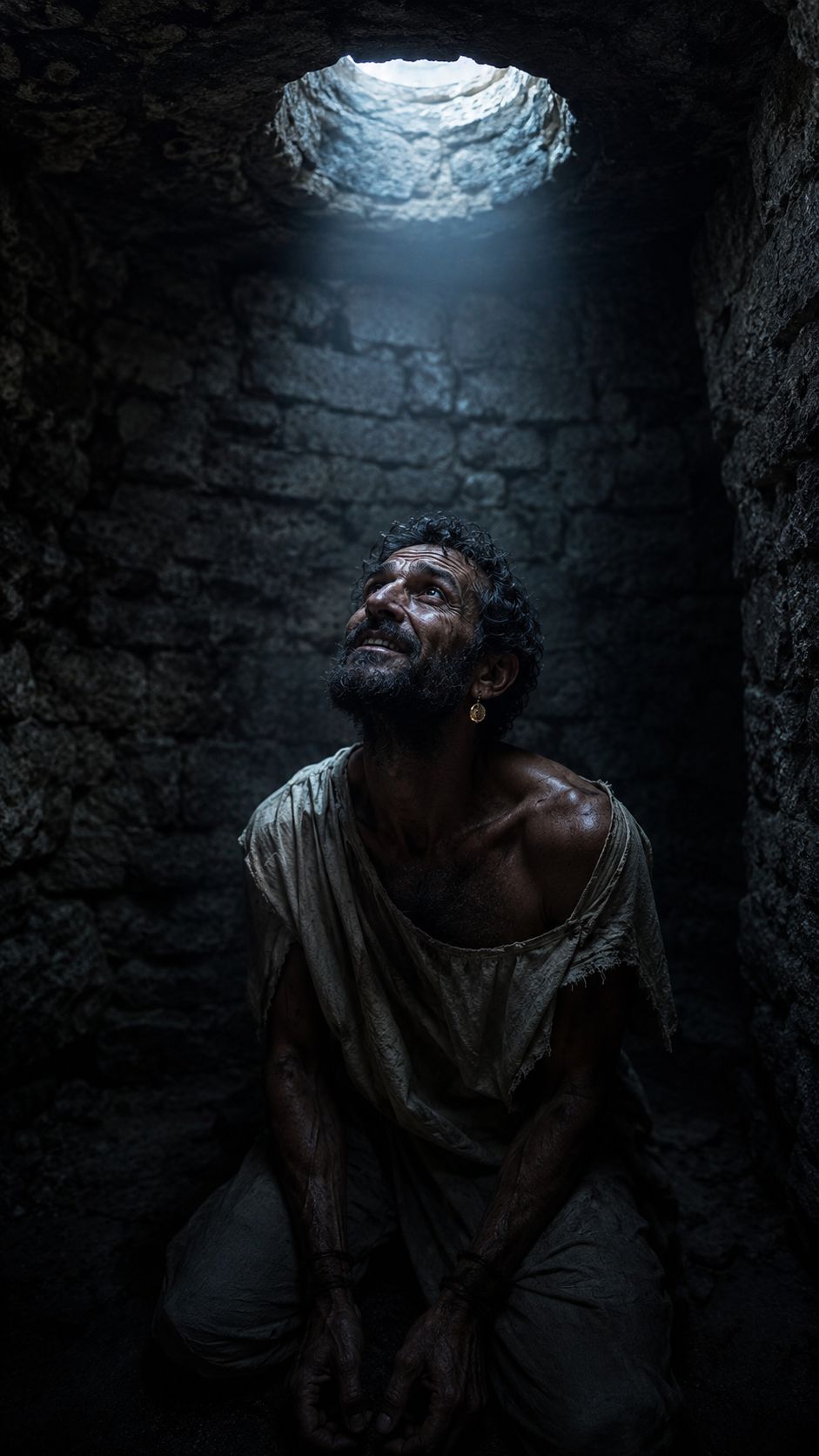 The King Left To Starve Beneath Rome
A Numidian king who beat Rome with bribery for years was finally stripped naked and left to starve in a pit.
Rome, Italy · 104 BC · same site
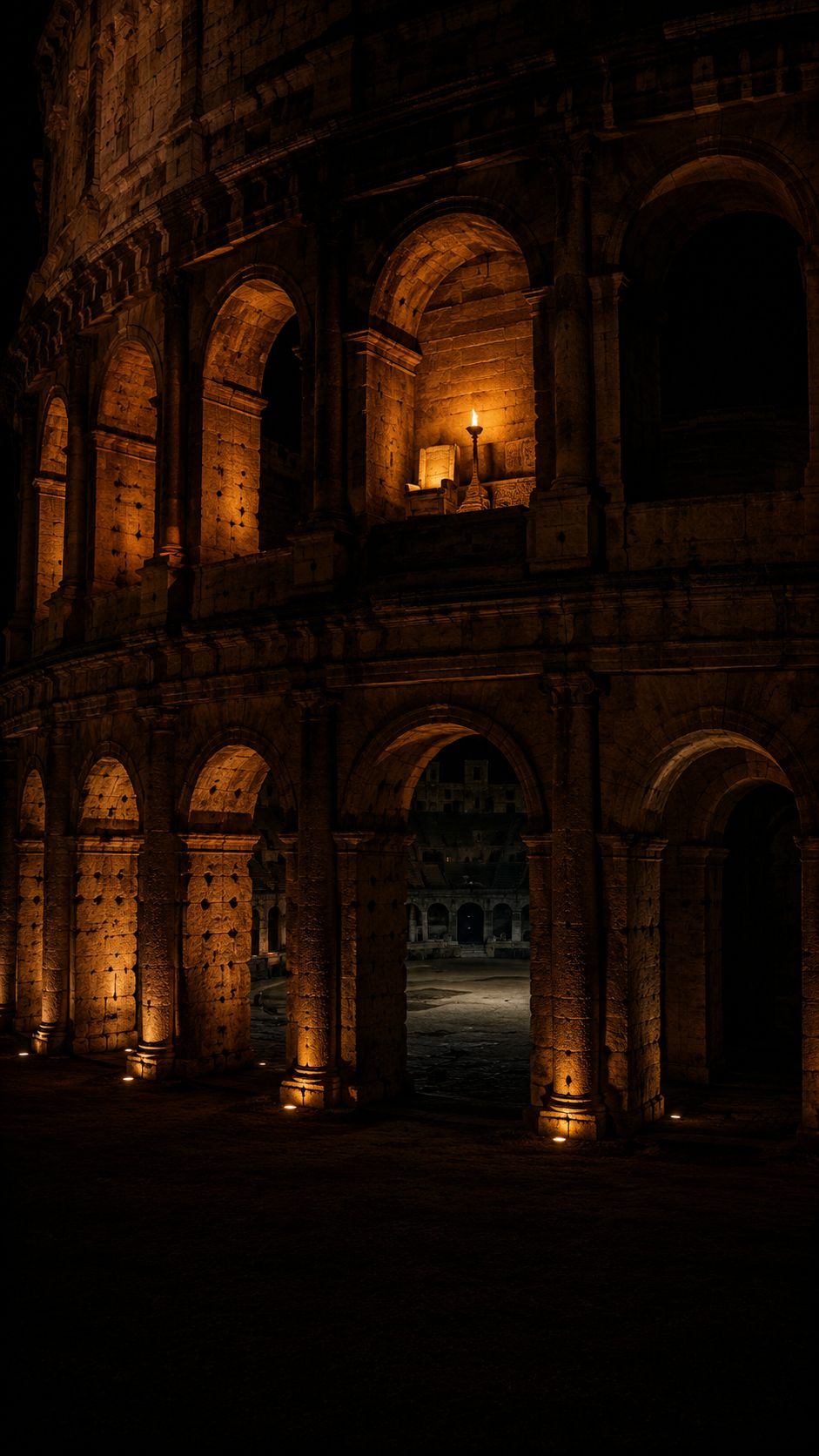 The Emperor Who Fought As A Gladiator For Fun
Gladiator showed him as a scheming villain — the real emperor clubbed amputees to death and billed the treasury for it.
Rome, Italy · 192 · same site