
On the night of 14th April 1912, as the RMS Titanic struck an iceberg and began to sink, the ship’s eight-piece band assembled on the boat deck and began to play.
They were not ordered to play. No captain gave the instruction. No officer demanded it. They played because they understood — perhaps more clearly than anyone on that deck — that music might be the only thing standing between order and panic.
They played for over two hours. They played as the lifeboats were loaded. They played as the bow dipped below the water. They played as the stern rose into the air. They played until playing was no longer physically possible.
All eight musicians died.
Not one was offered a seat in a lifeboat. Not one was asked to stop.
The Horror
The eight bandsmen were not employees of the White Star Line. They were freelance musicians, contracted through a Liverpool agency called C.W. & F.N. Black. They were classified as independent contractors — not crew, not passengers. This distinction mattered enormously, because it meant the White Star Line bore no direct responsibility for their deaths.
The agency bore no responsibility either. The musicians had been hired on terms that made them disposable in every legal sense.
After the sinking, the families of the dead musicians received letters from the agency. The letters were not expressions of sympathy. They were invoices.
C.W. & F.N. Black billed the families for the cost of the uniforms their sons had been wearing when they drowned in the North Atlantic. The agency listed the uniforms as company property that had not been returned.
The men who had played “Nearer, My God, to Thee” — or “Autumn” or “Song d’Automne,” depending on which survivor you believe — while 1,500 people died around them were, in the agency’s ledger, debtors. They owed for the clothes they sank in.
The bandleader was Wallace Hartley, a 33‑year‑old violinist from Colne, Lancashire. Before the voyage, he told his fiancée Maria Robinson: “If the ship goes down, I’ll go down playing ‘Nearer, My God, to Thee.’”
His body was recovered from the Atlantic ten days after the sinking — one of 328 pulled from the water. He was still wearing his uniform. His leather valise was still strapped across his chest. Inside, people assumed, was his violin. The case was tagged, logged, and sent home with his effects; no one opened it on the quay to make sure. His body was shipped back to Colne and buried on 18th May 1912. Thousands lined the streets.
The Modern Relic
In 2006, a violin was found in an attic in Bridlington, Yorkshire. It was inside a battered leather case. A small silver plate on the tailpiece was engraved: “For Wallace on the occasion of our engagement from Maria.”
It took seven years of forensic work — salt‑water damage analysis, wood dating, corrosion studies on the metalwork, and painstaking provenance research — to authenticate it. In 2013, the instrument was sold at auction by Henry Aldridge & Son for £1.1 million, the highest price ever paid for a Titanic artefact.
The violin that played as the ship went down survived in an attic for 94 years. The uniform its owner wore when he drowned was billed to his mother. The agency sent an invoice.
The fiancée who gave him the violin never married. She kept his letters until she died. The music stopped at 2:18 a.m. The invoice arrived by post.
Nearby on the Dark Atlas
- The Ship That Watched And Did Nothing
A steamer stopped for the night sits close enough to see Titanic's lights, while her sole wireless operator has already gone to bed.
North Atlantic Ocean, International waters · 1912 · same site
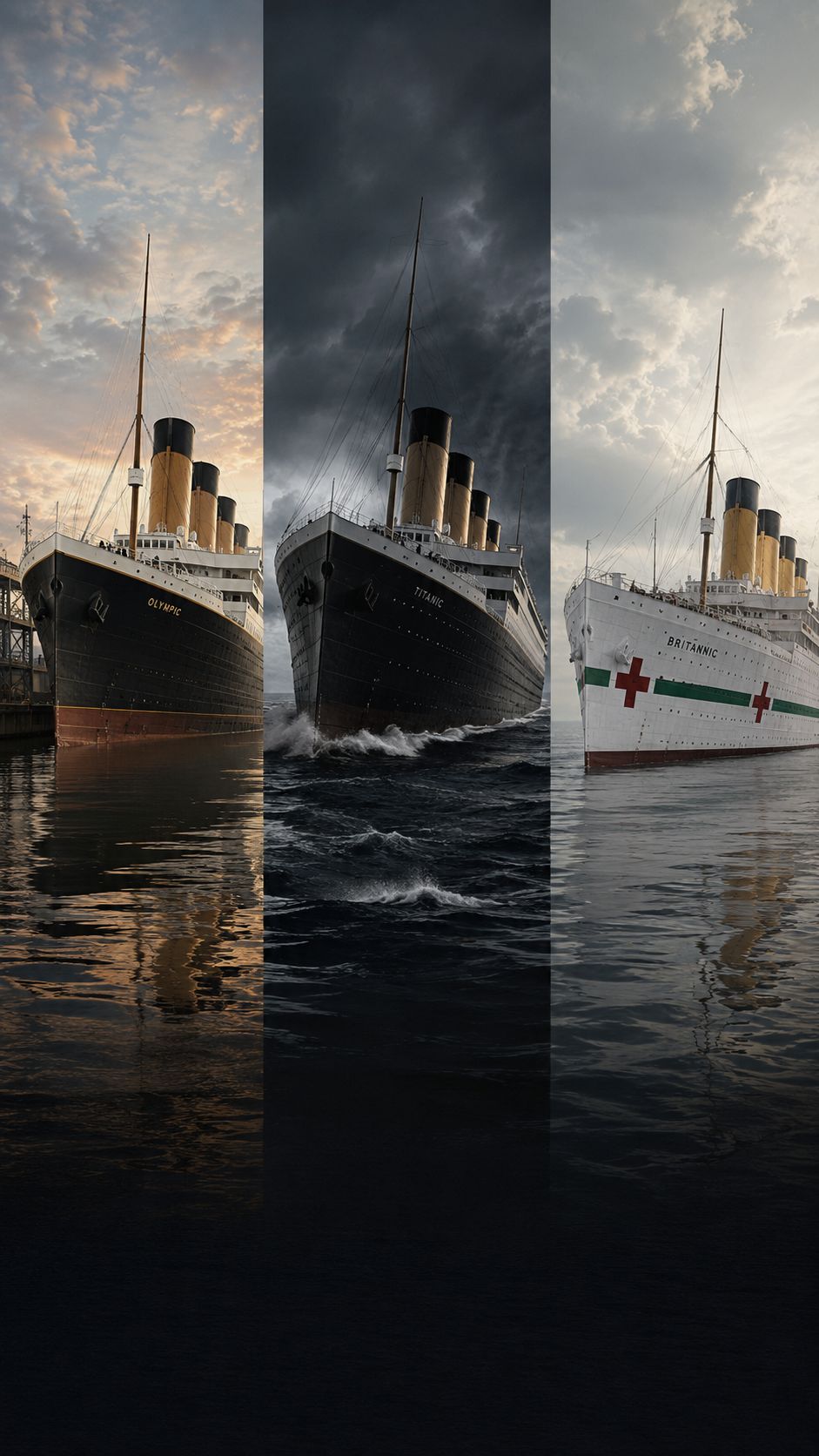 The Stewardess Who Survived Three Sinking Ships
Not expected to survive childhood, a stewardess goes on to live through disaster aboard all three of the White Star Line's sister ships.
North Atlantic Ocean, International waters · 1912 · same site
 Twenty Minutes to the Bottom of the River
A freighter loomed out of the fog and struck her broadside — she was gone beneath the St. Lawrence in under fifteen minutes.
Rimouski, Canada · 1914 · 1649 km away
 The Pirate's Sunken Promise To His Love
A poor sailor turned pirate to win a fortune for the woman he loved, and his treasure ship vanished for over 260 years.
Cape Cod, United States · 1717 · 1655 km away
More like this
 The Rape Trial That Ended In Trial By Combat
A woman's accusation of rape led to France's last judicial duel, with her own life staked on the outcome.
Paris, France · 1386
- The Parish Registers Of The Beast's Victims
Between 1764 and 1767 something killed roughly a hundred people, recorded in the registers as 'devoured by the beast.'
Saugues, France · 1764
- The Manufacturing Of England's Most Haunted House
For decades it was called the most haunted house in England, until its ghost story revealed how a haunting gets made.
Borley, Essex, United Kingdom · 1929
- The Truth Behind The Elephant Man
The real man behind the famous film was quieter, stranger and far more heartbreaking than any screenplay.
Whitechapel, London, United Kingdom · 1890