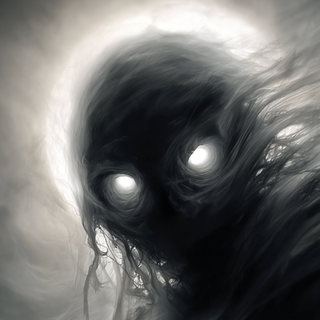
On the morning of 2nd September 1666, a fire started in a bakery on Pudding Lane owned by Thomas Farriner, baker to King Charles II. By the time it finally burned out four days later, more than 13,000 houses, 87 churches, and the old St Paul’s Cathedral had been destroyed. Roughly 100,000 people — about a quarter of London’s population — were homeless.
Farriner denied that his oven had started the blaze. He denied it for the rest of his life. His maid — the first person known to have died in the fire — never got to speak.
London wanted, and needed, someone to blame. London found someone.
The Horror
A simple‑minded French watchmaker named Robert Hubert came forward and confessed. He said he had been part of a Catholic plot to burn the city. He claimed he had thrown a fireball through the window of Farriner’s bakery on Pudding Lane.
His story fell apart almost immediately. The bakery had no window where he said he threw the fireball. When officials took him to Pudding Lane, he couldn’t even find the street without being led there. He couldn’t accurately describe the building. He stumbled over basic details of the neighbourhood.
Worse, witnesses and ship records showed that Hubert had not been in England when the fire started. He had arrived in London two days after the blaze began, disembarking from a Swedish ship while the city was already burning.
Everyone involved knew the confession was unreliable. The judge knew. The jury knew. The evidence pointed to a confused man admitting to a crime he could not have committed, in a place he had not reached, at a building he could barely locate.
They convicted him anyway.
Robert Hubert was hanged at Tyburn on 29th October 1666. He was the only person ever executed for starting the Great Fire of London. After his death, the captain of the Swedish ship publicly confirmed that Hubert had been aboard and had not set foot in London until after the fire was underway.
It didn’t matter. The city had its culprit, and he was already dead.
The Modern Relic
In the years that followed, London rebuilt itself almost completely. The Monument to the Great Fire of London — a 202‑foot Doric column designed by Christopher Wren — was erected near Pudding Lane and completed in 1677. A few years later, in 1681, an inscription was added to its base blaming the disaster on “the treachery and malice of the Popish faction.” In plain language: Catholics had burned London.
That accusation stayed carved into the stone for nearly two centuries, only being removed in 1830. For generations, visitors who read the Monument’s text were told the fire was the work of a Catholic conspiracy. Thomas Farriner continued to deny responsibility. No court ever proved that carelessness in his bakery had started the blaze.
Robert Hubert, the one man who died for the crime, was almost certainly not in London when the fire began. His story didn’t fit the streets. His timing didn’t fit the shipping records. His confession didn’t fit the facts. But in a city that had lost everything — homes, livelihoods, churches, and its skyline — a single, confused foreigner was easier to hang than admitting that the real cause might never be known.
Today, the Monument is open to visitors. There are 311 steps to the viewing platform at the top. From there, you can see the city that rose from the ashes and spread far beyond the old walls. Pudding Lane is a short walk away, a quiet street now marked by a small plaque. The original bakery is gone.
The fire that remade London still has no proven starting hand. The only certainty is that the one man who paid for it with his life almost certainly didn’t light it.
Nearby on the Dark Atlas
- Bloody Bonner's Decade of Rot
The bishop who sent dozens to the flames spent his final decade rotting in a foul, forgotten dungeon.
Southwark, London, United Kingdom · 1569 · same site
- The Brother Executed Alongside The Queen
Accused of incest with his own sister on evidence historians now call impossible, he died two days before her.
Tower Hill, London, United Kingdom · 1536 · same site
- The Chief Minister's Botched Beheading
Henry VIII's most powerful minister was executed by an inexperienced headsman who needed several strikes to kill him.
Tower Hill, London, United Kingdom · 1540 · same site
 The Botched Beheading That Named The Hangman
It took the executioner several horrific blows to finish the job, and his name became slang for hangman forever.
Tower Hill, London, United Kingdom · 1685 · same site
More like this
- The Murder Dickens Turned Into Fiction
A cold, calculated murder buried a body in a Bermondsey kitchen, and became fodder for the country's most famous novelist.
Bermondsey, London, United Kingdom · 1849
- The Chair No One Is Allowed To Sit In
A murderer's cursed armchair now hangs on a museum wall, five feet off the ground, so no one can sit in it again.
Thirsk, United Kingdom · 1702
- The Poisoner Who Weaponised A Town's Sweet Shops
She poisoned an entire town's confectionery to disguise the murder of a woman she hated, killing a child she never met.
Brighton, United Kingdom · 1871
 The Rape Trial That Ended In Trial By Combat
A woman's accusation of rape led to France's last judicial duel, with her own life staked on the outcome.
Paris, France · 1386