The execution of the Duke of Monmouth in 1685 is one of the most notorious and horrifying botched beheadings in all of English history — a catastrophe so grotesque that the name of the man who bungled it, Jack Ketch, became a byword for “executioner” and “hangman” that endured for centuries.
James Scott, Duke of Monmouth, was the charismatic, handsome, and hugely popular illegitimate son of King Charles II. When Charles died in 1685 leaving no legitimate children, the throne passed to his brother — the Catholic King James II. But Protestant England was deeply uneasy about a Catholic king, and Monmouth, a dashing Protestant hero, saw his chance. He launched a rebellion to seize the crown from his uncle, claiming the throne as the rightful Protestant heir.
The rebellion was a disaster. Monmouth’s ragtag army of West Country farmers and labourers — armed, in part, with pitchforks — was crushed at the Battle of Sedgemoor. Monmouth was captured, hiding in a ditch, and condemned to death for high treason. Because he was of royal blood, he was granted the “privilege” of a nobleman’s death: beheading by the axe, rather than the horrific hanging, drawing, and quartering meted out to common traitors.
The Horror
But the axe was a ghastly, imprecise way to die, and it all depended on the skill of the executioner. And the executioner that day was a man named Jack Ketch — who was already infamous for being catastrophically bad at his job.
Just two years earlier, in 1683, Ketch had executed another nobleman, Lord Russell, and had made a horrifying mess of it — his first blow reportedly missing the neck entirely and striking Russell in the shoulder, requiring several more hacking strokes to finish. The botch had been so notorious that Ketch had actually published a pamphlet defending himself, absurdly blaming Lord Russell for not positioning himself properly. His reputation for bloody incompetence was widely known.
And Monmouth knew it. As he mounted the scaffold on Tower Hill before a vast crowd, the Duke was determined to die with dignity. But he was also, understandably, terrified of falling into Jack Ketch’s clumsy hands. So he did something extraordinary. He handed Ketch a tip of six gold guineas — the customary payment to encourage a clean, swift job — and then he looked the executioner in the eye and openly, publicly warned him. According to the accounts, Monmouth said: “Here are six guineas for you. Do not hack me as you did my Lord Russell. I have heard you struck him four or five times. If you strike me twice, I cannot promise you not to stir.”
It was a calm, brave, and pointed reminder of Ketch’s infamous failure — and it was a catastrophic mistake. Because the warning completely unnerved the executioner. Rattled and self-conscious, Jack Ketch raised the axe and brought it down — and the first blow was feeble, inflicting only a shallow, glancing wound to the Duke’s neck.
What followed was a scene of pure horror. Monmouth, badly wounded but far from dead, is said to have raised his head and turned to look at the executioner with a reproachful, agonised gaze, before laying his head back down. Ketch struck again. And again. And still the head was not severed, and the Duke’s body still moved. The enormous crowd erupted in howls of rage, horror, and disgust. And then Jack Ketch did the unthinkable: he flung down his axe in despair and cried out, “I cannot do it! My heart fails me!” — refusing to continue.
The sheriff overseeing the execution roared at him to pick the axe back up. From the crowd came screams of fury — “Fling him over the rails!” — as the mob nearly rioted, wanting to tear the executioner apart. Forced to continue, Ketch took up the axe again and struck two more blows. In total, it took around five blows of the axe — and still Monmouth’s head clung to his body. Finally, unable to finish the job with the axe at all, Jack Ketch was reduced to pulling out a knife and sawing through the remaining sinews of the Duke’s neck by hand to complete the decapitation. It was a butchery so appalling that the crowd’s rage was uncontrollable, and Ketch had to be escorted away from the scaffold under armed guard to stop the mob from lynching him on the spot.
THE MODERN RELIC The horror of Monmouth’s death seared itself into the public memory. And it cemented Jack Ketch’s place in the language forever. His name became, and remained for centuries, the generic slang term for any executioner or hangman in England — “Jack Ketch” was the hangman, the personification of grim, bungling death. He even became a stock villain character in the Punch and Judy puppet shows, where “Jack Ketch” the hangman comes to hang Mr Punch — only for the trickster Punch to trick Ketch into hanging himself instead, to the delight of generations of children who had no idea they were laughing at a real, notorious 17th-century executioner.
There’s a poignant footnote to the Duke’s death, too — a legend that captures how beloved and important he was. It’s said that after his execution, someone realised no official portrait of the royal Duke existed, so his head was hastily reattached to his body, and he was propped up to have his portrait painted before burial — though historians debate whether this macabre story is true.
The relic is his resting place, in one of the most storied spots in London. James Scott, Duke of Monmouth, the King’s rebellious nephew, was gathered up — his hacked head and body laid together in a coffin draped in black velvet — and buried beneath the communion table of the Chapel of St Peter ad Vincula, inside the walls of the Tower of London. It is the same small, haunting chapel where so many of England’s beheaded lie — Anne Boleyn, Catherine Howard, Lady Jane Grey, Thomas More — and there Monmouth joined them: the charming pretender whose grab for a crown ended in a ditch, and whose death on Tower Hill was so hideously botched that it gave the English language its very name for the hangman.
Nearby on the Dark Atlas
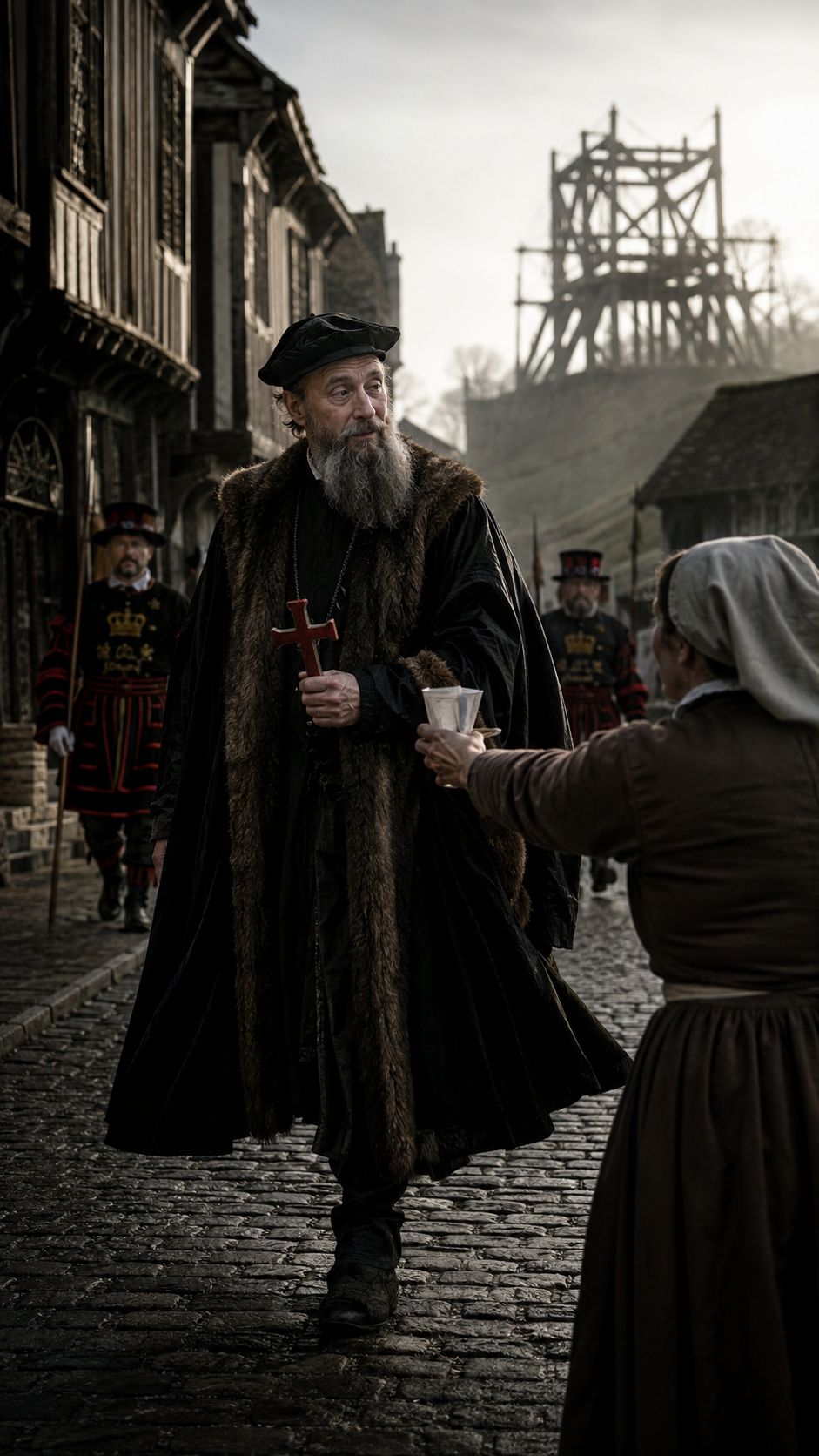 The Chancellor Who Refused His King's Supremacy
Henry VIII's own former Lord Chancellor walked to the block for refusing to accept the king as head of the Church.
Tower Hill, London, United Kingdom · 1535 · same site
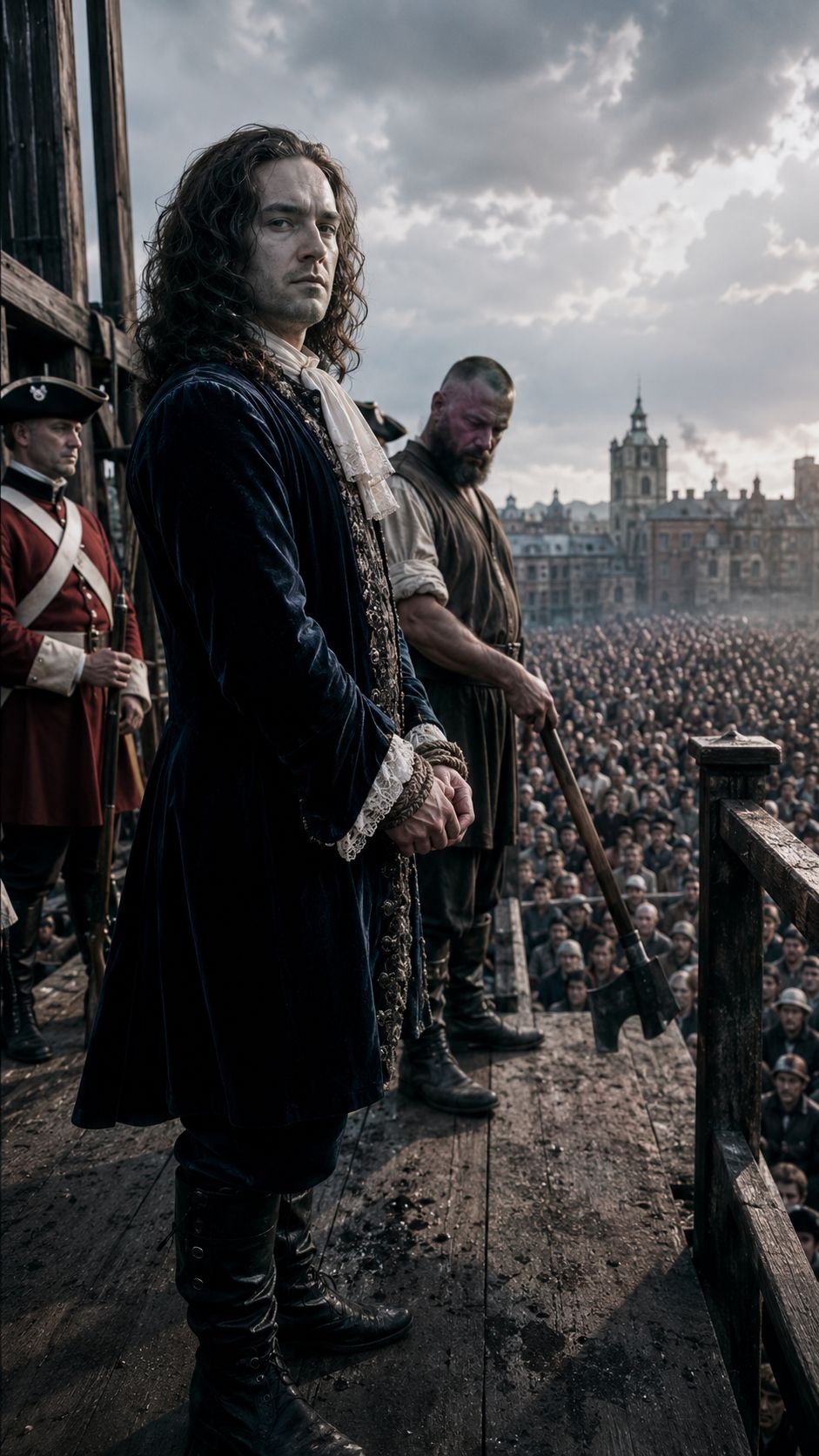 The Duke Who Paid The Headsman In Advance
He handed the executioner six guineas and begged him not to hack him apart like his last victim — it didn't work.
Tower Hill, London, United Kingdom · 1685 · same site
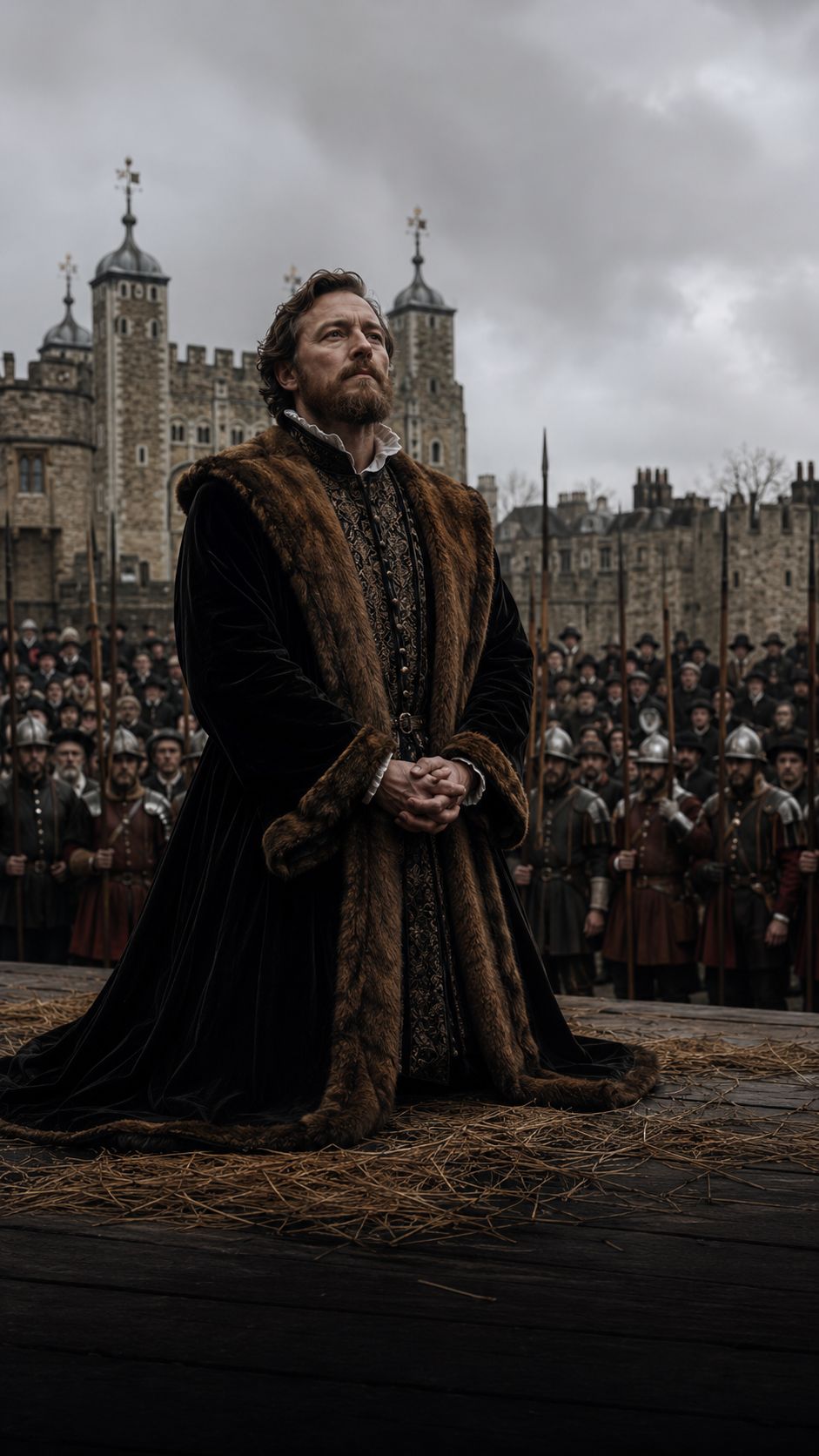 The Duke Whose Royal Blood Was a Death Sentence
His royal Plantagenet blood made him too dangerous to live under a paranoid, sonless Henry VIII.
Tower Hill, London, United Kingdom · 1521 · same site
- The Giant Who Fought His Own Execution
A rebel knight's sheer size turned his botched execution into a horrifying struggle on the scaffold.
Tower Hill, London, United Kingdom · 1554 · same site