Ambrose Bierce is the only major American writer whose death is itself a mystery — a man who spent his life writing about death, disappearance, and the cruelty of fate, and who then walked into one of his own stories and never walked out. He was seventy-one years old, famous, financially secure, and seemingly intent on dying violently in a foreign war. The man who wrote the most famous short story about a botched hanging in American literature rode into the Mexican Revolution and was never seen again.
Bierce was born in 1842 in a log cabin on Horse Cave Creek in Meigs County, Ohio. He fought in the Civil War, was wounded twice, and emerged with a permanent cynicism about human nature that would define his writing. He became one of the most feared journalists in America — his column “Prattle” in William Randolph Hearst’s San Francisco Examiner was notorious for its savage wit. He wrote The Devil’s Dictionary, a collection of bitter, hilarious definitions (“Marriage: the state or condition of a community consisting of a master, a mistress, and two slaves, making in all, two”). And in 1890, he published “An Occurrence at Owl Creek Bridge,” the story of a Confederate sympathizer who is hanged, the rope breaks, he escapes, and then — in the final sentence — we learn he is already dead, the escape having been a hallucination in the seconds before the drop kills him. Bierce understood that death was the punchline.
The Horror
By 1913, Bierce was a widower, estranged from his surviving children, and increasingly drawn to the Mexican Revolution. Pancho Villa’s forces were fighting the government of Victoriano Huerta, and Bierce — despite his age — decided to go and see the war for himself. He left Washington, D.C., in October 1913, traveled through Louisiana and Texas, and crossed into Mexico at Ciudad Juárez, attaching himself to Villa’s army as an observer. His last known letter, written from Chihuahua to a close friend, ended with the line: “As to me, I leave here tomorrow for an unknown destination.”
He was never heard from again.
The theories are endless. He was executed by Villa’s men as a spy. He was executed by Huerta’s men as a spy. He was killed in the Battle of Ojinaga in January 1914. He committed suicide in the desert. He was murdered for his money. He died of illness in a remote village. Every few years, someone claims to have found his bones, his diary, his grave. Nothing has ever been proven. The man who wrote that “death is not the end; there remains the litigation over the estate” left no estate to litigate and no body to bury.
The Modern Relic
The relic is the absence. There is no confirmed grave for Ambrose Bierce, no tombstone, no death certificate. The only marker is a cenotaph in Oakland Cemetery in Warsaw, Indiana, near where he grew up — an empty monument to a man whose body is somewhere in the Mexican desert, or in an unmarked grave, or at the bottom of a ravine. His collected works are still in print. “An Occurrence at Owl Creek Bridge” is still taught in schools. And the last letter he ever wrote sits in an archive, its final sentence a perfect epitaph for a writer who spent his life preparing his readers for the moment when the rope snaps and the story ends.
Nearby on the Dark Atlas
 The Hanging That Ended An Execution Method
Her hanging went so horrifically wrong in front of witnesses that an entire state abandoned the gallows forever.
Florence, United States · 1930 · 704 km away
 The Plutonium Sphere That Killed Its Makers
Built to destroy a city, a single sphere of plutonium never got the chance — so it turned on the scientists who made it instead.
Los Alamos, United States · 1946 · 806 km away
 The Outlaw Whose Hanging Tore His Head Off
A botched hanging in a dusty frontier town ended with the outlaw's head torn clean from his body.
Clayton, New Mexico, United States · 1901 · 911 km away
- The President's Brain That Vanished
His brain was preserved for the National Archives after his assassination, then it disappeared and has never been found.
Dallas, United States · 1963 · 1000 km away
More like this
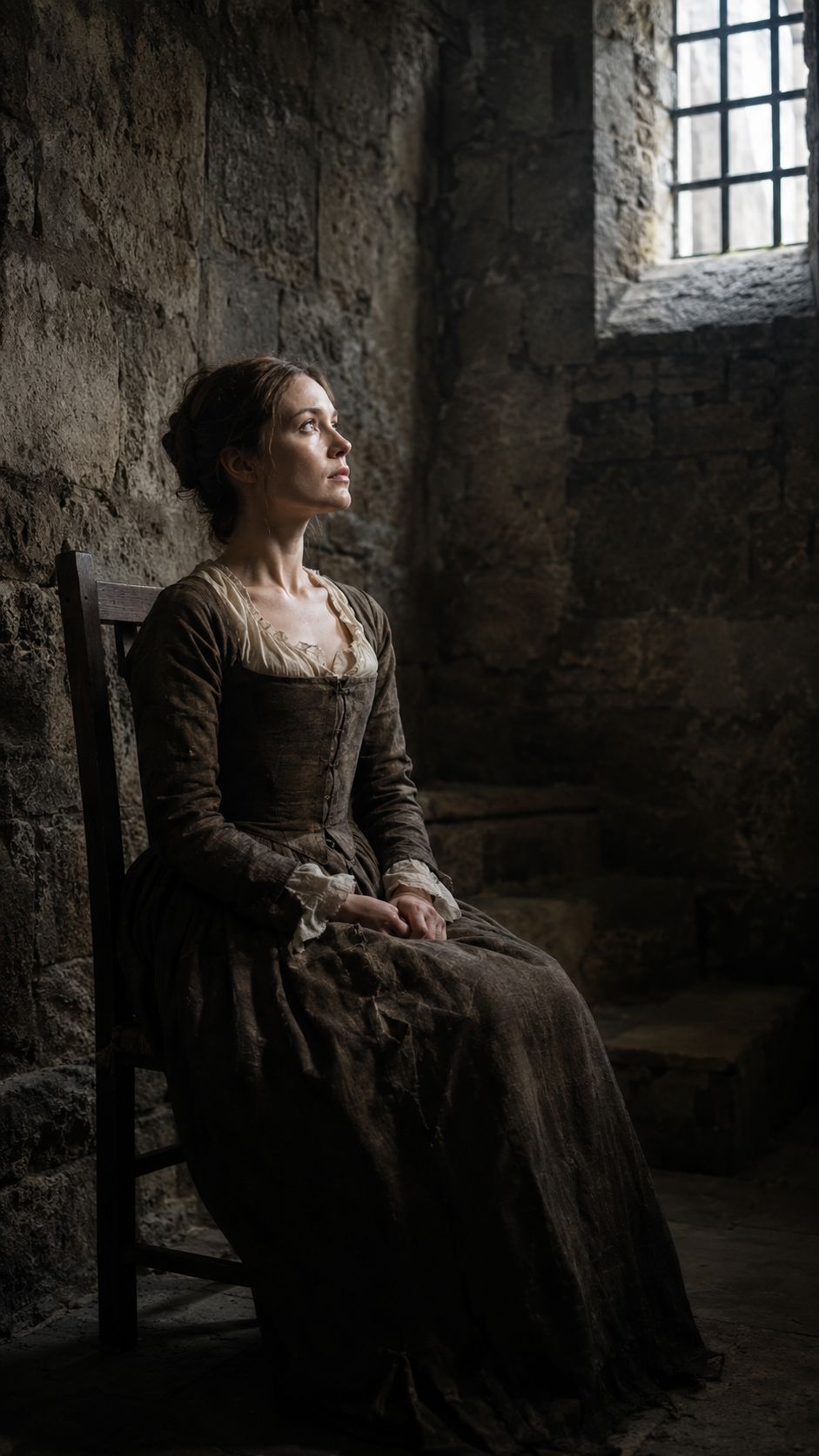 The Rape Trial That Ended In Trial By Combat
A woman's accusation of rape led to France's last judicial duel, with her own life staked on the outcome.
Paris, France · 1386
- The Parish Registers Of The Beast's Victims
Between 1764 and 1767 something killed roughly a hundred people, recorded in the registers as 'devoured by the beast.'
Saugues, France · 1764
- The Manufacturing Of England's Most Haunted House
For decades it was called the most haunted house in England, until its ghost story revealed how a haunting gets made.
Borley, Essex, United Kingdom · 1929
- The Truth Behind The Elephant Man
The real man behind the famous film was quieter, stranger and far more heartbreaking than any screenplay.
Whitechapel, London, United Kingdom · 1890