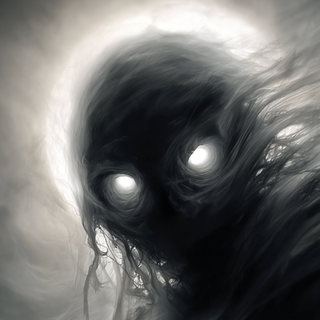
Delphine LaLaurie is one of the most infamous women in American history — a glamorous, wealthy New Orleans socialite whose beautiful mansion in the French Quarter concealed one of the most horrifying secrets of the antebellum South. Her story is a genuine account of monstrous cruelty hidden behind a mask of wealth and respectability — though it is also a story that has been so heavily embroidered by legend over nearly two centuries that separating the documented truth from the myth is part of understanding it. And the documented truth is terrible enough on its own.
To understand it, you have to picture New Orleans in the early 1830s — a glittering, prosperous city, and one built, like all the antebellum South, on the brutal foundation of slavery. And at the top of its high society sat Marie Delphine Macarty, known as Delphine LaLaurie. Born around 1787 into the powerful and wealthy Macarty family, she was a prominent Creole socialite, married three times, and by the early 1830s she was living with her third husband, a physician named Louis LaLaurie, in a grand mansion on Royal Street. She was famous for her elegance, her beauty, and the lavish parties she threw, at which the elite of New Orleans society were entertained. In public, she was charming and respectable — even, by some accounts, outwardly polite to Black people. But behind the doors of her mansion, a very different reality was hidden — and it involved the many enslaved people she held there, who served her guests and maintained her glamorous life.
The Horror
There had, in truth, been warnings for years. Rumours circulated in New Orleans about the treatment of the enslaved people in the LaLaurie household — that they were unusually gaunt, wretched, and terrified. As early as 1828, LaLaurie had reportedly been investigated for cruelty to those she enslaved. And there was one incident, recorded in the accounts, that pointed to real horror: it was said that Delphine had pursued a young enslaved girl through the house with a whip, and that the terrified child, to escape her, had fallen — or leapt — from the roof to her death, and that her body had then been hidden. The authorities responded to complaints by ordering some of the enslaved people removed from LaLaurie’s control — but she is said to have circumvented this by having relatives quietly buy them and return them to her. What is beyond dispute is grim on its own terms: the funeral registers of the period record the deaths of twelve enslaved people at the Royal Street mansion in just a few years — among them a woman named Bonne, a cook and laundress, and four of her children, Juliette, Florence, Jules, and little Leontine, children who died aged between roughly two and thirteen. These were real human beings, with names, who died in that house.
And then came the fire. On the morning of the 10th of April 1834, a blaze broke out in the LaLaurie mansion. According to the accounts, the fire had been started deliberately — set by the LaLauries’ elderly enslaved cook, a woman of around seventy, who was found chained to the kitchen stove, and who later said she had started the fire herself because she could no longer endure her life there, and had feared being taken to the upper rooms, from which, she said, no one who was taken ever returned. She had chosen to risk death by fire rather than continue to suffer. As the flames spread, neighbours and bystanders rushed to help — and it was then that they made the discovery that would horrify the nation. Forcing their way into the locked upper rooms of the mansion to rescue anyone trapped by the fire, they found seven enslaved people who had been imprisoned there: starved, emaciated, chained, and bearing the marks of prolonged, severe abuse. The city’s newspaper, the New Orleans Bee, reported that rescuers had found enslaved people “more or less horribly mutilated,” and condemned in print the “barbarous and fiendish atrocities” committed by LaLaurie against those she held captive. The seven survivors were carried out and taken to a public building, the Cabildo, to be cared for — and to be seen.
And New Orleans erupted. Word of what had been found in the mansion spread through the city like the fire itself, and the public — even in a society built on slavery, this was a step beyond what many would tolerate — was seized by fury. A vast crowd, said to number in the thousands, gathered around the LaLaurie mansion. And when it became clear that Delphine LaLaurie was not going to be arrested, the crowd became a mob. They stormed the house and tore it apart, gutting the grand mansion, smashing its fine furnishings and fixtures, until little but the walls remained. But Delphine LaLaurie herself escaped them. In the chaos, she fled — her carriage carrying her out of the city to the lakefront, where she boarded a boat and vanished. The most notorious woman in New Orleans was gone.
The Modern Relic
And she was never brought to justice. No criminal charges were ever filed against Delphine LaLaurie for what was found in her home. She fled New Orleans for good — travelling, the records suggest, by way of Mobile and New York, and ultimately to France. She settled in Paris, and she lived out the rest of her life there in comfortable exile, dying in 1849, having never answered for her crimes. Her reputation in New Orleans was destroyed forever, but she herself escaped all punishment — and her body was, it is believed, quietly returned to New Orleans and buried there years later.
Now, a crucial note on the truth, because this is where legend takes over. Over the following century, the LaLaurie story grew in the retelling into something ever more grotesque — lurid tales of a “torture chamber” filled with victims subjected to ghastly medical experiments and impossible mutilations. Most of these extreme details, historians point out, cannot be found in the 1834 record at all: they trace largely to a sensational fiction written in 1946, and to a hostile account decades after the fact, and were later amplified again by television dramatisations. The honest, documented horror is bad enough without the embellishments: seven real people found starved and chained, twelve recorded deaths, a cook who set a fire to escape, and a wealthy woman who tortured the human beings she owned and then walked away free.
The relic is the mansion itself, and it still stands. The LaLaurie Mansion — the present grand house, built on the site in 1838 after the original was destroyed by the fire and the mob — remains today at the corner of Royal Street and Governor Nicholls Street in the French Quarter of New Orleans — a large, elegant building that has served over the years as a home, a school, apartments, and a shop, and was even owned for a time by the actor Nicolas Cage. It is one of the most famous “haunted houses” in America, a fixture of every New Orleans ghost tour, its balconies pointed out to thousands of visitors who come to hear the story of what happened inside. But the truest way to remember the LaLaurie mansion is not as a ghost story. It is as the place where real, named people — Bonne and her children, the seven found in the attic, the cook who chose fire over another day of captivity — suffered and died at the hands of a woman the whole city had admired, in a house where the elegant parties upstairs were built directly on top of unimaginable cruelty below.
Nearby on the Dark Atlas
 The Ambush That Ended Bonnie and Clyde
Texas Ranger Frank Hamer set a trap on a quiet Louisiana road that ended America's most notorious outlaw run in seconds.
Bienville Parish, Louisiana, United States · 1934 · 371 km away
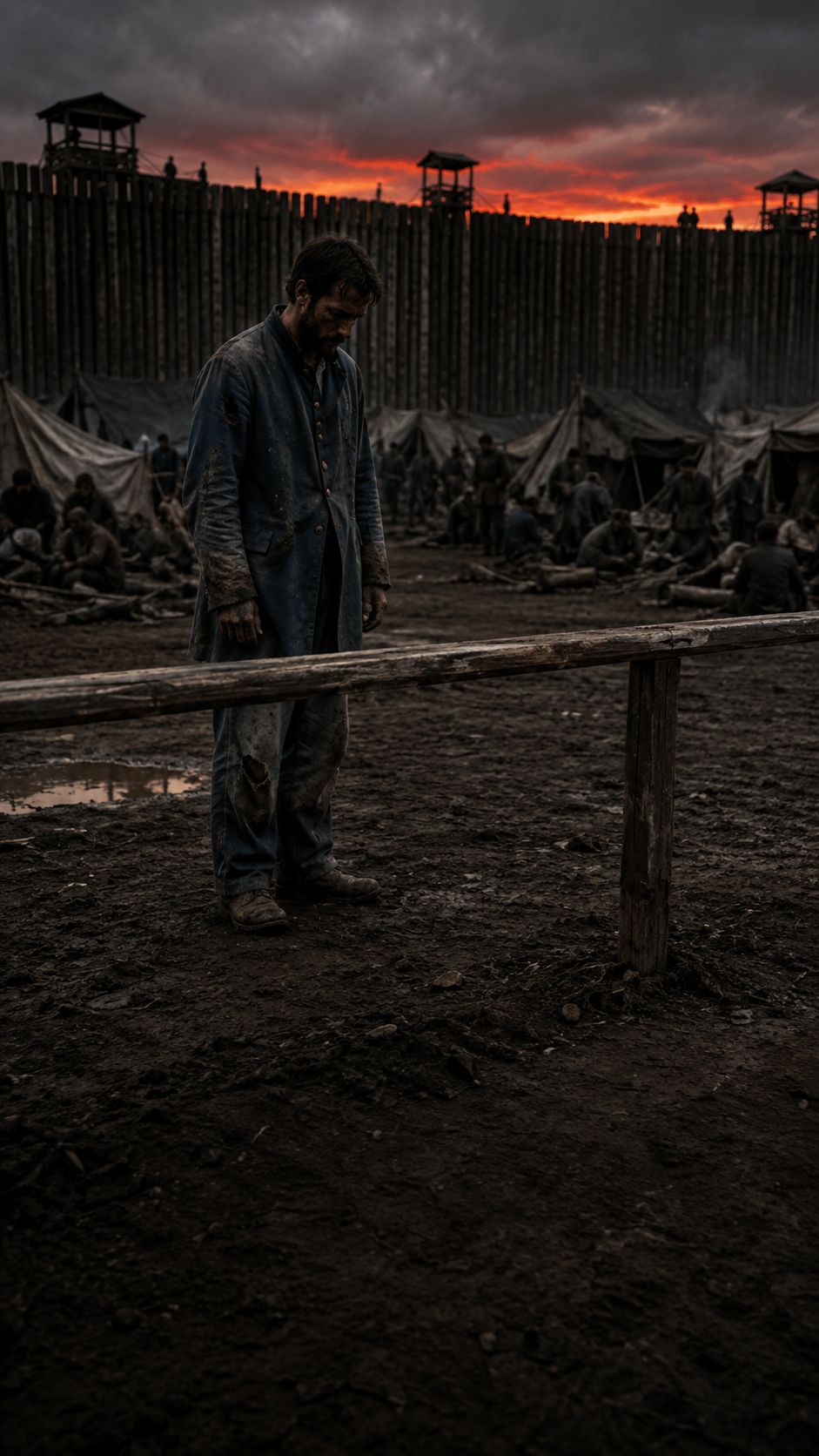 The Deadly Origin Of The Word Deadline
Long before it meant a due date, a dead line marked the boundary where Civil War prisoners could be shot on sight.
Andersonville, Georgia, United States · 1864 · 618 km away
- The President's Brain That Vanished
His brain was preserved for the National Archives after his assassination, then it disappeared and has never been found.
Dallas, United States · 1963 · 712 km away
 America's First Serial Killers
Shot down mid-chase, one killer's severed head was mounted on a pole — and locals swear you can still hear him laughing.
Webster County, Kentucky, United States · 1799 · 866 km away