It is one of the strange mercies of cinema that it knows when to stop. Bryan Singer’s 2008 film “Valkyrie” closes on a courtyard, a wall, and a burst of gunfire — Tom Cruise as Colonel Claus von Stauffenberg, straight-backed to the last. It is a clean ending, almost a noble one. The real events did not have the decency to end there. What the plotters of 20 July 1944 actually walked into was slower, and far darker, than any film has been willing to show. Stauffenberg was a colonel in the German Army, a career officer who had been gravely wounded in North Africa — he had lost his right hand, two fingers of his left, and an eye. He was also, by the summer of 1944, the operational heart of a conspiracy to kill Adolf Hitler and seize the German state from the Nazi Party. On the afternoon of 20 July 1944, he carried a briefcase into a conference at the Wolf’s Lair, Hitler’s field headquarters in East Prussia. Inside was a bomb. He armed it, set the case beneath the heavy oak map table, made his excuses, and left. The bomb exploded. Men in that room were killed. Hitler was not. The blast was deflected and muffled by the table’s solid supports, and he walked out shaken, singed, but alive. That single failure unravelled everything.
The Horror
Stauffenberg had already flown back to Berlin believing Hitler dead. At the Bendlerblock — the Army High Command building on the Tirpitzufer — the conspirators tried to trigger Operation Valkyrie, the plan to mobilise the reserve army against the SS. For a few hours it seemed to move. Then confirmation came through: Hitler had survived, and was speaking by telephone. The coup died in the corridors. Loyalist officers seized back the building. By the small hours of 21 July, Stauffenberg, his brother Berthold’s fellow plotters, and his devoted aide Lieutenant Werner von Haeften were under arrest, along with General Friedrich Olbricht and Colonel Albrecht Mertz von Quirnheim. It was General Friedrich Fromm — himself compromised, himself aware of the plot — who moved fastest. Fromm convened a drumhead court, condemned the ringleaders in minutes, and ordered them shot at once. Historians have long noted the likely reason for his haste: dead men could not testify to what Fromm had known and when. He was destroying evidence, and the evidence was people. They were taken down to the courtyard sometime before one in the morning. There was no proper lighting; someone drove an army truck into the yard and left its headlights burning so the firing squad could see. A small heap of sand had been made ready. One by one the men were stood against it. When the squad fired at Stauffenberg, Haeften — who had already been condemned — threw his own body into the path of the bullets, taking the first volley meant for the colonel. It bought Stauffenberg only seconds. He was placed against the wall again, and shot. According to the accounts that survive, his last words were flung out over the noise of the rifles: “Es lebe das heilige Deutschland” — “Long live sacred Germany.” The exact wording is disputed; some accounts render it as “secret” or “sacred/hallowed” Germany, and no two witnesses fully agree. What is not disputed is that he died defiant. That is where the film leaves you. The truth is that the courtyard was the quick death — the fortunate one. Because Hitler wanted more than executions. He wanted a spectacle of revenge, and he wanted it to last. In the weeks and months that followed, the wider net closed on hundreds of suspected conspirators, their families, and their associates. Many were dragged before the People’s Court in Berlin and its president, Roland Freisler, a judge who screamed at the accused until they could barely stand, denying them defence, dignity, or hope. The verdicts were foregone. The sentences were death. And these deaths were engineered to be terrible. At Plötzensee Prison, condemned men were hanged — not by the swift drop that breaks the neck, but by slow strangulation, some accounts describing thin rope or wire and butcher’s hooks fixed to a beam. Stauffenberg’s own brother, Berthold von Stauffenberg, was among eight men killed on 10 August 1944. It is widely reported that these executions were filmed on Hitler’s orders, with victims reportedly revived and hanged more than once to prolong the ordeal, so that he could watch the footage afterward. The film of the courtyard ends with a soldier’s death. The reality ended in a converted shed, on camera, made for an audience of one. There was a final indignity even for the four shot in the courtyard. They had been buried at first in a Berlin churchyard, in their uniforms — but within a day Heinrich Himmler ordered the graves reopened. According to the accounts that survive, the bodies were exhumed, stripped of their medals and insignia, and burned, and the ashes scattered so that no marker and no resting place would remain to become a shrine. And Fromm, the general who had ordered the swift shootings to save himself, saved nothing: he was arrested within days, imprisoned, and eventually condemned and shot by the very regime he had tried to protect, on 12 March 1945. Almost no one who touched that night died in bed.
The Modern Relic
You can stand where Stauffenberg was shot. The Bendlerblock survives in Berlin, and the very courtyard where the firing squad worked by truck-light is now part of the Gedenkstätte Deutscher Widerstand — the German Resistance Memorial Center. A bronze figure — a 1953 sculpture by Richard Scheibe of a young man standing upright with his hands bound — marks the ground, set against a plaque honouring the men who died there for refusing to obey. Each year on 20 July, the anniversary, the German armed forces hold a solemn public ceremony in that same courtyard, and new recruits swear their oath on the very spot where Stauffenberg was shot — a modern state deliberately building its army’s conscience on the ground where its predecessor committed a murder. Visitors leave wreaths and flowers through the summer. A short distance across the city, Plötzensee Prison is also a memorial now, its execution room preserved, the beam still fixed in place. Two ordinary buildings, in a working modern capital, holding between them the fast death and the slow one. The film gave Stauffenberg a clean ending because we needed one. History gave him a courtyard, a heap of sand, and a truck left running so that men could see to kill him — and then it kept going, into rooms he never lived to see, and made the rest of them die worse.
Nearby on the Dark Atlas
- The Dictator Who Tested Poison On His Own Dog
Afraid the cyanide might be fake, he tested it on his German Shepherd before using it himself.
Berlin, Germany · 1945 · 1.9 km away
 The King Who Met Hitler After His Throne
A year after giving up his crown for love, the former king toured Nazi Germany and gave the salute.
Berlin, Germany · 1937 · 3.7 km away
 The Murder Behind The Great Escape
The film ends in a rousing adventure — the real mass breakout ended in the cold-blooded murder of fifty recaptured men on Hitler's direct orders.
Żagań, Poland · 1944 · 167 km away
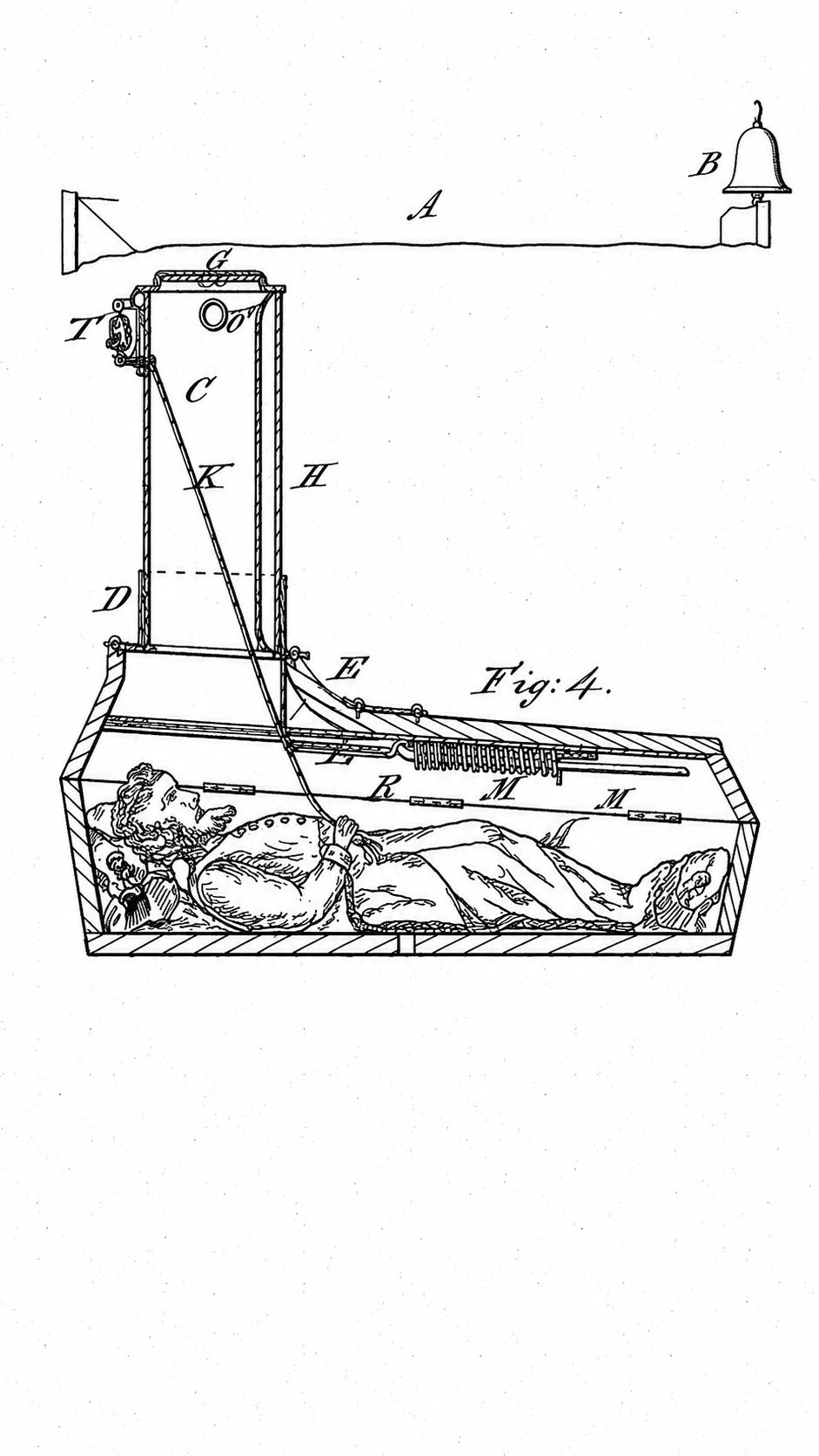 The Bells Rigged For The Not-Quite-Dead
Before the stethoscope existed, doctors couldn't reliably tell the dead from the merely unconscious, so inventors built coffins with bells attached.
Braunschweig, Germany · 1798 · 194 km away