
In late summer 480 BC, a Persian army under King Xerxes — numbering in the hundreds of thousands — marched south through Greece toward Athens. At the narrow coastal pass of Thermopylae, a Greek force assembled to stop them.
Everyone knows the legend: 300 Spartans, a last stand, a king who chose death, the film, the slow‑motion, the abs. Almost none of that is accurate. The real story is better — and crueller.
The Horror
The Greek force at Thermopylae was not 300 men. It was around 7,000, drawn from multiple city‑states: Sparta, Thespiae, Thebes, Corinth and others. Together they held the narrow pass for two days, inflicting heavy casualties on the much larger Persian army.
On the third day, a local traitor named Ephialtes revealed a mountain path that would let Persian troops get behind the Greek position. Once Leonidas learned the pass had been outflanked and encirclement was inevitable, he made a decision: most of the army would withdraw. A rearguard would stay to cover the retreat and die.
The 300 Spartans stayed. In practice, they had no choice. Spartan law and culture made retreat dishonourable to the point of civic annihilation. A Spartan who fled battle could lose his citizenship, his status, his name. For them, going home was worse than dying.
But they did not die alone.
Seven hundred men from the small city of Thespiae — not full‑time professional warriors raised in a military system like Sparta’s, but citizens of a modest town — volunteered to remain with the Spartans and share their fate.
They were not compelled by law. Their city did not forbid retreat. Their families would have welcomed them back. They chose to stay.
Herodotus, the main ancient source for the battle, names and praises them. Later memory did not. The popular story narrowed Thermopylae to “the 300.” The monument at the pass honours Leonidas and the Spartans by name. The Thespians’ memorial is smaller and quieter, set nearby, visited far less.
Seven hundred volunteers died beside 300 men bound by law, and it is the obligated who became legends while the volunteers became footnotes.
The rearguard fought to the end and was wiped out. Xerxes is said to have asked why such a small contingent resisted so fiercely. The answer he was given: “This is how free men fight.”
The Modern Relic
At Thermopylae today, a modern bronze statue of Leonidas stands beside the road, shield raised, spear in hand. Beneath it, an inscription echoing the ancient epitaph recorded by Herodotus:
“Go, stranger, and tell the Spartans that here, obedient to their laws, we lie.”
Nearby stands a smaller monument to the 700 Thespians. Many tour buses stop at Leonidas, take photographs, and move on without visiting the Thespian stone.
The physical pass itself has changed. In antiquity, the road squeezed between steep slopes and the sea; centuries of silt deposition have pushed the shoreline outward, turning the once‑narrow corridor into a broad plain. The geography that made the stand possible has faded. The landscape has forgotten the bottleneck. The monuments remember selectively.
Ephialtes, the traitor, survived the battle. A bounty was placed on his head. Years later, when he was killed in an unrelated dispute, the Greeks still awarded the reward to his killer — on principle. His name, Ephialtes, eventually became the common Greek word for “nightmare.”
The man who sold out the pass became a word for the worst thing you can see in your sleep. The 700 who chose to stay in that pass became a smaller stone across the road.
Nearby on the Dark Atlas
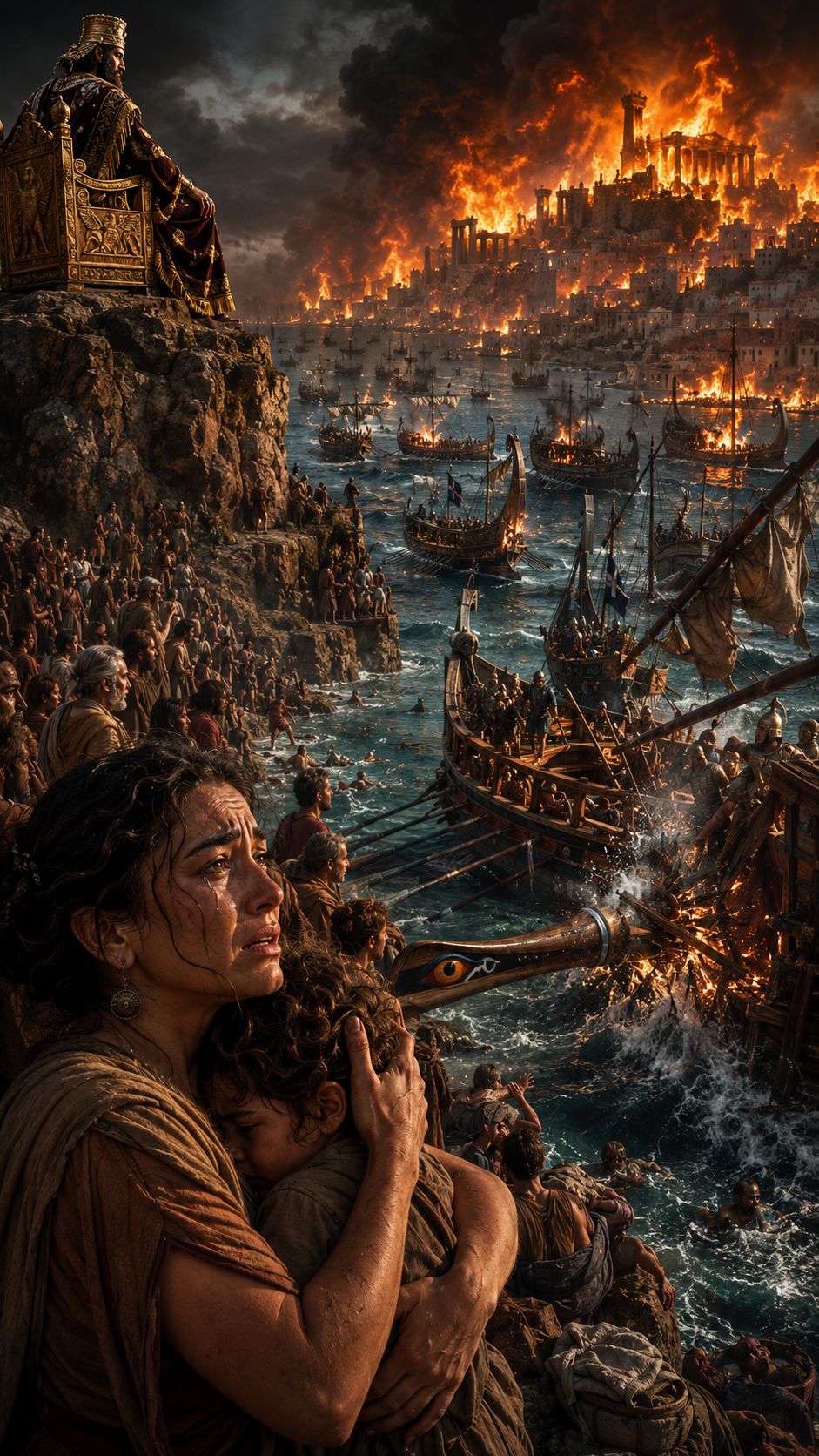 The Wooden Wall That Saved Athens
A cryptic oracle's prophecy about a wooden wall led Athens to lure the Persian fleet into a narrow strait and destroy it before Xerxes' eyes.
Salamis, Greece · 480 BC · 125 km away
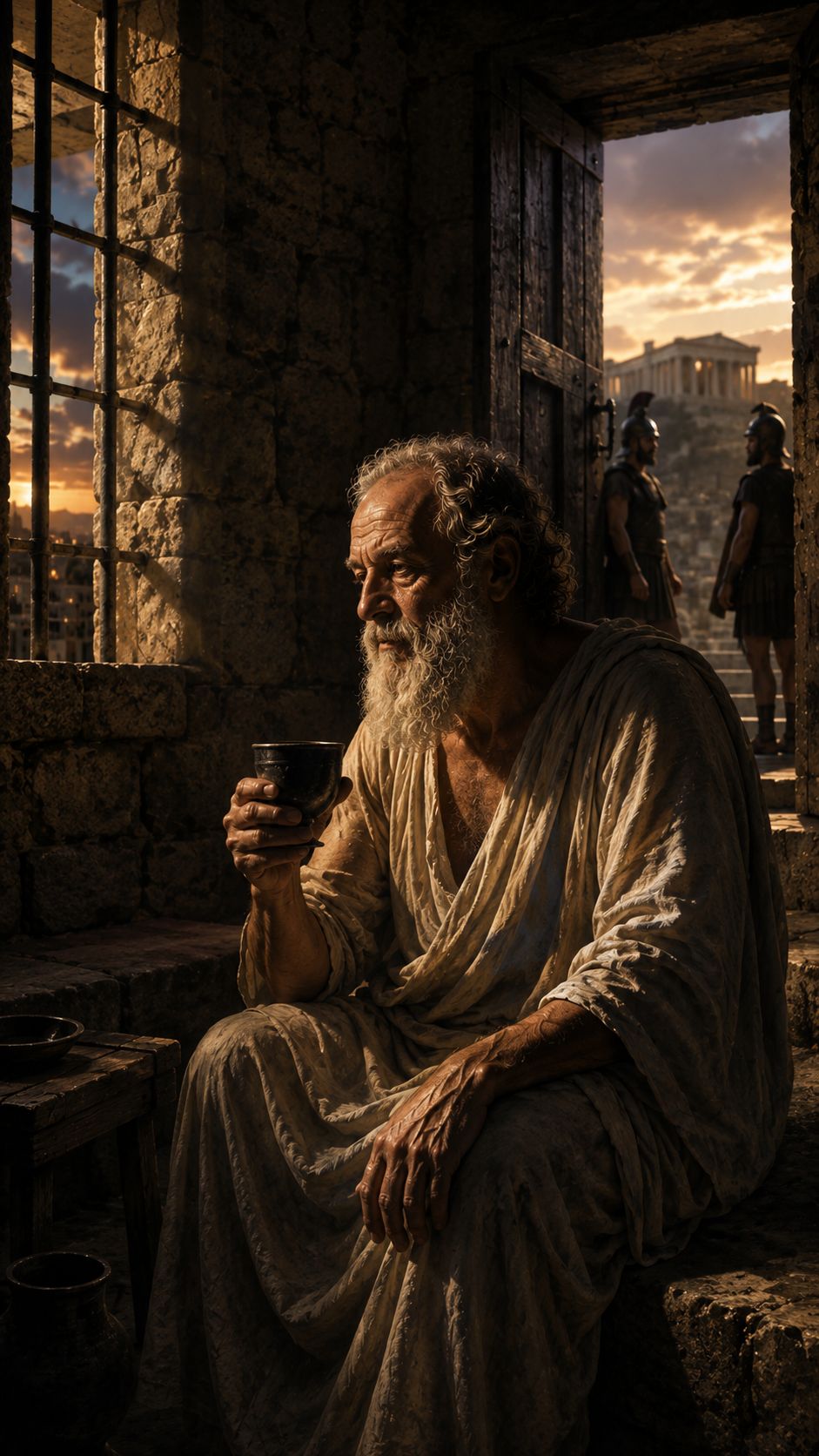 The Old Man Athens Put On Trial For Asking Questions
A seventy-year-old philosopher was condemned for corrupting the youth — his real crime was making powerful men look foolish.
Athens, Greece · 399 BC · 138 km away
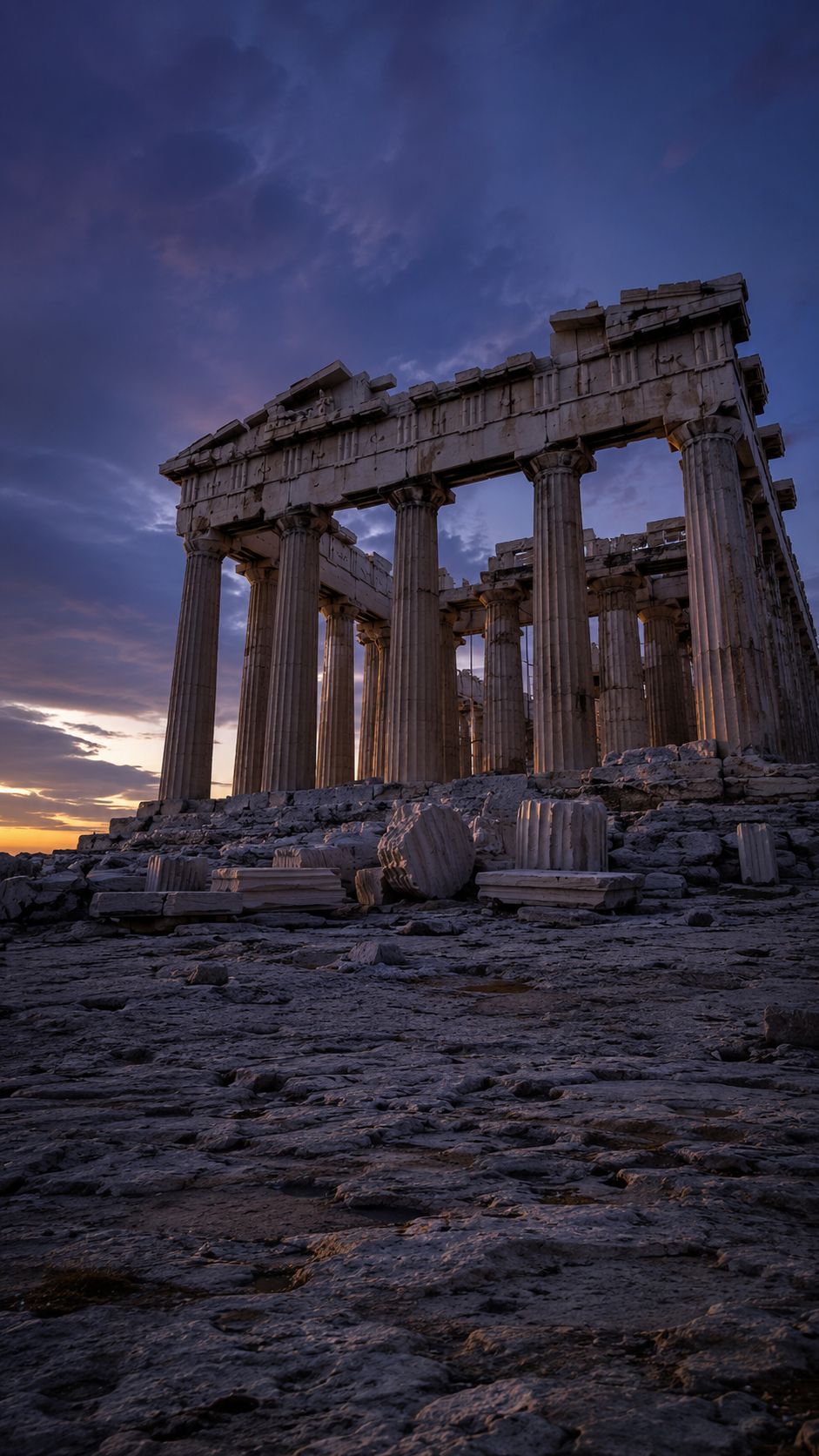 The Night One Shell Broke A Temple
A temple that survived 2,100 years of empires and earthquakes is gutted in a single evening by one gunpowder-filled gamble.
Acropolis, Athens, Greece · 1687 · 138 km away
 The Runner Who Died Delivering Victory
A professional long-distance runner is sent to beg Sparta for help, then races on to deliver news that costs him everything.
Marathon, Greece · 490 BC · 143 km away