
Roderigo (Roderigo/Roderigo) Lopez was a Portuguese converso — born into a Jewish family, forcibly baptised, and driven from Portugal by the Inquisition. He arrived in London around 1559, built a successful medical practice, and by 1586 had risen to the highest medical post in England: physician‑in‑chief to Queen Elizabeth I.
He remains the only royal doctor in English history to be executed.
The Horror
Lopez was heavily in debt and, like many Elizabethan courtiers, had drifted into freelance diplomacy and espionage, dealing with Spanish figures through Portuguese intermediaries. Whether he was genuinely plotting to poison the Queen or only running an unauthorised back‑channel that he hoped to profit from is something historians still argue about.
In January 1594, the Earl of Essex raided Lopez’s home and seized his papers. He wrote triumphantly to Anthony Bacon: he had uncovered “a most dangerous and desperate treason,” whose “executioner should have been Dr Lopez… by poison.”
Two Portuguese agents were tortured into confessing they were part of a Spanish plot to poison Elizabeth, and they named Lopez as the man who would administer the dose — allegedly for 50,000 crowns, slipped into her medicine or syrup. Lopez himself confessed under the threat and reality of torture in the Tower, then later retracted his confession and insisted he had only pretended to play along to cheat money from Spain.
Elizabeth initially believed him. She called Essex “a rash youth,” doubted the strength of the case, and delayed signing the death warrant for roughly three months. Essex pushed relentlessly. Lopez was tried at the Guildhall on 28 February 1594, denounced by the prosecutor as “a perjured and murdering villain and Jewish doctor, worse than Judas himself”, convicted within hours, and sentenced to be hanged, drawn and quartered.
On 7 June 1594, Lopez and two Portuguese associates were dragged on hurdles from the Tower to Tyburn. On the scaffold, according to William Camden, Lopez declared that “he loved the queen as well as he loved Jesus Christ” — a claim of loyalty framed in Christian language. Camden adds that this statement, “coming from a man of the Jewish profession, moved no small laughter in the standers‑by.” They laughed at a man facing disembowelment because his words and identity did not match.
He was hanged, cut down, disembowelled and quartered. He was about seventy years old. After his death, Elizabeth quietly returned most or all of his estate to his widow Sarah and helped support his son’s education — an act many historians read as a sign that, whatever she had signed, she was never fully convinced of his guilt.
The Modern Relic
Within a few years of Lopez’s execution, London stages saw a surge of plays about Jews and poison plots. Christopher Marlowe’s Jew of Malta was revived, and Shakespeare wrote The Merchant of Venice — a play about a Jewish man destroyed in a Christian court. Many scholars see the Lopez affair as one of the currents that fed into Shylock; others argue the connection is overstated, but agree the trial and execution shaped the atmosphere Shakespeare was writing in.
Lopez’s grave is unmarked. The courtly letters and chronicles that destroyed him survive in archives and footnotes. The line that made the crowd laugh — “I loved the Queen as well as I loved Jesus Christ” — is still being quoted four centuries later.
Nearby on the Dark Atlas
- Betrayed by a Farmer's Grudge
The man who helped condemn Anne Boleyn was destroyed years later by a tenant's accusation and a single well-placed word.
Tyburn, London, United Kingdom · 1540 · same site
 The Cheerful Walk to Tyburn
Watching from his cell, Thomas More saw five monks dragged to Tyburn cheerful as bridegrooms, knowing he would follow.
Tyburn, London, United Kingdom · 1535 · same site
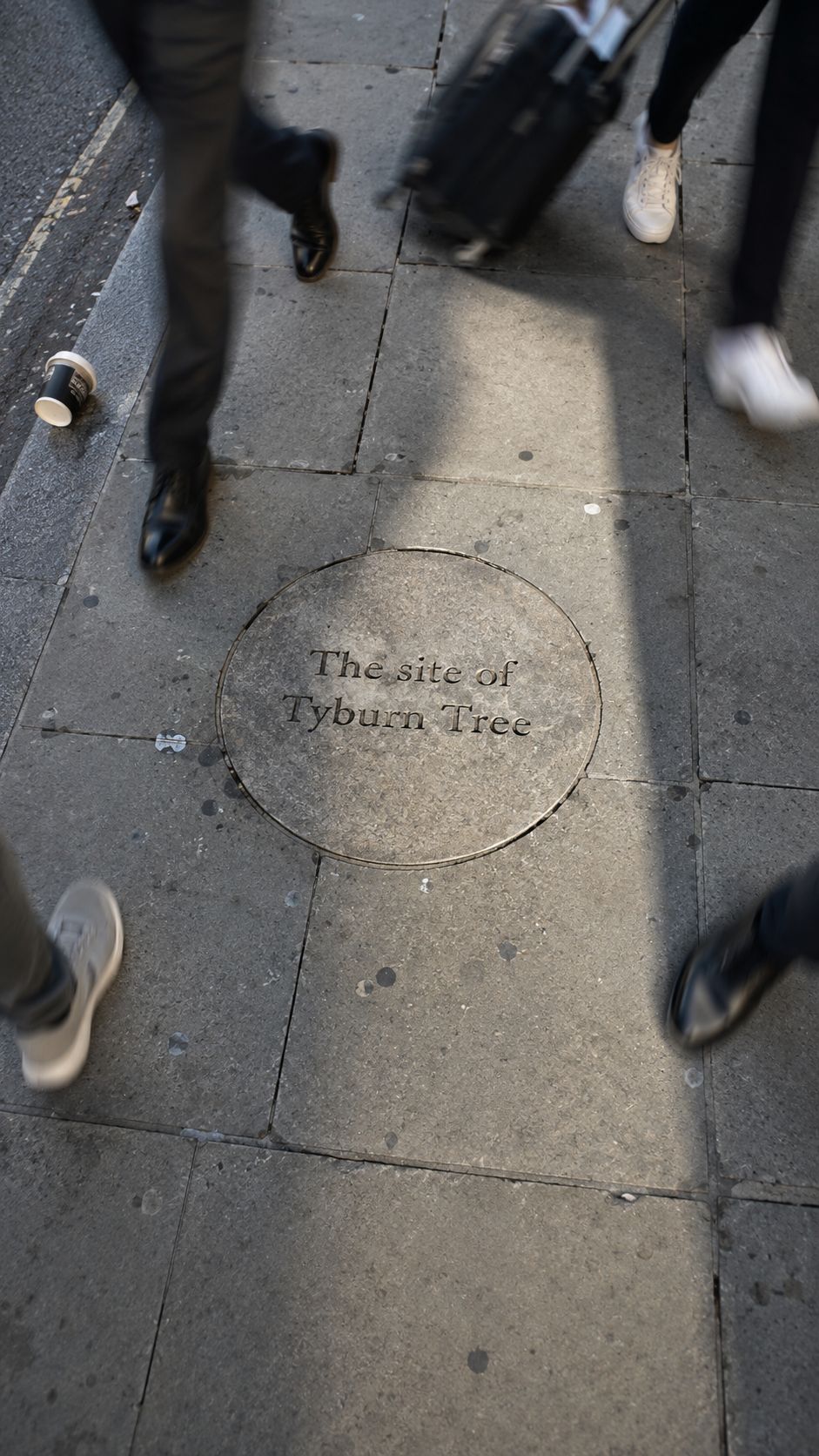 The Killing Ground Beside Marble Arch
For nearly 600 years a triangular wooden gallows on a London traffic island hanged tens of thousands, and almost nobody notices the plaque today.
Marble Arch, London, United Kingdom · 1700 · same site
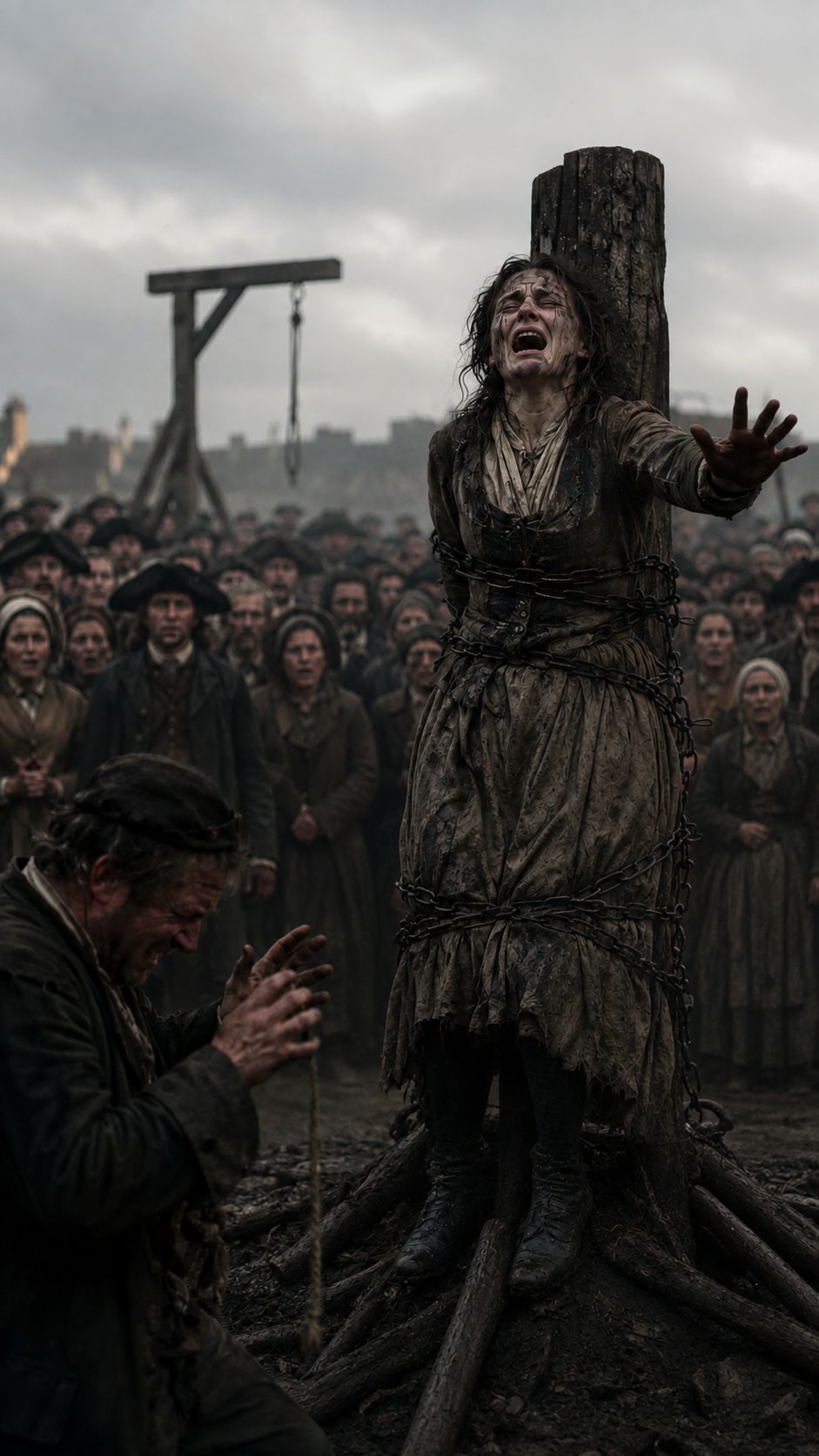 The Last Woman Burned Alive In England
Her murder became the stuff of ballads and nightmares — and her execution went so wrong it stands as a black mark on English justice.
London, United Kingdom · 1726 · same site