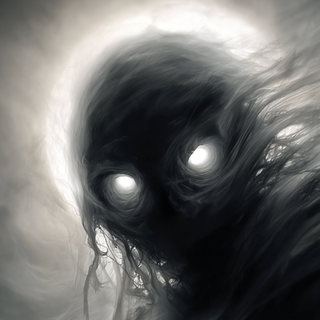
Sokushinbutsu is one of the most extraordinary and unsettling religious practices in all of human history — a ritual in which Buddhist monks in Japan attempted, over the course of roughly eight to ten years, to transform their own living bodies into mummies, in the ultimate act of devotion. And the most astonishing part is that a rare few of them succeeded — and their mummified bodies are still sitting in temples in Japan today, revered not as corpses, but as living Buddhas.
To understand it, you have to understand the belief behind it. The practice is rooted in a school of Japanese Buddhism whose most extreme adherents believed that ultimate enlightenment could be reached through supreme physical discipline and self-denial. The tradition traces back to the esoteric teachings of Kūkai, founder of Shingon Buddhism, but the practice itself arose in the late 14th century and flourished during the Edo period. Its goal was breathtaking in its ambition: not simply to die and be reborn, but to become a Buddha in this very body — to defeat death and decay itself, and to remain, forever, as an eternal object of veneration, a monk who could intercede for the suffering of ordinary people. To these monks, this was not suicide. It was the highest imaginable form of enlightenment. And the path to it was almost unimaginably hard.
The Horror
The process, practised especially in the Dewa Sanzan mountains of the Yamagata region, is thought to have taken around 3,000 days — roughly eight years — and it was designed, step by agonising step, to prepare a living body to survive as a mummy. It began with diet. For the first thousand days — roughly three years — the monk ate only nuts, seeds, and fruit foraged from the mountains, while performing rigorous physical labour, deliberately stripping away every ounce of body fat. Some monks swallowed small river stones to fill their empty stomachs and stave off the worst hunger. Then came a second thousand days, during which the diet grew even harsher: only bark, pine needles, and roots, in a regime known as mokujiki — “tree-eating” — slowly desiccating the body from the inside, reducing the monk to little more than skin and bone, and starving the very bacteria in his gut that would one day try to consume his corpse.
And then came the most extreme step of all. The monk began to drink a tea made from the sap of the urushi tree — the toxic lacquer used to varnish bowls and furniture. It was poison. It induced violent vomiting, purging the body of its remaining fluids, and, crucially, it saturated the flesh with a toxicity that would keep insects and maggots away from the body after death — a preservative brewed from the inside out. The sap was so potent that it effectively lined their stomachs like the lacquerware it was meant to create. In the Yamagata region, some monks also drank water from the arsenic-laced hot springs of Mount Yudono — sacred waters with enough poison to kill a man, which would further purge fluids and kill the microbes that cause rot. By now, after years of this, the monk was a living skeleton, drying and hardening while still breathing.
For the final stage, the emaciated monk was placed into a small stone tomb, or an underground chamber, barely larger than his own seated body, deep beneath the ground. There, sealed in near-total darkness, he sat in the lotus position of meditation. A single bamboo tube ran to the surface to give him air — and he was given a small bell. Each day, in the blackness, the monk would ring the bell, a sound reaching the monks above, telling them that he was still alive, still meditating, still on his path. And every day they listened for it. Until, one day, the bell did not ring. When the bell fell silent, the monks above knew their brother had passed into his final meditation. They removed the air tube and sealed the tomb completely, and they waited — often for another thousand days, another three years.
The Modern Relic
Then the tomb was opened. And here is the truth that makes the story both tragic and awe-inspiring: almost always, it had failed. The body had rotted. Despite the years of starvation and poison, decay had won, and the monk was found decomposed — a failure not just of flesh, but of the spirit itself, at least in the eyes of the tradition. These monks were still honoured for their devotion — but they were not enshrined. The tomb was simply resealed, and they were left in the dark. Because for it to work, the body had to emerge perfectly preserved, naturally mummified, the flesh dried and intact. And out of the many hundreds of monks who are believed to have attempted this over the centuries, only a rare handful — roughly 16 to 24 — actually succeeded. When a body was found perfectly preserved, it was the ultimate proof, in the eyes of the faithful, of the monk’s spiritual power. He was declared a living Buddha. His mummified body was dressed in fine robes, moved from the tomb into the temple, and placed in a shrine to be venerated.
The practice was outlawed by the Meiji government in 1877, criminalised as “anachronistic and depraved.” But the darkness didn’t end there. A one-eyed monk named Tetsuryūkai had been preparing for years and refused to stop. In 1878, he entered his tomb illegally. When his followers secretly exhumed him and found him perfectly preserved, they realised they could not display him without admitting they had broken the law. So they forged the temple records, backdating his death to 1862 — before the ban — and enshrined him at Nangaku Temple, where he still sits, a product of devotion and fraud. The last known successful sokushinbutsu was a monk named Bukkai, who completed the ritual in 1903 — also illegal. His body was not exhumed and enshrined until researchers dug him up in 1961.
The relic is that these self-made mummies are still there. In temples in the Yamagata region of northern Japan, and a few other places, the sokushinbutsu still sit — robed, enshrined, their darkened, mummified faces bowed in eternal meditation, some of them centuries old. At certain temples near the sacred Mount Yudono, you can visit them: monks like Shinnyōkai and Tetsumonkai, men who deliberately turned themselves into mummies hundreds of years ago and who, according to the tradition, are not considered dead at all, but forever in a deep meditative state. Every day, the monks who tend them still bring them offerings of food and change their robes, caring for them as living presences. The practice faded into history. But the living Buddhas remain — the astonishing, haunting endpoint of the most extreme act of faith the human body can be asked to endure, sitting silent in their shrines, waiting, as they believe, for the future they starved themselves into eternity to see. Most of them, of course, never made it that far. They are still in their tombs, rotted and forgotten, beneath the ground where the bells went silent.
Nearby on the Dark Atlas
 The Samurai Who Tested Swords On Strangers
Japanese swordsmen once tested new blades by cutting down unsuspecting passersby at night, until the shogunate finally banned it.
Edo, Japan · 1602 · 345 km away
 The Shadow Burned Into The Steps
In less than a second, a bank's granite steps bleach white everywhere except where one person happened to be sitting.
Hiroshima, Japan · 1945 · 826 km away
 Boiled Alive on Unzen's Sulfur Mountain
Christians who refused to trample a holy image were stripped and doused with boiling spring water on a steaming mountain.
Unzen, Japan · 1630 · 1098 km away
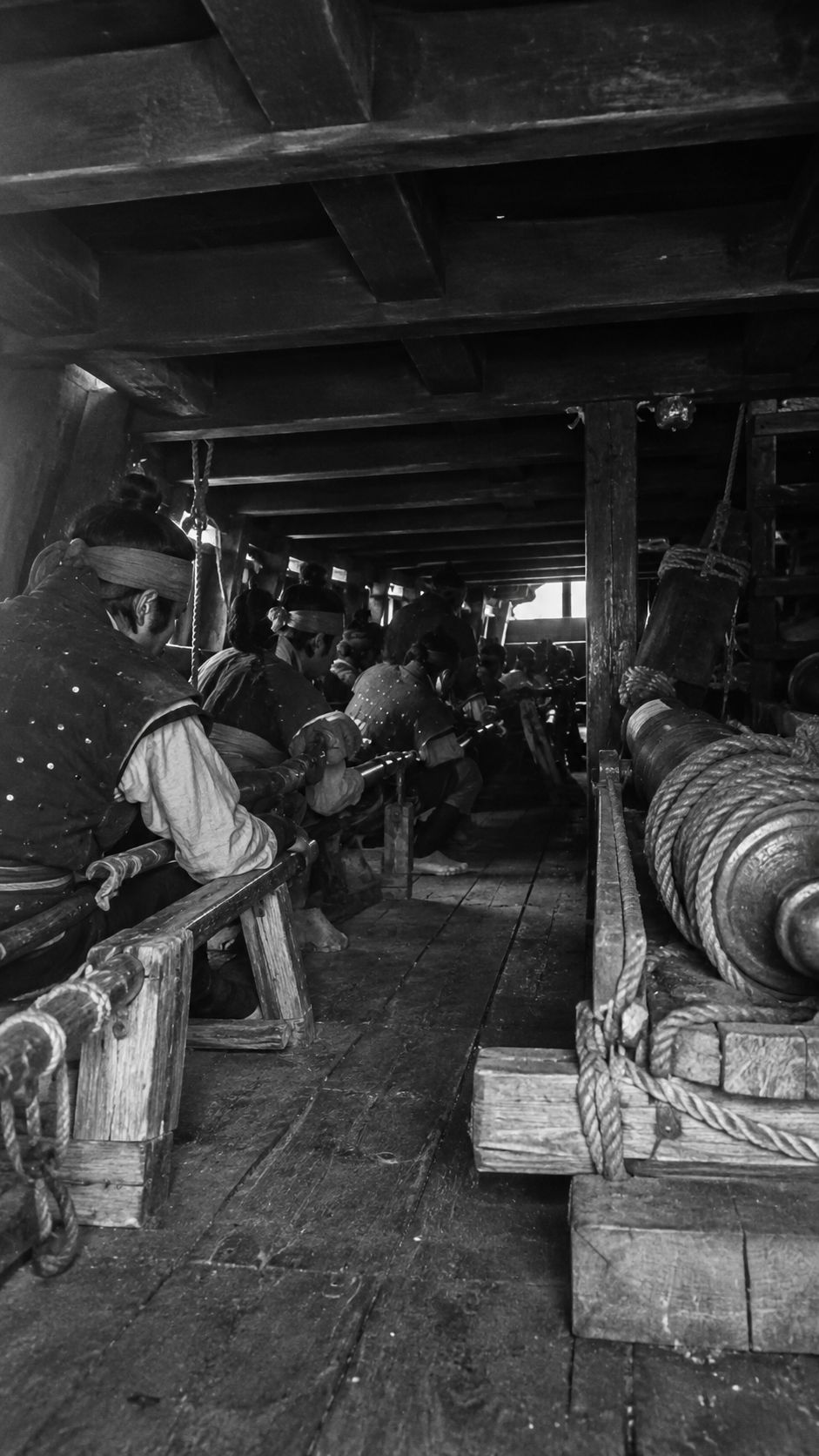 The Crane's Wing That Crushed a Fleet
A decoy fleet lured Japanese warships into open water, straight into a U-shaped trap that sealed their fate.
Hansan Island, South Korea · 1592 · 1111 km away
More like this
- The Leper King's Story No Film Would Show
Kingdom of Heaven gave him a dignified death behind a silver mask, the truth was far crueller.
Jerusalem, Israel · 1185
- The Heretic Burned By The Reformers Who Fled Rome
Calvin's Geneva burned a brilliant Spanish physician for his beliefs, then, centuries later, erected a monument of atonement.
Champel, Geneva, Switzerland · 1553
- The Truth Behind The Elephant Man
The real man behind the famous film was quieter, stranger and far more heartbreaking than any screenplay.
Whitechapel, London, United Kingdom · 1890
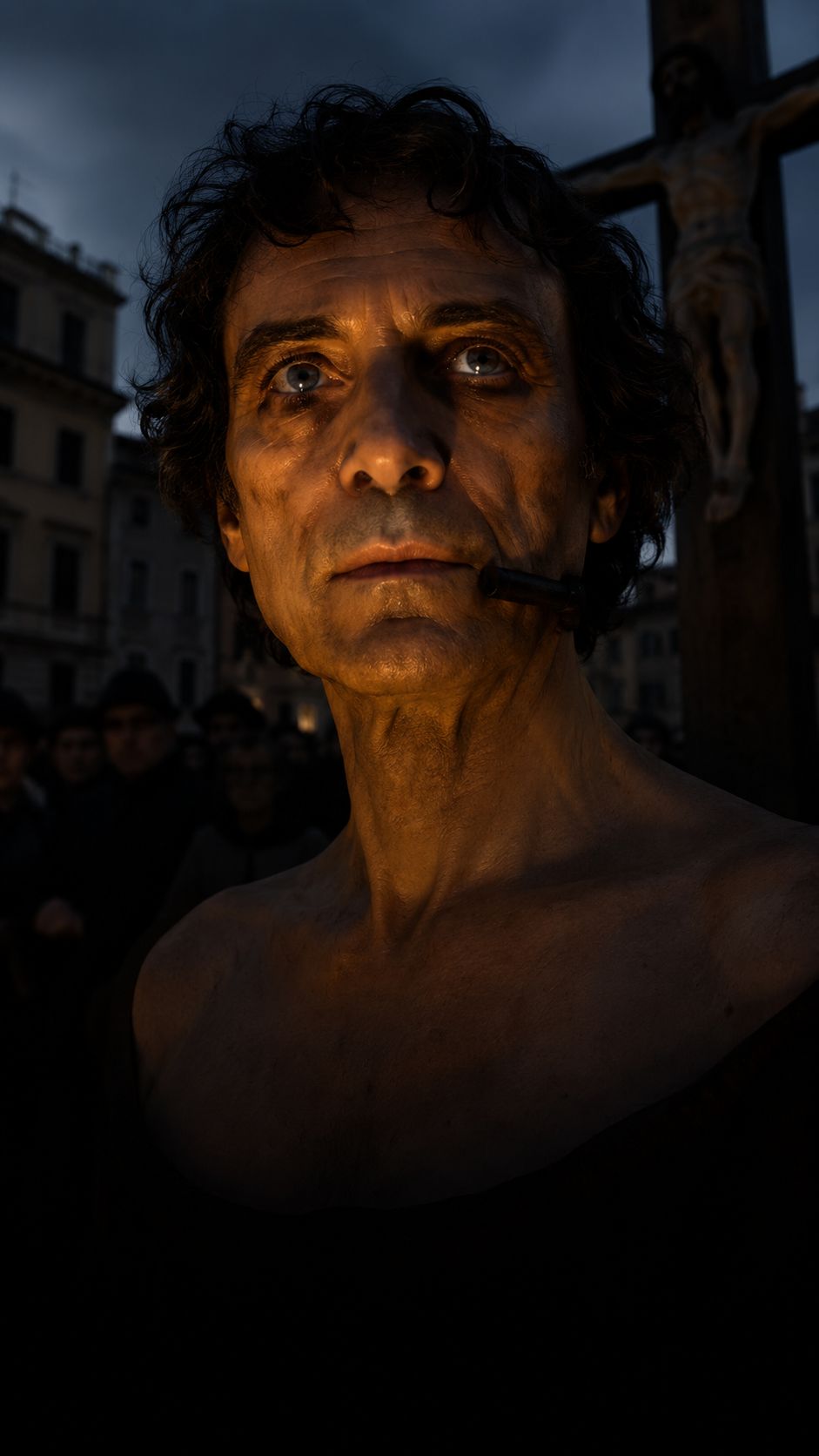 The Heretic Burned For What He Thought
After eight years of imprisonment, he refused to recant his vision of an infinite universe, and paid with his life.
Campo de' Fiori, Rome, Italy · 1600